GateUser-a445bc93

vip
Age 0 Yıl
Peak Tier 0
No content yet
#GatePreIPOsLaunchesWithSpaceX
Gate Pre-IPOs Debuts with SpaceX: A Structural Shift in Access, Liquidity, and Private Market Participation
The launch of Gate Pre-IPOs with SpaceX ($SPCX) is not just another product rollout—it represents a deeper structural evolution in how capital markets are accessed, distributed, and ultimately democratized. What we are witnessing here is the early-stage convergence of traditionally gated private equity opportunities with the increasingly fluid and globally accessible infrastructure of crypto-financial platforms. This is not a cosmetic innovation. It is a f
GUSD0,01%
post-image
Dubai_Prince
#GatePreIPOsLaunchesWithSpaceX
Gate Pre-IPOs Debuts with SpaceX: A Structural Shift in Access, Liquidity, and Private Market Participation
The launch of Gate Pre-IPOs with SpaceX ($SPCX) is not just another product rollout—it represents a deeper structural evolution in how capital markets are accessed, distributed, and ultimately democratized. What we are witnessing here is the early-stage convergence of traditionally gated private equity opportunities with the increasingly fluid and globally accessible infrastructure of crypto-financial platforms. This is not a cosmetic innovation. It is a fundamental reconfiguration of who gets to participate in value creation before public listing events.
At the surface level, the offering is straightforward: SpaceX shares are being made available at 590 USDT per unit, with a total allocation of 33,900 shares, implying a valuation of approximately 1.4 trillion USDT. Users can subscribe using USDT or GUSD, with additional incentives such as airdrops for higher-tier participants like VIP 5+ users and affiliate ultras. However, stopping at these details would miss the larger narrative. The real significance lies not in the pricing or allocation mechanics, but in the precedent this sets.
---
The Structural Context: Why This Matters Now
For decades, access to pre-IPO equity in companies like SpaceX has been restricted to institutional investors, venture capital firms, and ultra-high-net-worth individuals. The barriers were not just financial—they were structural, regulatory, and relational. Entry into these deals often required deep networks, long lock-up periods, and acceptance of illiquid positions with uncertain exit timelines.
Gate’s Pre-IPO model challenges this paradigm by introducing a semi-liquid, crypto-denominated access layer that lowers both the financial and operational thresholds for participation. By tokenizing exposure to pre-IPO equity and integrating it into a crypto-native environment, Gate is effectively compressing the distance between retail investors and private market opportunities.
This raises an important question: Is this true democratization, or simply a repackaging of exclusivity in a more accessible wrapper?
---
The Bull Case: Expanding Access and Redefining Opportunity
From an optimistic perspective, this model represents a breakthrough in financial inclusion. Retail participants who were previously excluded from early-stage value capture can now gain exposure to high-growth companies before IPO-driven price discovery occurs. In traditional markets, much of the upside is realized before public listing, leaving retail investors to enter at inflated valuations.
By enabling earlier participation, Gate Pre-IPOs could shift part of that value distribution curve. The implications are significant:
Access Expansion: Investors no longer need institutional backing to enter pre-IPO deals.
Capital Efficiency: Crypto-based subscriptions allow for faster settlement and reduced friction.
Portfolio Diversification: Users can diversify beyond tokens into real-world equity exposure.
Market Evolution: A hybrid model emerges where TradFi assets are integrated into DeFi-like accessibility layers.
In this view, Gate is not just offering a product—it is building a bridge between two historically disconnected financial ecosystems.
---
The Bear Case: Illusion of Access and Hidden Constraints
However, a more critical lens reveals several unresolved tensions. While access appears democratized, the underlying risks and constraints remain largely intact—and in some cases, amplified.
First, valuation transparency becomes a central concern. A 1.4 trillion USDT implied valuation raises immediate questions about pricing methodology, secondary market comparables, and potential overvaluation risks. Without the rigorous disclosure frameworks of public markets, participants are operating with limited information.
Second, liquidity remains uncertain. While the platform may provide entry, exit mechanisms are less clear. Pre-IPO investments are inherently illiquid, and tokenization does not automatically solve this issue unless supported by robust secondary markets with sufficient depth.
Third, regulatory ambiguity cannot be ignored. The intersection of tokenized equity and global crypto platforms exists in a gray zone across many jurisdictions. This introduces potential compliance risks that could impact both the platform and its users.
Finally, incentive structures such as airdrops for VIP users introduce behavioral distortions. Instead of purely investment-driven participation, users may be incentivized by short-term rewards, potentially leading to misaligned expectations and speculative behavior.
---
The Middle Ground: A Transitional Model, Not a Final Form
The reality likely lies between these two extremes. Gate Pre-IPOs should not be viewed as a complete solution, but rather as an early iteration of a broader transformation in capital markets. It is a transitional model—one that experiments with accessibility while still grappling with the complexities of private equity dynamics.
What makes this launch particularly important is not that it solves all existing problems, but that it forces the market to confront them. It introduces new questions:
How should pre-IPO assets be priced in a crypto-native environment?
What mechanisms are needed to ensure fair access without compromising investor protection?
Can liquidity be engineered for inherently illiquid assets without distorting their value?
Where should the line be drawn between innovation and regulatory responsibility?
These are not trivial questions, and their answers will shape the next phase of financial evolution.
---
Strategic Implications for Investors
For participants, this is not a simple “buy or ignore” decision. It requires a layered understanding of both opportunity and risk.
On one hand, exposure to a company like SpaceX before a potential IPO event carries undeniable appeal. The narrative strength, growth trajectory, and technological positioning of such a company make it a compelling asset.
On the other hand, investors must recognize that they are entering a hybrid structure where traditional equity risks intersect with crypto market volatility and platform-specific dynamics. This is not equivalent to holding publicly traded shares, nor is it comparable to standard token investments.
Disciplined participants will approach this with a framework that includes:
Clear risk allocation limits
Independent valuation skepticism
Awareness of liquidity constraints
Long-term horizon alignment
Without these, the perceived opportunity can quickly become a miscalculated exposure.
---
The Bigger Picture: Convergence Is No Longer Optional
The launch of Gate Pre-IPOs with SpaceX signals something larger than a single product milestone. It reflects an accelerating convergence between traditional finance and crypto infrastructure that is no longer theoretical—it is actively unfolding.
Institutions are moving into crypto. Crypto platforms are moving into traditional assets. The boundary between the two is becoming increasingly porous.
In this environment, platforms that successfully integrate both worlds will define the next generation of financial ecosystems. Gate’s move positions it within this emerging category, but success will depend on execution, transparency, and the ability to manage the inherent tensions of this hybrid model.
---
Final Assessment
Gate Pre-IPOs launching with SpaceX is a bold and strategically significant development, but it is not without complexity. It opens doors, but it also introduces new layers of uncertainty. It promises access, but demands deeper responsibility from participants.
This is not a moment for blind optimism or outright dismissal. It is a moment for critical engagement.
Because what is being tested here is not just a product—it is the future structure of how global capital is accessed, distributed, and valued.
And that future is still being written.
---
#GatePreIPOs #SpaceX #CryptoInnovation #TradFiToDeFi

repost-content-media
  • Reward
  • Comment
  • Repost
  • Share
#AltcoinsRallyStrong
Altcoins Rally Strong: Market Dynamics and Strategic Insights
The cryptocurrency market is witnessing a significant altcoin resurgence as capital rotation accelerates beyond Bitcoin dominance. Current market data reveals a robust upward momentum across diverse sectors, with several tokens posting triple-digit percentage gains within 24-hour windows. This rally represents more than speculative enthusiasm; it signals fundamental shifts in blockchain adoption, institutional positioning, and sector-specific innovation cycles.
Market Structure and Leading Performers
The altcoi
BTC2,37%
MOVR-0,21%
OAS-10,35%
AUDIO-2,99%
post-image
Dubai_Prince
#AltcoinsRallyStrong
Altcoins Rally Strong: Market Dynamics and Strategic Insights
The cryptocurrency market is witnessing a significant altcoin resurgence as capital rotation accelerates beyond Bitcoin dominance. Current market data reveals a robust upward momentum across diverse sectors, with several tokens posting triple-digit percentage gains within 24-hour windows. This rally represents more than speculative enthusiasm; it signals fundamental shifts in blockchain adoption, institutional positioning, and sector-specific innovation cycles.
Market Structure and Leading Performers
The altcoin landscape demonstrates remarkable breadth, with Moonriver (MOVR) leading the charge at 115.58% appreciation, followed closely by Oasys (OAS) at 107.14%. These movements reflect genuine infrastructure development rather than pure momentum trading. Moonriver's Kusama parachain integration and cross-chain capabilities continue attracting developer attention, while Oasys positions itself strategically within the gaming blockchain ecosystem through partnerships with major Japanese publishers.
Mid-tier performers including Audius (AUDIO) at 67.54% and Owlto Finance (OWL) at 62.88% highlight the diversity of this rally. Audius benefits from decentralized music streaming adoption acceleration, whereas Owlto Finance captures cross-chain bridge demand as liquidity fragmentation across Layer 2 networks intensifies. The meme coin segment maintains relevance with Wojak (WOJAK) posting 59.77% gains, demonstrating persistent retail engagement despite institutional Bitcoin accumulation.
Macro Context and Institutional Flows
Bitcoin currently trades at $77,182, posting a 2.83% daily increase with resistance near $78,320. Ethereum mirrors this strength at $2,418.83, up 3.11% with intraday highs touching $2,465. The Fear and Greed Index registers 21, indicating Extreme Fear territory that historically precedes significant accumulation phases. This contrarian signal suggests sophisticated participants are positioning while retail sentiment remains cautious.
Institutional flows through spot ETFs continue reshaping market structure. BlackRock and Morgan Stanley sustained inflows demonstrate conviction despite short-term volatility. The Coinbase Premium Index maintains nine consecutive positive days, confirming North American institutional demand. Long-term holder metrics show supply tightening, with RHODL ratios reaching historically significant levels that typically correlate with cycle bottoms.
Sector Rotation and Narrative Strength
Several thematic sectors drive this altcoin appreciation. Layer 1 alternatives gain traction as Ethereum gas costs and congestion persist despite Layer 2 scaling. Gaming and metaverse infrastructure tokens capitalize on mainstream adoption curves. Cross-chain interoperability solutions address genuine market fragmentation pain points. Decentralized physical infrastructure (DePIN) narratives mature beyond conceptual phases into revenue-generating protocols.
The rally exhibits structural differences from previous cycles. Token unlock schedules have compressed, reducing systematic supply pressure. Venture capital distribution timelines extended, aligning investor incentives with longer-term ecosystem development. Regulatory clarity improvements in major jurisdictions reduce uncertainty premiums previously embedded in altcoin valuations.
Risk Management and Positioning Considerations
Despite bullish momentum, prudent risk management remains essential. Derivatives funding rates reached 2023 lows recently, indicating excessive bearish positioning that could fuel short squeezes. However, liquidation clusters above current price levels suggest resistance zones where profit-taking may intensify. Volume analysis across major altcoin pairs shows healthy distribution without exhaustion patterns.
Correlation metrics between altcoins and Bitcoin have declined from cycle highs, suggesting genuine differentiation rather than beta-driven appreciation. This decoupling benefits portfolio construction through improved risk-adjusted returns. Stablecoin supply ratios indicate substantial dry powder remains on sidelines, capable of sustaining rallies if sentiment shifts definitively.
Technical Infrastructure and Adoption Metrics
On-chain data reveals accelerating wallet creation rates across multiple ecosystems. Developer activity metrics from GitHub repositories show sustained commitment to protocol improvement. Active address growth outpaces price appreciation in several leading altcoins, suggesting fundamental usage expansion rather than pure speculation.
Decentralized exchange volumes across competing chains demonstrate liquidity migration patterns favoring lower-cost environments. Bridge transaction volumes indicate capital mobility between ecosystems has increased substantially, enabling rapid sector rotation. Smart contract deployment rates reached quarterly highs, signaling builder confidence in current market conditions.
Strategic Outlook
The current altcoin rally appears structurally sound compared to previous speculative episodes. Institutional infrastructure improvements, including custody solutions and regulated investment vehicles, reduce friction for traditional capital allocation. Regulatory frameworks in major economies provide clearer operational boundaries for protocol development.
However, participants should monitor several risk factors. Macroeconomic conditions remain uncertain with central bank policy divergence. Geopolitical developments continue introducing volatility spikes. Technical vulnerabilities across bridge protocols and cross-chain infrastructure require ongoing security vigilance.
Portfolio construction should emphasize quality metrics including developer activity, treasury sustainability, and genuine user adoption rather than narrative momentum alone. Diversification across sectors and chains reduces concentration risk while capturing thematic upside. Position sizing relative to liquidity depth ensures tactical flexibility during volatility episodes.
The convergence of institutional adoption, technological maturation, and regulatory clarity creates a foundation for sustained altcoin market development. Participants navigating this environment with disciplined risk management and fundamental analysis are positioned to benefit from continued sector evolution.
---
#AltcoinsRally #CryptoMarket #Blockchain #DeFi #GateTrading
repost-content-media
  • Reward
  • Comment
  • Repost
  • Share
#Gate13thAnniversaryLive
#Gate13周年现场直击
CRYPTO MARKET LIVE BREAKDOWN — APRIL 18, 2026
THIS IS NOT A RALLY. THIS IS A DECISION ZONE.
Bitcoin trading between $74K and $77K is being misread by the majority of the market. This is not hesitation—it is compression. And compression at this scale is never neutral. It is directional energy being stored.
For nearly two months, BTC has tested the $75K–$76K region and failed to hold above it. Weak analysis calls this “resistance.” Strong analysis asks a better question: why hasn’t price been rejected lower if sellers are truly in control?
Because they are
BTC2,37%
ETH1,25%
SOL1,46%
XRP2,41%
post-image
Dubai_Prince
#Gate13thAnniversaryLive
#Gate13周年现场直击
CRYPTO MARKET LIVE BREAKDOWN — APRIL 18, 2026
THIS IS NOT A RALLY. THIS IS A DECISION ZONE.
Bitcoin trading between $74K and $77K is being misread by the majority of the market. This is not hesitation—it is compression. And compression at this scale is never neutral. It is directional energy being stored.
For nearly two months, BTC has tested the $75K–$76K region and failed to hold above it. Weak analysis calls this “resistance.” Strong analysis asks a better question: why hasn’t price been rejected lower if sellers are truly in control?
Because they are not.
What we are witnessing is a controlled absorption of supply. Large holders are distributing selectively, but more importantly, they are not triggering downside continuation. Every dip is being met with structured demand—quiet, consistent, and capital-heavy. That is not distribution behavior at cycle tops. That is positioning.
Now layer in derivatives data.
Funding rates have remained negative for over a month while open interest continues to rise. This is not a normal environment. This is a crowded short trade building under the surface. The market is leaning bearish while price refuses to break down.
That imbalance matters.
Because when positioning is wrong, price doesn’t drift—it snaps.
A confirmed reclaim of $75K with strong candle structure doesn’t just move price upward—it forces participation. Shorts begin to unwind, liquidity thins above, and the path toward $78K accelerates. Beyond that, $80K is not just resistance—it is the line that separates consolidation from expansion.
If $80K breaks with acceptance, this market doesn’t grind higher—it reprices aggressively.
---
ALTCOINS — STOP CALLING THIS ALTSEASON
This is where most traders lose the plot.
They see isolated pumps and assume market-wide strength. That is lazy thinking.
What is actually happening is rotation.
Capital is not flowing into “altcoins” as a category—it is flowing into specific narratives with asymmetric upside. AI-linked tokens, DeFi infrastructure, and RWA exposure are attracting liquidity because they align with forward-looking capital themes.
Meanwhile, meme coins and outdated Layer 1 narratives are underperforming—not because the market is weak, but because capital is becoming selective.
That distinction is critical.
Ethereum holding around $2.3K is not bullish or bearish on its own—it is neutral. It reflects stability, not leadership. Solana and XRP showing strength are not signals of altseason—they are signals of localized conviction.
Volume confirms this.
We are not seeing broad participation. We are seeing clustered expansion, where money moves with intent, not emotion.
This is not a market that rewards exposure.
This is a market that rewards precision.
---
SENTIMENT — FEAR IS NOT A WARNING. IT IS A CONDITION.
The Fear and Greed Index sitting in Extreme Fear is being interpreted incorrectly by most participants.
Fear does not mean the market is weak.
Fear means participants are positioned defensively.
And when positioning becomes one-sided, the market becomes unstable in the opposite direction.
Right now, derivatives traders are hedged, short-biased, and cautious. But on-chain data shows long-term holders are not distributing. They are holding, and in many cases, accumulating.
That divergence is not common—and it is not meaningless.
It tells you that the people with the longest time horizon are not reacting to short-term uncertainty. They are positioning through it.
Historically, this exact environment—fear in sentiment, stability in holding behavior—has marked mid-cycle accumulation zones, not tops.
The market feels uncertain because it is transitioning.
Not because it is collapsing.
---
GATE 13TH ANNIVERSARY — THIS IS LIQUIDITY INJECTION, NOT CELEBRATION
Most people will underestimate this. That’s a mistake.
An $8 million global trading competition is not just marketing—it is a liquidity event. It pulls in new users, reactivates dormant capital, and increases transaction velocity across the platform.
At the same time, high-visibility real-world events amplify attention beyond crypto-native circles, bringing in external interest at a moment when the market is already structurally compressed.
This matters because markets don’t move on structure alone—they move when structure meets participation.
Gate’s anniversary is increasing participation.
And timing matters.
Because when participation increases during compression, the eventual breakout is not gradual—it is violent.
---
MARKET STRUCTURE — READ THIS CLEARLY
Bitcoin dominance above 57% is not a random metric—it is a signal.
Capital is not spreading.
It is concentrating.
And until that changes, any talk of full altseason is premature.
What we have right now is a market coiling under pressure:
– Tight price range
– Rising open interest
– Heavy overhead liquidity
– Defensive sentiment
– Stable spot demand
This combination does not resolve sideways forever.
It resolves with expansion.
The only question is direction—and right now, structure favors upside if key levels are reclaimed.
Above $78K, momentum accelerates.
Above $80K, structure flips.
Below $72K, the range resets and time becomes the dominant factor again.
---
FINAL VERDICT — THIS IS WHERE MOST PEOPLE GET IT WRONG
This is not the top.
But it is also not a confirmed breakout.
This is the phase where weak conviction gets punished and strong positioning gets built.
Bitcoin is not struggling—it is being held in place while positioning builds underneath it.
Altcoins are not lagging—the market is filtering them.
Fear is not a danger signal—it is the byproduct of uncertainty before expansion.
And Gate’s 13th anniversary is not background noise—it is fuel entering a compressed system.
The market is not giving clear signals because it is not ready to move yet.
But when it does, it will not ask for permission.
It will move fast, and most will be positioned wrong.
Watch $76K.
That is not just resistance anymore.
That is the trigger.
#Gate13周年 #Bitcoin #CryptoMarket #CreatorCarnival
repost-content-media
  • Reward
  • Comment
  • Repost
  • Share
#JaneStreetBets$7BonCoreWeave
Jane Street Bets $7B on CoreWeave: What This Means for the AI Infrastructure Arms Race
Jane Street, one of the world's most sophisticated quantitative trading firms, has just made one of the largest strategic commitments in the AI infrastructure space—a landmark $7 billion deal with CoreWeave that signals a fundamental shift in how financial institutions approach computational power.
The Deal Structure
The agreement consists of two components: a $6 billion cloud services commitment spanning multiple years and a direct $1 billion equity investment at $109 per shar
post-image
Dubai_Prince
#JaneStreetBets$7BonCoreWeave
Jane Street Bets $7B on CoreWeave: What This Means for the AI Infrastructure Arms Race
Jane Street, one of the world's most sophisticated quantitative trading firms, has just made one of the largest strategic commitments in the AI infrastructure space—a landmark $7 billion deal with CoreWeave that signals a fundamental shift in how financial institutions approach computational power.
The Deal Structure
The agreement consists of two components: a $6 billion cloud services commitment spanning multiple years and a direct $1 billion equity investment at $109 per share. This dual-structure approach demonstrates Jane Street's conviction not just as a customer, but as a long-term stakeholder in the AI cloud provider's success. The investment places Jane Street among CoreWeave's top five shareholders, giving the trading firm significant influence over the direction of one of the most critical infrastructure providers in the AI ecosystem.
Why This Matters for Institutional Trading
Jane Street generated $20.5 billion in net trading revenue in 2025, making it one of the most profitable trading operations globally. Their decision to allocate $7 billion toward AI infrastructure reveals a calculated bet: the firm believes AI-enhanced trading models will generate returns sufficient to justify this massive capital deployment. This is not speculative spending—it is a strategic imperative.
The deal grants Jane Street priority access to NVIDIA's upcoming Vera Rubin chips across CoreWeave's data center network. For a quantitative trading firm, access to next-generation compute translates directly into competitive advantage—faster model training, more sophisticated algorithms, and the ability to process market signals at scales impossible for competitors with inferior infrastructure.
CoreWeave's Positioning
CoreWeave has emerged as a dominant player in the specialized AI cloud market, with a market capitalization approaching $50 billion. The company originated from Ethereum mining operations, with founders who repurposed GPU mining rigs for AI workloads when the crypto mining landscape shifted. This heritage gives CoreWeave unique expertise in maximizing GPU utilization efficiency.
The Jane Street deal represents CoreWeave's third major commitment this month alone, following a $21 billion agreement with Meta and partnerships with Anthropic. Combined with existing contracts from OpenAI ($12 billion) and NVIDIA ($6.3 billion), CoreWeave's order book now exceeds $50 billion in committed revenue. This concentration of demand from the world's most valuable technology companies validates the thesis that specialized AI cloud infrastructure represents a scarce and strategically vital resource.
The Infrastructure Bottleneck
The broader context for this deal is the acute shortage of high-performance compute capacity required to train and run large AI models. Traditional cloud providers like AWS, Google Cloud, and Microsoft Azure were not architected for the specific demands of AI workloads. CoreWeave and similar "neocloud" providers have filled this gap by building infrastructure specifically optimized for GPU-intensive AI applications.
For trading firms, this bottleneck creates both risk and opportunity. Firms without access to sufficient compute will find themselves at a structural disadvantage as AI-driven strategies become increasingly dominant. Jane Street's $7 billion commitment is a defensive move to secure supply in a market where capacity constraints are likely to persist for years.
Implications for Market Structure
This deal accelerates a trend where the largest quantitative trading firms are becoming vertically integrated with AI infrastructure providers. The traditional model of renting compute from generic cloud providers is giving way to long-term strategic partnerships with specialized infrastructure companies. This shift has several consequences:
First, it raises barriers to entry for smaller trading operations that cannot commit billions to infrastructure partnerships. The gap between well-capitalized incumbents and challengers widens.
Second, it creates new forms of counterparty risk and operational complexity. Trading firms now have significant exposure to the financial health and operational performance of their infrastructure partners.
Third, it changes the competitive dynamics of the AI cloud market itself. CoreWeave's massive contract book provides revenue visibility that supports further infrastructure expansion, creating a flywheel effect that strengthens its position against competitors.
Valuation and Risk Considerations
CoreWeave's stock has gained approximately 30% following the announcement of recent deals, though it remains 37% below its all-time highs. The Jane Street investment at $109 per share provides a benchmark for institutional valuation of the company.
Investors should consider several risk factors. The concentrated customer base creates dependency risk—CoreWeave's top clients represent an outsized portion of revenue. The capital intensity of infrastructure expansion requires continuous funding, and the company operates in a competitive landscape with well-funded rivals. Additionally, the AI training market could evolve in ways that reduce demand for the specific type of infrastructure CoreWeave provides.
However, the strategic nature of these partnerships suggests that major customers have conducted extensive due diligence and are making long-term commitments based on confidence in CoreWeave's technical capabilities and operational execution.
The Bigger Picture
Jane Street's $7 billion bet on CoreWeave is emblematic of a broader transformation in how capital markets operate. The integration of AI into trading is not a future possibility—it is the present reality, and firms are making massive investments to secure competitive positioning.
For observers of financial markets, this deal provides insight into where sophisticated institutional capital is flowing. The message is clear: AI infrastructure is the foundational layer upon which the next generation of trading strategies will be built, and access to this infrastructure is becoming a primary determinant of competitive success.
The intersection of quantitative trading, AI infrastructure, and cloud computing is creating new investment themes and reshaping traditional market structures. As this evolution continues, partnerships like the Jane Street-CoreWeave agreement will likely become more common, with significant implications for market participants across the ecosystem.
#JaneStreet #CoreWeave #AIInfrastructure #QuantitativeTrading
repost-content-media
  • Reward
  • Comment
  • Repost
  • Share
#AIInfraShiftstoApplications
The Great Migration: Why AI Infrastructure Is Quietly Losing Its Grip to the Applications Layer
The artificial intelligence landscape in 2026 is undergoing a structural shift that many are underestimating. On the surface, it still looks like an infrastructure-driven race—massive capital expenditure, GPU shortages, data center expansion, and hyperscaler dominance. But beneath that surface, something far more consequential is unfolding: value is beginning to migrate away from infrastructure and toward the applications layer.
This is not a collapse of infrastructure
post-image
post-image
Dubai_Prince
#AIInfraShiftstoApplications
The Great Migration: Why AI Infrastructure Is Quietly Losing Its Grip to the Applications Layer
The artificial intelligence landscape in 2026 is undergoing a structural shift that many are underestimating. On the surface, it still looks like an infrastructure-driven race—massive capital expenditure, GPU shortages, data center expansion, and hyperscaler dominance. But beneath that surface, something far more consequential is unfolding: value is beginning to migrate away from infrastructure and toward the applications layer.
This is not a collapse of infrastructure relevance. It is a rebalancing of where power, monetization, and long-term defensibility actually sit.
---
The Illusion of Dominance at the Infrastructure Layer
The numbers are staggering. Big Tech is pouring over $600 billion into AI infrastructure. GPU clusters are scaling at unprecedented speeds. Specialized data centers are being optimized for training and inference workloads. From the outside, it appears that whoever controls compute will control the future of AI.
But history rarely rewards infrastructure alone.
Infrastructure is essential—but it is rarely where the majority of value ultimately accrues. It creates capability, not necessarily differentiation. And once that capability becomes widely accessible, it begins to commoditize.
That is exactly what is starting to happen.
---
The Infrastructure Paradox
We are entering what can be described as an “efficiency reckoning.” AI systems are no longer experimental—they are moving into production, running continuously, executing real business workflows.
And this changes everything.
Compute-heavy systems that made sense in demo environments quickly become economically unsustainable at scale. Energy costs, latency constraints, and operational complexity are forcing a shift toward efficiency, optimization, and orchestration.
Infrastructure can no longer behave like raw horsepower. It must evolve into intelligent, managed systems. But even then, its role becomes supportive—not dominant.
The paradox is simple:
The more powerful infrastructure becomes, the less it differentiates.
---
Where the Money Is Actually Flowing
Follow capital flows, and the real story emerges.
Enterprise AI spending has surged dramatically, but more than half of that spending is now directed toward applications—not infrastructure. Tools that directly impact revenue, productivity, and workflows are capturing the majority of budgets.
Why?
Because businesses don’t buy compute.
They buy outcomes.
Applications that automate sales pipelines, generate code, optimize marketing campaigns, or manage operations are far easier to justify than abstract infrastructure investments.
This is where monetization becomes tangible.
---
The Rise of the Application Layer
The application layer is where AI becomes real.
It is where models meet workflows.
Where intelligence meets usability.
Where capability turns into measurable ROI.
Startups are dominating this layer not because they have better infrastructure—but because they understand integration, experience, and outcomes.
They are embedding AI directly into workflows rather than building standalone tools. They are designing systems that solve specific problems rather than showcasing general capability.
And that difference is everything.
---
Agentic AI: The Turning Point
The emergence of agentic AI represents a fundamental shift in how value is created.
Instead of tools that assist users, we are now seeing systems that execute tasks end-to-end. These agents manage workflows, make decisions, and operate with increasing autonomy.
This changes the economic model.
Traditional SaaS charged for access.
Agentic systems charge for outcomes.
And outcomes are inherently tied to applications—not infrastructure.
As multi-agent systems evolve, the competitive advantage will not come from who has the most compute. It will come from who owns the workflow.
---
Enterprise Reality: Adoption Tells the Truth
Despite widespread AI adoption, only a small percentage of organizations are seeing meaningful financial impact.
Why?
Because most are still thinking in terms of tools—not systems.
High-performing organizations are doing something different. They are redesigning workflows, integrating AI deeply into operations, and deploying agentic systems at scale.
They are not investing more in infrastructure.
They are extracting more value from applications.
This distinction is critical.
---
The Build vs Buy Shift
Enterprises are also rethinking how they approach AI implementation.
Instead of building everything from scratch, they are increasingly adopting application-layer solutions that can be integrated quickly and deliver immediate results.
At the same time, they are investing in talent capable of orchestrating these systems—engineers who understand efficiency, integration, and governance.
This reflects a broader realization:
The bottleneck is no longer access to AI.
It is the ability to apply it effectively.
---
The Counterargument: Infrastructure Still Matters
None of this means infrastructure becomes irrelevant.
In fact, it becomes more important—but in a different way.
Infrastructure becomes the foundation, not the differentiator.
There is also a valid argument that AI will eventually become invisible—embedded into systems so deeply that the distinction between infrastructure and applications blurs.
Additionally, energy constraints, governance challenges, and enterprise complexity still favor large infrastructure providers.
But even in this scenario, the layer that interfaces with users, workflows, and decisions—the applications layer—remains where value is realized.
---
Not a Replacement—A Stack Evolution
This is not a zero-sum shift.
It is a stacking effect.
Infrastructure enables models.
Models enable applications.
Applications deliver value.
The difference is where margins expand and defensibility emerges.
Infrastructure scales horizontally.
Applications scale through depth—through context, integration, and ownership of workflows.
That depth is harder to replicate.
---
Why This Shift Matters
Understanding this transition is critical for anyone building, investing, or operating in AI.
Because it changes the question.
The question is no longer:
“Who has the best AI?”
It becomes:
“Who is using AI to own the workflow?”
And that is a fundamentally different game.
---
The Road Ahead
As 2026 progresses, the trajectory is becoming clearer.
AI is moving from experimental capability to embedded infrastructure within business processes. But the value generated by that infrastructure is increasingly captured at the application layer.
Winners will not necessarily be those who build the largest models or the biggest data centers.
They will be those who:
Integrate AI seamlessly into workflows
Deliver measurable business outcomes
Build systems that users depend on daily
Control the interface between intelligence and execution
At the same time, risks remain. Governance challenges, reliability issues, and the possibility of overinvestment in infrastructure all create uncertainty.
But one thing is becoming increasingly difficult to ignore:
Infrastructure may power AI—
but applications define its impact.
---
Final Thought
We are not witnessing the decline of infrastructure.
We are witnessing the rise of where value actually lives.
And that place is shifting—quietly but decisively—toward the applications layer.
---
#AIInfraShiftstoApplications #ArtificialIntelligence #TechTrends2026 #EnterpriseAI
repost-content-media
  • Reward
  • Comment
  • Repost
  • Share
#周末交易计划
Weekend Trading Brief: Market Reality Check
The market is not recovering. It is merely pausing before the next move. Bitcoin sits at $75,604, down1.99% over24 hours. Ethereum trades at $2,335, down2.98%. The Fear and Greed Index reads27, still in "Fear" territory. This is not a bottom. This is consolidation with a side of anxiety.
Full Recovery or Continued Cooling?
Neither. The market is entering a "liquidity redistribution" phase. Bitcoin ETF inflows hit $996 million this week, the strongest in three months. Friday alone saw $663.9 million flow in, the largest single-day inflow sinc
BTC2,37%
ETH1,25%
RAVE5,12%
REQ-5,08%
post-image
Dubai_Prince
#周末交易计划
Weekend Trading Brief: Market Reality Check
The market is not recovering. It is merely pausing before the next move. Bitcoin sits at $75,604, down1.99% over24 hours. Ethereum trades at $2,335, down2.98%. The Fear and Greed Index reads27, still in "Fear" territory. This is not a bottom. This is consolidation with a side of anxiety.
Full Recovery or Continued Cooling?
Neither. The market is entering a "liquidity redistribution" phase. Bitcoin ETF inflows hit $996 million this week, the strongest in three months. Friday alone saw $663.9 million flow in, the largest single-day inflow since mid-January. This sounds bullish until you realize the price barely moved. The rally from $74,000 to $78,000 was a short squeeze, not organic demand. CryptoQuant analyst AxelAdlerJr confirmed this: "The rebound was driven by forced closure of short positions, not fresh demand."
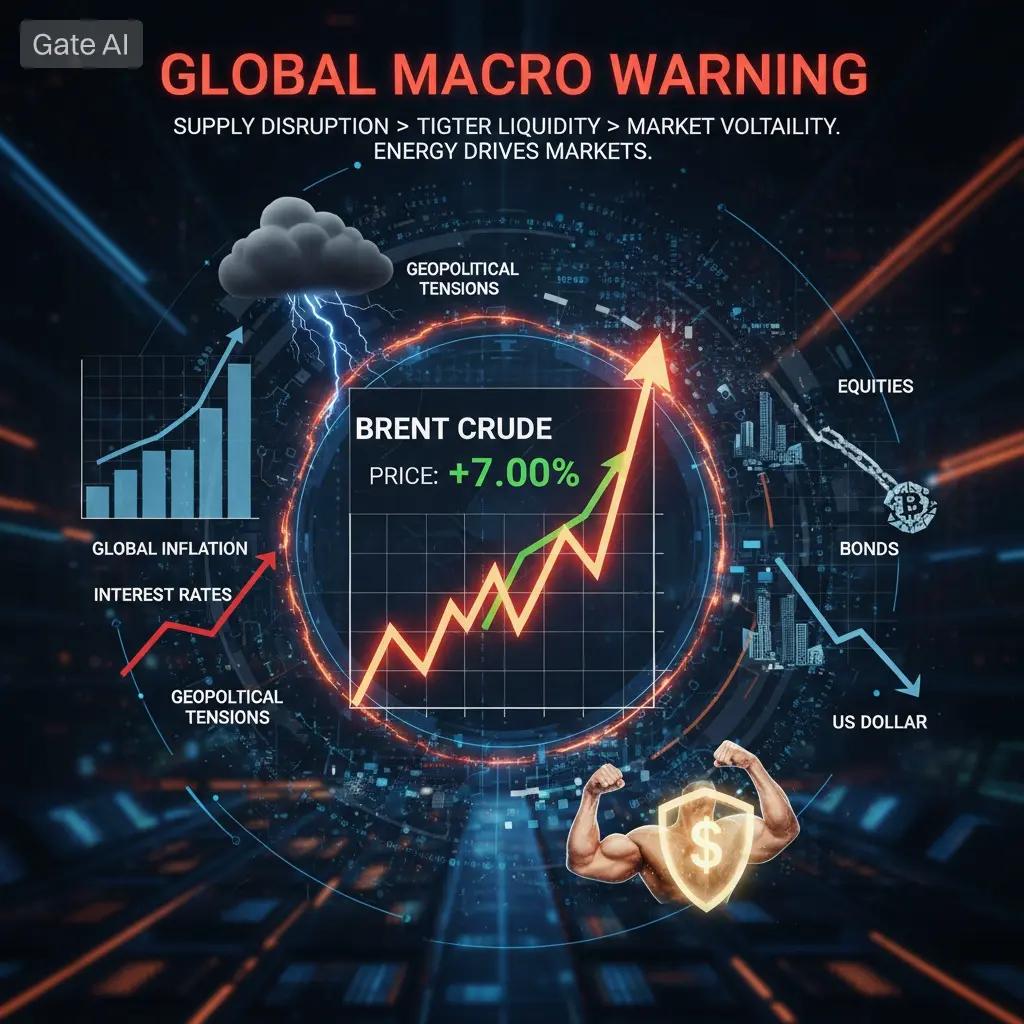
The geopolitical backdrop offers temporary relief. US-Iran tensions de-escalated. The Strait of Hormuz reopened. Risk assets caught a bid. But do not confuse relief with trend reversal. Bitcoin remains range-bound between $72,000 support and $78,000 resistance. Until we see a decisive break above $80,000 with volume, this is a trader's market, not an investor's market.
The Ahr999 "bottom-fishing" indicator just crossed0.45, entering the "dollar-cost averaging zone." Historically, this suggests accumulation opportunity. But history also shows Bitcoin can stay in this zone for months before moving. Patience is not just a virtue here. It is survival.
Who Is Quietly Gathering Strength?
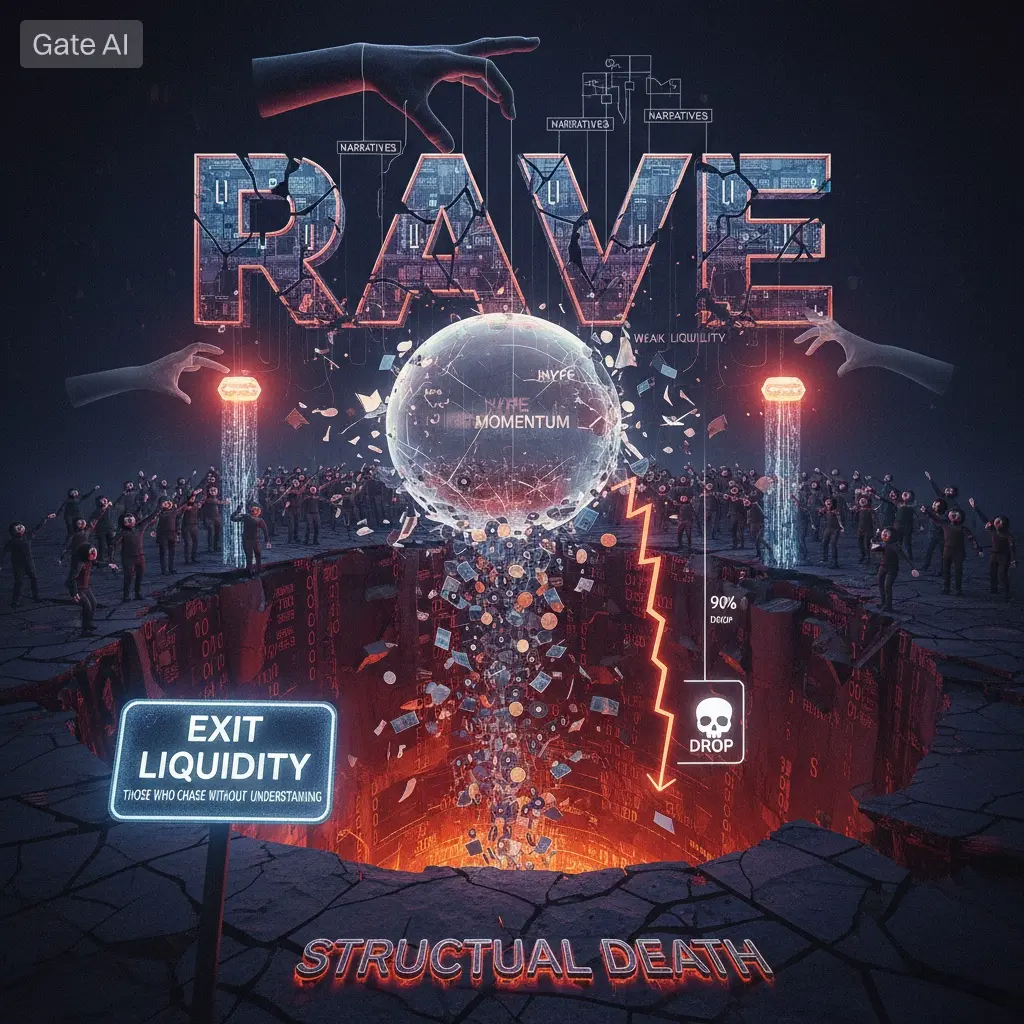
The real action is not in the majors. It is in the wreckage. RAVE collapsed89.38% in24 hours, from $27 to $2.80. Over $43 million in liquidations. This is not "gathering strength." This is a massacre. If you are hunting for strength, look elsewhere.
REQ gained69.68%, FIRE jumped60.11%, XYM rose50.64%. These are low-cap, low-volume moves. The kind of pumps that trap retail traders chasing momentum. The top loser list tells the real story: AIOT down54.9%, TAKE down37.54%, FHE down36.56%. Meme coins like "我踏马来了" cratered37.27%. This is risk-off behavior dressed in weekend volatility.
The institutional narrative remains intact. Morgan Stanley launched a Bitcoin ETF. Arkham identified their address holding1,348 BTC worth over $102 million. Korean government confirmed2026 spot ETF plans. These are long-term bullish signals. But they do not change the weekend price action. Smart money accumulates quietly. Dumb money chumps headlines.
Signals That Could Break the Calm
Three catalysts demand attention:
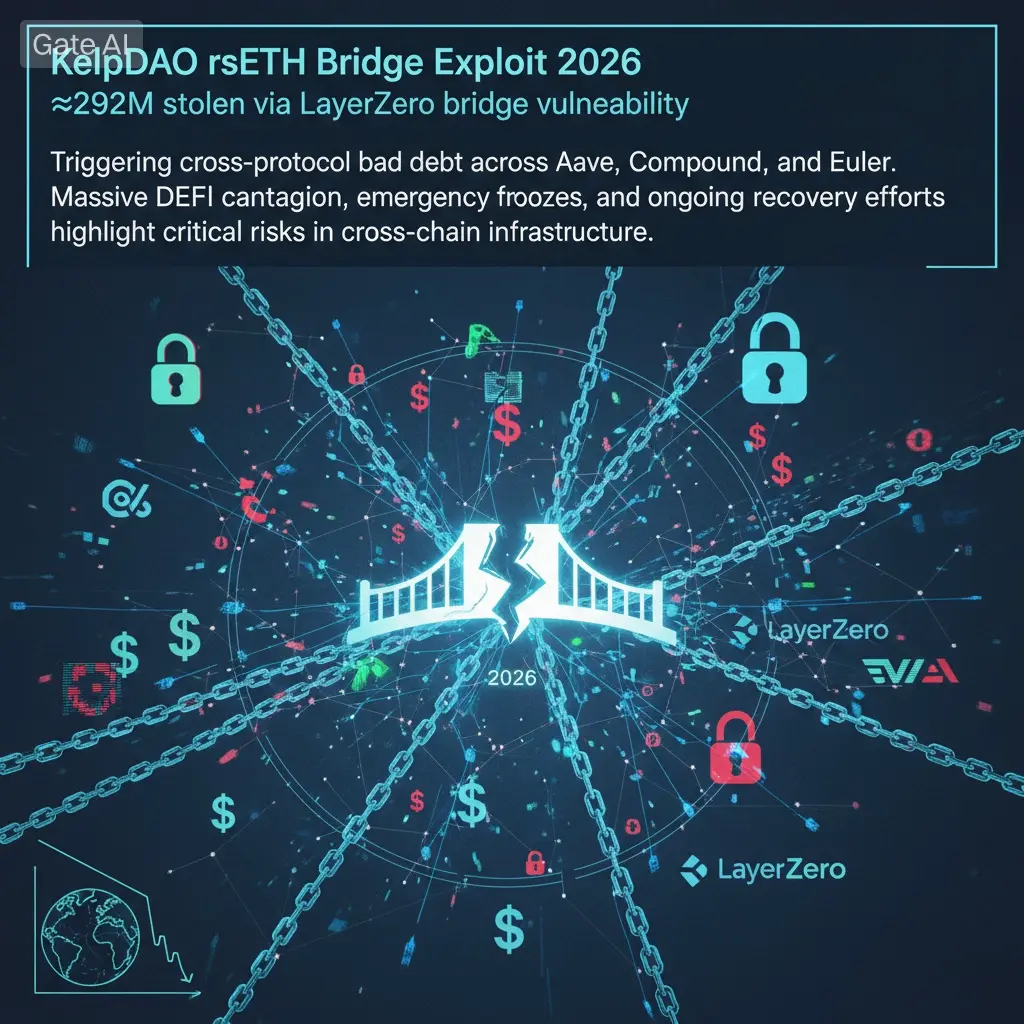
First, the KelpDAO exploit. A hacker drained116,500 rsETH worth $292 million through a LayerZero bridge vulnerability. The attacker deposited stolen rsETH into Aave, borrowed ETH, and created bad debt. Justin Sun withdrew65,584 ETH ($154 million) from Aave as a precaution. Aave froze rsETH markets. ETH utilization hit100%. This is not contained. Cross-chain bridge risks are systemic. If you hold assets in restaking protocols or cross-chain bridges, reassess your exposure immediately.
Second, the RAVE collapse. From $150 million market cap to $66 million in hours. Contract liquidations exceeded $43 million. This is what happens when leveraged positions unwind. The lesson is not "avoid altcoins." The lesson is "respect risk management." Every position needs a stop loss. Every trade needs position sizing. The market does not care about your conviction.
Third, ETF flows versus price action divergence. Record inflows failed to sustain prices above $78,000. This suggests distribution at higher levels. Institutional buying is real. But it is not infinite. If ETF flows slow while price drifts lower, the next leg down begins. Watch the weekly close. A close below $74,000 opens the door to $70,000 and lower.
Weekend trading is not about catching the next10x. It is about not becoming exit liquidity. The market is neither fully recovering nor continuing to cool. It is waiting. Waiting for the next macro catalyst. Waiting for liquidity to shift. Waiting for retail to give up and go back to their day jobs.
Your watchlist should focus on three things:
1. Bitcoin dominance. If BTC holds above $75,000 while alts bleed, capital is rotating to safety. This is bearish for altseason hopes.
2. ETH/BTC ratio. Currently weak. ETH underperformed BTC this week despite ETF inflows. If this continues, Ethereum's "ultrasound money" narrative faces serious challenges post-exploit.
3. Funding rates. Negative funding on perpetuals suggests shorts are paying longs. This creates conditions for short squeezes. But squeezes fail without spot follow-through. Watch for divergences.
The "holding cash and sleeping among flowers" strategy is not lazy. It is sophisticated. Cash is a position. Cash earns yield in stablecoins. Cash avoids drawdowns. The traders who survive this phase will have capital ready when real opportunity emerges.
Do not confuse activity with progress. Do not confuse noise with signal. The market will test your patience before it rewards your conviction. The weekend is a trap for bored traders. Stay disciplined. Stay liquid. Stay alive.
#WeekendTrading #CryptoBrief #MarketAnalysis #GateSquare
repost-content-media
  • Reward
  • Comment
  • Repost
  • Share
Gate Square Weekend Session: #周末交易计划
The weekend in crypto is often misunderstood. Retail treats it like downtime, institutions treat it like a positioning window, and professionals treat it like a silent battlefield where liquidity thins, narratives sharpen, and traps become easier to set. The idea that “nothing happens on weekends” is not just outdated—it is financially dangerous. Price may slow, but structure never sleeps.
At Gate Square, the conversation is not about whether to trade or not. It is about how to think when the noise fades and only intent remains.
---
☕ Weekend Slow Life vs S
BTC2,37%
post-image
Dubai_Prince
Gate Square Weekend Session: #周末交易计划
The weekend in crypto is often misunderstood. Retail treats it like downtime, institutions treat it like a positioning window, and professionals treat it like a silent battlefield where liquidity thins, narratives sharpen, and traps become easier to set. The idea that “nothing happens on weekends” is not just outdated—it is financially dangerous. Price may slow, but structure never sleeps.
At Gate Square, the conversation is not about whether to trade or not. It is about how to think when the noise fades and only intent remains.
---
☕ Weekend Slow Life vs Strategic Positioning
There are two types of market participants this weekend:
The first type closes charts, convinces themselves that inactivity equals discipline, and steps away hoping Monday will provide clarity.
The second type understands that weekends are not for aggressive execution—but for strategic observation, recalibration, and quiet accumulation planning.
“Holding cash and sleeping among flowers” is not laziness. It is a calculated stance. Cash is a position. Patience is a strategy. But only if it is backed by structured thinking—not emotional avoidance.
The key question is not whether you trade.
The key question is whether you are positioning intelligently for what comes next.
---
💬 Chat Topic 1: Full Recovery or Continued Cooling?
This is the core debate—and most participants are asking the wrong version of it.
The market is not in a binary state of “recovering” or “cooling.” It is in a transitional phase, where liquidity, sentiment, and macro narratives are temporarily misaligned.
A full recovery requires three elements:
Sustained spot demand, not just derivatives-driven price action
Positive funding stability without overheating
Macro alignment (risk-on sentiment, stable yields, and no external shocks)
Right now, what we are seeing is partial alignment at best.
Price stabilization does not equal recovery. Consolidation at elevated levels often masks distribution. Similarly, pullbacks do not automatically signal weakness—they can be controlled resets designed to rebuild structure.
The smarter framing is this:
Are we seeing absorption or exhaustion?
If bids continue to absorb sell pressure without aggressive downside expansion, the market is building a base. If volume dries and rebounds weaken, the structure is fragile.
The weekend will not give you the answer—but it will give you clues.
Watch how price behaves in low liquidity:
Does it drift lower slowly (passive weakness)?
Does it spike down and get bought instantly (hidden strength)?
Does it compress tightly (energy building for expansion)?
This is not about predicting direction. It is about identifying intent.
---
💬 Chat Topic 2: Who in Your Watchlist Is Quietly Gathering Strength?
The biggest opportunities never announce themselves loudly.
While most traders chase visible momentum, professionals track silent accumulation—assets that are not trending, not hyped, but structurally improving beneath the surface.
What does “quiet strength” actually look like?
Higher lows forming without aggressive breakout attempts
Stable volume during market dips
Relative strength against Bitcoin during minor corrections
Tight consolidation ranges after previous impulse moves
These are not exciting charts. They do not go viral. But they are often where the next expansion begins.
Weekend conditions amplify this dynamic. With reduced participation, weak assets fade faster, while strong assets hold structure.
Your watchlist should not just be a list of coins.
It should be a ranking system of behavior:
Which assets refuse to break down?
Which ones recover faster after dips?
Which ones attract volume at key levels?
Strength is not defined by how high something moves.
It is defined by how well it resists falling.
---
💬 Chat Topic 3: What Signals Could Break the Calm?
Calm markets are not safe markets. They are compressed markets.
And compression leads to expansion.
The danger is that most participants wait for confirmation after the move begins—when risk is already elevated and opportunity has diminished.
Instead, focus on early disruption signals:
1. Liquidity Sweeps
Sudden wicks in low-liquidity environments are not random. They are deliberate. Weekend sweeps often test both sides of the book to identify weak positioning.
2. Funding Rate Shifts
If funding flips aggressively during a quiet market, it signals positioning imbalance. This often precedes sharp moves designed to punish crowded trades.
3. Open Interest Behavior
Rising open interest with flat price = positions building without resolution.
Falling open interest with stable price = leverage being flushed quietly.
Both scenarios signal that a larger move is approaching.
4. Correlation Breakdowns
If altcoins begin to diverge from Bitcoin behavior, it indicates rotation—not stability. Rotation phases often precede volatility spikes.
5. Order Book Imbalances
Thin books can exaggerate moves. If you see large walls appearing and disappearing, it is not support—it is intent manipulation.
---
Step-by-Step Discussion: How to Approach This Weekend
Step 1: Define Your Bias, Then Challenge It
Do not enter the weekend neutral. Form a thesis—but actively look for reasons it could be wrong. This keeps you adaptive.
Step 2: Reduce Execution, Increase Observation
This is not the time for overtrading. It is the time for pattern recognition. Let the market show its hand.
Step 3: Track Behavior, Not Just Price
Price is the outcome. Behavior is the signal. Focus on reactions, not levels.
Step 4: Prepare Scenarios, Not Predictions
Map out what you will do if the market breaks up, down, or stays flat. Clarity before movement creates confidence during movement.
Step 5: Protect Capital First
Opportunities are infinite. Capital is not. Survive the uncertain phases to dominate the clear ones.
---
Feature Focus: Gate Square Weekend Intelligence Edge
Gate Square is not just a discussion space—it is a real-time sentiment engine.
The advantage is not in having information. Everyone has access to data.
The advantage is in interpreting collective intelligence faster than the market moves.
Use Gate Square this weekend to:
Compare your thesis against other serious traders
Identify consensus—and more importantly, over-consensus
Detect early narrative shifts before they hit mainstream channels
Stress-test your ideas in a competitive environment
The traders who win are not the ones who avoid noise.
They are the ones who extract signal from it.
---
Final Perspective
This weekend is not about making big moves.
It is about making better decisions.
The market is pausing—but it is not resting. Beneath the surface, positioning is shifting, narratives are forming, and liquidity is preparing for its next test.
If you approach this weekend passively, you will react next week.
If you approach it strategically, you will be ready before the move begins.
---
Call to Action
Join the discussion on Gate Square now. Share your bias, challenge others, refine your strategy, and position yourself ahead of the next move. The market rewards those who prepare in silence—not those who chase in noise.
#CryptoStrategy #WeekendTrading #MarketStructure #GateSquare
repost-content-media
  • Reward
  • Comment
  • Repost
  • Share
#USStocksHitRecordHighs
US Stocks Hit Record Highs: A Comprehensive Analysis
The US equity markets have demonstrated remarkable resilience in mid-April 2026, with major indices achieving unprecedented milestones despite ongoing geopolitical tensions. The S&P 500 breached the psychological 7,000 barrier for the first time, closing at approximately 7,126 by April 17, while the Nasdaq Composite surged past 24,000 to reach 24,468, marking its eleventh consecutive daily gain—the longest winning streak since 2009. The Dow Jones Industrial Average also participated in this rally, climbing to 49,447.
post-image
Dubai_Prince
#USStocksHitRecordHighs
US Stocks Hit Record Highs: A Comprehensive Analysis
The US equity markets have demonstrated remarkable resilience in mid-April 2026, with major indices achieving unprecedented milestones despite ongoing geopolitical tensions. The S&P 500 breached the psychological 7,000 barrier for the first time, closing at approximately 7,126 by April 17, while the Nasdaq Composite surged past 24,000 to reach 24,468, marking its eleventh consecutive daily gain—the longest winning streak since 2009. The Dow Jones Industrial Average also participated in this rally, climbing to 49,447. Year-to-date performance has been impressive: Nasdaq leading with a 5.2% gain, followed by S&P 500 at 4.1%, and Dow at 2.9%.
Geopolitical De-escalation as Primary Catalyst
The most significant driver behind this rally has been the de-escalation signals emerging from the US-Iran conflict. President Trump's statement that the war was "very close to over" provided substantial relief to risk assets. The implementation of a ten-day ceasefire between Israel and Lebanon starting April 16 further reinforced optimism. Perhaps most critically, Iran's foreign minister confirmed that the Strait of Hormuz—responsible for approximately 20% of global oil shipments—remained "completely open." This development triggered a dramatic 10% collapse in crude oil prices, with WTI falling to $84.85 per barrel from recent highs above $91. The energy cost relief particularly benefited airline stocks, with Delta Air Lines surging 6-10%, while broader market sentiment improved as inflationary pressure from oil dissipated.
Technology Sector Leadership
Mega-cap technology companies contributed approximately 40% of the S&P 500's gains during this period. Tesla advanced 7.6% on April 15 alone, while the Magnificent Seven cohort showed broad strength with only Amazon lagging. Artificial intelligence and quantum computing developments provided additional momentum: Meta's collaboration with Broadcom on AI chips, IonQ's 17% surge in quantum computing, and Nvidia's continued innovation in AI models all captured investor attention. Taiwan Semiconductor Manufacturing Company's announcement of a 58% profit jump in Q1, driven by insatiable AI demand, served as a powerful catalyst for the entire semiconductor ecosystem and underpinned the Nasdaq's exceptional performance.
Economic Fundamentals and Monetary Policy Expectations
Lower-than-expected wholesale inflation data supported growing expectations for Federal Reserve rate cuts later in 2026. This macroeconomic backdrop, combined with resilient corporate earnings—exemplified by PepsiCo's volume growth and TSMC's AI-driven profitability—created a favorable environment for equity appreciation. The market's ability to look through geopolitical noise and focus on fundamental strength demonstrates mature investor behavior.
Technical and Market Structure Observations
This rally represents a significant recovery from the March-April pullback that saw indices decline approximately 5%. The speed and magnitude of the rebound highlight the underlying bid for US equities, even as risks remain regarding the durability of the Middle East ceasefire. The Nasdaq's eleven-day winning streak is particularly notable given the concentration of growth stocks that typically exhibit higher volatility.
Implications for Global Markets
The US stock market's performance has historically served as a bellwether for global risk appetite. The current rally, occurring despite legitimate geopolitical concerns, suggests that capital continues to favor American equity markets for their depth, liquidity, and exposure to transformative technologies like artificial intelligence. For cryptocurrency and digital asset investors, this risk-on environment in traditional markets typically correlates with increased speculative activity in alternative assets.
Forward Outlook
While momentum remains constructive, investors should monitor several variables: the sustainability of the Israel-Lebanon ceasefire, any renewed tensions in the Strait of Hormuz, upcoming Federal Reserve communications regarding monetary policy trajectory, and the continuation of strong corporate earnings through the current reporting season. Should de-escalation hold and economic data remain supportive, the path of least resistance appears higher for US equities, potentially setting the stage for additional record highs in the coming weeks.
The convergence of geopolitical relief, technological innovation, and supportive monetary policy expectations has created a powerful tailwind for US stocks. This environment underscores the importance of maintaining diversified exposure to growth assets while remaining vigilant regarding headline risks that could quickly reverse sentiment.
#USStocks #StockMarket #RecordHighs #MarketAnalysis
repost-content-media
  • Reward
  • Comment
  • Repost
  • Share
#GatePreIPOsLaunchesWithSpaceX
From the perspective of capital markets evolution, the introduction of Gate Pre-IPOs with a focus on SpaceX ($SPCX) should not be interpreted as a simple product launch, but rather as a structural signal pointing toward the gradual convergence of private equity access and crypto-native financial infrastructure. What is being offered in this round is not direct equity ownership in the traditional sense, but a synthetic or structured exposure mechanism that mirrors the valuation trajectory and market sentiment surrounding one of the most strategically important pr
STARL-2,68%
post-image
Dubai_Prince
#GatePreIPOsLaunchesWithSpaceX
From the perspective of capital markets evolution, the introduction of Gate Pre-IPOs with a focus on SpaceX ($SPCX) should not be interpreted as a simple product launch, but rather as a structural signal pointing toward the gradual convergence of private equity access and crypto-native financial infrastructure. What is being offered in this round is not direct equity ownership in the traditional sense, but a synthetic or structured exposure mechanism that mirrors the valuation trajectory and market sentiment surrounding one of the most strategically important private companies in the world today. SpaceX, as an entity, occupies a unique position at the intersection of aerospace engineering, global communications through Starlink, defense contracting, and long-term interplanetary ambitions, which means its valuation is not merely driven by revenue multiples, but by asymmetric future potential and geopolitical relevance.
To understand why this matters, one must recognize that pre-IPO opportunities have historically been restricted to institutional capital, venture funds, and ultra-high-net-worth individuals with access to private deal flow. The introduction of SPCX within Gate Pre-IPOs challenges this exclusivity by abstracting access into a more liquid, tradable, and globally distributed format. This creates a debate worth examining: does this democratization genuinely expand opportunity, or does it introduce a layer of abstraction that retail participants may misinterpret as equivalent to direct ownership? The answer lies in understanding both the structure and the limitations. Participants are not acquiring voting rights or direct shares in SpaceX; instead, they are positioning themselves within a framework that reflects pre-IPO valuation dynamics, which can be influenced by secondary market sentiment, anticipated IPO pricing, and macro-level capital flows into frontier technology sectors.
From a strategic standpoint, SpaceX represents a high-conviction narrative asset. Its achievements—reusable rockets, cost compression in launch economics, and the rapid deployment of a global satellite internet network—have already redefined industry baselines. However, the valuation debate remains complex. Bulls argue that SpaceX is not just an aerospace company but a vertically integrated infrastructure layer for the future digital economy, potentially rivaling telecom giants through Starlink alone. Bears, on the other hand, question the sustainability of its capital-intensive model, regulatory exposure, and the timeline for monetizing its most ambitious projects, including Mars colonization. This divergence in perspective is precisely what makes SPCX an intellectually and financially engaging pre-IPO exposure.
Moving to the subscription mechanics and rules for this round, it is essential to approach participation with procedural clarity rather than speculative enthusiasm. The subscription process is structured within a defined time window, during which eligible users must commit funds to express their interest in acquiring SPCX allocation. Eligibility typically requires full account verification (KYC compliance), ensuring that participants meet regulatory and platform-specific standards. This is not a trivial step; it reflects the increasing alignment between crypto platforms and global compliance expectations, especially when dealing with instruments that bridge into traditional financial domains.
Once eligibility is established, participants must ensure sufficient balance availability within their accounts prior to subscription. The platform enforces minimum and maximum subscription thresholds, which serve dual purposes: preventing excessive concentration by a small number of participants while also maintaining operational efficiency in allocation. This introduces an important strategic decision for users—whether to commit aggressively within the upper limit to maximize potential allocation or to adopt a more conservative stance given the uncertainty inherent in proportional distribution systems.
The allocation mechanism itself is a critical point of understanding and often a source of misconception. In scenarios where total subscription demand exceeds available allocation, which is highly probable given the global recognition of SpaceX, the distribution is not guaranteed to be fully satisfied. Instead, allocation may occur on a proportional basis or through a weighted system that reflects the total demand pool. This means that even a large subscription does not ensure a correspondingly large allocation, thereby introducing an element of probabilistic outcome rather than deterministic acquisition. From a game-theoretic perspective, this creates a competitive environment where participants must anticipate aggregate demand rather than act in isolation.
Another key procedural aspect is the temporary locking of funds during the subscription and allocation phase. This is often overlooked but has significant implications for liquidity management. During this period, committed funds cannot be redeployed into other trading opportunities, which introduces an opportunity cost. For active traders, this trade-off must be carefully evaluated—participating in SPCX exposure versus maintaining liquidity for short-term market movements. This is particularly relevant in volatile crypto markets where timing and flexibility can materially impact overall portfolio performance.
Risk disclosure is not merely a formal requirement but a substantive consideration. Pre-IPO exposure, especially in a synthetic or structured format, carries multiple layers of risk: valuation risk, liquidity risk, structural risk, and narrative risk. Valuation risk arises from the possibility that the implied price of SPCX does not align with eventual public market pricing, should an IPO occur. Liquidity risk reflects the potential limitations in secondary market trading depth. Structural risk pertains to the nature of the instrument itself—participants must understand what they are actually holding. Narrative risk, perhaps the most underestimated, stems from shifts in market sentiment toward SpaceX or the broader space economy sector.
In a broader sense, this offering represents an experiment in financial evolution. It challenges the traditional boundaries between private and public markets, raises questions about accessibility versus complexity, and highlights the increasing role of crypto platforms as intermediaries in global capital formation. For participants, the opportunity is not just to gain exposure to SpaceX, but to engage with a new paradigm of investment infrastructure that may define the next decade of financial innovation. However, with this opportunity comes the responsibility to move beyond surface-level enthusiasm and engage with the underlying mechanics, assumptions, and risks in a disciplined manner.
Ultimately, the Gate Pre-IPOs SPCX round should be approached neither as a guaranteed pathway to outsized returns nor as an overly complex instrument to be dismissed outright. It exists in a nuanced middle ground where informed participation can unlock meaningful exposure, while uninformed engagement can lead to misaligned expectations. The distinction between these outcomes lies entirely in the depth of understanding brought into the process.
#GatePreIPOs #SpaceX #CryptoInvesting #PrivateMarkets
repost-content-media
  • Reward
  • Comment
  • Repost
  • Share
#Gate13thAnniversaryLive
THIRTEEN YEARS OF PIONEERING EXCELLENCE: GATE'S EVOLUTION FROM A MODEST EXCHANGE TO A GLOBAL DIGITAL ASSET POWERHOUSEThe cryptocurrency landscape has witnessed the meteoric rise and catastrophic fall of countless platforms over the past decade, yet Gate stands as a testament to resilience, innovation, and unwavering commitment to user empowerment. As we celebrate the monumental milestone of Gate's13th anniversary, we are not merely commemorating the passage of time but rather acknowledging thirteen years of relentless pursuit toward building the most comprehensive, se
post-image
Dubai_Prince
#Gate13thAnniversaryLive
THIRTEEN YEARS OF PIONEERING EXCELLENCE: GATE'S EVOLUTION FROM A MODEST EXCHANGE TO A GLOBAL DIGITAL ASSET POWERHOUSEThe cryptocurrency landscape has witnessed the meteoric rise and catastrophic fall of countless platforms over the past decade, yet Gate stands as a testament to resilience, innovation, and unwavering commitment to user empowerment. As we celebrate the monumental milestone of Gate's13th anniversary, we are not merely commemorating the passage of time but rather acknowledging thirteen years of relentless pursuit toward building the most comprehensive, secure, and technologically advanced digital asset ecosystem in the world. This is not simply an anniversary; it is a declaration of dominance, a celebration of50 million registered users who have chosen Gate as their trusted gateway to the future of finance, and a bold proclamation that the next thirteen years will redefine the very fabric of how humanity interacts with digital value.
THE FOUNDATION OF TRUST: UNPARALLELED SECURITY AND TRANSPARENCYIn an industry plagued by hacks, collapses, and regulatory uncertainty, Gate has distinguished itself through an unwavering commitment to security and transparency that few competitors can match. The platform's reserve coverage ratio of125% represents not merely a number but a profound statement of financial integrity, with total reserves valued at approximately9.478 billion dollars ranking Gate among the top four platforms globally. This is not accidental success but the deliberate result of thirteen years of meticulous risk management, rigorous compliance frameworks, and a fundamental philosophy that user assets must be protected above all else. While other exchanges have faltered under the weight of their own hubris, Gate has methodically constructed a fortress of trust spanning multiple jurisdictions including Malta, Cyprus, Bahamas, Japan, United States, Australia, and Dubai, each license representing another layer of legitimacy in an often-lawless industry. The implementation of Gate Vault provides institutional-grade security solutions that transform the anxiety of asset protection into the confidence of absolute safety, allowing traders to focus on strategy rather than survival.
THE MULTI-ASSET REVOLUTION: BRIDGING TRADITIONAL AND DIGITAL FINANCEPerhaps no single development better encapsulates Gate's evolution than its aggressive expansion into multi-asset trading, a strategic pivot that recognizes the artificial boundaries between traditional finance and cryptocurrency are dissolving before our eyes. The dedicated TradFi trading section represents a masterstroke of foresight, incorporating tokenized assets across equities, commodities, indices, foreign exchange, and metals within a unified environment that eliminates the friction of managing multiple accounts across disparate platforms. This is not merely convenience; it is the democratization of access, the removal of barriers that have historically excluded retail investors from sophisticated financial instruments. When February2026 spot trading volume exceeded74 billion dollars with an11% month-over-month increase, this was not speculative mania but rather evidence that Gate has successfully positioned itself as the premier destination for traders seeking exposure to both digital and traditional markets. The derivatives trading segment commanding approximately11% market share further cements Gate's status among the global elite, proving that the platform can compete not merely in volume but in the sophistication of its product offerings.
THE DECENTRALIZED FRONTIER: GATE DEX AND ON-CHAIN INFRASTRUCTUREWhile centralized exchanges remain the primary gateway for most users, Gate has demonstrated remarkable foresight in developing its decentralized ecosystem, recognizing that the future of finance will be increasingly on-chain and user-sovereign. The upgraded Gate DEX now supports a comprehensive suite of on-chain financial products including spot trading, futures, and swaps, with Gate Perp DEX processing more than one million monthly transactions. This is not a side project or an afterthought but a parallel infrastructure designed to serve users who demand the security of self-custody without sacrificing the liquidity and functionality of professional trading platforms. The astonishing milestone of100 million on-chain addresses on Gate Layer represents one of the most significant achievements in blockchain infrastructure, a scale that rivals the largest Layer1 networks and demonstrates Gate's technical capabilities extend far beyond exchange operations. The introduction of Alpha Points and the seamless integration of on-chain asset discovery with professional trading tools creates a hybrid experience that bridges the gap between DeFi experimentation and institutional-grade execution.
ARTIFICIAL INTELLIGENCE: THE NEXT EVOLUTIONARY LEAPAs the industry stands at the precipice of an AI revolution, Gate has positioned itself at the vanguard of this transformation through initiatives that merge artificial intelligence with financial services in ways that were science fiction merely years ago. GateAI and Gate for AI represent not incremental improvements but fundamental reimaginings of how users interact with markets, providing market interpretation, strategy insights, and trading assistance that augment human decision-making with machine intelligence. The introduction of GateRouter, an AI aggregation portal enabling access to multiple large language models through a single interface, demonstrates Gate's understanding that the future belongs to platforms that can intelligently route users to optimal solutions rather than forcing them into rigid frameworks. GateClaw, the native AI agent designed to lower barriers to automated trading, transforms complex algorithmic strategies from the domain of quantitative hedge funds into accessible tools for everyday traders. This is not about replacing human judgment but amplifying it, providing users with the analytical firepower of institutional trading desks while maintaining the intuitive interface that has made Gate beloved by millions.
THE13TH ANNIVERSARY CELEBRATION: A FESTIVAL OF REWARDS AND RECOGNITIONThe #Gate13thAnniversaryLive celebration transcends typical marketing campaigns, representing a genuine appreciation for the community that has built Gate into what it is today. The Early Bird Boarding Plan invites users to participate in daily quiz challenges to win exclusive boarding tickets, lucky draw chances, and cabin upgrade eligibility while sharing in a million-dollar prize pool. This is gamification with substance, transforming routine platform engagement into an adventure of discovery and reward. The completion of designated tasks spanning sharing, inviting friends, trading, earning, and VIP upgrades generates additional lucky draw opportunities, ensuring that every interaction with the platform contributes to potential rewards. The13 Time Capsule items, gradually released throughout the celebration, create a collectible experience that rewards long-term engagement, with users who complete the full collection earning chances to participate in draws for the13th Anniversary Mystery Gift Pack. The Gate DEX New World Explorers Program with its69,300 USDT prize pool offers multiple pathways to rewards through trading exploration footprints, endurance voyages, on-chain interactions, and referrals, ensuring that every type of user from the casual holder to the professional trader can participate meaningfully.
GLOBAL PRESENCE: FROM PARIS TO HONG KONG AND BEYONDThe13th anniversary celebration extends far beyond digital interfaces, manifesting in prestigious offline events that demonstrate Gate's status as a global institution. The participation in Paris Blockchain Week and Hong Kong Web3 Carnival places Gate alongside the most influential voices in the industry, while the exclusive GATE GALA13 anniversary dinner at Rosewood Hong Kong gathers more than300 guests from leading institutions, partners, and key opinion leaders. The spectacular F1 Red Bull Racing parade through Victoria Harbour and the Racing the Future exhibition at K11 MUSEA showcase Gate's partnership with Oracle Red Bull Racing, bringing top-tier motorsport culture into urban landmark scenes and demonstrating how cryptocurrency branding can transcend its digital origins to capture mainstream imagination. These are not vanity events but strategic investments in brand recognition, trust-building, and community cultivation that will yield dividends for years to come.
THE FOUNDER'S VISION: DR. HAN'S UNWAVERING COMMITMENTAt the center of Gate's success stands founder and CEO Dr. Han, whose vision has guided the platform from its inception in2013 through multiple market cycles, regulatory challenges, and technological disruptions. The in-depth dialogues conducted as part of the anniversary celebration offer rare insights into the strategic thinking of one of the industry's most experienced leaders, covering industry trends, platform strategy, and future development. Dr. Han's participation in the GATE GALA13 and various global industry exchanges demonstrates a leadership style that prioritizes direct engagement with the community over distant corporate management. This is not merely public relations but a genuine commitment to transparency and accountability that has earned Gate the loyalty of millions of users who recognize that behind the technology and the trading interfaces stands a leader who has consistently prioritized long-term sustainability over short-term gains.
THE COMPETITIVE ADVANTAGE: WHY GATE CONTINUES TO WINIn an industry characterized by intense competition and rapid technological change, Gate's sustained success can be attributed to several distinct competitive advantages that competitors struggle to replicate. The platform's support for over4,500 digital assets provides unparalleled diversity, ensuring that users can access emerging opportunities before they reach mainstream attention. The consistent ranking among top exchanges in both spot and derivatives trading volumes demonstrates that Gate has successfully balanced breadth of offerings with depth of liquidity, avoiding the trap of listing low-quality assets while maintaining competitive markets for established cryptocurrencies.
THE FUTURE VISION: YOUR GATEWAY TO iWEB3The anniversary theme Your Gateway to iWeb3 encapsulates Gate's ambitious vision for the future, one where the boundaries between centralized and decentralized finance, between artificial intelligence and human judgment, between traditional assets and digital tokens, dissolve into a seamless ecosystem of financial opportunity. The iWeb3 concept represents not merely Web3 with AI augmentation but a fundamental reimagining of how users will interact with digital value, where intelligent agents handle routine operations, where cross-chain interoperability is invisible to the end user, and where the full spectrum of global financial assets is accessible through a single interface.
THE CALL TO ACTION: JOIN THE CELEBRATION,
This is your moment. The celebration has begun, the prizes are waiting, and the future is being built. Do not watch from the sidelines as others claim the rewards and opportunities that rightfully belong to those with the vision to act. Connect your Gate Wallet, complete your first exploration footprint, join the live streams, invite your network, and stake your claim in the iWeb3 revolution. The next thirteen years will be defined by those who recognized the potential of this moment and had the courage to act upon it.
Your Gateway to iWeb3 awaits. Join the #Gate13thAnniversaryLive celebration now and become part of financial history.
#Gate13thAnniversaryLive #GateExchange #DigitalFinance
repost-content-media
  • Reward
  • Comment
  • Repost
  • Share
#AnthropicvsOpenAIHeatsUp
The market is no longer reacting. It is recalibrating.
What began as a late-March relief rally has now transitioned into something far more dangerous for anyone still underestimating it — a structurally reinforced momentum phase driven by real capital, not speculative optimism. This is not a bounce. This is reallocation at scale.
The shift is subtle, but critical. Previous cycles were narrative-led. This one is capital-validated.
As geopolitical pressure temporarily eased, it did not just remove uncertainty — it unlocked sidelined institutional liquidity. That liquid
BTC2,37%
ETH1,25%
SOL1,46%
post-image
Dubai_Prince
#AnthropicvsOpenAIHeatsUp
The market is no longer reacting. It is recalibrating.
What began as a late-March relief rally has now transitioned into something far more dangerous for anyone still underestimating it — a structurally reinforced momentum phase driven by real capital, not speculative optimism. This is not a bounce. This is reallocation at scale.
The shift is subtle, but critical. Previous cycles were narrative-led. This one is capital-validated.
As geopolitical pressure temporarily eased, it did not just remove uncertainty — it unlocked sidelined institutional liquidity. That liquidity did not scatter randomly. It moved with precision into sectors already demonstrating measurable dominance, with artificial intelligence sitting at the center of that gravity field.
The escalating competition between Anthropic and OpenAI is no longer a headline battle. It is a capital war. And capital wars leave footprints — in infrastructure spending, in data center expansion, in semiconductor demand, and ultimately in equity market structure.
This is where most participants misread the situation.
They see innovation. Markets see expenditure.
Hundreds of billions are no longer being promised — they are being deployed. Compute capacity is being locked in. Training clusters are being scaled. Enterprise integration is accelerating. This transforms AI from a speculative narrative into an economic backbone.
The significance of this cannot be overstated.
An estimated $650B+ in AI-related capital expenditure is not just growth fuel — it is a volatility suppressor. It creates a structural floor beneath markets because it anchors expectations to real, ongoing deployment. Pullbacks in such an environment are not signals of weakness. They are friction points within an expanding system.
This is why dips are being bought faster than they can develop.
At the same time, the oil market is no longer behaving as a destabilizing force. Elevated prices, once a trigger for panic, are now being absorbed as a known variable. Stability — even at higher levels — has replaced unpredictability. Markets are no longer reacting emotionally to inflation signals. They are pricing probabilities.
This is a higher level of market maturity.
Risk is no longer defined by presence. It is defined by deviation.
Meanwhile, mega-cap equities have undergone a quiet but profound transformation. They are no longer pure growth vehicles. They have evolved into hybrid liquidity anchors — absorbing capital flows in a way traditionally reserved for sovereign debt or defensive assets.
When capital chooses equities over bonds for stability, the entire framework of portfolio construction shifts.
This is exactly what we are witnessing.
Double-digit index performance is not a result of retail euphoria. It is the outcome of institutional necessity — a search for scalable, reliable earnings in an environment where alternatives are increasingly constrained.
This macro structure directly feeds into crypto — but not uniformly.
Bitcoin is not leading by accident. It is functioning as a liquidity gateway — the first recipient of macro capital entering the digital asset space. Its current consolidation is being misinterpreted by many as stagnation. In reality, it is absorption.
Positions are being built, not unwound.
Ethereum, in contrast, operates on a delayed response curve. Its underperformance is structural, not fundamental. Staking mechanics, yield frameworks, and network evolution reduce its sensitivity during early liquidity phases. But history shows that once rotation begins, it accelerates aggressively.
Then comes the final layer — high-beta ecosystems.
Assets like Solana do not lead cycles. They amplify them.
When liquidity expands beyond institutional channels and retail participation increases, these ecosystems become the primary beneficiaries. Their volatility is not a weakness — it is a function of accessibility and speculative velocity.
This creates a clear hierarchy of capital flow.
Liquidity does not arrive everywhere at once. It sequences.
First into macro proxies. Then into foundational infrastructure. Finally into high-risk expansion layers.
Understanding this sequence is no longer optional. It is an edge.
However, this entire structure rests on a fragile equilibrium.
Interest rates remain the ultimate constraint.
The US 10-year Treasury yield is the pressure valve. If it rises aggressively beyond tolerance thresholds, liquidity tightens. And when liquidity tightens, even the strongest narratives begin to fracture.
AI spending can support markets. It cannot override monetary contraction indefinitely.
Volatility is the second fault line.
Sustained low volatility creates confidence — but also complacency. In a system increasingly driven by algorithms and leverage, a sudden spike does not just trigger reactions. It accelerates them. Position unwinds become cascades.
Stability, in this environment, is conditional — not permanent.
Geopolitical calm is another illusion worth questioning.
Markets do not require peace. They require predictability. As long as risks remain contained, momentum can persist. But any unexpected escalation introduces nonlinear repricing.
And that is where most participants are still exposed.
They are positioned for continuation, not disruption.
The deeper truth is this:
The market has transitioned from storytelling to verification.
Investors are no longer asking what could happen. They are allocating based on what is already happening — real capital deployment, real earnings resilience, real liquidity flows.
This is a system becoming increasingly interconnected, increasingly data-driven, and increasingly unforgiving to those operating on outdated assumptions.
Momentum is no longer organic.
It is engineered.
Engineered through capital allocation.
Engineered through infrastructure expansion.
Engineered through strategic competition at the highest levels of technological development.
As long as these forces remain aligned, the bullish structure does not just survive — it compounds.
But if even one pillar weakens — liquidity, rates, or stability — the unwind will be just as structured as the rise.
This is not a market to blindly believe in.
This is a market to understand with precision.
Because the difference between those who win this cycle and those who get trapped is simple:
One group reacts to price.
The other tracks the forces moving it.
Choose correctly.
#CryptoMarkets #AIRevolution #Bitcoin #MacroTrends
repost-content-media
  • Reward
  • Comment
  • Repost
  • Share
#SaylorReleasesBitcoinTrackerUpdate
This is not a chart update. It is a signal. And the market has learned—sometimes too late—that ignoring these signals comes at a cost.
When Michael Saylor posts the Bitcoin Tracker, he is not sharing information. He is positioning expectation. The now-iconic “orange dots” are no longer just historical markers of accumulation—they are forward-looking indicators of intent. And intent, when backed by capital, moves markets.
To understand why this matters, you need to stop thinking like a retail trader reacting to price, and start thinking like an institution c
BTC2,37%
SATS2,66%
post-image
Dubai_Prince
#SaylorReleasesBitcoinTrackerUpdate
This is not a chart update. It is a signal. And the market has learned—sometimes too late—that ignoring these signals comes at a cost.
When Michael Saylor posts the Bitcoin Tracker, he is not sharing information. He is positioning expectation. The now-iconic “orange dots” are no longer just historical markers of accumulation—they are forward-looking indicators of intent. And intent, when backed by capital, moves markets.
To understand why this matters, you need to stop thinking like a retail trader reacting to price, and start thinking like an institution controlling supply. MicroStrategy—now operating under the identity of Strategy in market narratives—has executed one of the most aggressive treasury transformations in modern financial history. It has redefined what it means to hold Bitcoin, not as a trade, but as a reserve asset with strategic weight.
Every dot on that tracker represents a decision made under uncertainty. Not after confirmation. Not after breakouts. During fear, during drawdowns, during sideways compression—when most participants hesitate, Strategy accumulates. This is not coincidence. It is doctrine.
And here is where most people get it wrong: they treat these updates as backward-looking transparency. In reality, they function as pre-positioning signals. Historically, Saylor’s posts—often paired with minimalistic phrases like “More Orange” or “Stay Humble. Stack Sats.”—have preceded official acquisition disclosures. The pattern is no longer subtle. It is behavioral. And behavior, when consistent, becomes exploitable—if you are paying attention.
This has given rise to what traders now call the “Saylor Effect.” Not a meme, but a structural psychological feedback loop. The moment the tracker appears, expectations shift. Market participants begin pricing in future demand before it materializes. Liquidity tightens not because of immediate buying pressure, but because of anticipated absorption. This is how narratives front-run capital.
Timing amplifies the impact. These updates rarely appear during euphoric expansions. They emerge in ambiguity—when Bitcoin is consolidating, when momentum is unclear, when sentiment is fragile. This is where conviction has the highest informational value. Anyone can buy strength. Very few accumulate uncertainty at scale.
And Strategy does it repeatedly.
Recent behavior reinforces this pattern. The company has continued accumulating Bitcoin even at price levels below its average cost basis. That is not reactive trading—that is balance sheet conviction. It signals that volatility is irrelevant within their framework. Price is not the signal. Allocation is.
But the real sophistication lies beneath the surface: financing. Strategy is no longer simply issuing equity to fund purchases. It is evolving its capital structure—leveraging instruments like convertible notes and preferred shares to access liquidity without immediate dilution pressure. This is institutional engineering applied to digital asset accumulation. Traditional finance is not competing with Bitcoin here—it is being repurposed to acquire it.
This changes the game.
Because when accumulation is funded structurally rather than opportunistically, it becomes persistent. And persistent demand reshapes supply dynamics. Bitcoin is a finite asset. Every large-scale buyer who removes supply from circulation is not just investing—they are tightening the market’s future flexibility. Over time, this creates asymmetry: limited downside elasticity, expanding upside sensitivity.
The tracker, therefore, is not just a visual. It is a map of supply extraction.
From a market psychology perspective, the implications are equally powerful. Saylor has positioned himself as more than a corporate executive—he is a narrative anchor within the Bitcoin ecosystem. His signals influence not just institutional observers, but retail conviction. When he moves, he reinforces belief. When belief strengthens, selling pressure weakens. And when selling pressure weakens in a finite system, price becomes reactive to even marginal demand increases.
However—and this is where discipline separates professionals from noise—signals are not confirmations. The tracker does not guarantee immediate purchases. It suggests probability, not certainty. Those who trade it blindly without risk management are not following strategy—they are gambling on pattern repetition.
Real edge comes from interpretation, not imitation.
You do not follow Saylor. You study the behavior, understand the incentives, and position yourself within the structural flow of capital he represents.
Zooming out, this update reflects something much larger than a single company’s accumulation strategy. It marks the continued institutionalization of Bitcoin as a treasury-grade asset. This is the transition phase where Bitcoin moves from speculative allocation to strategic reserve. And once that transition matures, market behavior changes permanently.
Short-term volatility will remain. Corrections will happen. But underneath that noise, a different layer is forming—one defined by entities that do not sell, that accumulate through cycles, and that operate on timelines measured in years, not weeks.
That is the layer the tracker reveals.
So when you see the orange dots, do not ask whether price will go up tomorrow. Ask a more important question: who is removing supply today, and how consistently are they doing it?
Because in the end, markets are not driven by opinions. They are driven by actions backed by capital.
And this update is a reminder that the smartest capital in the room is still accumulating.
#Bitcoin #CryptoMarkets #InstitutionalAdoption #MarketStructure
repost-content-media
  • Reward
  • Comment
  • Repost
  • Share
#RAVECrashes90%
This was not a random crash. It was a textbook execution of how weak markets die fast and how unprepared traders get erased even faster.
A 90% collapse is not volatility — it is structural failure. When an asset loses nearly all its value within hours, it exposes one truth: there was never real strength behind the price, only momentum built on unstable ground.
RAVE did not “suddenly” crash. The conditions for this collapse were forming long before the first red candle printed. Rapid upside movement created the illusion of strength, but in reality it was a liquidity trap. Price
RAVE5,12%
post-image
Dubai_Prince
#RAVECrashes90%
This was not a random crash. It was a textbook execution of how weak markets die fast and how unprepared traders get erased even faster.
A 90% collapse is not volatility — it is structural failure. When an asset loses nearly all its value within hours, it exposes one truth: there was never real strength behind the price, only momentum built on unstable ground.
RAVE did not “suddenly” crash. The conditions for this collapse were forming long before the first red candle printed. Rapid upside movement created the illusion of strength, but in reality it was a liquidity trap. Price moved up faster than real demand could sustain, meaning every new buyer was simply providing exit liquidity for earlier participants.
This is where most traders misunderstand the market. They see price rising and assume value is increasing. In reality, in low-liquidity environments, price is not discovery — it is distortion. A small amount of capital can push prices aggressively higher, creating a false sense of opportunity. But when selling begins, the same thin liquidity turns into a vacuum.
Before the crash, the structure likely showed all classic warning signals: aggressive parabolic growth, shallow order books, concentrated token distribution, and heavy speculative volume. These are not bullish indicators — they are early signs of fragility. The stronger the move without foundation, the more violent the collapse that follows.
The psychology behind this event is even more predictable than the price action itself. First comes acceleration, where early gains attract attention. Then comes FOMO, where retail participants enter late, driven by fear of missing out rather than understanding. Then comes distribution, where informed participants quietly reduce exposure. And finally comes panic, where exits become impossible because everyone is trying to sell into disappearing liquidity.
By the time most traders react, the market is no longer functioning normally. Orders slip, spreads widen, and price drops cascade. This is not just selling — it is a chain reaction where each sell triggers the next. Liquidity does not just decrease, it vanishes.
There are only a few realistic explanations for a move of this magnitude, and none of them are bullish. Either liquidity was intentionally pulled, a vulnerability was exploited, large holders exited aggressively, or the entire price structure was artificially inflated and then released. Different causes, same outcome: collapse.
Experienced participants do not wait for confirmation after a crash. They watch the signals before it happens. Sudden wallet movements, abnormal liquidity changes, unusual transaction spikes, and shifts in holder behavior are not noise — they are early warnings. Ignoring them is not bad luck, it is poor discipline.
The most important lesson here is not about RAVE specifically. It is about how risk is mispriced by retail traders. Small-cap assets offer high upside, but they also carry asymmetric downside. You can lose far more, far faster, than you expect. Without strict risk management, participation becomes speculation, and speculation without control becomes loss.
After a 90% drop, the instinct to “buy the dip” becomes strongest. This is where most traders fail again. They confuse a destroyed structure with an opportunity. But a chart that has collapsed this deeply is not discounted — it is broken. Recovery is not impossible, but statistically it is rare and often temporary without fundamental rebuilding.
The correct approach after such an event is not action, but restraint. Wait for stabilization, observe whether liquidity returns, analyze whether the project shows transparency and response, and only then reassess. Acting too early is not bravery — it is impatience disguised as confidence.
From a broader perspective, events like this reinforce a critical market reality. Crypto remains a high-opportunity environment, but it is still dominated by inefficiencies, information gaps, and emotional decision-making. Capital that survives and grows is not the most aggressive — it is the most disciplined.
RAVE is not the first asset to collapse like this, and it will not be the last. The difference between those who lose and those who learn is simple: one group reacts to price, the other studies structure.
If you are still approaching markets based on hype, momentum, and short-term excitement, this event should reset your thinking completely. Because in this space, the market does not forgive poor positioning — it exposes it.
The real takeaway is not about what happened to RAVE. It is about what this event reveals about how markets function under stress, how liquidity behaves when pressure increases, and how quickly sentiment can shift from greed to fear.
Opportunities in crypto are real, but they are never free. Every gain comes attached with risk, and every risk ignored eventually demands payment.
The traders who last are not the ones who catch every move. They are the ones who avoid the moves that can end them.
#CryptoRisk #MarketStructure #TradingPsychology #liquidity
repost-content-media
  • Reward
  • Comment
  • Repost
  • Share
#WCTCTradingChallengeShare8MUSDT
If you think this is just another trading competition announcement, you’re already behind.
This is not a campaign. It’s a filter.
Every cycle, platforms create events that look like opportunities on the surface but are actually designed to separate participants into two categories: those who chase rewards blindly, and those who understand how to position themselves where capital, visibility, and influence converge. WCTC Season 8 is clearly the second type.
Gate’s 13th anniversary is not being celebrated with nostalgia. It is being used as leverage. The launch
Dubai_Prince
#WCTCTradingChallengeShare8MUSDT
If you think this is just another trading competition announcement, you’re already behind.
This is not a campaign. It’s a filter.
Every cycle, platforms create events that look like opportunities on the surface but are actually designed to separate participants into two categories: those who chase rewards blindly, and those who understand how to position themselves where capital, visibility, and influence converge. WCTC Season 8 is clearly the second type.
Gate’s 13th anniversary is not being celebrated with nostalgia. It is being used as leverage. The launch of the World Crypto Trading Competition Season 8 is structured to attract serious liquidity, disciplined traders, and strategic operators who understand that competitions like these are less about luck and more about controlled execution under pressure.
The headline number, up to 8 million USDT, is not there to impress beginners. It is there to attract volume, trigger competition between high-capacity traders, and amplify platform activity at a global scale. The real signal is not the size of the prize pool, but how it unlocks. It expands based on participation and verified trading volume, meaning the system rewards those who are active, consistent, and capable of sustaining performance over time. This immediately eliminates passive participants and forces engagement.
The structure itself is where the intelligence lies.
Three tracks. Three different psychological battlegrounds.
The Team Trading Contest is not about teamwork in the traditional sense. It is about leadership, influence, and network leverage. Building a team of 50+ members early is not just a requirement for bonuses, it’s a test of your ability to attract traders who trust your direction. The reward ceiling of 108,000 USDT for leaders is not given for trading alone. It is given for coordination, reputation, and strategic alignment. Weak leaders will struggle here, regardless of their individual trading skills.
The Solo Trading Contest removes every excuse. No team, no shared credit, no external support. Just your decisions, your discipline, and your execution. This is where consistency becomes visible. Anyone can have one good trade. Very few can maintain controlled performance across a full competition cycle while managing risk, volatility, and psychological pressure.
Then comes the Champions Showdown. This is where ego gets tested. Direct competition against top performers is not designed for comfort. It is designed to expose weaknesses quickly. Reaction speed, decision clarity, and emotional control become more important than strategy itself. If you hesitate, you lose. If you overtrade, you lose. If you misread momentum, you lose.
Now look at the entry incentives. A 20 USDT experience voucher for new users is not generosity. It’s onboarding acceleration. Daily reward chests with guaranteed wins are not charity. They are retention mechanics. The early team formation bonus is not just a reward. It’s a race condition designed to create urgency and early momentum. Every element is engineered to increase participation speed and platform activity.
Eligibility rules are equally deliberate. By excluding API users, high-tier VIPs, market makers, and institutional accounts, the competition removes automated advantages and levels the field. This shifts the focus back to human decision-making, timing, and adaptability. At the same time, minimum trading volume requirements ensure that only serious participants qualify for rewards. This is not a playground for low-effort participation.
The restriction on stablecoin pairs is another critical detail. It forces exposure to volatility. You cannot farm volume safely. You must engage with real market movement, where risk exists and decisions matter. This single rule transforms the competition from a volume game into a performance-driven environment.
The reward distribution timeline also reveals intent. Delayed distribution ensures post-event verification, preventing manipulation and reinforcing the platform’s stance on fair competition. The strict anti-cheating policy is not just compliance language. It is a clear message that any attempt to exploit the system will result in disqualification or worse.
Now the real question is not whether this event is worth joining.
The real question is how you approach it.
If your mindset is to “try your luck,” don’t waste your time. You will be outperformed by traders who treat this like a structured campaign. If your strategy is undefined, your risk management is weak, or your psychology is unstable, this competition will expose it quickly.
But if you understand positioning, if you can control your emotions under pressure, if you can balance aggression with discipline, and if you can adapt to changing market conditions, then this is not just a competition. It is a stage.
A stage where visibility increases. A stage where performance compounds. A stage where one strong cycle can shift your trajectory.
The difference between participants will not be knowledge. It will be execution.
And execution under competition pressure is where most fail.
Registration is already open, but timing matters. Early entry gives you positioning advantages, especially in team formation and initial activity phases. Waiting reduces optionality and limits your ability to capitalize on early incentives.
So decide clearly.
Either you enter with a structured plan, defined risk parameters, and a clear objective…
or you stay out and watch others take the rewards you hesitated on.
There is no middle ground here.
This competition will not reward intention. It will reward precision.
#WCTC #Gateio #CryptoTrading #TradingCompetition
repost-content-media
  • Reward
  • Comment
  • Repost
  • Share
#BrentOilRises
BRENT OIL SURGES 7%: TEMPORARY SPIKE OR THE START OF A GLOBAL INFLATION REPRICING?
What looks like a simple energy rally is actually something far more dangerous for global markets. Brent crude jumping 7% in a single session and reclaiming the $96 level is not a routine volatility event. It is a macro shock signal. The kind that forces central banks, equities, bonds, and crypto into synchronized reassessment.
This is not about oil alone. This is about inflation expectations being reactivated at a time when markets had already started pricing monetary easing.
The timing is criti
BTC2,37%
Dubai_Prince
#BrentOilRises
BRENT OIL SURGES 7%: TEMPORARY SPIKE OR THE START OF A GLOBAL INFLATION REPRICING?
What looks like a simple energy rally is actually something far more dangerous for global markets. Brent crude jumping 7% in a single session and reclaiming the $96 level is not a routine volatility event. It is a macro shock signal. The kind that forces central banks, equities, bonds, and crypto into synchronized reassessment.
This is not about oil alone. This is about inflation expectations being reactivated at a time when markets had already started pricing monetary easing.
The timing is critical.
Markets were leaning toward policy stabilization, risk asset recovery, and inflation normalization narratives. That entire framework is now under pressure again.
PRICE ACTION IS NOT RANDOM
Brent crude June futures surged sharply back to $96.27 per barrel after briefly collapsing in the previous session. The move from panic sell-off to aggressive rebound within days reflects one thing clearly: liquidity-driven geopolitical pricing.
WTI followed with similar strength, pushing above $90 per barrel. The widening Brent-WTI spread signals something deeper than demand shifts. It reflects regional risk repricing, particularly around maritime supply routes and geopolitical chokepoints.
This is not a technical bounce. This is forced repricing of supply risk.
THE REAL CATALYST IS SUPPLY SECURITY, NOT DEMAND
The trigger is renewed geopolitical instability centered around the Strait of Hormuz, one of the most critical energy corridors in the world.
Any disruption here does not reduce supply slightly. It threatens nearly one-fifth of global oil flows. That is not marginal. That is structural exposure.
Recent escalation involving maritime seizures, military positioning, and suspended diplomatic engagement has removed the illusion of stability that markets briefly priced in.
What changed is not only events, but expectations.
Markets went from assuming de-escalation to re-pricing escalation risk within 48 hours.
ENERGY MARKETS ARE NOW IN VOLATILITY REGIME
The energy sector is no longer reacting in smooth cycles. It is reacting in volatility bursts.
Oil has moved from a fundamentals-driven market into a geopolitics-dominated instrument.
This matters because volatility itself becomes self-reinforcing. Once traders and institutions begin pricing risk premiums into every barrel, oil stops behaving like a commodity and starts behaving like a geopolitical derivative.
Energy equities are responding accordingly. Cash flow projections for major producers are being revised upward rapidly under sustained higher oil assumptions. Midstream infrastructure is becoming strategically more valuable due to transport and routing pressure.
But this is not just an energy story. It is a global liquidity story.
INFLATION EXPECTATIONS ARE BEING REPRICED AGAIN
This is where the real macro shift begins.
Oil is not just a commodity input. It is a global inflation anchor.
A sustained move above $90–$95 changes the entire inflation baseline assumption for Q2 and beyond.
That immediately impacts:
Central bank policy timelines
Bond yield trajectories
Equity valuation models
Credit spreads
Currency strength dynamics
Markets were preparing for policy easing narratives. That narrative is now conditional again.
If oil remains elevated, central banks lose flexibility. If inflation expectations re-anchor higher, rate cuts get delayed or reduced in magnitude.
This is the part markets underestimate every cycle: energy shocks do not stay in energy.
They migrate into monetary policy.
RISK ASSETS ARE ENTERING TRANSMISSION PHASE
Equity futures weakness following the oil surge is not emotional selling. It is mechanical repricing.
Higher oil → higher inflation expectations → higher yields → tighter financial conditions → lower risk asset valuations.
This is the transmission chain.
The Nasdaq and broader equity indices are particularly sensitive because they sit at the long-duration end of the risk spectrum. When discount rates move, they move first and hardest.
This is not panic. This is repricing of duration risk.
DOLLAR STRENGTH RETURNS AS DEFAULT HEDGE
The US dollar is responding exactly as expected under energy-driven inflation shock conditions.
When oil rises sharply and inflation expectations increase, global capital typically rotates into dollar liquidity. Not because the US is immune, but because dollar assets remain the deepest hedge pool during systemic uncertainty.
This strengthens the dollar index, which then creates secondary pressure on commodities and gold.
This is a hidden loop many traders miss:
Oil up → inflation up → yields up → dollar up → commodity pressure offsets initial rally
That is why markets feel unstable even when direction seems obvious.
BOND MARKET IS THE REAL SIGNAL
Equities react emotionally. Bonds react structurally.
The bond market repricing higher yields is the clearest confirmation that this oil move is not being treated as temporary.
If oil sustains above $90, inflation breakevens adjust upward, and long-duration bond pricing resets.
This is where financial conditions tighten even without central bank action.
CRYPTO IS NOT DECOUPING YET
Bitcoin and crypto are not acting as independent assets in this environment.
They are still strongly correlated with liquidity conditions and risk appetite, particularly Nasdaq behavior.
Oil-driven inflation shocks create a paradox for crypto:
Short term: risk-off liquidity withdrawal
Medium term: inflation hedge narrative speculation
Long term: structural adoption narrative remains intact
But in the current phase, macro dominance overrides narrative.
Bitcoin is reacting to liquidity expectations, not ideology.
Until inflation stabilizes or liquidity expands, crypto remains within risk asset structure.
SAFE HAVENS ARE COMPETING, NOT COOPERATING
Gold, dollar, and bonds are not moving in perfect alignment.
They are competing for safe haven capital under conflicting signals:
Geopolitical risk supports gold
Inflation expectations support yields and dollar
Liquidity tightening supports bonds selectively
This creates cross-asset instability rather than clear directional flow.
That instability is itself a signal of macro transition phase.
WHAT THIS REALLY IS
This is not an oil spike.
This is a macro stress test of global pricing systems.
Markets are being forced to answer one question:
Is inflation structurally returning, or is this a temporary geopolitical distortion?
The answer will not come from headlines. It will come from price persistence.
If Brent holds above $90–$95 range, this becomes a regime shift. If it fails and collapses back below $85, it becomes another volatility cycle.
But at this moment, positioning matters more than prediction.
MARKET IMPLICATIONS
Energy remains structurally strong in volatility regimes
Equities face valuation pressure under rising yields
Bonds become sensitive to inflation repricing
Crypto remains liquidity-dependent, not decoupled
Dollar strength persists as default hedge mechanism
FINAL VERDICT
Calling this a temporary spike is a weak interpretation of the data.
This is not a reaction. It is a repricing phase.
Markets are not responding to oil.
Markets are responding to what oil implies about inflation, policy, and liquidity for the rest of 2026.
And that implication is simple:
The era of stable macro assumptions is currently being challenged again.
Position accordingly.
#BrentOilRises #GlobalMarkets #InflationWave #MacroTrading
repost-content-media
  • Reward
  • Comment
  • Repost
  • Share
#KelpDAOBridgeHacked KelpDAO rsETH Bridge Exploit: The Largest DeFi Hack of 2026
On April 18, 2026, KelpDAO, a prominent liquid restaking protocol with over $1.3 billion in total value locked (TVL) prior to the incident, suffered a catastrophic exploit targeting its cross-chain bridge infrastructure. The attack resulted in the theft of approximately 116,500 rsETH tokens, valued at roughly $292-294 million at the time of the breach, making it the largest decentralized finance exploit of 2026 to date.
The Attack Vector
The exploit targeted KelpDAO's rsETH bridge powered by LayerZero's cross-chai
ZRO4,19%
AAVE1,4%
ETH1,25%
ARB0,58%
Dubai_Prince
#KelpDAOBridgeHacked KelpDAO rsETH Bridge Exploit: The Largest DeFi Hack of 2026
On April 18, 2026, KelpDAO, a prominent liquid restaking protocol with over $1.3 billion in total value locked (TVL) prior to the incident, suffered a catastrophic exploit targeting its cross-chain bridge infrastructure. The attack resulted in the theft of approximately 116,500 rsETH tokens, valued at roughly $292-294 million at the time of the breach, making it the largest decentralized finance exploit of 2026 to date.
The Attack Vector
The exploit targeted KelpDAO's rsETH bridge powered by LayerZero's cross-chain messaging protocol. Attackers identified and exploited a critical vulnerability in the LayerZero EndpointV2's lzReceive function. The methodology involved registering a testnet peer using Unichain EID 30320 and exploiting a 1-of-1 Decentralized Verifier Network (DVN) approval configuration. This allowed the attacker to craft and transmit a fraudulent cross-chain message that bypassed standard validation protocols, triggering the unauthorized release of rsETH from the vault without legitimate backing assets.
The stolen rsETH represented approximately 18% of the token's total circulating supply, causing immediate systemic concerns across the DeFi ecosystem.
Cross-Protocol Contagion and Bad Debt Crisis
Rather than holding the stolen assets, the attacker rapidly deployed the unbacked rsETH as collateral across multiple lending protocols, creating a cascading bad debt scenario:
- Aave V3 (Ethereum): -52,834 WETH borrowed
- Aave V3 (Arbitrum): -29,782 WETH plus 821 wstETH borrowed
- Compound V3 and Euler: Additional $23-59 million in borrowings
The total bad debt across affected protocols exceeded $200 million, as the rsETH collateral became effectively worthless following the protocol pause. This marked the incident as not merely a bridge exploit but a cross-protocol contagion event that tested the resilience of DeFi's interconnected architecture.
Immediate Market Impact
The exploit triggered significant market reactions and protocol-level emergency responses:
- Aave's TVL plummeted over $7 billion due to mass ETH withdrawals, with utilization rates hitting 100% on affected markets
- Native token declines: $AAVE fell approximately 20%, while $ZRO (LayerZero) dropped roughly 30%
- Emergency market freezes implemented across Aave V3, V4, SparkLend, Fluid, and Upshift for rsETH collateral
- Lido Earn suspended earnETH deposits due to rsETH exposure concerns
- Multiple projects utilizing LayerZero bridges initiated precautionary pauses
Secondary risks emerged including potential ETH liquidation failures, USDT borrow incentive complications, and concentrated bad debt exposure on Arbitrum's Aave deployment, which may lack comprehensive Umbrella coverage protection.
Emergency Response and Current Status
KelpDAO's security team responded within approximately one hour of detection, implementing a protocol-wide pause at 18:21 UTC on April 18. This rapid response successfully blocked two subsequent attack attempts. The team has issued official statements confirming their openness to white-hat negotiations and is conducting a comprehensive root cause analysis in collaboration with LayerZero, Unichain, and third-party auditors.
Aave governance has initiated discussions regarding treasury deployment and potential loans to cover identified shortfalls, with proposals including ETH slope2 rate increases to manage protocol stress. According to Chaos Labs analysis, approximately $177 million of the bad debt has been settled, though Arbitrum exposure remains unresolved.
Blockchain investigators including ZachXBT have tracked stolen funds to Tornado Cash, with no successful recovery reported at this time. Analysts project potential 15-20% haircuts for bridged rsETH holders, with KelpDAO considering loss socialization mechanisms or mainnet holder prioritization strategies.
Industry Implications
This incident represents a critical inflection point for cross-chain bridge security and liquid restaking token (LRT) composability. The exploit highlights fundamental vulnerabilities in configurable bridge security parameters, particularly the risks associated with simplified DVN configurations. The event has intensified scrutiny of bridge architecture security standards and the systemic risks posed by highly interconnected DeFi protocols.
The KelpDAO breach surpasses the previous 2026 record held by Drift Protocol's $280-285 million exploit from April 1, underscoring an alarming trend of increasingly sophisticated attacks targeting complex cross-chain infrastructure. With over $1.2 billion in crypto losses recorded in April 2026 across multiple incidents including the CoW Swap domain hijacking attack, the industry faces mounting pressure to fortify security infrastructure and implement more robust cross-protocol risk management frameworks.
Affected users and market participants are advised to monitor official channels from KelpDAO and Aave for ongoing updates regarding fund recovery efforts, compensation frameworks, and protocol reopening timelines.
#KelpDAO #DeFiSecurity #CryptoHack #BridgeExploit
repost-content-media
  • Reward
  • Comment
  • Repost
  • Share
#USIranTensionsShakeMarkets
US-Iran Conflict Resurges: Market Turmoil and Strategic Adjustments
The Middle East ceasefire has collapsed. On April 20, Iran accused the US of firing on its merchant vessels and vowed retaliation, instantly reversing diplomatic progress. The Strait of Hormuz, responsible for approximately 20% of global oil shipments, faces renewed closure pressure. Risk-off sentiment has gripped markets: Bitcoin dropped below $74,000 from weekend highs above $78,300, while WTI crude oil surged 5% to breach $91 per barrel. Brent crude touched $96.27. This briefing addresses three
BTC2,37%
post-image
Dubai_Prince
#USIranTensionsShakeMarkets
US-Iran Conflict Resurges: Market Turmoil and Strategic Adjustments
The Middle East ceasefire has collapsed. On April 20, Iran accused the US of firing on its merchant vessels and vowed retaliation, instantly reversing diplomatic progress. The Strait of Hormuz, responsible for approximately 20% of global oil shipments, faces renewed closure pressure. Risk-off sentiment has gripped markets: Bitcoin dropped below $74,000 from weekend highs above $78,300, while WTI crude oil surged 5% to breach $91 per barrel. Brent crude touched $96.27. This briefing addresses three critical questions: the trajectory of US-Iran negotiations post-Wednesday, whether oil represents a momentum play or value trap, and how crypto traders should recalibrate strategies amid elevated volatility.
Ceasefire Prospects After Wednesday
The diplomatic timeline has fractured. Iranian armed forces spokespersons confirmed military readiness while delaying immediate retaliation to secure crew safety. IRGC Commander Ahmad Vahidi has reportedly consolidated control over both military response and negotiating strategy. The April 17 announcement that Hormuz was "completely open" reversed within 24 hours when IRGC Navy attacked commercial vessels and declared no passage permitted. Maritime tracking confirms virtually halted traffic except Iranian-flagged vessels.
The upcoming Wednesday deadline carries asymmetric risk. President Trump maintains "no sticking points" rhetoric, yet Iran has publicly denied participation plans for Pakistan-hosted talks. The US naval blockade remains non-negotiable from Washington's perspective while representing a core grievance for Tehran. Historical precedent from this conflict suggests ceasefire announcements often precede rather than prevent escalation. Traders should weight probability toward continued friction rather than durable resolution. Any agreement would likely be tactical and reversible, not structural.
WTI Crude: Chasing or Catching
WTI's gap-up to $91+ presents a classic momentum-versus-value dilemma. Bullish arguments center on physical supply constraints: tanker traffic through Hormuz has dropped 94%, strategic reserve releases offer limited buffer, and alternative routes lack capacity. Bangladesh raised retail fuel prices 10-15% citing supply tightness. The supply shock duration extends beyond immediate conflict resolution—restoring shipping confidence requires weeks of demonstrated stability.
However, structural headwinds temper enthusiasm. Global demand destruction accelerates above $90 sustained pricing. The Federal Reserve's policy trajectory remains data-dependent with officials explicitly tying decisions to inflation outcomes. A supply-driven oil spike could paradoxically tighten financial conditions and pressure risk assets including crypto. The positioning landscape shows crowded long exposure following the initial March surge.
For active traders: momentum favors continuation until diplomatic breakthrough, but entry timing matters. The risk-reward at $91+ skews negative for fresh longs without position sizing discipline. Consider that the initial March conflict spike saw WTI near $120 before retracing substantially. Current prices embed significant geopolitical premium. Scale-in approaches outperform all-or-nothing allocation. Monitor inventory data and shipping insurance rates for real-time supply assessment beyond headline noise.
Bitcoin Strategy Below $74,000
BTC's resilience merits attention. Despite the $4,000+ weekend-to-Monday drop, the pullback measured just 1.6% against oil's 5.7% surge and European equity futures' sharper declines. This divergence suggests crypto markets have largely priced geopolitical tail risk. Spot ETF inflows reached $996 million last week—the strongest since mid-January—with three consecutive weeks of positive flows totaling $1.8 billion. BlackRock's IBIT leads this institutional bid.
Technical structure reveals a consolidation zone between $72,000-$78,000. The 72,000-73,000 region has demonstrated consistent support with accumulation evidence. Conversely, $78,000-$80,000 represents heavy liquidation clustering and supply overhead. The "cursed" $72,000-$80,000 range has historically seen rapid traversal without sustained consolidation—recent price action shows 200,000 BTC changing hands at $76,000-$77,000, suggesting constructive distribution.
Derivatives data presents mixed signals. Funding rates across major exchanges indicate persistent bearish bias with rates below 0.005%, yet perpetual open interest remains elevated. Whale positioning shows active management: one address closed $61 million in shorts while opening conditional buy orders at $74,900. Another significant long at $74,628 average with liquidation near $72,776 added stop-loss protection at $73,869. These dynamics suggest informed capital views current levels as tactical opportunity rather than structural breakdown.
Strategic recommendations: maintain core exposure with volatility-adjusted sizing. The $72,000-$73,000 zone offers favorable accumulation for medium-term positioning. Avoid leverage above 3-5x given event-risk asymmetry. Set alerts for sustained breaks below $72,000 (invalidating support) or reclaim of $78,000 (resumption of uptrend). Consider options strategies for convexity: puts for tail protection or call spreads for upside capture without premium bleed. The institutional bid via ETFs provides downside cushioning absent in previous cycles—use this structural change to maintain conviction through volatility.
Cross-Asset Implications
The macro regime has shifted from inflation shock toward geopolitical risk pricing. Federal Reserve officials including Waller and Daly explicitly condition policy on conflict outcomes, removing the "Fed put" as reliable backstop. Simultaneously, political pressure maintains easing expectations, creating policy-path uncertainty. This "liquidity contraction plus expectation support" environment favors range-bound, event-driven markets.
Bitcoin's evolving role deserves emphasis. Each Iran-related shock has produced smaller drawdowns, suggesting holder base maturation and spot-driven price discovery replacing futures-dominated volatility. The asset may be transitioning toward geopolitical shock absorber status—though this thesis requires validation through continued relative outperformance during risk-off episodes.
*Conclusion
The US-Iran conflict enters a dangerous phase where military action and diplomatic signaling operate on parallel tracks. Markets face binary outcomes: breakthrough could trigger rapid risk-on reversions, while escalation sustains supply-driven inflation pressure constraining central bank flexibility. Position for persistence rather than resolution. In oil, favor tactical exposure with tight risk management over directional conviction. In Bitcoin, treat current levels as accumulation opportunity within defined support parameters, respecting the range until structural breakout confirms. Volatility is the only certainty—size positions accordingly.
---
#USIranConflict #BitcoinStrategy #CrudeOilAnalysis #GeopoliticalRisk
repost-content-media
  • Reward
  • Comment
  • Repost
  • Share
#GatePreIPOsLaunchesWithSpaceX
WCTC S8 Global Trading Challenge: 8 Million USDT Awaits
Gate.io marks its 13th anniversary with the return of the world's most prestigious crypto trading competition. WCTC Season 8 launches with an unprecedented prize pool and a completely reimagined competition structure designed to reward traders of every skill level and strategy preference.
The Prize Pool Breakdown
Eight million USDT stands ready for distribution across five distinct competition tracks. The Team Competition commands the largest share with up to 3.6 million USDT allocated to collaborative trad
SWAP-2,22%
post-image
Dubai_Prince
#GatePreIPOsLaunchesWithSpaceX
WCTC S8 Global Trading Challenge: 8 Million USDT Awaits
Gate.io marks its 13th anniversary with the return of the world's most prestigious crypto trading competition. WCTC Season 8 launches with an unprecedented prize pool and a completely reimagined competition structure designed to reward traders of every skill level and strategy preference.
The Prize Pool Breakdown
Eight million USDT stands ready for distribution across five distinct competition tracks. The Team Competition commands the largest share with up to 3.6 million USDT allocated to collaborative trading squads. Individual traders compete for a dedicated 2 million USDT pool, while the 1v1 Champion PK format puts 1.6 million USDT on the line for head-to-head battles. A guaranteed 800,000 USDT funds bonus events including mystery boxes and livestream rewards, ensuring opportunities beyond traditional leaderboard rankings.
Competition Structure
Pre-registration runs through April 23, 2026 at 08:00 UTC, with the official competition commencing the same day at 16:00 UTC. The event concludes May 20, 2026 at 07:59 UTC. Team Competition features two distinct phases, each spanning two weeks, with complete ranking resets between halves. This dual-phase approach allows teams to refine strategies after the first round and gives late entrants a genuine opportunity to compete for top positions.
Participation Requirements
Eligibility extends to all Gate.io users regardless of account age or trading history. New registrations and veteran accounts enjoy equal standing. The sole qualification threshold requires participants to generate minimum trading volume of 10,000 USDT during the competition period to achieve "valid trader" status and unlock prize claims. Team formation occurs exclusively during pre-registration, making immediate action essential for those pursuing collaborative strategies.
Eligible Trading Instruments
The competition embraces Gate.io's full product ecosystem. All USDT-margined spot trading pairs qualify, alongside ETFs and flash swap transactions. Perpetual futures contracts with USDT settlement participate fully. Additionally, TradFi trading pairs expand opportunities beyond traditional cryptocurrency markets. This comprehensive inclusion allows participants to leverage their existing expertise across multiple asset classes without strategy constraints.
Dynamic Prize Scalding
Unlike fixed-pool competitions, WCTC S8 employs progressive unlock mechanics. Prize allocations expand proportionally with valid trader participation, ranging from baseline distributions at minimum thresholds to maximum unlocks exceeding 500,000 active participants. This structure benefits the entire community, larger participation generates larger rewards for all competitive tiers.
Strategic Considerations
Team Competition rewards both aggregate trading volume and collective profit metrics, favoring coordinated strategies over individual heroics. The two-phase format permits tactical pivots between rounds, teams can adjust composition, risk parameters, and asset focus based on first-half performance data. Individual Competition isolates personal trading acumen, while Champion PK introduces direct competitive elements absent from traditional leaderboard formats.
Registration and Preparation
Immediate registration at gate.com/competition/wctc-s8 secures team formation privileges and early access to competition resources. Participants should review eligible trading pairs, establish risk management frameworks, and coordinate with potential teammates during the pre-registration window. Competition mechanics favor prepared entrants who understand scoring methodologies and prize distribution schedules.
The 13th anniversary celebration extends beyond trading floors, Gate.io hosts concurrent events in Hong Kong including the GATE GALA 13 anniversary dinner and exclusive F1 Red Bull team exhibitions, demonstrating the platform's sustained market presence and institutional partnerships.
Eight million USDT represents substantial opportunity. Whether pursuing team coordination, individual excellence, or direct competitive confrontation, WCTC S8 provides structured pathways for serious traders to convert market expertise into meaningful returns. Registration remains open. Competition begins April 23.
#WCTCTradingChallengeShare8MUSDT #Gate13thAnniversary #CryptoTradingCompetition #WCTCS8
repost-content-media
  • Reward
  • Comment
  • Repost
  • Share
  • Pin