


#AnthropicvsOpenAIHeatsUp
The market is no longer reacting. It is recalibrating.
What began as a late-March relief rally has now transitioned into something far more dangerous for anyone still underestimating it — a structurally reinforced momentum phase driven by real capital, not speculative optimism. This is not a bounce. This is reallocation at scale.
The shift is subtle, but critical. Previous cycles were narrative-led. This one is capital-validated.
As geopolitical pressure temporarily eased, it did not just remove uncertainty — it unlocked sidelined institutional liquidity. That liquidity did not scatter randomly. It moved with precision into sectors already demonstrating measurable dominance, with artificial intelligence sitting at the center of that gravity field.
The escalating competition between Anthropic and OpenAI is no longer a headline battle. It is a capital war. And capital wars leave footprints — in infrastructure spending, in data center expansion, in semiconductor demand, and ultimately in equity market structure.
This is where most participants misread the situation.
They see innovation. Markets see expenditure.
Hundreds of billions are no longer being promised — they are being deployed. Compute capacity is being locked in. Training clusters are being scaled. Enterprise integration is accelerating. This transforms AI from a speculative narrative into an economic backbone.
The significance of this cannot be overstated.
An estimated $650B+ in AI-related capital expenditure is not just growth fuel — it is a volatility suppressor. It creates a structural floor beneath markets because it anchors expectations to real, ongoing deployment. Pullbacks in such an environment are not signals of weakness. They are friction points within an expanding system.
This is why dips are being bought faster than they can develop.
At the same time, the oil market is no longer behaving as a destabilizing force. Elevated prices, once a trigger for panic, are now being absorbed as a known variable. Stability — even at higher levels — has replaced unpredictability. Markets are no longer reacting emotionally to inflation signals. They are pricing probabilities.
This is a higher level of market maturity.
Risk is no longer defined by presence. It is defined by deviation.
Meanwhile, mega-cap equities have undergone a quiet but profound transformation. They are no longer pure growth vehicles. They have evolved into hybrid liquidity anchors — absorbing capital flows in a way traditionally reserved for sovereign debt or defensive assets.
When capital chooses equities over bonds for stability, the entire framework of portfolio construction shifts.
This is exactly what we are witnessing.
Double-digit index performance is not a result of retail euphoria. It is the outcome of institutional necessity — a search for scalable, reliable earnings in an environment where alternatives are increasingly constrained.
This macro structure directly feeds into crypto — but not uniformly.
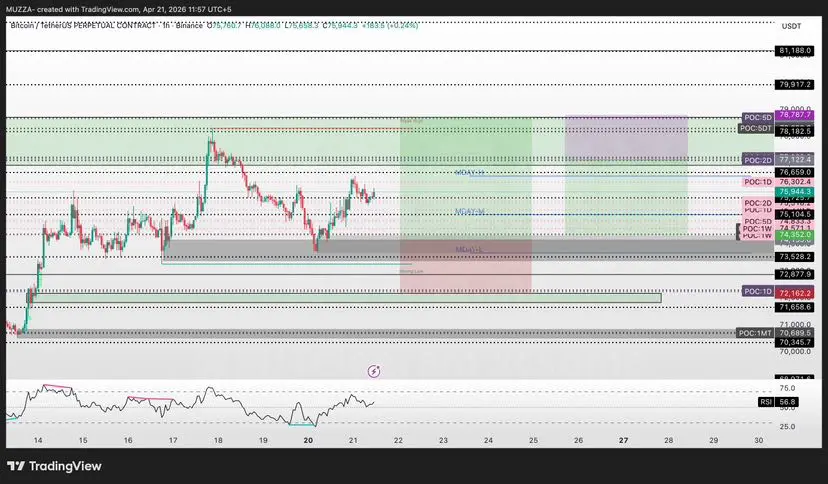
Bitcoin is not leading by accident. It is functioning as a liquidity gateway — the first recipient of macro capital entering the digital asset space. Its current consolidation is being misinterpreted by many as stagnation. In reality, it is absorption.
Positions are being built, not unwound.
Ethereum, in contrast, operates on a delayed response curve. Its underperformance is structural, not fundamental. Staking mechanics, yield frameworks, and network evolution reduce its sensitivity during early liquidity phases. But history shows that once rotation begins, it accelerates aggressively.
Then comes the final layer — high-beta ecosystems.
Assets like Solana do not lead cycles. They amplify them.
When liquidity expands beyond institutional channels and retail participation increases, these ecosystems become the primary beneficiaries. Their volatility is not a weakness — it is a function of accessibility and speculative velocity.
This creates a clear hierarchy of capital flow.
Liquidity does not arrive everywhere at once. It sequences.
First into macro proxies. Then into foundational infrastructure. Finally into high-risk expansion layers.
Understanding this sequence is no longer optional. It is an edge.
However, this entire structure rests on a fragile equilibrium.
Interest rates remain the ultimate constraint.
The US 10-year Treasury yield is the pressure valve. If it rises aggressively beyond tolerance thresholds, liquidity tightens. And when liquidity tightens, even the strongest narratives begin to fracture.
AI spending can support markets. It cannot override monetary contraction indefinitely.
Volatility is the second fault line.
Sustained low volatility creates confidence — but also complacency. In a system increasingly driven by algorithms and leverage, a sudden spike does not just trigger reactions. It accelerates them. Position unwinds become cascades.
Stability, in this environment, is conditional — not permanent.
Geopolitical calm is another illusion worth questioning.
Markets do not require peace. They require predictability. As long as risks remain contained, momentum can persist. But any unexpected escalation introduces nonlinear repricing.
And that is where most participants are still exposed.
They are positioned for continuation, not disruption.
The deeper truth is this:
The market has transitioned from storytelling to verification.
Investors are no longer asking what could happen. They are allocating based on what is already happening — real capital deployment, real earnings resilience, real liquidity flows.
This is a system becoming increasingly interconnected, increasingly data-driven, and increasingly unforgiving to those operating on outdated assumptions.
Momentum is no longer organic.
It is engineered.
Engineered through capital allocation.
Engineered through infrastructure expansion.
Engineered through strategic competition at the highest levels of technological development.
As long as these forces remain aligned, the bullish structure does not just survive — it compounds.
But if even one pillar weakens — liquidity, rates, or stability — the unwind will be just as structured as the rise.
This is not a market to blindly believe in.
This is a market to understand with precision.
Because the difference between those who win this cycle and those who get trapped is simple:
One group reacts to price.
The other tracks the forces moving it.
Choose correctly.
#CryptoMarkets #AIRevolution #Bitcoin #MacroTrends
The market is no longer reacting. It is recalibrating.
What began as a late-March relief rally has now transitioned into something far more dangerous for anyone still underestimating it — a structurally reinforced momentum phase driven by real capital, not speculative optimism. This is not a bounce. This is reallocation at scale.
The shift is subtle, but critical. Previous cycles were narrative-led. This one is capital-validated.
As geopolitical pressure temporarily eased, it did not just remove uncertainty — it unlocked sidelined institutional liquidity. That liquidity did not scatter randomly. It moved with precision into sectors already demonstrating measurable dominance, with artificial intelligence sitting at the center of that gravity field.
The escalating competition between Anthropic and OpenAI is no longer a headline battle. It is a capital war. And capital wars leave footprints — in infrastructure spending, in data center expansion, in semiconductor demand, and ultimately in equity market structure.
This is where most participants misread the situation.
They see innovation. Markets see expenditure.
Hundreds of billions are no longer being promised — they are being deployed. Compute capacity is being locked in. Training clusters are being scaled. Enterprise integration is accelerating. This transforms AI from a speculative narrative into an economic backbone.
The significance of this cannot be overstated.
An estimated $650B+ in AI-related capital expenditure is not just growth fuel — it is a volatility suppressor. It creates a structural floor beneath markets because it anchors expectations to real, ongoing deployment. Pullbacks in such an environment are not signals of weakness. They are friction points within an expanding system.
This is why dips are being bought faster than they can develop.
At the same time, the oil market is no longer behaving as a destabilizing force. Elevated prices, once a trigger for panic, are now being absorbed as a known variable. Stability — even at higher levels — has replaced unpredictability. Markets are no longer reacting emotionally to inflation signals. They are pricing probabilities.
This is a higher level of market maturity.
Risk is no longer defined by presence. It is defined by deviation.
Meanwhile, mega-cap equities have undergone a quiet but profound transformation. They are no longer pure growth vehicles. They have evolved into hybrid liquidity anchors — absorbing capital flows in a way traditionally reserved for sovereign debt or defensive assets.
When capital chooses equities over bonds for stability, the entire framework of portfolio construction shifts.
This is exactly what we are witnessing.
Double-digit index performance is not a result of retail euphoria. It is the outcome of institutional necessity — a search for scalable, reliable earnings in an environment where alternatives are increasingly constrained.
This macro structure directly feeds into crypto — but not uniformly.
Bitcoin is not leading by accident. It is functioning as a liquidity gateway — the first recipient of macro capital entering the digital asset space. Its current consolidation is being misinterpreted by many as stagnation. In reality, it is absorption.
Positions are being built, not unwound.
Ethereum, in contrast, operates on a delayed response curve. Its underperformance is structural, not fundamental. Staking mechanics, yield frameworks, and network evolution reduce its sensitivity during early liquidity phases. But history shows that once rotation begins, it accelerates aggressively.
Then comes the final layer — high-beta ecosystems.
Assets like Solana do not lead cycles. They amplify them.
When liquidity expands beyond institutional channels and retail participation increases, these ecosystems become the primary beneficiaries. Their volatility is not a weakness — it is a function of accessibility and speculative velocity.
This creates a clear hierarchy of capital flow.
Liquidity does not arrive everywhere at once. It sequences.
First into macro proxies. Then into foundational infrastructure. Finally into high-risk expansion layers.
Understanding this sequence is no longer optional. It is an edge.
However, this entire structure rests on a fragile equilibrium.
Interest rates remain the ultimate constraint.
The US 10-year Treasury yield is the pressure valve. If it rises aggressively beyond tolerance thresholds, liquidity tightens. And when liquidity tightens, even the strongest narratives begin to fracture.
AI spending can support markets. It cannot override monetary contraction indefinitely.
Volatility is the second fault line.
Sustained low volatility creates confidence — but also complacency. In a system increasingly driven by algorithms and leverage, a sudden spike does not just trigger reactions. It accelerates them. Position unwinds become cascades.
Stability, in this environment, is conditional — not permanent.
Geopolitical calm is another illusion worth questioning.
Markets do not require peace. They require predictability. As long as risks remain contained, momentum can persist. But any unexpected escalation introduces nonlinear repricing.
And that is where most participants are still exposed.
They are positioned for continuation, not disruption.
The deeper truth is this:
The market has transitioned from storytelling to verification.
Investors are no longer asking what could happen. They are allocating based on what is already happening — real capital deployment, real earnings resilience, real liquidity flows.
This is a system becoming increasingly interconnected, increasingly data-driven, and increasingly unforgiving to those operating on outdated assumptions.
Momentum is no longer organic.
It is engineered.
Engineered through capital allocation.
Engineered through infrastructure expansion.
Engineered through strategic competition at the highest levels of technological development.
As long as these forces remain aligned, the bullish structure does not just survive — it compounds.
But if even one pillar weakens — liquidity, rates, or stability — the unwind will be just as structured as the rise.
This is not a market to blindly believe in.
This is a market to understand with precision.
Because the difference between those who win this cycle and those who get trapped is simple:
One group reacts to price.
The other tracks the forces moving it.
Choose correctly.
#CryptoMarkets #AIRevolution #Bitcoin #MacroTrends