Nazdej

vip
Age 0.2 Yıl
Peak Tier 0
No content yet
Good Post
MrFlower_vip
#GlobalTechSell-OffHitsRiskAssets — Crypto in the Crossfire
The recent global tech sell-off isn’t just Nasdaq pain. Its shockwaves are hitting all risk assets, including crypto. Understanding the dynamics is critical for strategic positioning.
📉 Drivers of the Sell-Off
1. Rising Interest Rate Pressure
Growth-oriented, leveraged tech stocks are highly sensitive to rates.
Higher bond yields → future cash flows discounted → valuations decline.
2. Risk-Off Sentiment Spreads
Investors rotate from equities to safe havens: USD, bonds, gold.
Crypto, as a high-beta asset, experiences immediate pressure.
3. Macro Uncertainty
Inflation data and central bank guidance amplify volatility.
Global capital becomes selective, punishing leveraged and speculative markets first.
🔄 Impact on Crypto
BTC, ETH, and large-cap altcoins are short-term correlated with equities.
Altcoins suffer deeper pullbacks due to lower liquidity and higher leverage.
Market rotation favors Bitcoin and stablecoins, as smart money seeks liquidity and safety.
🧠 Market Structure Signals
Crypto is testing key support zones that historically acted as macro pivots.
Liquidity flushes are occurring near clustered retail stop levels.
High-volume reclaim or sustained support will indicate that risk appetite is returning despite macro pressure.
⚠️ Risks to Watch
Prolonged tech weakness could extend crypto corrections beyond short-term support.
Spiking funding rates on leveraged positions may trigger cascade liquidations.
Cross-asset contagion risk: weakness in equities can amplify negative crypto sentiment.
🔑 Key Levels & Indicators
Monitor BTC & ETH support zones for liquidity absorption.
Track volume profiles to see if dips are bought or rejected.
Watch derivatives metrics (funding rates and open interest) to gauge leverage risk or neutralization.
🎯 Strategy for Traders & Investors
Avoid chasing dips in volatile altcoins during tech-led sell-offs.
Scale into high-conviction zones on BTC/ETH with disciplined risk management.
Keep cash reserves ready to capitalize on macro-driven capitulation opportunities.
📌 Bottom Line
The #GlobalTechSell-OffHitsRiskAssets highlights how interconnected crypto is with global markets.
Short-term pain is expected.
Long-term resilience depends on structure, liquidity management, and disciplined strategy.
Risk assets may shake, but those who navigate volatility with discipline capture the next major move.
repost-content-media
  • Reward
  • 2
  • Repost
  • Share
LittleQueenvip:
2026 GOGOGO 👊
View More
helpful information
MrFlower_vip
#PartialGovernmentShutdownEnds Market Impact & Strategic Implications
The recent partial government shutdown in the United States has officially ended, restoring full federal operations and removing a key source of short-term macro uncertainty. While the direct economic damage was limited, its psychological and structural impact on financial markets was significant. The resolution has already improved investor confidence and influenced capital flows, particularly across risk-sensitive assets such as equities and cryptocurrencies.
Current Market Snapshot
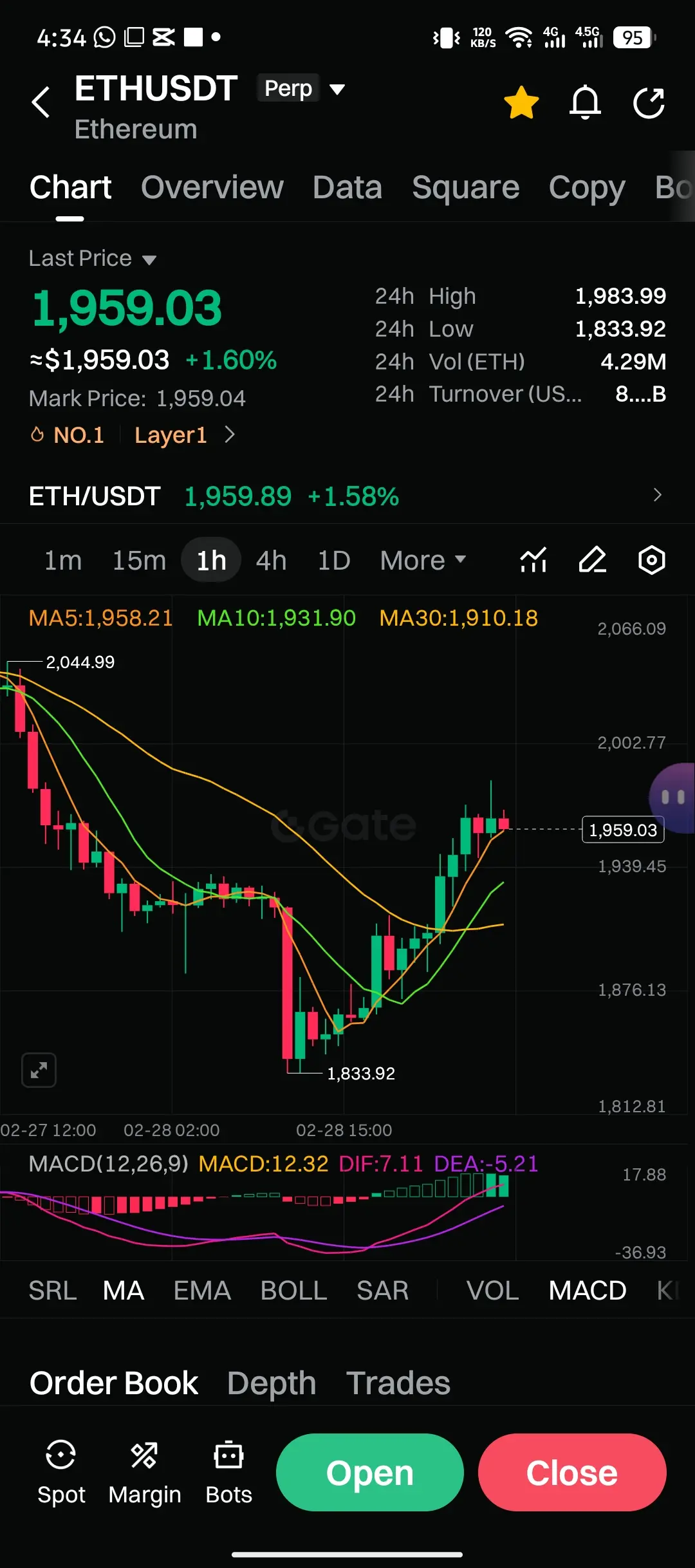
Following the shutdown’s conclusion, major asset classes have shown early signs of stabilization and recovery. Bitcoin is trading around the $67,000–$68,000 range, reflecting moderate strength after recent volatility. Ethereum has stabilized near $1,950–$2,000, holding important technical support. Equity markets, especially technology stocks, are seeing renewed interest, while gold and other safe-haven assets have experienced mild pullbacks as risk-off sentiment fades. The removal of this macro headwind is allowing sidelined capital to gradually reenter risk markets.
Restored Confidence and Liquidity
The resumption of full government operations has improved overall market transparency and liquidity conditions. During the shutdown, uncertainty surrounding data releases, policy implementation, and fiscal operations weighed heavily on investor sentiment. With normal functioning restored, institutional and retail participants now operate in a more predictable environment, encouraging renewed positioning and capital deployment.
Return of Risk-On Sentiment
With one of the most visible short-term risks eliminated, risk-on behavior is beginning to reemerge. Historically, markets respond positively when major political or fiscal disruptions are resolved. Bitcoin, select altcoins, and growth-oriented equities now face improved conditions for attracting incremental inflows. While this does not guarantee a sustained rally, it increases the probability of near-term stabilization and selective upside.
Macro Stability and Policy Visibility
Although the shutdown’s direct economic impact was relatively modest, its symbolic importance was substantial. Full government functionality reduces the risk of disruptions to spending programs, regulatory processes, and economic reporting. This enhanced policy visibility supports medium-term market planning and lowers the likelihood of sudden confidence shocks tied to governance uncertainty.
Strengthening Link Between Crypto and Macro Cycles
Crypto markets have become increasingly intertwined with broader macroeconomic trends. Risk-on and risk-off dynamics in equities and bonds now regularly influence digital asset performance. Improved sentiment in traditional markets often coincides with stabilization in Bitcoin and Ethereum, particularly when macro stress diminishes. The shutdown’s resolution reinforces this correlation and supports a normalization narrative across asset classes.
Trading Perspective — Gate User Insights
For active traders on Gate, events such as government shutdowns highlight the importance of macro awareness. Even developments unrelated to blockchain fundamentals can strongly influence crypto prices through shifts in sentiment and capital rotation. Maintaining disciplined position sizing, predefined risk limits, and structured trade planning remains essential during periods of uncertainty. Focusing on technical structure rather than reacting emotionally to headlines allows for more consistent execution. With the shutdown now resolved, traders benefit from improved clarity when making strategic decisions.
Strategic Outlook Going Forward
The end of the shutdown marks a transition from political uncertainty to greater macro stability. This environment generally favors patient accumulation, selective exposure, and structured risk-taking rather than aggressive speculation. While volatility has not disappeared, improved visibility supports more confident medium-term positioning across both traditional and digital markets.
Key Takeaways
The conclusion of the partial government shutdown removes a major macro overhang and restores confidence across financial markets. Renewed risk appetite is likely to benefit both crypto and equities, particularly if broader economic conditions remain supportive. Traders should remain patient, monitor key technical levels on Bitcoin and Ethereum, and prioritize risk management. As uncertainty fades, disciplined strategy becomes the primary driver of long-term opportunity.
MrFlower
repost-content-media
  • Reward
  • 3
  • Repost
  • Share
LittleQueenvip:
2026 GOGOGO 👊
View More
good luck
MrFlower_vip
#Web3FebruaryFocus Endurance Over Hype
Web3 has entered a phase that appears quiet on the surface but represents a critical inflection point beneath it. The era in which narratives, hype, and viral momentum could sustain entire ecosystems is fading. Today, success is no longer defined by novelty, but by resilience under regulatory, technical, economic, and social scrutiny. February is less about another speculative cycle and more about endurance—whether the architectures and ideas of the past decade can function as durable digital infrastructure.
Decentralization is no longer a slogan. It has become a complex set of trade-offs between openness and safety, speed and verifiability, ideology and usability. Projects that gain long-term traction will be those willing to confront these tensions honestly and engineer around complexity rather than ignoring it.
DeFi: Learning the Language of Risk
The first generation of decentralized finance demonstrated that exchanges, lending markets, and derivatives could operate without centralized intermediaries. Built on open-source and composable foundations, early DeFi proved what was technically possible. However, it also exposed deep structural fragilities when token incentives replaced sustainable revenue models.
Liquidity mining successfully bootstrapped ecosystems but failed as a long-term foundation. Many protocols expanded rapidly only to collapse under weak incentive design and systemic risk. Today’s DeFi landscape is more disciplined. Tokenized treasuries, on-chain credit markets, and professionally managed vaults are importing practices refined in traditional finance, including collateral hierarchies, duration management, risk-weighted allocation, and transparent stress testing.
If DeFi can intermediate real-world assets efficiently while remaining auditable and permissionless, it may finally deliver on its original promise: a global financial system where trust emerges from verification rather than reputation. February’s experiments in treasury management, composability, and risk engineering will reveal which protocols can withstand this test.
AI and Crypto: The Rise of Non-Human Economies
Artificial intelligence is becoming increasingly capable of planning, optimizing, and generating value. Yet AI lacks a native economic environment. Blockchains provide what it is missing: neutral accounts, permissionless payments, and immutable transaction records.
By integrating AI agents with wallets, smart contracts, and programmable incentives, software can evolve from passive tools into active economic participants. An autonomous agent could pay for computation, reward data providers, or contract other agents without human intervention.
This shift moves the conversation from automation to autonomy. Machines are no longer merely replacing tasks; they are beginning to operate as independent economic entities. February’s experiments with agent identities, reputation systems, and on-chain provenance represent early attempts to define behavioral standards for non-human participants, though technical and ethical risks remain substantial.
Interoperability: Beyond Chain Nationalism
The multichain era accelerated innovation but also created severe fragmentation. Users faced complex wallets, fragile bridges, and isolated liquidity pools. Emerging solutions—such as intent-based routing, account abstraction, and composable cross-chain messaging—aim to hide this complexity.
The goal is seamless value transfer, comparable to how information flows across the internet. However, abstraction introduces new risks. Control over invisible infrastructure layers can enable behavioral influence and rent extraction, potentially recreating centralized power structures beneath a decentralized façade. February may prove decisive in determining whether cross-chain systems can scale without becoming new chokepoints.
Consumer Crypto: The Discipline of Usefulness
No technical architecture matters if it fails to deliver tangible value to ordinary users. After years dominated by traders and speculation, attention is returning to utility. Digital games with meaningful ownership, social networks with portable identity, and cross-border payments powered by stablecoins are gaining renewed focus.
Most users value reliability over ideology. Stablecoins, already functioning as everyday money in regions with weak currencies, represent the first large-scale consumer success of crypto. February’s consumer-facing experiments will test whether this foothold can expand without relying on hype cycles.
Regulation as Design Constraint, Not Obstacle
Regulation is no longer viewed solely as an external threat. It has become an internal design parameter. Institutions require accountability, consumer protections, and auditability. In response, protocols are integrating identity layers, compliance frameworks, and governance systems resembling constitutional structures.
This evolution forces Web3 to confront its own narratives. Decentralization has never meant the absence of power, but its distribution. The challenge is to encode checks and balances into software without recreating opaque hierarchies. February will highlight which projects can navigate regulatory constraints while maintaining openness and trust.
Bitcoin’s Expanding Frontier
Bitcoin has traditionally prioritized minimalism and immutability, treating its base layer as sacred infrastructure. Recent developments in Layer-2 networks, BTC-backed financial products, and new token standards signal a community negotiating between ideological purity and practical utility.
This raises fundamental questions. Does innovation strengthen Bitcoin’s role as monetary collateral and settlement anchor, or dilute its original philosophy? February may reveal whether Bitcoin’s base layer can remain robust while peripheral ecosystems expand.
The Deeper Currents Shaping February
Beneath surface narratives lie enduring tensions: verification versus convenience, autonomy versus responsibility, abstraction versus control, and global openness versus local regulation. These are not technical debates alone. They are questions about how digital civilization organizes trust and authority.
Web3 has become a laboratory for political economy, experimenting with property, identity, governance, and coordination. The industry is leaving adolescence. There are fewer spectacles and more balance sheets, fewer slogans and more institutional frameworks.
Key Metrics to Watch
Several indicators will define February’s trajectory. Can DeFi revenues sustainably exceed incentive-driven growth? Will stablecoins expand beyond exchange usage into daily commerce? Are genuinely autonomous AI agents emerging? How concentrated is power within abstraction layers? Can institutions participate without eroding decentralization?
Final Perspective
The story of Web3 is no longer centered solely on innovation. It is about how humans organize trust, responsibility, and economic activity in a digital age. February represents a critical moment. Ideas are no longer theoretical, and experimentation is giving way to selection. The next phase will determine which protocols, communities, and principles endure.
  • Reward
  • 2
  • Repost
  • Share
LittleQueenvip:
Happy New Year! 🤑
View More
#BitMineAcquires20,000ETH 1️⃣ Institutional Confidence Strengthens Ethereum’s Narrative
BitMine’s acquisition of 20,000 ETH represents more than just a large transaction — it signals growing institutional confidence in Ethereum’s long-term value. Such moves are rarely impulsive. Instead, they reflect deep research, strategic positioning, and belief in Ethereum’s role as core digital infrastructure for the future financial system.
2️⃣ Strategic Accumulation During Market Consolidation
This purchase took place during a period of market consolidation, when prices were not showing strong upward mo
ETH-1,36%
MrFlower_vip
#BitMineAcquires20,000ETH 1️⃣ Institutional Confidence Strengthens Ethereum’s Narrative
BitMine’s acquisition of 20,000 ETH represents more than just a large transaction — it signals growing institutional confidence in Ethereum’s long-term value. Such moves are rarely impulsive. Instead, they reflect deep research, strategic positioning, and belief in Ethereum’s role as core digital infrastructure for the future financial system.
2️⃣ Strategic Accumulation During Market Consolidation
This purchase took place during a period of market consolidation, when prices were not showing strong upward momentum. Historically, institutions prefer to accumulate during such phases rather than chase rallies. This suggests BitMine is focused on long-term positioning rather than short-term speculation.
3️⃣ Part of a Broader Treasury Expansion Plan
The 20,000 ETH acquisition is part of a larger accumulation strategy. Over recent periods, BitMine has continued to increase its Ethereum holdings, indicating a structured treasury management approach. This consistent buying behavior highlights strong conviction in Ethereum’s long-term ecosystem growth.
4️⃣ Focus on Yield Through Staking Participation
Beyond holding ETH, BitMine has actively staked a significant portion of its assets. Staking allows institutions to earn passive yield while supporting network security. This reflects a shift from passive ownership to productive participation within the Ethereum ecosystem.
5️⃣ Ethereum’s Growing Institutional Appeal
Ethereum is increasingly being viewed as more than a smart contract platform. With developments in Layer-2 scaling, real-world asset tokenization, decentralized finance, and institutional custody solutions, ETH is becoming a core component of digital finance infrastructure.
6️⃣ Impact on Supply and Market Liquidity
When large entities accumulate and stake ETH, it reduces the amount available for trading on exchanges. Over time, this reduction in liquid supply can influence price behavior, especially during periods of rising demand. However, such effects tend to develop gradually.
7️⃣ Accumulation Signals Long-Term Vision, Not Hype
Institutional buying of this scale usually does not aim for quick profits. Instead, it reflects confidence in multi-year growth. These moves often precede increased volatility and structural shifts in market behavior rather than immediate price surges.
8️⃣ Alignment With Broader On-Chain Trends
BitMine’s activity aligns with a wider trend of increasing whale and institutional participation in Ethereum. More long-term holders are locking assets in staking contracts and cold storage, suggesting growing trust in Ethereum’s network stability and future relevance.
9️⃣ Strategic Lessons for Market Participants
Smart money typically builds positions quietly and patiently. Rather than reacting to headlines, institutions focus on fundamentals such as network usage, developer activity, economic incentives, and adoption trends. BitMine’s move reflects this disciplined investment mindset.
🔟 Strengthening Ethereum’s Long-Term Market Position
Overall, BitMine’s acquisition reinforces Ethereum’s image as a productive, yield-generating, and institution-friendly digital asset. While short-term price movements remain unpredictable, such strategic positioning suggests that major players are preparing for long-term growth as global liquidity cycles evolve.
repost-content-media
  • Reward
  • 6
  • Repost
  • Share
LittleQueenvip:
Happy New Year! 🤑
View More
  • Reward
  • 4
  • Repost
  • Share
LittleQueenvip:
Buy To Earn 💎
View More
#OvernightV-ShapedMoveinCrypto The recent overnight V-shaped move in crypto once again demonstrates how quickly sentiment, liquidity, and positioning can collide in digital asset markets. These rapid collapses and equally fast recoveries are not random anomalies. They are structural events that reflect how crypto’s 24/7, leverage-heavy ecosystem responds when imbalances reach critical levels.
During low-liquidity hours, markets become more fragile. Order books thin, bid depth weakens, and even moderate selling pressure can cascade into sharp declines. When combined with high leverage, this env
MrFlower_vip
#OvernightV-ShapedMoveinCrypto The recent overnight V-shaped move in crypto once again demonstrates how quickly sentiment, liquidity, and positioning can collide in digital asset markets. These rapid collapses and equally fast recoveries are not random anomalies. They are structural events that reflect how crypto’s 24/7, leverage-heavy ecosystem responds when imbalances reach critical levels.
During low-liquidity hours, markets become more fragile. Order books thin, bid depth weakens, and even moderate selling pressure can cascade into sharp declines. When combined with high leverage, this environment becomes especially dangerous. A small break in support can trigger forced liquidations, stop-loss clusters, and algorithmic selling, accelerating downside far beyond what organic spot selling would produce.
In this case, the initial drop was driven less by fundamental news and more by positioning stress. Long-heavy derivatives markets became vulnerable, and once key intraday levels failed, liquidation engines took control. Price moved not because investors changed their long-term outlook, but because leverage needed to be flushed. This distinction is critical for interpreting what followed.
The rebound was equally telling. As price entered historically significant demand zones, experienced buyers stepped in. Long-term holders, institutional desks, and opportunistic traders recognized forced selling and liquidity gaps. At the same time, late-entry shorts were caught off guard, triggering short squeezes that reinforced upside momentum. The recovery was mechanical as much as it was emotional.
From a technical standpoint, V-shaped moves reflect extreme short-term disequilibrium. Indicators often show deep oversold conditions, stretched deviations from moving averages, and abnormal liquidation volume. While the bounce can look impressive, it does not automatically indicate trend reversal. Many V-shaped recoveries simply restore price to fair value after temporary distortion.
Market structure explains why these patterns are so common in crypto. Derivatives markets dominate price discovery, and when positioning becomes overcrowded, the system seeks balance through volatility. These violent resets act as pressure valves, clearing excessive risk before new trends can form. In that sense, V-shaped moves are part of the market’s self-correction mechanism.
Psychologically, these events are designed to test discipline. Panic selling near the lows and emotional chasing near the highs are natural human responses—but they are consistently punished in this environment. Experienced participants focus on preparation, predefined risk limits, and liquidity awareness rather than reacting to every sharp move.
These overnight swings also reveal crypto’s role as a real-time sentiment barometer. Because the market never closes, it absorbs global risk shifts immediately. Changes in equity futures, currency markets, or macro headlines are often reflected in crypto first. This makes digital assets both more volatile and more informative than traditional markets.
The broader lesson is that volatility is structural, not accidental. It arises from continuous trading, high leverage, fragmented liquidity, and global participation. Trying to eliminate volatility in crypto is unrealistic. Learning to operate within it is what separates consistent participants from emotional ones.
Ultimately, the #OvernightV-ShapedMoveinCrypto reinforces a timeless principle: fast recoveries do not equal lasting strength. Sustainable trends require time, volume support, and structural confirmation. Sharp rebounds may offer tactical opportunities, but long-term success comes from understanding when a move represents true accumulation—and when it is simply the market resetting itself before the next phase.
repost-content-media
  • Reward
  • 4
  • Repost
  • Share
LittleQueenvip:
Buy To Earn 💎
View More
Keep it up
MrFlower_vip
#PartialGovernmentShutdownEnds 📌 Market Impact: Partial U.S. Government Shutdown Ends
The partial U.S. government shutdown has officially ended, restoring normal federal operations and reducing political uncertainty. Markets — including crypto — are reacting less to the drama itself and more to what stability brings.
🔍 Why This Matters for Crypto
1️⃣ Policy & Regulatory Continuity Returns
With federal agencies fully operational again, regulatory reviews, compliance processes, and financial oversight can move forward without disruption. This reduces legal uncertainty and supports progress on digital asset frameworks, ETFs, and institutional compliance.
2️⃣ Liquidity and Capital Flows Normalize
Shutdowns often slow government payments and economic activity, acting like a temporary liquidity squeeze. With funding restored, capital circulation becomes more predictable, allowing investors to reposition and reallocate into risk assets, including crypto.
3️⃣ Reduced Headline-Driven Volatility
Political uncertainty fuels short-term volatility. Now that the shutdown has ended, narrative-driven panic fades and attention shifts back to fundamentals such as adoption, custody solutions, and institutional participation.
4️⃣ Lower Risk Premium for Digital Assets
During political stress, markets price in extra risk. As uncertainty clears, part of that risk premium can unwind, easing pressure on major crypto assets.
📈 Crypto-Specific Implications
Bitcoin & Major Altcoins
Lower political risk helps stabilize sentiment and reconnect price action to macro and liquidity trends rather than headlines.
Regulatory Momentum Resumes
ETF reviews, stablecoin frameworks, and compliance processes can move forward more smoothly, improving long-term visibility for the industry.
Institutional Capital
Institutions prioritize regulatory and political stability. With federal risk reduced, cautious allocators may feel more confident deploying capital.
🎯 Not a “Bull Signal” — A Stability Reset
The end of a shutdown is not automatically bullish or bearish.
It represents a return to baseline stability.
Markets usually react more strongly to uncertainty than to its resolution. Once uncertainty disappears, price action tends to reflect real fundamentals and macro conditions again.
🧠 What to Watch Next
• Progress on crypto-related regulations and ETFs
• Broader liquidity and interest-rate signals
• Institutional inflows and derivatives positioning
• On-chain activity and accumulation trends
✅ Key Takeaway
Ending the partial shutdown doesn’t guarantee a rally, but it removes a major source of uncertainty. This improves confidence, supports liquidity flow, and creates a healthier environment for long-term crypto adoption.
Crypto moves fast — but stability is what allows strategic growth to take hold.
repost-content-media
  • Reward
  • 1
  • Repost
  • Share
LittleQueenvip:
Buy To Earn 💎
Helpful information 🙂ℹ️
MrFlower_vip
#GoldAndSilverRebound Gold and silver aren’t just metals — they’re macro hedges and long-term safe havens.
After recent pullbacks:
🔹 Gold: Holding key support, positioning for renewed institutional inflows
🔹 Silver: Highly sensitive to industrial demand and global liquidity cycles
Why This Rebound Matters
1️⃣ Macro Context
• Geopolitical tensions and inflation uncertainty continue to support demand
• Central bank policy shifts are creating windows for strategic accumulation
2️⃣ Market Implications
• Investors rotate from high-risk assets into defensive hedges
• ETFs and tokenized metals are seeing renewed attention
• Short-term volatility may offer high-quality accumulation zones
3️⃣ Strategic Takeaway
• Gold reinforces its role as a store of value
• Silver benefits from its dual role: safe haven + industrial utility
Bottom Line:
A metals rebound signals renewed confidence and disciplined hedging — not just short-term price action.
#MacroCrypto #TokenizedMetals
repost-content-media
  • Reward
  • Comment
  • Repost
  • Share
very good post
MrFlower_vip
#GoldAndSilverRebound Gold and silver aren’t just metals — they’re macro hedges and long-term safe havens.
After recent pullbacks:
🔹 Gold: Holding key support, positioning for renewed institutional inflows
🔹 Silver: Highly sensitive to industrial demand and global liquidity cycles
Why This Rebound Matters
1️⃣ Macro Context
• Geopolitical tensions and inflation uncertainty continue to support demand
• Central bank policy shifts are creating windows for strategic accumulation
2️⃣ Market Implications
• Investors rotate from high-risk assets into defensive hedges
• ETFs and tokenized metals are seeing renewed attention
• Short-term volatility may offer high-quality accumulation zones
3️⃣ Strategic Takeaway
• Gold reinforces its role as a store of value
• Silver benefits from its dual role: safe haven + industrial utility
Bottom Line:
A metals rebound signals renewed confidence and disciplined hedging — not just short-term price action.
#MacroCrypto #TokenizedMetals
repost-content-media
  • Reward
  • Comment
  • Repost
  • Share
#VitalikSellsETH Market Implications and Analysis
Recent transactions by Vitalik Buterin, one of Ethereum’s most high-profile holders, have drawn significant attention across crypto markets. When someone with substantial ETH holdings moves or sells tokens, it inevitably influences sentiment, liquidity dynamics, and trader behavior. However, understanding the context and drivers behind such activity is essential before drawing conclusions.
📌 Hashtag Context
The #VitalikSellsETH tag has become a focal point for discussions around whale movements, liquidity shifts, and market psychology. Actions
ETH-1,36%
DEFI-4,39%
MrFlower_vip
#VitalikSellsETH Market Implications and Analysis
Recent transactions by Vitalik Buterin, one of Ethereum’s most high-profile holders, have drawn significant attention across crypto markets. When someone with substantial ETH holdings moves or sells tokens, it inevitably influences sentiment, liquidity dynamics, and trader behavior. However, understanding the context and drivers behind such activity is essential before drawing conclusions.
📌 Hashtag Context
The #VitalikSellsETH tag has become a focal point for discussions around whale movements, liquidity shifts, and market psychology. Actions by prominent figures like Vitalik are interpreted both emotionally and analytically — but symbolic significance doesn’t automatically equal bearish fundamentals.
High-profile sales often spark debate because they illuminate how large holders manage risk, liquidity, and portfolio exposure. These transactions provide insight into how large stakeholders interact with the market — but they are not, on their own, proof of systemic weakness.
📊 Ethereum Market & Technical Snapshot
• Current Price Context: ETH is trading around the lower end of its broader range, showing short-term fluctuations as the market digests recent activity.
• Volatility & Momentum: Momentum indicators such as RSI are in the neutral to slightly oversold area, indicating potential for short-term rebounds if selling pressure eases.
• Key Technical Zones: Support near established technical levels remains a critical factor for short-term price behavior.
Large sales by major holders often trigger reactive positioning in both spot and derivatives markets. Temporary dips or spikes in volatility are common — but these movements rarely alter Ethereum’s long-term growth narrative on their own.
🧠 Potential Reasons Behind the ETH Sale
🟡 Portfolio Rebalancing
Large stakeholders routinely adjust exposure to manage risk and reduce concentration in one asset.
🟡 Philanthropic or Ecosystem Allocations
Significant transactions can be linked to grants, public goods funding, or contributions to broader ecosystem development.
🟡 Strategic Risk Management
During periods of volatility, rebalancing reduces exposure risk without signaling a loss of confidence in fundamentals.
These motivations illustrate that whale activity often reflects strategic decisions rather than bearish sentiment about the network’s prospects.
📉 Market Implications Right Now
Short-Term Effects:
• Temporary volatility and price dips near key support zones
• Short-term traders adjusting exposure or tightening risk controls
• Increased caution among retail participants reacting emotionally
Broad Market Impact:
• Altcoins and DeFi tokens often move in sympathy with ETH volatility
• Liquidations and funding rate shifts may intensify intra-day swings
Trader Behavior:
Short-term participants may reduce leverage or de-risk, while longer-term holders focus on structural fundamentals rather than transient price reactions.
🏛️ Broader & Long-Term Outlook
In the long run, isolated sales by individual holders — even prominent ones — rarely undermine fundamental growth if the underlying ecosystem remains strong. Ethereum continues to be supported by:
✔ Smart contract adoption
✔ DeFi and tokenization activity
✔ Layer-2 scaling and developer engagement
✔ Institutional interest in blockchain infrastructure
If the sale is unrelated to network health or future expectations, prices often recover as liquidity normalizes and structural demand asserts itself.
🎯 Key Takeaways for Investors
🔹 #VitalikSellsETH signals a whale transaction, not a structural weakness in Ethereum.
🔹 Short-term volatility may follow, but strong fundamentals support long-term growth.
🔹 Technical price levels and market sentiment are important for tactical decisions.
🔹 High-profile sales help illuminate liquidity flows and market psychology — useful for informed trading.
Bottom Line: Individual whale transactions generate attention and short-term noise, but they should be interpreted within a broader context of network health, adoption metrics, and macro liquidity conditions. Understanding both why the sale happened and how markets interpret it leads to better strategic decisions than reacting to headlines alone.
repost-content-media
  • Reward
  • Comment
  • Repost
  • Share
#VitalikSellsETH Market Implications and Analysis
Recent transactions by Vitalik Buterin, one of Ethereum’s most high-profile holders, have drawn significant attention across crypto markets. When someone with substantial ETH holdings moves or sells tokens, it inevitably influences sentiment, liquidity dynamics, and trader behavior. However, understanding the context and drivers behind such activity is essential before drawing conclusions.
📌 Hashtag Context
The #VitalikSellsETH tag has become a focal point for discussions around whale movements, liquidity shifts, and market psychology. Actions
ETH-1,36%
DEFI-4,39%
MrFlower_vip
#VitalikSellsETH Market Implications and Analysis
Recent transactions by Vitalik Buterin, one of Ethereum’s most high-profile holders, have drawn significant attention across crypto markets. When someone with substantial ETH holdings moves or sells tokens, it inevitably influences sentiment, liquidity dynamics, and trader behavior. However, understanding the context and drivers behind such activity is essential before drawing conclusions.
📌 Hashtag Context
The #VitalikSellsETH tag has become a focal point for discussions around whale movements, liquidity shifts, and market psychology. Actions by prominent figures like Vitalik are interpreted both emotionally and analytically — but symbolic significance doesn’t automatically equal bearish fundamentals.
High-profile sales often spark debate because they illuminate how large holders manage risk, liquidity, and portfolio exposure. These transactions provide insight into how large stakeholders interact with the market — but they are not, on their own, proof of systemic weakness.
📊 Ethereum Market & Technical Snapshot
• Current Price Context: ETH is trading around the lower end of its broader range, showing short-term fluctuations as the market digests recent activity.
• Volatility & Momentum: Momentum indicators such as RSI are in the neutral to slightly oversold area, indicating potential for short-term rebounds if selling pressure eases.
• Key Technical Zones: Support near established technical levels remains a critical factor for short-term price behavior.
Large sales by major holders often trigger reactive positioning in both spot and derivatives markets. Temporary dips or spikes in volatility are common — but these movements rarely alter Ethereum’s long-term growth narrative on their own.
🧠 Potential Reasons Behind the ETH Sale
🟡 Portfolio Rebalancing
Large stakeholders routinely adjust exposure to manage risk and reduce concentration in one asset.
🟡 Philanthropic or Ecosystem Allocations
Significant transactions can be linked to grants, public goods funding, or contributions to broader ecosystem development.
🟡 Strategic Risk Management
During periods of volatility, rebalancing reduces exposure risk without signaling a loss of confidence in fundamentals.
These motivations illustrate that whale activity often reflects strategic decisions rather than bearish sentiment about the network’s prospects.
📉 Market Implications Right Now
Short-Term Effects:
• Temporary volatility and price dips near key support zones
• Short-term traders adjusting exposure or tightening risk controls
• Increased caution among retail participants reacting emotionally
Broad Market Impact:
• Altcoins and DeFi tokens often move in sympathy with ETH volatility
• Liquidations and funding rate shifts may intensify intra-day swings
Trader Behavior:
Short-term participants may reduce leverage or de-risk, while longer-term holders focus on structural fundamentals rather than transient price reactions.
🏛️ Broader & Long-Term Outlook
In the long run, isolated sales by individual holders — even prominent ones — rarely undermine fundamental growth if the underlying ecosystem remains strong. Ethereum continues to be supported by:
✔ Smart contract adoption
✔ DeFi and tokenization activity
✔ Layer-2 scaling and developer engagement
✔ Institutional interest in blockchain infrastructure
If the sale is unrelated to network health or future expectations, prices often recover as liquidity normalizes and structural demand asserts itself.
🎯 Key Takeaways for Investors
🔹 #VitalikSellsETH signals a whale transaction, not a structural weakness in Ethereum.
🔹 Short-term volatility may follow, but strong fundamentals support long-term growth.
🔹 Technical price levels and market sentiment are important for tactical decisions.
🔹 High-profile sales help illuminate liquidity flows and market psychology — useful for informed trading.
Bottom Line: Individual whale transactions generate attention and short-term noise, but they should be interpreted within a broader context of network health, adoption metrics, and macro liquidity conditions. Understanding both why the sale happened and how markets interpret it leads to better strategic decisions than reacting to headlines alone.
repost-content-media
  • Reward
  • Comment
  • Repost
  • Share
#VitalikSellsETH Market Implications and Analysis
Recent transactions by Vitalik Buterin, one of Ethereum’s most high-profile holders, have drawn significant attention across crypto markets. When someone with substantial ETH holdings moves or sells tokens, it inevitably influences sentiment, liquidity dynamics, and trader behavior. However, understanding the context and drivers behind such activity is essential before drawing conclusions.
📌 Hashtag Context
The #VitalikSellsETH tag has become a focal point for discussions around whale movements, liquidity shifts, and market psychology. Actions
ETH-1,36%
DEFI-4,39%
MrFlower_vip
#XAIHiringCryptoSpecialists How xAI’s Recruitment Signals a New Era for Crypto & AI
Elon Musk’s artificial intelligence company xAI has officially begun recruiting crypto-focused specialists to help train its advanced AI systems, including its flagship model Grok. This development is gaining major attention across both crypto and tech communities, highlighting a deeper convergence between artificial intelligence and digital financeCigital finance.
Unlike traditional market-related hiring, this initiative is not centered on trading or speculation. Instead, it focuses on teaching AI how to understand crypto markets at a structural, analytical, and systemic level.
📌 What Is Happening
xAI has posted new roles such as Finance Expert – Crypto, designed to support AI training and model refinement. These positions are:
• Fully remote
• Open to global applicants
• Focused on financial reasoning and crypto market structure
• Dedicated to AI education, not live trading
The core objective is to improve how AI models interpret decentralized finance, blockchain ecosystems, and digital asset markets.
🧠 Why xAI Is Hiring Crypto Specialists
This move reflects a strategic shift away from simple price forecasting and toward expert-driven AI reasoning.
Rather than feeding models only charts and headlines, xAI aims to teach its systems to think like professional crypto analysts.
This includes understanding:
• On-chain behavior
• DeFi protocols
• Liquidity fragmentation
• Market microstructure
• Risk dynamics
• Cross-chain activity
• MEV and execution logic
The goal is to replicate how experienced professionals analyze markets, not just how prices move.
🛠️ Key Responsibilities
Crypto specialists are expected to contribute advanced domain knowledge, including:
✔ On-chain analytics
✔ Tokenomics evaluation
✔ DeFi risk modeling
✔ Cross-exchange dynamics
✔ Arbitrage concepts
✔ Liquidity structure analysis
✔ Professional market commentary
✔ Creation of training data (text, audio, video)
This goes far beyond basic data labeling. It focuses on embedding real-world reasoning into AI systems.
❗ What the Role Is — and Is Not
✅ What It Is
• Training AI with expert market logic
• Translating professional thinking into structured data
• Bridging human insight and machine learning
• Improving financial intelligence systems
❌ What It Is Not
• A trading position
• A hedge fund role
• A quant trading job
• A price prediction role
• A portfolio management position
xAI has clearly positioned this as an educational and analytical role.
💼 Role Structure & Compensation
Based on available information:
• Fully remote
• Global eligibility
• Compensation: ~$45 to $100 per hour
• No capital management responsibility
• Focus on insight and analysis
While competitive for AI training roles, this has sparked discussion since top-tier crypto analysts often earn more in trading environments.
🚀 Strategic Implications for Crypto & AI
This hiring trend signals a major evolution in financial AI development.
Instead of reacting to price signals, future AI systems may:
✔ Model professional reasoning
✔ Analyze systemic risk
✔ Understand protocol interdependencies
✔ Interpret market structure
✔ Evaluate DeFi sustainability
By embedding expert logic, xAI could develop more sophisticated financial intelligence tools.
This represents a shift from data-driven AI to reasoning-driven AI.
👨‍💻 What This Means for Crypto Professionals
For analysts, researchers, and DeFi specialists, this opens a new career pathway.
Crypto expertise is no longer limited to:
• Trading
• Investing
• Portfolio management
It can now directly shape how intelligent systems understand markets.
This role blends:
✔ Financial analysis
✔ Quantitative thinking
✔ Blockchain knowledge
✔ AI training
✔ Content creation
Demand for this hybrid skill set is likely to grow across the AI industry.
🔗 The Bigger Picture: AI × Crypto Convergence
This development shows that AI firms now view crypto as:
• Structurally complex
• Data-rich
• Systemically important
• Intellectually demanding
Blockchain and AI are converging not at the price level — but at the cognitive level.
Machines are learning how humans think about markets.
📍 Conclusion
The #XAIHiringCryptoSpecialists trend marks a pivotal shift in how artificial intelligence interacts with digital finance.
xAI’s initiative goes far beyond price prediction. It aims to embed professional market reasoning into AI systems so they can understand crypto ecosystems in depth.
As AI becomes central to finance, demand for specialists who can translate real-world market logic into machine intelligence will continue to rise.
This may redefine what crypto expertise means in the age of advanced AI — and reshape how financial knowledge is valued in the future.
repost-content-media
  • Reward
  • Comment
  • Repost
  • Share
Good information keep growing 👍
MrFlower_vip
#BitMineAcquires20,000ETH BitMine’s 20,000 ETH Acquisition: Institutional Strategy, Staking Economics, and Ethereum’s Emergence as a Global Reserve Asset
Ethereum’s institutional era is no longer theoretical — it is now observable.
BitMine’s acquisition of 20,000 ETH represents a defining moment in Ethereum’s evolution as a financial asset. This transaction was not driven by short-term price movements or speculative sentiment. It reflects a deeper structural shift in how sophisticated capital views Ethereum: not as a volatile cryptocurrency, but as productive digital infrastructure capable of generating yield, securing decentralized systems, and anchoring long-term balance sheets.
This move highlights a broader transformation underway in global capital markets, where Ethereum is increasingly evaluated through the lens of capital efficiency, network utility, and strategic reserve value.
🏦 BitMine’s Treasury Strategy: Long-Duration Capital Allocation
As a digital asset treasury firm, BitMine operates under a fundamentally different mandate than retail traders or momentum-driven funds.
Its strategy emphasizes:
• Long-term holding
• Balance-sheet resilience
• Capital preservation
• Compounding returns
Within this framework, Ethereum naturally qualifies as a treasury-grade asset.
By accumulating ETH at scale, BitMine is signaling that Ethereum now belongs alongside long-term reserve instruments — assets held for years, not months, and intended to support future financial infrastructure.
📊 Institutional Execution: Structural, Not Speculative
The structure of the acquisition is as important as its size.
BitMine utilized institutional execution channels to minimize market impact, demonstrating:
• Advanced planning
• Strategic intent
• Capital discipline
This was not a reaction to market momentum. It was a deliberate deployment aligned with a broader accumulation thesis.
Such execution patterns are characteristic of entities that treat assets as foundations, not inventory.
🔁 Ethereum as Productive Capital: The Staking Advantage
Unlike traditional reserve assets, Ethereum offers native yield through staking.
This transforms ETH from passive exposure into productive capital.
For institutions, this provides:
• Reduced opportunity cost
• Income generation
• Long-term compounding
• Volatility smoothing
Ethereum becomes a hybrid instrument — part infrastructure asset, part yield-bearing reserve.
This structural advantage is central to its institutional appeal.
🌐 Infrastructure Exposure: Owning the Settlement Layer
Ethereum is not merely an asset — it is the settlement and execution layer for the digital economy.
It underpins:
• DeFi systems
• Stablecoin rails
• Tokenized securities
• Programmable finance
Holding ETH means owning the fuel that powers this expanding ecosystem.
As on-chain activity grows, demand for ETH as gas, collateral, and settlement medium increases structurally — independent of speculative cycles.
This positions ETH as infrastructure, not experimentation.
📈 Staking at Scale: A Compounding Engine
When institutions stake ETH at scale, they:
• Lock supply
• Earn protocol-native rewards
• Increase holdings organically
• Strengthen network security
This creates a self-reinforcing loop of accumulation and participation.
For treasury-focused firms, staking converts Ethereum from idle capital into a compounding financial engine.
⚖️ Supply Dynamics: Institutional Scarcity Effects
Large-scale institutional accumulation alters market structure.
When ETH is:
• Acquired at scale
• Committed to long-term holding
• Staked for yield
It is effectively removed from liquid circulation.
This reduces available supply and increases sensitivity to incremental demand.
Over time, price dynamics become more influenced by scarcity and usage than by speculative churn.
📡 Signaling Power: Institutional Legitimization
Institutional behavior shapes market perception.
When well-capitalized firms treat Ethereum as a reserve asset, it:
• Validates similar strategies
• Reduces perceived risk
• Encourages peer adoption
• Accelerates maturation
Asset classes evolve through repeated behavior, not isolated announcements.
BitMine’s action contributes to this cumulative institutional narrative.
🏗️ From Risk Asset to Financial Backbone
Ethereum’s narrative is shifting.
It is increasingly defined by:
• Reliability
• Economic throughput
• Network security
• Institutional participation
As staking deepens and treasury adoption expands, Ethereum begins to resemble foundational infrastructure rather than speculative technology.
BitMine’s acquisition reinforces this transition.
🔮 Long-Term Implications: Structural Capital Cycles
If Ethereum continues to be adopted as a treasury and staking asset, future cycles may be shaped by:
• Structured capital allocation
• Institutional balance-sheet strategy
• Infrastructure valuation models
ETH may increasingly be compared to sovereign or systemic assets rather than emerging tech.
In this context, BitMine’s allocation appears early — not aggressive.
🧭 A Statement of Intent, Not a Trade
This was not a tactical position.
It was a strategic declaration.
BitMine’s move reflects conviction in:
• Ethereum’s durability
• Its economic model
• Its security architecture
• Its role in global finance
As more institutions adopt similar approaches, Ethereum’s position as a digital reserve and settlement asset will continue to strengthen.
📍 Conclusion
The #BitMineAcquires20,000ETH event is not the end of a story.
It is evidence that a much larger transformation is underway.
Ethereum is evolving from a speculative asset into productive, institutional-grade financial infrastructure.
BitMine’s acquisition is not a headline-driven trade.
It is a marker of where serious capital believes the future is headed.
And that future is increasingly being built on Ethereum
repost-content-media
  • Reward
  • Comment
  • Repost
  • Share
Good Information
MrFlower_vip
#ChilizLaunchesFanTokens Chiliz Expands Tokenized Fan Engagement in Sports and Entertainment
Chiliz, a leading blockchain platform for sports and entertainment engagement, has officially launched a new series of fan tokens, marking a major step in the evolution of tokenized fan experiences. This initiative strengthens the integration of blockchain technology into mainstream sports ecosystems by transforming fan participation into a digital, interactive, and monetizable asset class.
Fan tokens enable supporters to engage directly with their favorite teams through governance participation, exclusive rewards, and digital experiences. This launch reinforces blockchain’s role in enhancing community engagement, creating new revenue channels, and deepening loyalty between fans and franchises.
⚽ Utility and Governance Framework
The newly launched fan tokens combine community governance with practical utility.
Holders can:
• Vote on selected club decisions (kits, experiences, fan events)
• Access VIP opportunities and exclusive merchandise
• Receive digital collectibles and early event access
• Trade tokens on supported exchanges
This dual function — participation plus market liquidity — establishes fan engagement as both experiential and economic.
📊 Market and Ecosystem Impact
Chiliz’s expansion strengthens its leadership in tokenized sports engagement.
Key ecosystem effects include:
• Increased trading activity during major sporting events
• Higher community participation
• New revenue streams for partner clubs
• Expanded utility for the CHZ token
Because CHZ is central to fan token purchases, ecosystem growth directly supports native token demand.
🔗 Blockchain Infrastructure
The fan tokens operate on the Chiliz Chain (CHZ), optimized for speed, security, and low-cost transactions.
Core technical features include:
• Smart contract-based voting systems
• Automated reward distribution
• Transparent governance processes
• Secure token trading mechanisms
These features ensure credibility, accountability, and scalability across fan engagement activities.
👥 Community Engagement and Network Effects
Chiliz integrates fan tokens into a broader engagement ecosystem through:
• Gamified mobile applications
• Loyalty programs
• Social media campaigns
• Interactive challenges and polls
High-profile partnerships with global clubs and leagues amplify network effects, driving sustained adoption and brand loyalty.
Fan tokens evolve from speculative assets into digital identity tools within sports communities.
💼 Financial and Investor Implications
Fan token launches generate measurable market signals.
Key indicators include:
• Trading volume
• Wallet growth
• Active users
• Community participation rates
Rising activity increases CHZ demand and liquidity. Institutional participants are also monitoring this sector as tokenized engagement merges finance, media, and entertainment.
🌍 Strategic and Macro Significance
Chiliz’s initiative reflects a broader shift toward tokenized loyalty and participation models.
This framework transforms fans from passive consumers into:
• Active stakeholders
• Digital community members
• Governance participants
Over time, similar models may expand into media, music, esports, and entertainment platforms.
Chiliz is positioning itself at the center of this emerging engagement economy.
📈 Long-Term Outlook
Sustained fan token adoption may lead to:
• Deeper blockchain integration in sports
• Expanded NFT and reward ecosystems
• New partnerships with leagues and broadcasters
• Integrated digital fan economies
This strategy prioritizes long-term loyalty, ecosystem growth, and financial inclusion over short-term speculation.
✅ Conclusion
The #ChilizLaunchesFanTokens initiative marks a major milestone in tokenized fan engagement.
By combining governance rights, exclusive access, tradable assets, and gamified participation, Chiliz is building a multi-layered digital ecosystem for fans, clubs, and investors.
This launch reinforces Chiliz’s leadership in blockchain-based entertainment and signals the growing role of digital assets in mainstream engagement.
Monitoring adoption metrics, trading activity, and ecosystem expansion will be key to evaluating the long-term impact on CHZ and the broader tokenized entertainment economy.
repost-content-media
  • Reward
  • Comment
  • Repost
  • Share
good
MrFlower_vip
#InstitutionalHoldingsDebate 📊 Institutional Bitcoin Strategy — Long-Term Conviction or Tactical Adjustment?
As Bitcoin navigates a volatile market environment, a clear behavioral split is emerging between institutional investors and retail participants. While price pullbacks often trigger hesitation or selling on the retail side, institutional activity tells a very different story — one rooted in long-term conviction rather than short-term reaction.
Recent on-chain data and industry reports indicate that institutions continue to accumulate Bitcoin, even during corrective phases. Large holders and whale wallets have reached multi-month highs in BTC holdings, while surveys show that nearly 80% of institutions plan to increase exposure on dips. At the same time, regulated investment vehicles — particularly spot Bitcoin ETFs — remain consistent sources of inflows, absorbing market sell-side pressure and reinforcing demand at lower price levels.
This behavior highlights a fundamental difference in investment logic. Institutions operate with longer time horizons, often measured in quarters or years. Temporary market weakness is viewed as an opportunity to build strategic positions rather than a signal to exit. Bitcoin is increasingly treated as a structural portfolio component, serving roles such as a store of value, an inflation hedge, and a diversification tool with distinct risk characteristics compared to traditional assets.
ETF flows further reinforce this perspective. Even during periods of price weakness, Bitcoin ETFs continue to attract capital, reflecting institutional preference for regulated, transparent exposure aligned with traditional financial infrastructure. This channel has become a critical mechanism for sustained accumulation without reliance on speculative trading behavior.
In contrast, retail investors often respond emotionally to volatility. History shows that retail participation tends to decline or turn bearish during drawdowns, driven by fear, leverage unwinds, or headline risk. This divergence matters because institutional accumulation creates a demand floor, offsetting retail selling and contributing to greater market stability over time.
That said, institutional conviction does not imply rigidity. Tactical adjustments still occur within a broader strategic framework. Allocation sizes may be paced over time, exposure may be hedged using derivatives or structured products, and positioning can adapt to macroeconomic signals or regulatory developments. The key distinction is that tactics evolve, but the core thesis remains intact.
Bottom Line: Strategy and Tactics Are Working Together
Institutions are largely committed to Bitcoin as a long-term strategic asset. Continued accumulation, resilient ETF inflows, and growing adoption through regulated channels all point to sustained confidence. At the same time, tactical flexibility — through risk management, staged entries, and adaptive positioning — reflects a mature investment approach.
This shift has meaningful implications for the Bitcoin market: • Reduced long-term volatility as buy-and-hold capital grows
• Stronger downside support during market corrections
• A transition from speculative trading toward structural adoption
Bitcoin is increasingly being treated not just as a trade, but as digital monetary infrastructure within diversified portfolios.
— MrFlower_ 🌸
repost-content-media
  • Reward
  • Comment
  • Repost
  • Share
#BTCBitcoin is navigating a high-volatility, risk-off environment today as global markets remain cautious. Macro uncertainty continues to dominate price action, driven by persistent inflation pressures, interest rate expectations, and liquidity concerns. Risk assets, including cryptocurrencies, are experiencing broad selling pressure, reflecting investor caution. This environment has caused Bitcoin to trade below key short-term resistance zones, with attempts at upside recovery met with immediate selling. The result is a market structure that remains weak, with volatility amplified by thin liq
BTC1,35%
MrFlower_vip
#BTCBitcoin is navigating a high-volatility, risk-off environment today as global markets remain cautious. Macro uncertainty continues to dominate price action, driven by persistent inflation pressures, interest rate expectations, and liquidity concerns. Risk assets, including cryptocurrencies, are experiencing broad selling pressure, reflecting investor caution. This environment has caused Bitcoin to trade below key short-term resistance zones, with attempts at upside recovery met with immediate selling. The result is a market structure that remains weak, with volatility amplified by thin liquidity and the ongoing deleveraging in derivatives markets. Funding rates have cooled, open interest has declined, and traders are exiting leveraged positions, creating a healthy but painful reset in market positioning. Historically, these phases are often the prelude to a period of stabilization, as selling pressure exhausts itself and stronger hands prepare to defend key levels.
From a technical perspective, several support and resistance levels are critical to watch. On the support side, Bitcoin faces near-term floors around $87,500–$88,000, where previous buying activity has been observed. If this level fails to hold, the next meaningful support cluster lies between $85,000 and $83,000, followed by a psychological and structural floor near $80,000, which has historically acted as a major demand zone. On the resistance side, Bitcoin faces immediate hurdles around $91,500–$94,000, with a stronger barrier at $95,000–$96,000, above which broader upside momentum could resume. The ultimate psychological resistance remains the $100,000 level, a milestone that would require sustained buying interest and conviction to break. These levels serve as reference points for both traders and investors, with support acting as potential buy zones and resistance marking areas where selling pressure may intensify.
Macro factors remain a dominant influence on price behavior. Uncertainty around central bank policies and potential delays in rate cuts continue to weigh on sentiment. In addition, the broader market is still digesting the effects of leverage unwinding, which has amplified intraday volatility. Short-term price movements are largely reactive to news and market sentiment, rather than trend-driven fundamentals, meaning that spikes and drops can occur rapidly and unpredictably. Traders need to stay disciplined, watching for declining sell volume and the establishment of higher lows as signs of market stabilization. At the same time, patient long-term investors can view this period as an opportunity to accumulate at structurally important levels, particularly as historical patterns suggest that Bitcoin tends to recover strongly after such reset phases.
In summary, Bitcoin remains in a period of uncertainty and technical consolidation. Short-term volatility is likely to persist, with price action bounded by the key support and resistance levels outlined above. Market participants should focus on risk management and structural observation rather than chasing speculative moves. Macro developments, liquidity flows, and derivative positioning will continue to influence Bitcoin’s behavior, while technical levels provide actionable reference points. While the near-term outlook is cautious, the longer-term narrative remains intact, with strong support floors and renewed buying interest expected once fear-driven selling abates. Bitcoin is currently undergoing a natural market reset — a period that historically precedes stronger, more sustainable moves higher.
repost-content-media
  • Reward
  • 1
  • Repost
  • Share
Betterforevervip:
A single spark can start a prairie fire! I just posted this afternoon, and I started buying tonight! Actually, I feel quite reassured. Although the probability of BTC reversing immediately at this level isn't high, in the market, confidence is far more important than the charts.
GOLD & SILVER JUST COLLIDED! ⚡
Gold plunged 16% and silver tumbled 39% in just 2 days, wiping out trillions in value. This isn’t just a dip it’s a shockwave through the metals market.
Why the crash?
1️⃣ Fed Clarity: Markets were betting on a super-dovish Fed. That guess is gone.
2️⃣ Parabolic Pop: Silver’s meteoric rise is now a steep fall parabolic spikes rarely recover fast.
3️⃣ Mania Ends: Everyone rushed in crypto, traders, speculators. Extreme hype usually ends in a major top.
4️⃣ History Rhymes: Silver’s past shows crashes like this can take months or years to recover.
The takeaway? Meta
MrFlower_vip
🚨 SYSTEM ALERT: GLOBAL MARKETS AT BREAKING POINT
Tomorrow, the U.S. stock market reopens after the government shutdown.
And what we’re seeing right now is not normal volatility…
It’s a warning signal.
Gold is falling.
Silver is falling.
Stocks are falling.
The U.S. dollar is weakening.
This is not a coincidence.
This is what systemic stress looks like.
History shows one thing clearly:
When multiple asset classes crash together, something big is breaking under the surface.
The last time markets showed similar conditions, global equities crashed nearly 60%.
And this time, the situation is even more fragile.
Big money is not “taking profits.”
They are raising cash.
When institutions dump assets across the board, it means they are preparing for risk — not chasing returns.
For decades, U.S. Treasury bonds were considered the safest asset in the world.
But today, the narrative is changing.
The global bond market is sending a clear message:
Confidence in long-term U.S. debt is weakening.
With national debt crossing $40 trillion, investors are questioning whether the system can sustain itself without massive money printing.
And when money printing begins…
It doesn’t save the economy.
It destroys purchasing power.
Here’s the chain reaction unfolding:
→ Bonds are sold aggressively
→ Yields spike sharply
→ The Federal Reserve gets cornered
→ Emergency liquidity measures begin
→ Currency value erodes
This is how financial crises are born.
On paper, asset prices may rise.
But in reality, people get poorer.
Inflation eats savings.
Real estate becomes unaffordable.
Liquidity disappears.
Middle-class wealth gets crushed.
When fear takes over, psychology changes.
People stop trusting money.
They rush into real assets — gold, silver, crypto, commodities — anything that feels “safe.”
This is why market flows matter more than headlines.
The Gold–Silver ratio is shifting.
Institutional positioning is changing.
Volatility is rising quietly before the storm
repost-content-media
  • Reward
  • Comment
  • Repost
  • Share
#MyWeekendTradingPlan Futures Market Outlook — Defense First, Then Precision Attack
The crypto futures market is heading into the weekend under extreme stress, and the current environment clearly favors caution over aggression. Bitcoin’s sharp drop from the $80,000 region into the $75,000–$77,000 zone triggered more than $2.5 billion in long liquidations, rapidly flushing excessive leverage from the system. While such events often reset market structure, they do not automatically confirm a trend reversal. Sentiment remains fragile, liquidity is thin, and emotions are elevated — classic condit
BTC1,35%
SOL-1,45%
JUP-4,68%
DOGE-2,12%
MrFlower_vip
#MyWeekendTradingPlan Futures Market Outlook — Defense First, Then Precision Attack
The crypto futures market is heading into the weekend under extreme stress, and the current environment clearly favors caution over aggression. Bitcoin’s sharp drop from the $80,000 region into the $75,000–$77,000 zone triggered more than $2.5 billion in long liquidations, rapidly flushing excessive leverage from the system. While such events often reset market structure, they do not automatically confirm a trend reversal. Sentiment remains fragile, liquidity is thin, and emotions are elevated — classic conditions for volatility traps.
From a positioning perspective, this is not the time to play hero. Despite dip buyers calling for a V-shaped recovery, the broader macro backdrop supports a strategic defensive stance. A partial U.S. government shutdown, uncertainty around future Federal Reserve leadership, and persistent inflation pressures continue to weigh on global risk assets. In this environment, chasing price without confirmation is closer to gambling than trading. Capital preservation comes first.
Bitcoin remains the undisputed anchor of the entire market. The $75,000 level is the line in the sand, both technically and psychologically. Holding above this zone through the weekend would suggest seller exhaustion and early accumulation by stronger hands. However, a decisive breakdown below opens the door toward the $69,000–$70,000 range, the next major psychological and liquidity zone. Until BTC establishes a clear base, sustained upside momentum remains limited.
Rather than expecting a clean directional move, the most probable scenario is a sideways, volatile consolidation. After such a large long-position flush, short-term relief bounces are common as shorts take profits and funding rates normalize. That said, weekend liquidity is notoriously thin, increasing the likelihood of sharp wicks in both directions. A genuine trend shift is more likely to be confirmed during Sunday night or Monday morning’s Asian session, when volume and institutional participation return.
Among major assets, BTC and SOL remain the primary focus. Bitcoin must successfully defend the $75k region to restore broader confidence. Solana, currently testing the $100 psychological level, has historically been one of the fastest rebounders following liquidation-driven selloffs due to its strong retail participation and momentum-driven trading behavior. If sentiment turns, SOL is often among the first to react.
Within the Solana ecosystem, JUP (Jupiter) continues to stand out as a high-beta opportunity. Residual momentum from the “Jupuary” airdrop keeps interest elevated, making it a prime volatility play if SOL stabilizes. Meanwhile, DOGE is showing quiet strength beneath the surface — whale wallet balances have remained stable despite the pullback, suggesting conviction and the potential for a meme-led bounce should sentiment improve.
Relative strength is one of the most important signals during market stress. XRP, supported by Ripple’s recent DFSA approval in Dubai, continues to show resilience despite macro pressure. Likewise, ZK and ZRO holding green while the broader market bleeds is a notable signal. Assets that refuse to dump during panic phases often lead once conditions stabilize, making them key candidates for early rotation.
Macro uncertainty remains the dominant overhang. The U.S. government shutdown has become a real-time risk-off catalyst, temporarily pushing capital toward gold and the U.S. dollar. At the same time, markets are closely watching developments surrounding Kevin Warsh and potential shifts in future Fed policy. Any signal on monetary direction immediately impacts DXY — and crypto follows.
While painful, the liquidation of over 430,000 traders has a constructive structural impact. Excess leverage has been cleared, reducing the risk of cascading liquidations and allowing for cleaner price discovery if demand returns. This does not guarantee an immediate rally, but it significantly improves the quality of any future move.
For this weekend, I remain firmly in Defense Mode. Roughly 60% of capital stays in stablecoins, with selective limit orders placed for a potential BTC wick toward $74k. My focus is on whether Bitcoin can hold the $75k floor through Sunday night. If support holds and momentum confirms during the Monday Asian open, I’ll rotate into Attack Mode, targeting high-beta assets like SOL and JUP for controlled futures volatility plays.
In a market this unstable, patience is a weapon — and attacking without a shield is simply gambling.
Stay safe, manage risk, and trade smart
repost-content-media
  • Reward
  • 1
  • Repost
  • Share
Discoveryvip:
2026 GOGOGO 👊
#GateLiveMiningProgramPublicBeta Gate.io has officially launched its Live Mining Program in public beta, marking a major step forward in crypto engagement, liquidity mining, and decentralized finance innovation. This initiative introduces a real-time, interactive framework where users can actively participate in mining and rewards distribution while gaining hands-on exposure to DeFi mechanics. By blending accessibility, education, and strategic earning, Gate.io is positioning this program as more than just a rewards system — it’s an evolving ecosystem experience.
The public beta phase allows a
DEFI-4,39%
TOKEN-0,35%
MrFlower_vip
#GateLiveMiningProgramPublicBeta Gate.io has officially launched its Live Mining Program in public beta, marking a major step forward in crypto engagement, liquidity mining, and decentralized finance innovation. This initiative introduces a real-time, interactive framework where users can actively participate in mining and rewards distribution while gaining hands-on exposure to DeFi mechanics. By blending accessibility, education, and strategic earning, Gate.io is positioning this program as more than just a rewards system — it’s an evolving ecosystem experience.
The public beta phase allows a broader user base to explore the platform’s features while providing critical feedback that will shape its final release. Gate.io is emphasizing transparency and a user-centric design, aiming to balance system efficiency with an engaging and intuitive experience. Through this beta testing period, potential issues related to reward calculations, mining allocation, or interface performance can be identified early, ensuring a more robust and refined final product.
For users and traders, the Live Mining Program opens up new opportunities to earn rewards in real time without locking capital into long-term staking or farming commitments. This makes it particularly attractive for both seasoned traders and newcomers who want exposure to DeFi without excessive risk. The program also highlights the importance of understanding tokenomics, liquidity dynamics, and reward schedules — knowledge that can translate directly into smarter trading and portfolio decisions.
From a broader market perspective, the launch of this public beta extends beyond Gate.io itself. Increased user participation naturally drives liquidity, which can influence token price action, volatility, and market depth. Traders closely monitoring the Live Mining Program may gain early insight into shifts in supply-demand dynamics, especially for tokens associated with mining rewards. A successful rollout could also serve as a blueprint for other exchanges seeking to implement gamified liquidity and engagement models.
On the technology and security front, Gate.io has integrated real-time monitoring systems and security protocols aligned with current industry standards. While mining and DeFi participation always carry inherent risks, beta testing plays a crucial role in identifying potential vulnerabilities in smart contracts, transaction flows, and user interfaces. Participants are encouraged to follow best practices such as strong wallet security, multi-factor authentication, and careful transaction verification.
Beyond earnings, the educational value of the Live Mining Program stands out. Gate.io is actively working to demystify DeFi by allowing users to experience mining mechanics in real time rather than learning purely through theory. Community engagement is central to this approach, with feedback channels and discussion spaces enabling users to share insights, strategies, and observations — helping shape the evolution of the platform itself.
For strategic participants, a disciplined approach remains essential. Monitoring reward structures and mining rates can help optimize returns, while tracking token price movements and overall market sentiment ensures alignment with broader portfolio goals. Engaging with the community during the beta phase can provide valuable early insights, and evaluating risk exposure before committing significant capital is always key.
The launch of #GateLiveMiningProgramPublicBeta represents a meaningful step toward more interactive and inclusive DeFi participation. By combining real-time rewards, educational exposure, and community-driven feedback, Gate.io is creating an environment where users can earn, learn, and actively influence product development. Traders, investors, and DeFi enthusiasts who participate early may gain a strategic edge while contributing to a more transparent and dynamic crypto ecosystem.
Stay informed, manage risk, and explore responsibly. 🚀
repost-content-media
  • Reward
  • 1
  • Repost
  • Share
Discoveryvip:
2026 GOGOGO 👊
#CryptoMarketPullback The crypto market has experienced a sharp overnight pullback, with both Bitcoin and Ethereum weakening and total market capitalization slipping below the $3 trillion mark. This move appears driven more by profit-taking, tightening liquidity, and macro-led risk-off sentiment than by any fundamental breakdown in market structure. Corrections of this nature are a normal part of bullish market cycles, often serving to reset leverage and test conviction among participants.
Such pullbacks tend to separate long-term holders from short-term speculators, creating heightened volati
BTC1,35%
ETH-1,36%
MrFlower_vip
#CryptoMarketPullback The crypto market has experienced a sharp overnight pullback, with both Bitcoin and Ethereum weakening and total market capitalization slipping below the $3 trillion mark. This move appears driven more by profit-taking, tightening liquidity, and macro-led risk-off sentiment than by any fundamental breakdown in market structure. Corrections of this nature are a normal part of bullish market cycles, often serving to reset leverage and test conviction among participants.
Such pullbacks tend to separate long-term holders from short-term speculators, creating heightened volatility in the short run but also opening strategic opportunities for disciplined traders and investors. The key lies in identifying whether critical support zones can hold and whether demand steps in at lower levels.
Bitcoin (BTC) is currently testing a crucial support range around $28,000–$28,500. Historically, this zone has acted as an accumulation area during previous corrective phases. While downside wicks and intraday volatility remain possible, sustained acceptance above this region would signal stability and renewed buyer confidence. Until confirmation appears, patience remains essential.
Ethereum (ETH) is trading near the $1,750–$1,800 range, largely mirroring Bitcoin’s price behavior. In the short term, ETH’s direction is closely tied to broader market sentiment rather than isolated catalysts. Holding above this level would help maintain structural strength, while a breakdown could invite further testing of lower support zones.
Across the broader market, altcoins are under heavier pressure, reflecting their higher beta and relatively lower liquidity. While many weaker projects may continue to underperform, select assets with strong fundamentals, active development, or upcoming catalysts are beginning to present risk-adjusted accumulation opportunities. As always, selectivity is critical during volatile phases.
From a data perspective, on-chain metrics suggest continued accumulation by long-term Bitcoin holders, signaling underlying confidence despite price weakness. At the same time, derivatives data and funding rates indicate elevated short-term volatility, highlighting the ongoing battle between leveraged traders and spot buyers.
In terms of strategy, a disciplined approach is essential during pullbacks of this nature. Avoid impulsive reactions to sudden dips and wait for signs of stabilization before increasing exposure. Layered accumulation allows for better average entry prices while reducing timing risk. Capital protection should remain the priority, with clearly defined invalidation levels to manage downside scenarios.
Selective exposure to altcoins should focus on projects with real adoption, strong narratives, and measurable catalysts, rather than speculative momentum plays. Additionally, macro awareness remains critical. Factors such as USD strength, interest rate expectations, and global risk sentiment continue to exert significant influence over crypto price action.
Key Takeaway:
This pullback represents a healthy correction within a volatile market environment, not a structural breakdown. For patient and disciplined participants, it offers an opportunity to position into high-quality assets at more favorable levels. Strategic risk management, structured entries, and close monitoring of technical and macro signals will be essential in navigating this phase and preparing for the next potential market upswing.
repost-content-media
  • Reward
  • 2
  • Repost
  • Share
Discoveryvip:
Buy To Earn 💎
View More
  • Pin

Trade Crypto Anywhere Anytime
qrCode
Scan to download Gate App
Community
  • 简体中文
  • English
  • Tiếng Việt
  • 繁體中文
  • Español
  • Русский
  • Français (Afrique)
  • Português (Portugal)
  • Bahasa Indonesia
  • 日本語
  • بالعربية
  • Українська
  • Português (Brasil)