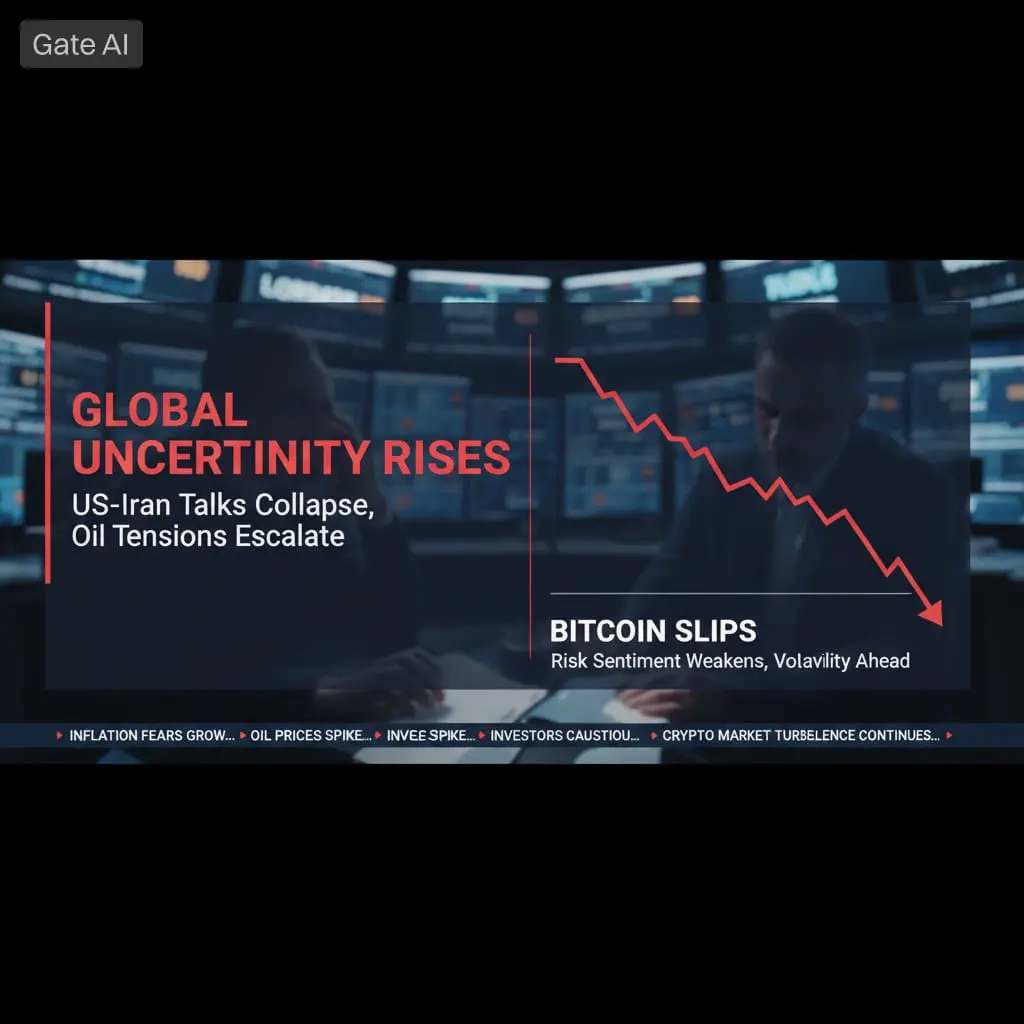
# US-IranTalksStall

179.69K
📢 Gate Plaza | 4/24 Hot Topics: #美伊谈判陷入僵局
The Middle East situation heats up again, with the US-Iran game intensifying. Iran sends strong signals and accelerates military buildup, while the US simultaneously enhances deployments and initiates citizen evacuations. Tensions in the Strait of Hormuz escalate, with increased risks of oil tanker interception and blockade. Disagreements in negotiations continue to widen; whether a ceasefire will break down has become a key variable affecting oil prices and the global market.
🎁 Market analysis, pick 5 lucky winners to share $1,000 in position exper
View Original
post-image
  • Reward
  • 22
  • Repost
  • Share
CryptoChampion:
To The Moon 🌕
View More
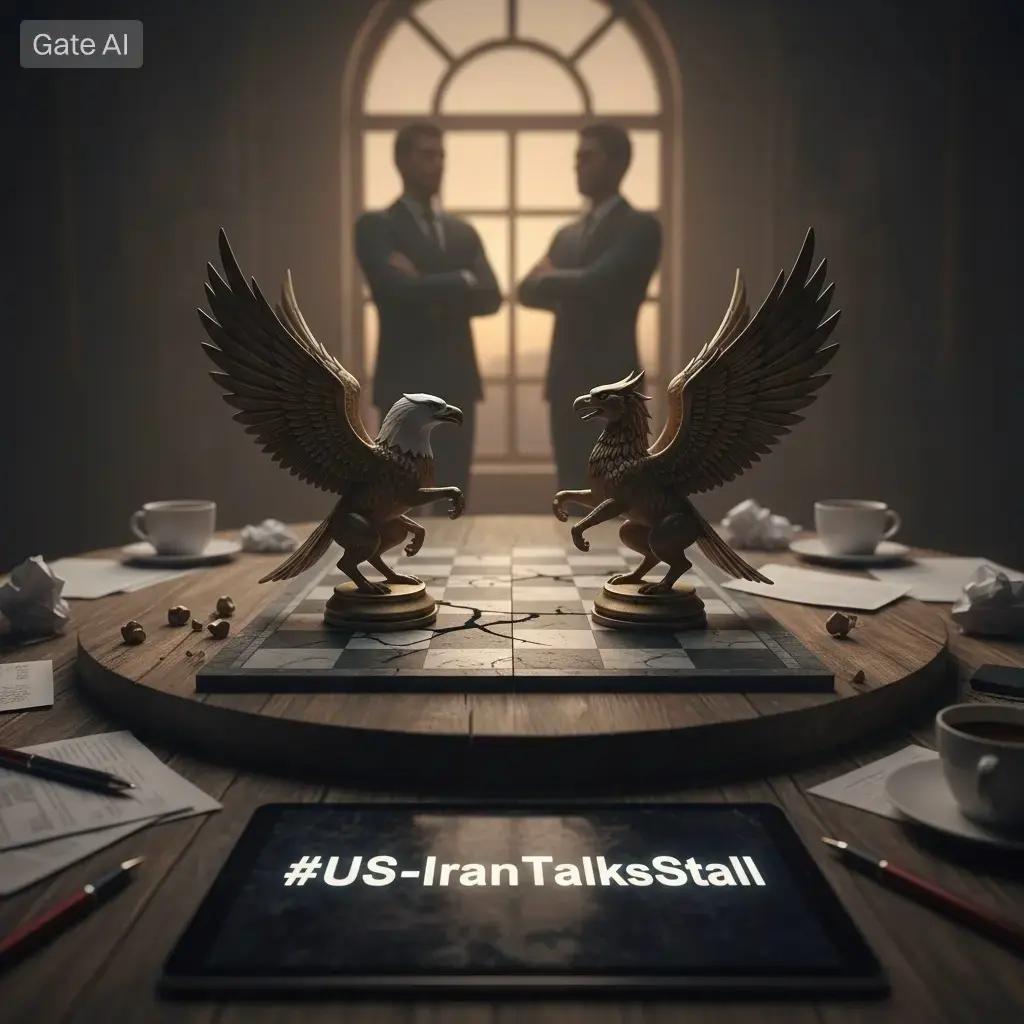
#US-IranTalksStall
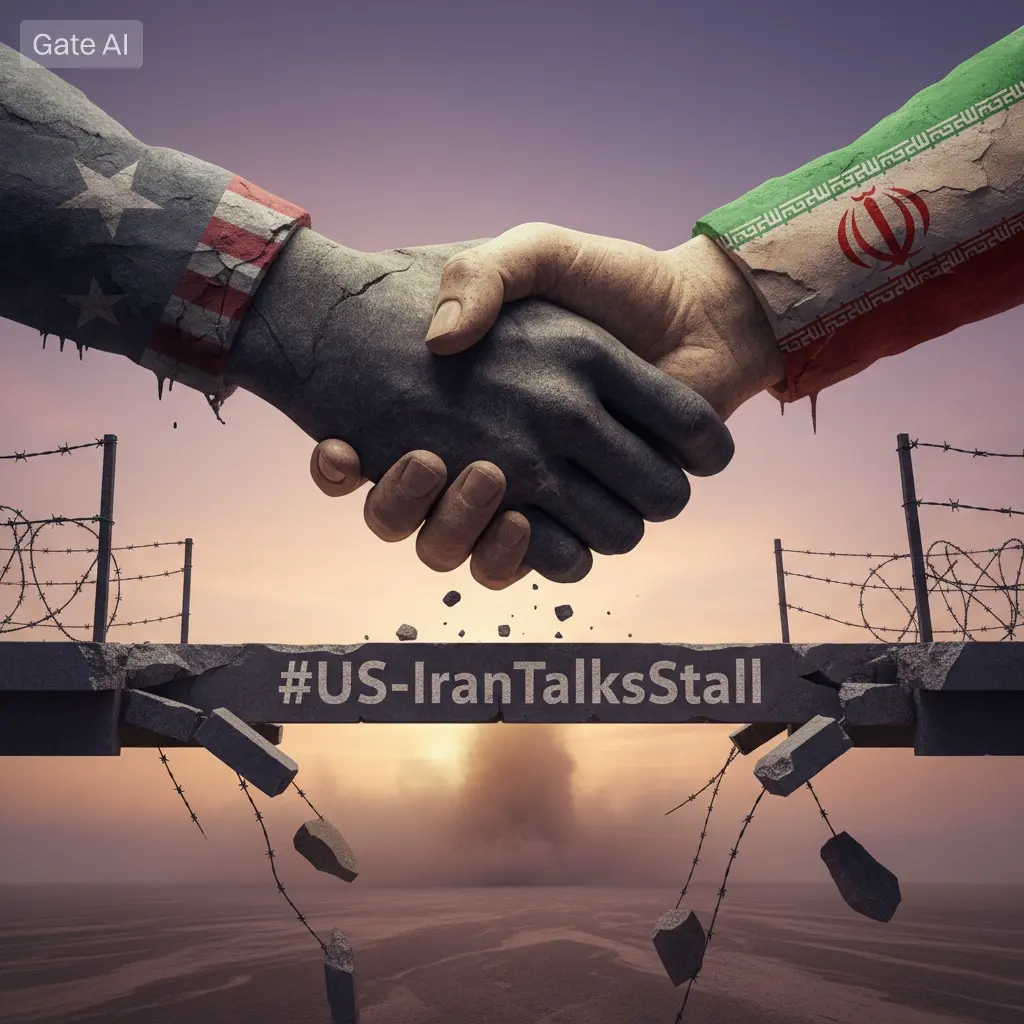
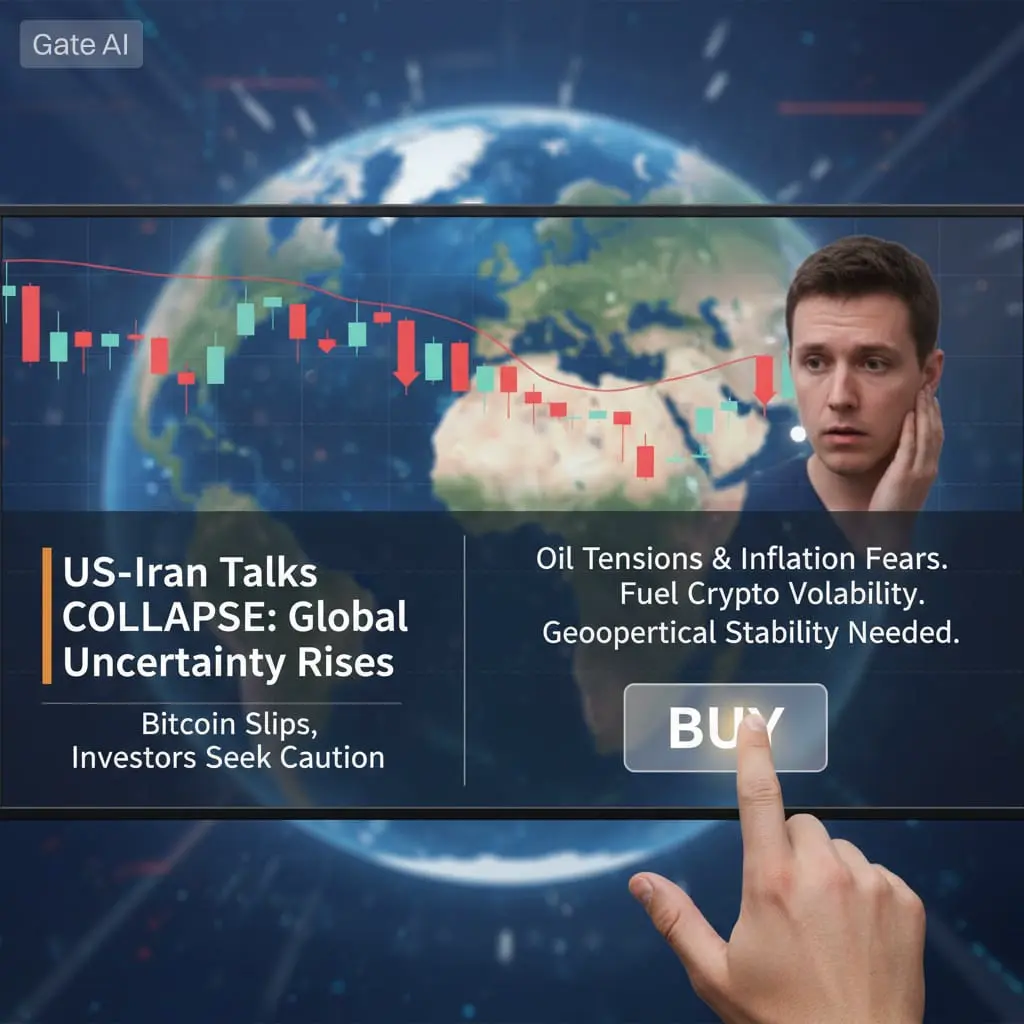
The collapse of the latest US-Iran negotiations has become one of the biggest macro events shaping global financial markets this week, and crypto traders are now feeling the pressure directly. After nearly 21 hours of marathon negotiations held in Islamabad, Pakistan, both sides failed to reach a breakthrough, leaving the market facing renewed uncertainty, rising oil prices, and growing volatility across risk assets.
The biggest reason behind the stalled talks remains Iran’s nuclear program. Washington demanded a clear commitment from Tehran that it would permanently aband
BTC-0,28%
CryptoChampion
#US-IranTalksStall
The collapse of the latest US-Iran negotiations has become one of the biggest macro events shaping global financial markets this week, and crypto traders are now feeling the pressure directly. After nearly 21 hours of marathon negotiations held in Islamabad, Pakistan, both sides failed to reach a breakthrough, leaving the market facing renewed uncertainty, rising oil prices, and growing volatility across risk assets.
The biggest reason behind the stalled talks remains Iran’s nuclear program. Washington demanded a clear commitment from Tehran that it would permanently abandon any pathway toward nuclear weapons development. However, Iran refused to accept these terms, with US Vice President JD Vance confirming that Tehran would not agree to Washington’s conditions. This remains the single largest obstacle preventing a diplomatic resolution.
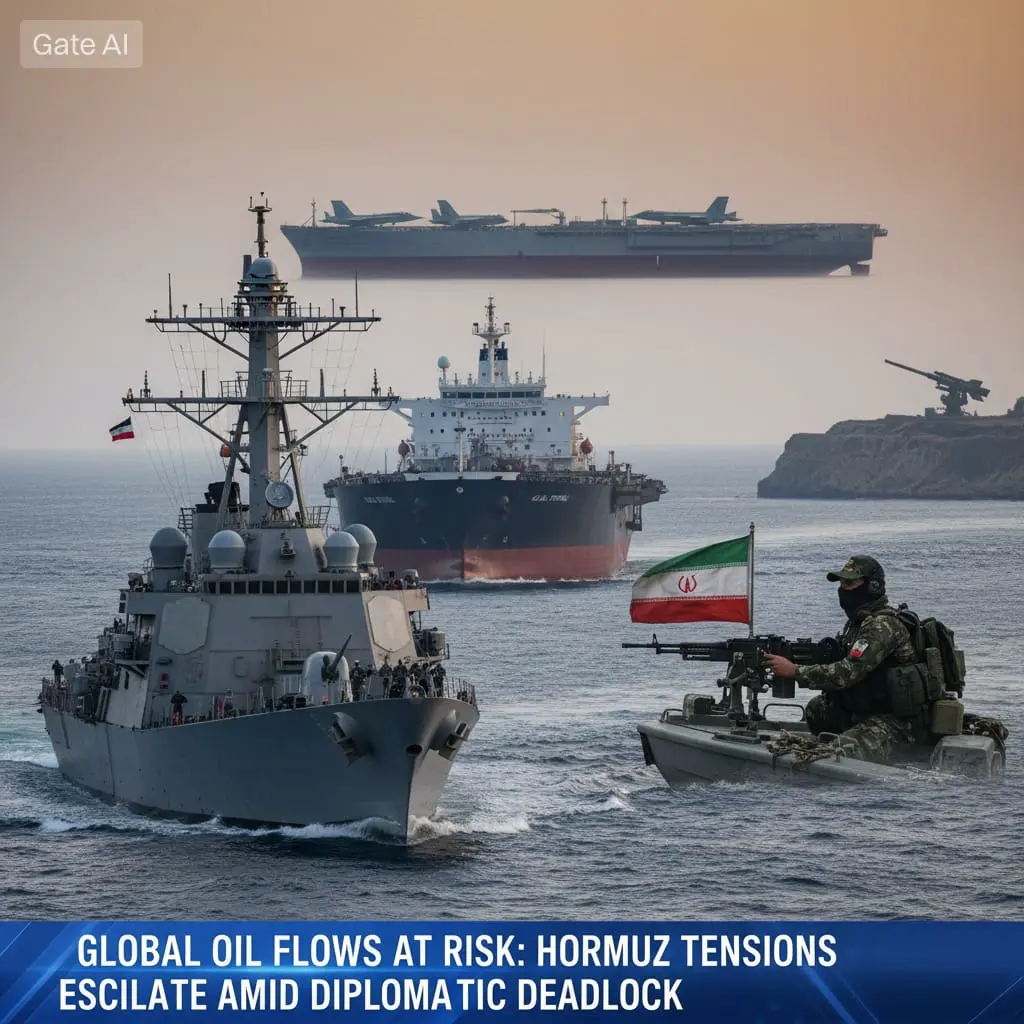
The second major flashpoint is the Strait of Hormuz, one of the most strategically important waterways in the world, responsible for nearly 20 percent of global oil shipments. Since the beginning of hostilities earlier this year, Iran’s actions around the strait have triggered major disruptions in global energy markets. President Trump responded by maintaining a naval blockade on Iranian ports, creating severe economic pressure and pushing crude oil prices sharply higher.
Even after Iran signaled its willingness to reopen the strait following a temporary regional ceasefire, Washington refused to lift the blockade. Tensions escalated further after the US military seized an Iranian-flagged vessel attempting to challenge the blockade, causing Tehran to threaten a complete withdrawal from future negotiations.
This geopolitical deadlock is now directly impacting Bitcoin.
BTC recently attempted to break above the $79,000 resistance zone but faced rejection and pulled back into the $76,962 to $78,570 range. This price action reflects growing market caution as investors shift into defensive positioning. Whenever global uncertainty rises, traders often move toward traditional safe-haven assets like gold and the US dollar, putting temporary pressure on crypto markets.
From a technical perspective, Bitcoin still holds an overall bullish structure on higher timeframes, but warning signs are becoming visible. The 4-hour chart shows bullish moving average alignment, suggesting buyers still control the broader trend. However, MACD divergence signals weakening momentum, while daily indicators show overbought conditions that increase the probability of short-term corrections.
The key support zone currently sits between $76,300 and $76,700. If this level holds, BTC could attempt another push toward $79,000 and potentially target $82,000 in the next move. However, if geopolitical tensions intensify and oil prices continue rising, stronger downside pressure may send Bitcoin toward $75,000 or even the major support region near $72,000.
Higher oil prices also create inflation concerns, which may force the Federal Reserve to keep interest rates elevated for longer. This is generally negative for high-risk assets like crypto and could limit BTC’s upside momentum in the short term.
For traders, this is a market where patience matters more than aggression. Smaller position sizes, tighter risk management, and disciplined entries are critical. Accumulation strategies near support zones remain strong for long-term investors, while short-term traders should stay alert for sudden headline-driven volatility.
Right now, Bitcoin is not just trading technicals—it is trading geopolitics. And until clarity returns to US-Iran relations, volatility will remain the real king of the market.
#GateSquare #CreatorCarnival #ContentMining #Gate13周年
repost-content-media
  • Reward
  • Comment
  • Repost
  • Share
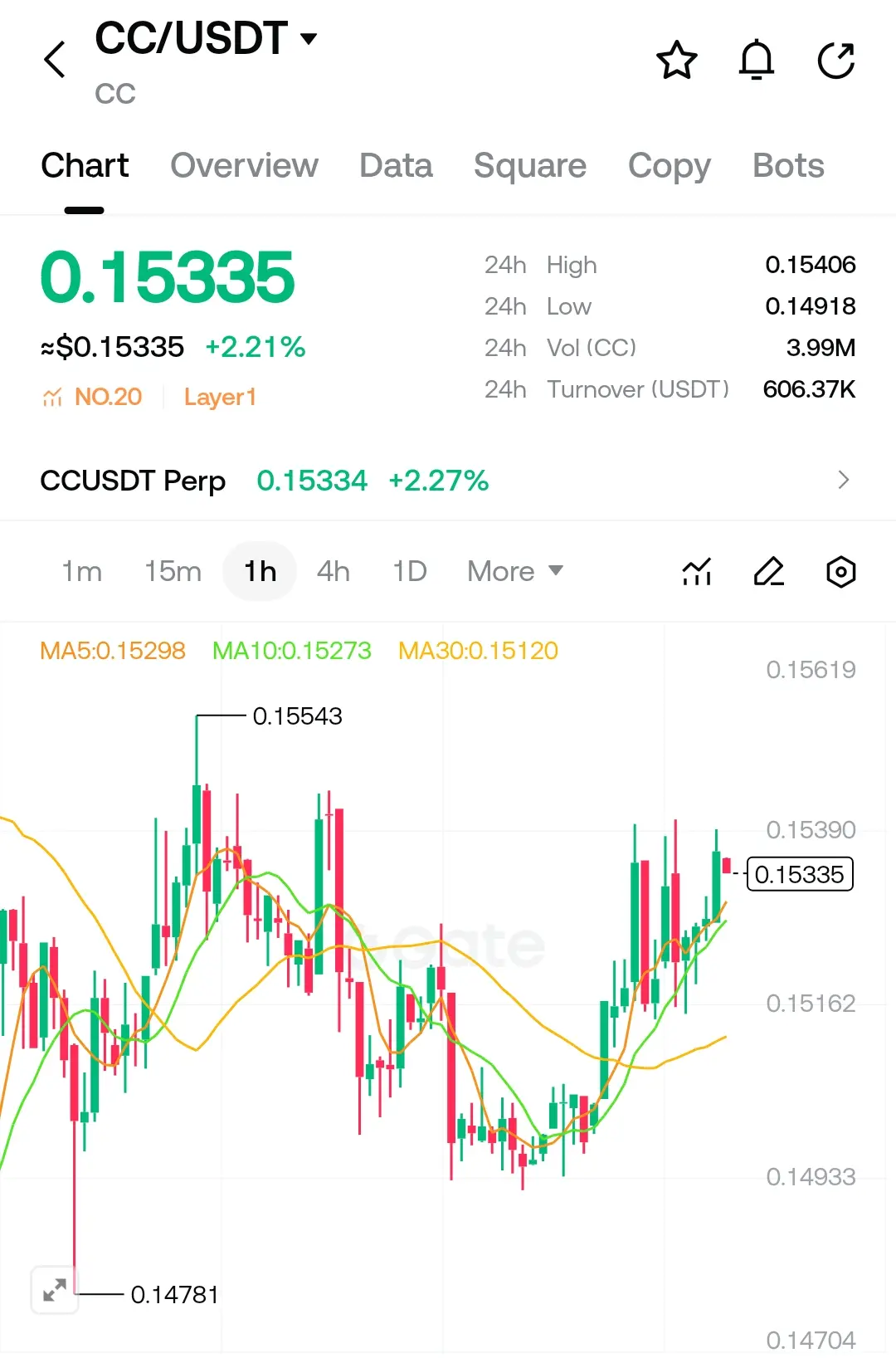
$CC
Price 0.1540, up 926% off lows. Clear breakout from 0.048-0.091 base. Momentum strong but cooling into range.
• Entry Zone: 0.133 - 0.154
• TP1: 0.220
• TP2: 0.300
• TP3: 0.380
• Stop-Loss: 0.110
Consolidation above 0.133 healthy. Losing that level turns trend choppy. Break above 0.155 triggers next leg.
#$CC #WCTCTradingKingPK #CryptoMarketSeesVolatility #rsETHAttackUpdate #US-IranTalksStall
CC1,97%
post-image
  • Reward
  • 1
  • Repost
  • Share
GateUser-696db78d:
this looks good for a long run..
#US-IranTalksStall
The collapse of the latest US-Iran negotiations has become one of the biggest macro events shaping global financial markets this week, and crypto traders are now feeling the pressure directly. After nearly 21 hours of marathon negotiations held in Islamabad, Pakistan, both sides failed to reach a breakthrough, leaving the market facing renewed uncertainty, rising oil prices, and growing volatility across risk assets.
The biggest reason behind the stalled talks remains Iran’s nuclear program. Washington demanded a clear commitment from Tehran that it would permanently aband
BTC-0,28%
post-image
post-image
  • Reward
  • 4
  • Repost
  • Share
MasterChuTheOldDemonMasterChu:
Just charge forward 👊
View More
#US-IranTalksStall
The recent breakdown in negotiations between the United States and Iran represents one of the most significant geopolitical developments affecting global markets in 2026. The talks, which were held in Islamabad, Pakistan, collapsed after marathon 21-hour negotiations failed to produce a truce deal, with both sides trading accusations and escalating tensions.
Reasons Behind the Talks Stall
The primary sticking points that led to the collapse of negotiations are multifaceted. First and foremost, Iran's refusal to commit to abandoning its nuclear ambitions remains the central
BTC-0,28%
post-image
post-image
  • Reward
  • 2
  • Repost
  • Share
GateUser-d84a7b23:
go
View More
#US-IranTalksStall
Gate Square | 4/20 Hot Topic: #US-Iran Conflict Resurges Again Causing Market Turmoil
🚨 Sudden Shift in the Middle East Situation: Risk-Off Sentiment Sparks Market Volatility
On April 20, due to Iran stating that the U.S. fired on its merchant ships and vowed retaliation, the expectation of a ceasefire in the Middle East turned into a mirage. The geopolitical crisis instantly ignited risk-off sentiment in the market: BTC came under pressure and fell below the $74,000 level, while WTI crude oil gapped up with a 5% jump. Market volatility surged sharply, triggering warning
BTC-0,28%
post-image
Gate广场_Official
📢 Gate Square | 4/20 Hot Topic: #US-Iran Conflict Resurges Again Causing Market Turmoil
🚨 Sudden Shift in the Middle East Situation: Risk-Off Sentiment Sparks Market Volatility
On April 20, due to Iran stating that the U.S. fired on its merchant ships and vowed retaliation, the expectation of a ceasefire in the Middle East turned into a mirage. The geopolitical crisis instantly ignited risk-off sentiment in the market: BTC came under pressure and fell below the $74,000 level, while WTI crude oil gapped up with a 5% jump. Market volatility surged sharply, triggering warnings across risk assets.
🎁 For market analysis, draw 5 Koi to split $1,000 position experience vouchers!
💬 This Episode’s Discussion:
1️⃣ Ceasefire expectations dashed? Where will the situation go after Wednesday?
2️⃣ WTI crude oil gapped higher and opened up—now is it “chasing the high” or “to eat the meat”?
3️⃣ BTC falls below 74,000—how should the strategy for a volatile trading market be adjusted?
Share your views 👉 https://www.gate.com/post
Gate TradFi—one-click to allocate global assets 👉 https://www.gate.com/tradfi
📅 4/20 12:00 - 4/22 18:00 (UTC+8)
repost-content-media
  • Reward
  • Comment
  • Repost
  • Share
#US-IranTalksStall
The recent breakdown in negotiations between the United States and Iran represents one of the most significant geopolitical developments affecting global markets in 2026. The talks, which were held in Islamabad, Pakistan, collapsed after marathon 21-hour negotiations failed to produce a truce deal, with both sides trading accusations and escalating tensions.
Reasons Behind the Talks Stall
The primary sticking points that led to the collapse of negotiations are multifaceted. First and foremost, Iran's refusal to commit to abandoning its nuclear ambitions remains the central
BTC-0,28%
HighAmbition
#US-IranTalksStall
The recent breakdown in negotiations between the United States and Iran represents one of the most significant geopolitical developments affecting global markets in 2026. The talks, which were held in Islamabad, Pakistan, collapsed after marathon 21-hour negotiations failed to produce a truce deal, with both sides trading accusations and escalating tensions.
Reasons Behind the Talks Stall
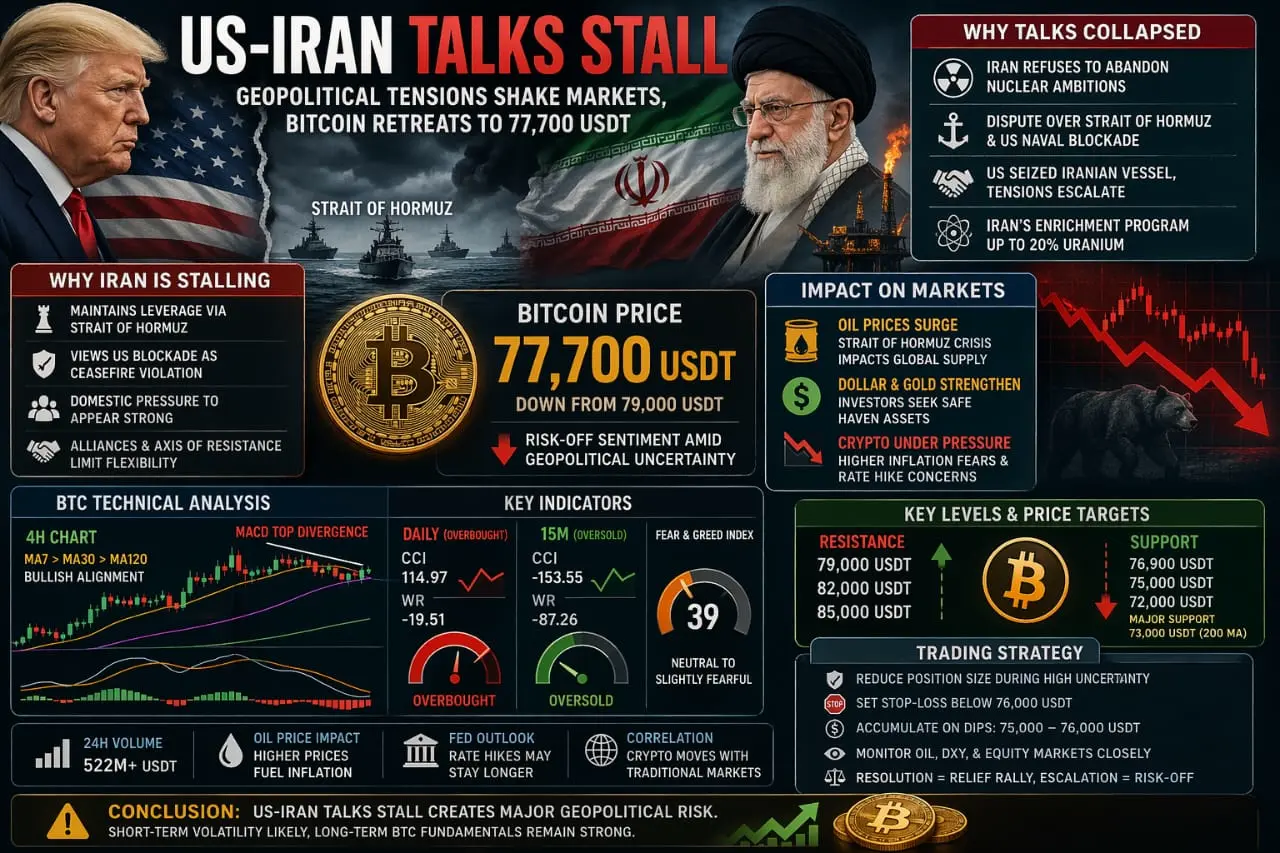
The primary sticking points that led to the collapse of negotiations are multifaceted. First and foremost, Iran's refusal to commit to abandoning its nuclear ambitions remains the central obstacle. US Vice President JD Vance explicitly stated that Tehran would not accept Washington's terms regarding nuclear weapons development. The US demands an affirmative commitment that Iran will not seek nuclear weapons or the tools to quickly achieve them.
The Strait of Hormuz has emerged as another critical flashpoint. Iran continues to essentially control this vital waterway through which approximately 20 percent of global oil shipments pass. President Trump announced that the US would impose a naval blockade on Iranian ports in response to Iran's closure of the strait since the beginning of hostilities on February 28, 2026. This blockade has sent oil prices spiraling worldwide and created significant economic pressure on Iran.
Iran has expressed frustration over Trump's decision to maintain the naval blockade even after Tehran announced it would reopen the strait following a 10-day ceasefire between Israel and Lebanon. Iranian officials have threatened to forgo negotiations entirely after the US military seized an Iranian-flagged vessel attempting to defy the blockade over the weekend.
The scope of Iran's nuclear enrichment program has also been contentious. The proposed enrichment program was based on what analysts describe as an overly ambitious 10-year reactor plan, including enriching uranium up to 20 percent with advanced centrifuges. The International Atomic Energy Agency has tracked Iran's nuclear fuel and documented that Iran had 45.5 kilograms of uranium enriched to 20 percent, representing roughly a seven-to-eight-year supply for the reactor.
Why Iran is Stalling the Talks
Iran's negotiating position appears driven by several factors. The regime is seeking to maintain leverage by controlling the Strait of Hormuz, which gives them significant geopolitical power. Additionally, Iran views the US blockade as a violation of the ceasefire agreement, creating a Catch-22 situation where neither side is willing to make the first concession.
The Iranian leadership, under Supreme Leader Mojtaba Khamenei, faces domestic pressure to appear strong against American demands. The country's economy has been devastated by sanctions, and any deal that appears to capitulate to US demands could undermine the regime's legitimacy. Furthermore, Iran's strategic alliances with regional actors and its position within the Axis of Resistance create additional constraints on its negotiating flexibility.
Impact on Crypto Markets
The breakdown in US-Iran talks has created significant ripples throughout cryptocurrency markets. Bitcoin, which had touched the 79,000 USDT level, has retreated to approximately 77,700 USDT, reflecting the risk-off sentiment that typically accompanies geopolitical uncertainty.
The correlation between geopolitical tensions and crypto market volatility has become increasingly pronounced. When traditional safe-haven assets like gold and the US dollar strengthen during times of crisis, cryptocurrencies often experience sell pressure as investors seek liquidity and stability. The current situation is no exception, with Bitcoin struggling to maintain momentum above key resistance levels.
The Strait of Hormuz crisis has particular implications for crypto markets because it affects global energy prices. Higher oil prices typically lead to inflationary pressures, which can influence Federal Reserve policy decisions. Any indication that the Fed might maintain higher interest rates for longer due to inflation concerns tends to weigh on risk assets, including cryptocurrencies.
BTC Current Price Analysis and Forecast
Bitcoin is currently trading around 77,700 USDT, having retreated from the 79,000 USDT resistance level. Technical analysis reveals a mixed picture. On the 4-hour timeframe, moving averages show a bullish alignment with MA7 above MA30 above MA120, indicating an overall upward trend. However, there are concerning signals as well.
The 4-hour chart displays a MACD top divergence pattern, where price made a new high while the MACD histogram decreased, suggesting potential pullback risk. Daily indicators show overbought conditions with CCI at 114.97 and WR at negative 19.51, indicating the market may be due for a correction.
Short-term indicators on the 15-minute timeframe show oversold conditions with CCI at negative 153.55 and WR at negative 87.26, suggesting potential for a bounce. However, the price has fallen below the 20-period moving average, indicating short-term weakness.
Volume analysis shows significant participation with 24-hour trading volume exceeding 522 million USDT, suggesting strong market interest at current levels. The fear and greed index sits at 39, indicating a neutral to slightly fearful sentiment among market participants.
Trading Strategy and Price Targets
Given the current geopolitical uncertainty and technical setup, a cautious approach is warranted. The immediate support level to watch is around 76,900 USDT, which represents the recent low. If this level holds, Bitcoin could attempt another push toward the 79,000 USDT resistance.
However, if the US-Iran situation deteriorates further and oil prices spike, Bitcoin could face additional downside pressure. In a risk-off scenario, support levels at 75,000 USDT and 72,000 USDT come into play. The 200-day moving average around 73,000 USDT represents a critical long-term support zone.
For upside targets, a break above 79,000 USDT could open the door to 82,000 USDT and potentially 85,000 USDT. However, given the overbought daily conditions and geopolitical risks, the probability of immediate new highs appears limited.
Strategic Recommendations
Traders should consider reducing position sizes during periods of heightened geopolitical uncertainty. Setting stop-losses below the 76,000 USDT level would help protect against a deeper correction. For those looking to accumulate, dollar-cost averaging on dips toward the 75,000-76,000 USDT zone may be prudent.
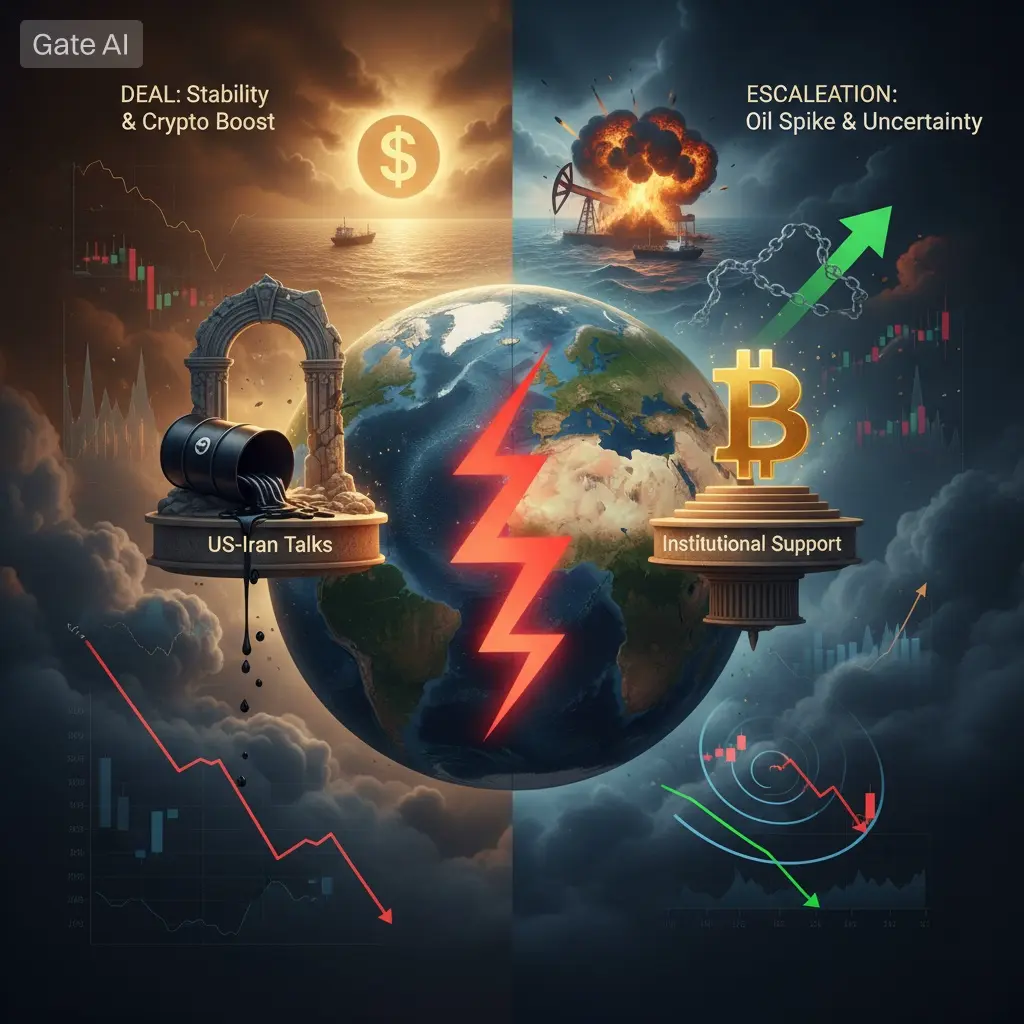
The correlation between traditional markets and crypto has been increasing, so monitoring developments in oil prices, the US dollar index, and equity markets will provide valuable context for crypto trading decisions. Any resolution to the US-Iran tensions could spark a relief rally, while escalation could trigger a broader risk-off move affecting all asset classes.
In conclusion, the US-Iran talks stall represents a significant geopolitical risk factor for crypto markets in the near term. While Bitcoin's long-term fundamentals remain intact, short-term volatility is likely to persist until there is clarity on the diplomatic front. Traders should remain vigilant, manage risk appropriately, and be prepared for rapid shifts in market sentiment as the situation evolves.
repost-content-media
  • Reward
  • 1
  • Repost
  • Share
HighAmbition:
Diamond Hands 💎
#US-IranTalksStall #USIranTalksStall
🚨 Geopolitics Meets Markets: What Comes Next?
The collapse of US–Iran negotiations has injected fresh uncertainty into global markets — and crypto is already reacting. After an intense 21-hour diplomatic push in Islamabad, talks broke down with no agreement, reigniting tensions around nuclear policy, sanctions, and control of the Strait of Hormuz.
🌍 Why This Matters
• Oil flows are under pressure → inflation risks rising
• Risk sentiment is weakening → capital rotating to safety
• Global macro uncertainty is back in focus
📉 Bitcoin Reaction
BTC pulled ba
BTC-0,28%
  • Reward
  • 2
  • Repost
  • Share
AylaShinex:
To The Moon 🌕
View More
#US-IranTalksStall #Gate13thAnniversaryLive Geopolitical Context: The Islamabad Stalemate
The diplomatic breakdown marks a transition from mediation to active containment. Despite Pakistan's efforts to facilitate a truce, two "red line" issues proved insurmountable:
The Nuclear Affirmative: The US demanded a verifiable commitment from Iran to abandon tools for rapid nuclear weaponization—a term Vice President Vance confirmed Tehran flatly rejected.
Strait of Hormuz & The Blockade: Following Iran's closure of the Strait on February 28, the US launched a full naval blockade on April 13. Iran’s
BTC-0,28%
post-image
post-image
post-image
  • Reward
  • 3
  • Repost
  • Share
ybaser:
Buy To Earn 💰️
View More
I agree
#US-IranTalksStall
The recent breakdown in negotiations between the United States and Iran represents one of the most significant geopolitical developments affecting global markets in 2026. The talks, which were held in Islamabad, Pakistan, collapsed after marathon 21-hour negotiations failed to produce a truce deal, with both sides trading accusations and escalating tensions.
Reasons Behind the Talks Stall
The primary sticking points that led to the collapse of negotiations are multifaceted. First and foremost, Iran's refusal to commit to abandoning its nuclear ambitions remains the
BTC-0,28%
  • Reward
  • Comment
  • Repost
  • Share
Load More