
#美伊谈判陷入僵局
US-IRAN DEADLOCK MY FULL MARKET ANALYSIS BEFORE THE APRIL 26 DEADLINE
WHERE WE ACTUALLY STAND TODAY
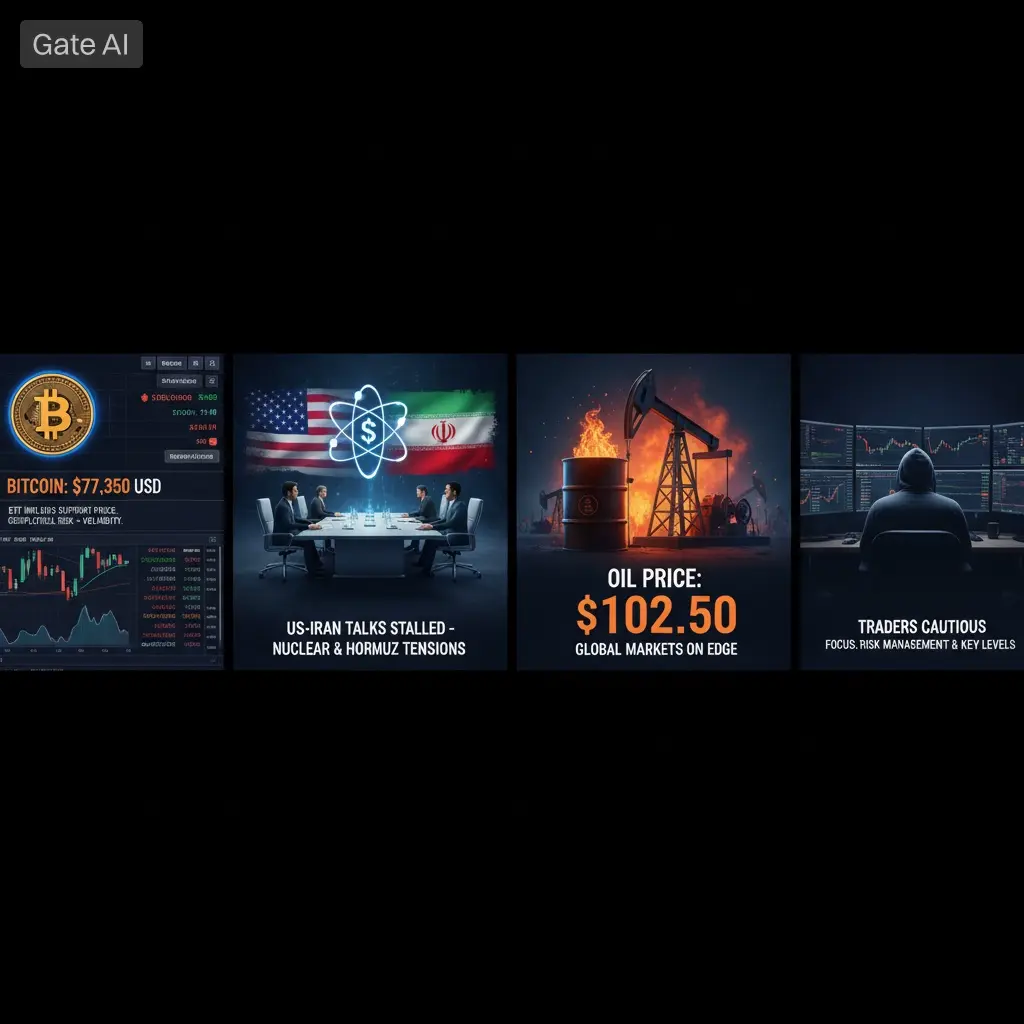
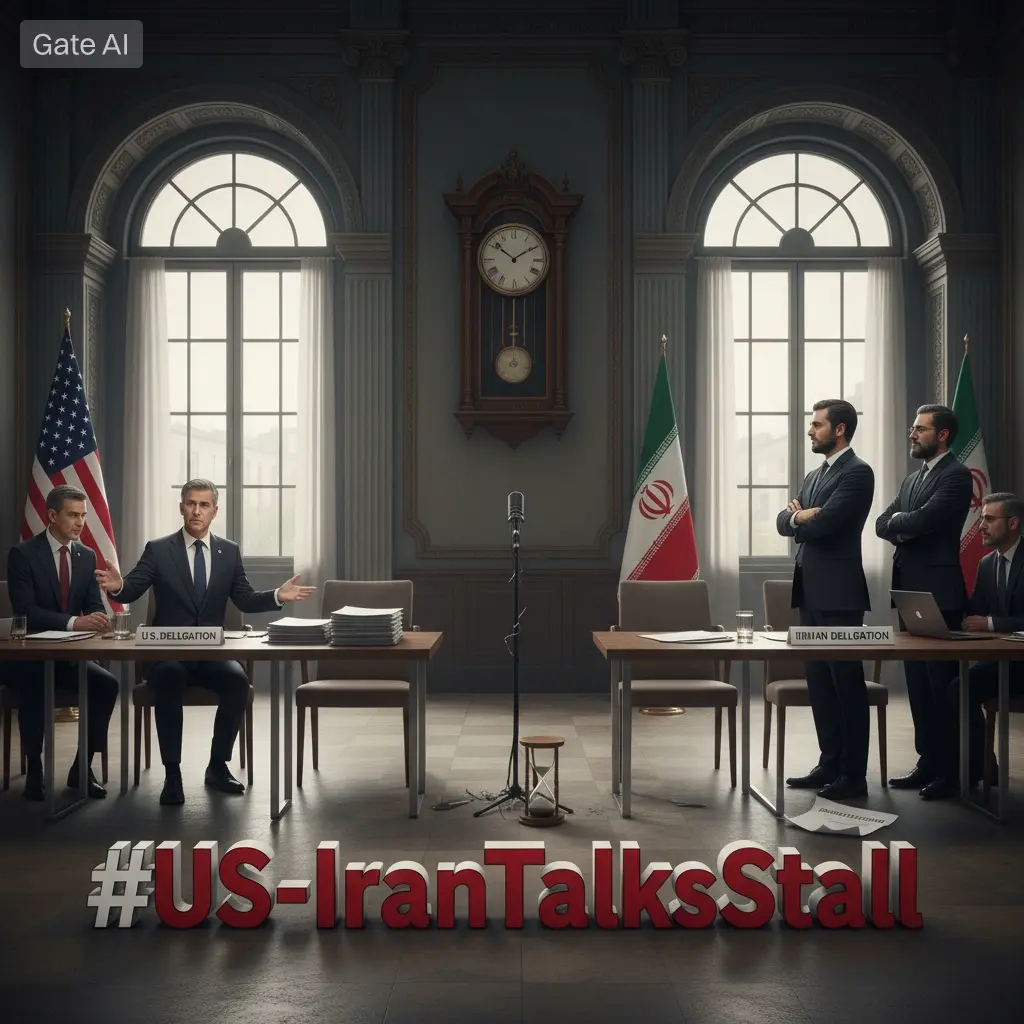
Let me give you the unfiltered picture as of April 25, 2026. The ceasefire that Pakistan brokered on April 8 is functionally dead. Not officially but functionally. Here is the evidence. The Islamabad talks on April 11 and 12 lasted 21 hours and ended with both delegations leaving without any agreement. The two core issues remain completely unresolved Iran's nuclear program and the status of the Strait of Hormuz. Iran's Foreign Ministry spokesperson confirmed there is "no plan for a second round of negotiations with the US for now." Trump canceled Witkoff and Kushner's planned Pakistan trip on April 25, saying Iran "offered a lot, but not enough." The ceasefire technically expires on April 26 the same day as this discussion deadline. We are, right now, at the most dangerous 24-hour window of this entire conflict.
The dual blockade situation tells you everything you need to know. The US Navy is blockading Iranian ports while Iran restricts commercial shipping through the Strait of Hormuz. On April 17, Iran declared the Strait open oil prices crashed 11% in hours. By April 18, Iran reimposed restrictions after Trump refused to end the US naval blockade. On April 21, the US Navy seized an Iranian container ship in the Gulf of Oman. Vessels attempting transit are being fired upon. Iran has reportedly even lost track of some of the mines it planted in the strait, meaning it physically cannot fully reopen it even if it wanted to. This is not a ceasefire. This is a frozen war with both sides applying maximum economic pressure simultaneously.
QUESTION ONE — WILL THE CEASEFIRE BREAK DOWN AND WILL THE STRAIT STAY BLOCKED
My direct answer: the formal ceasefire framework will collapse within 72 hours. Here is my reasoning.
Trump's core demand is Iran's unconditional nuclear disarmament. He stated on March 6 there will be "no deal except unconditional surrender." Iran's counter-proposal demands war reparations, security guarantees, international recognition of Iranian sovereignty over the Strait, and only a five-year pause on uranium enrichment versus Washington's demand for a 20-year pause. These positions are not negotiating postures that are close to each other. They are fundamentally incompatible frameworks. Abbas Araghchi said Iran was "inches away from an MOU" in Islamabad and accused the US of moving the goalposts but Trump's cancellation of the envoy trip on April 25 signals Washington is not interested in further concessions at this stage.
The Strait of Hormuz will remain effectively blocked regardless of what any diplomatic statement says. Even if Iran formally declares it open again — as it did on April 17 commercial traffic will not return without confidence in physical safety. Chevron's CEO stated publicly that ships would only transit when "our people and cargo can be transited with a high degree of confidence." That confidence does not exist right now. The strait has been carrying mines, IRGC naval vessels are boarding ships, and vessels under armed escort were still fired upon during the brief April 17 reopening window. Experts warn that even if a deal is reached today, it could take months to restore supply chains to pre-war levels. The cumulative effect has already breached half a billion barrels of lost supply 13 million barrels per day of crude, condensates, and natural gas liquids shut in for nearly two months.
My ceasefire breakdown probability: 70% within the next 72 hours. My Strait full reopening probability before May 2026: less than 25%.
QUESTION TWO — HOW WILL OIL AND GLOBAL MARKETS EVOLVE IF CONFLICT ESCALATES
This is where the analysis gets critically important for every trader on Gate Square. Let me break it down by scenario with market implications for each.
Scenario One Full Ceasefire Collapse and Resumed US Strikes (65% probability)
If Trump resumes military operations against Iran which he has explicitly threatened, including destroying Iranian power plants, bridges, and energy infrastructure the market reaction will be immediate and severe across every asset class simultaneously.
Oil will spike toward $130 to $150 per barrel from current elevated levels. The Strait of Hormuz carries 20 million barrels of oil per day and 20% of global LNG. Asian markets are most exposed 84% of crude through the strait goes to Asia, with China receiving one third of its total oil supply via this route. A full blockade continuation means China, Japan, South Korea, and India face energy emergency conditions within weeks. Saudi Arabia and UAE have alternative pipeline routes but cannot compensate for the full volume of Hormuz throughput.
Global equity markets will enter crisis mode. The S&P 500, already under pressure from tariff uncertainty and Fed chair confirmation volatility, would face a 7 to 12% drawdown in the immediate escalation window. European markets would follow given their 12 to 14% LNG dependency on Qatari supply through the strait Qatar's Ras Laffan facility is already operating at reduced capacity after strike damage.
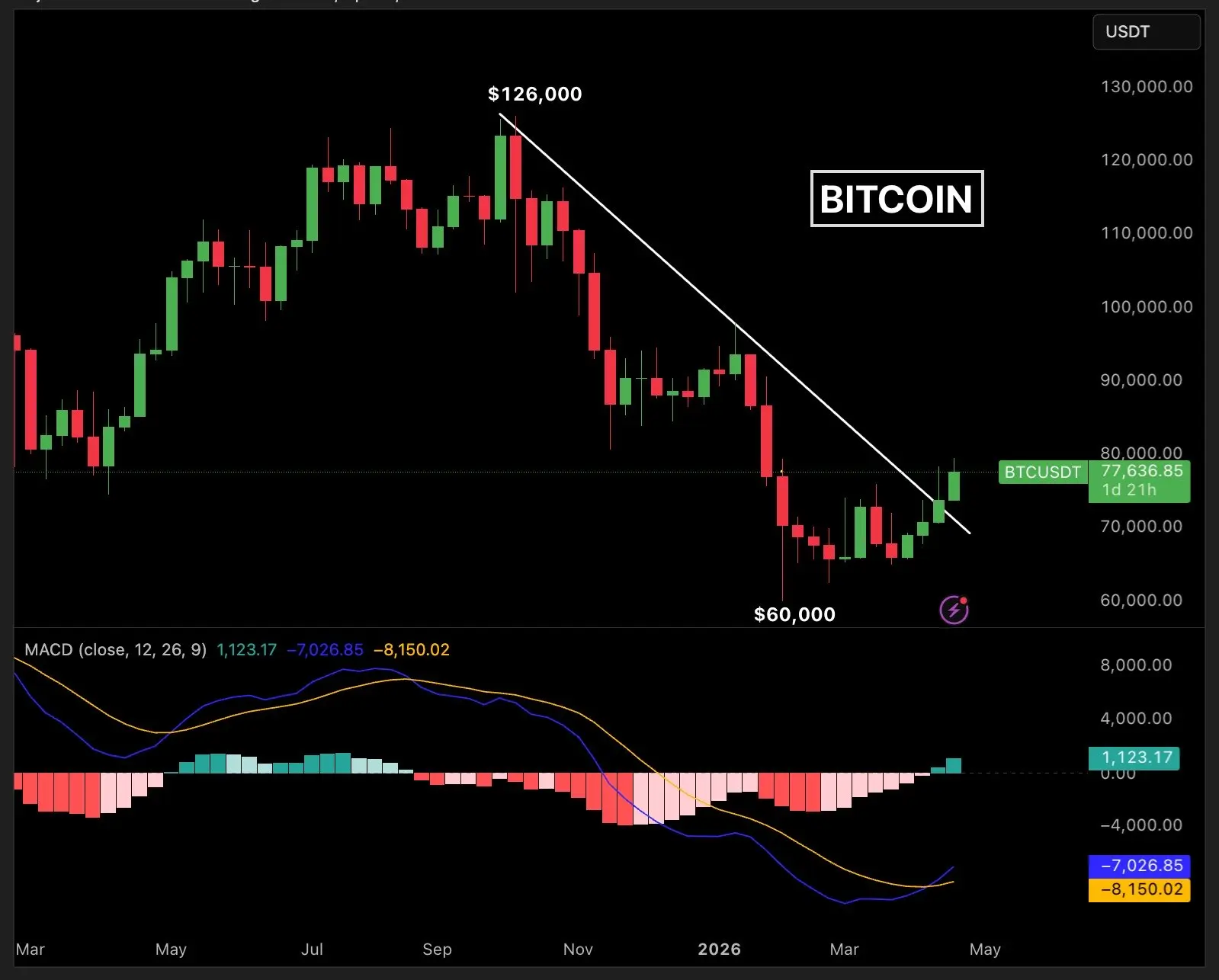
Crypto markets will experience a two-phase response. Phase one: immediate risk-off selling as fear dominates. Bitcoin could retest $70,000 to $72,000. Altcoins would drop 15 to 25% across the board. Phase two within 5 to 10 days of sustained escalation: Bitcoin and gold begin decoupling from traditional risk assets as inflation expectations surge. If oil at $140+ becomes the base case for months, stagflation fears dominate the macro narrative and Bitcoin's value proposition as a non-sovereign, inflation-resistant asset gains urgent relevance. History shows this pattern clearly initial shock selling in crypto followed by structural accumulation as the inflation thesis gains credibility. The April 8 ceasefire announcement moved Bitcoin from $63,000 to $72,000 in hours. A breakdown will reverse that move first then create the next accumulation window.
Scenario Two Partial Agreement Extends Ceasefire 15 to 20 Days (25% probability)
If Pakistan extracts a partial commitment from Iran not full nuclear disarmament, but a verified freeze on enrichment plus Hormuz reopening Trump accepts a 15 to 20 day extension to allow Phase 2 negotiations. Oil drops $15 to $20 immediately on the news. Bitcoin reacts with a short squeeze from $75,000 toward $80,000 to $82,000. The Fear and Greed Index, currently at 32 (Fear), jumps toward 55 to 60 in a single session. This is the bull scenario for crypto in the short term. However, analysts note that even this scenario does not fully resolve the supply disruption. Half a billion barrels of cumulative loss cannot be recovered overnight. Oil above $90 remains the base case even with a full Strait reopening, which means inflation pressure continues.
Scenario Three Broader Regional Escalation (10% probability)
If Iran activates Hezbollah in Lebanon beyond current levels, or if IRGC-linked groups strike Saudi Aramco facilities which remain the single most critical oil infrastructure target in the world the market consequences become catastrophic. Oil above $160 to $180. Global shipping insurance rates rendering most commercial routes economically unviable. Emergency central bank intervention in multiple countries. The IMF has already warned that global growth will take a measurable hit even if the ceasefire holds. A full regional war spreading to Gulf state infrastructure represents a tail risk that markets are not fully pricing. In this scenario, stablecoins and gold are the only near-term safe positions. Bitcoin and crypto would face a sharp 30 to 40% correction before recovering as the monetary debasement narrative dominates in the medium term.
MY TRADING POSITION AND FINAL ANALYSIS
I am currently positioned with reduced risk-on exposure and elevated stablecoin reserves specifically because the next 24 to 48 hours represent the highest geopolitical uncertainty window of 2026. The ceasefire deadline is April 26. Trump canceled the envoy trip on April 25. Iran says there is no plan for further talks. These are not signals of imminent resolution. They are signals of a breakdown in progress.
The IMF confirmed that global growth is already taking a hit and we are "not going back to the Goldilocks scenario" of stable growth and low inflation. Energy experts confirm that 13 million barrels per day of production remains shut-in and that "we are losing it every single day this goes on." White House press secretary confirmed the US is "strangling their economy and it is getting weakened by the second." Neither side is blinking. Both sides are intensifying pressure.
For traders on Gate Square: watch the next 24 hours on Pakistan. Islamabad is the only active diplomatic channel. Any signal from Pakistani PM Shehbaz Sharif or Field Marshal Asim Munir about a third round of talks is the leading indicator for a relief rally. Absence of that signal by April 26 confirms breakdown and the position is defensive stablecoins, BTC accumulation on dips, and short exposure to oil-sensitive equities.
The Strait of Hormuz is the world's most important 34-kilometer waterway. It is currently contested by the world's most powerful navy and the most entrenched revolutionary government in the Middle East. The resolution of that contest will define oil prices, inflation trajectories, central bank policy, and crypto market direction for the rest of 2026. This is not a regional conflict. It is the defining macro variable of the year.
Position accordingly. Stay informed. Manage risk carefully.
US-IRAN DEADLOCK MY FULL MARKET ANALYSIS BEFORE THE APRIL 26 DEADLINE
WHERE WE ACTUALLY STAND TODAY
Let me give you the unfiltered picture as of April 25, 2026. The ceasefire that Pakistan brokered on April 8 is functionally dead. Not officially but functionally. Here is the evidence. The Islamabad talks on April 11 and 12 lasted 21 hours and ended with both delegations leaving without any agreement. The two core issues remain completely unresolved Iran's nuclear program and the status of the Strait of Hormuz. Iran's Foreign Ministry spokesperson confirmed there is "no plan for a second round of negotiations with the US for now." Trump canceled Witkoff and Kushner's planned Pakistan trip on April 25, saying Iran "offered a lot, but not enough." The ceasefire technically expires on April 26 the same day as this discussion deadline. We are, right now, at the most dangerous 24-hour window of this entire conflict.
The dual blockade situation tells you everything you need to know. The US Navy is blockading Iranian ports while Iran restricts commercial shipping through the Strait of Hormuz. On April 17, Iran declared the Strait open oil prices crashed 11% in hours. By April 18, Iran reimposed restrictions after Trump refused to end the US naval blockade. On April 21, the US Navy seized an Iranian container ship in the Gulf of Oman. Vessels attempting transit are being fired upon. Iran has reportedly even lost track of some of the mines it planted in the strait, meaning it physically cannot fully reopen it even if it wanted to. This is not a ceasefire. This is a frozen war with both sides applying maximum economic pressure simultaneously.
QUESTION ONE — WILL THE CEASEFIRE BREAK DOWN AND WILL THE STRAIT STAY BLOCKED
My direct answer: the formal ceasefire framework will collapse within 72 hours. Here is my reasoning.
Trump's core demand is Iran's unconditional nuclear disarmament. He stated on March 6 there will be "no deal except unconditional surrender." Iran's counter-proposal demands war reparations, security guarantees, international recognition of Iranian sovereignty over the Strait, and only a five-year pause on uranium enrichment versus Washington's demand for a 20-year pause. These positions are not negotiating postures that are close to each other. They are fundamentally incompatible frameworks. Abbas Araghchi said Iran was "inches away from an MOU" in Islamabad and accused the US of moving the goalposts but Trump's cancellation of the envoy trip on April 25 signals Washington is not interested in further concessions at this stage.
The Strait of Hormuz will remain effectively blocked regardless of what any diplomatic statement says. Even if Iran formally declares it open again — as it did on April 17 commercial traffic will not return without confidence in physical safety. Chevron's CEO stated publicly that ships would only transit when "our people and cargo can be transited with a high degree of confidence." That confidence does not exist right now. The strait has been carrying mines, IRGC naval vessels are boarding ships, and vessels under armed escort were still fired upon during the brief April 17 reopening window. Experts warn that even if a deal is reached today, it could take months to restore supply chains to pre-war levels. The cumulative effect has already breached half a billion barrels of lost supply 13 million barrels per day of crude, condensates, and natural gas liquids shut in for nearly two months.
My ceasefire breakdown probability: 70% within the next 72 hours. My Strait full reopening probability before May 2026: less than 25%.
QUESTION TWO — HOW WILL OIL AND GLOBAL MARKETS EVOLVE IF CONFLICT ESCALATES
This is where the analysis gets critically important for every trader on Gate Square. Let me break it down by scenario with market implications for each.
Scenario One Full Ceasefire Collapse and Resumed US Strikes (65% probability)
If Trump resumes military operations against Iran which he has explicitly threatened, including destroying Iranian power plants, bridges, and energy infrastructure the market reaction will be immediate and severe across every asset class simultaneously.
Oil will spike toward $130 to $150 per barrel from current elevated levels. The Strait of Hormuz carries 20 million barrels of oil per day and 20% of global LNG. Asian markets are most exposed 84% of crude through the strait goes to Asia, with China receiving one third of its total oil supply via this route. A full blockade continuation means China, Japan, South Korea, and India face energy emergency conditions within weeks. Saudi Arabia and UAE have alternative pipeline routes but cannot compensate for the full volume of Hormuz throughput.
Global equity markets will enter crisis mode. The S&P 500, already under pressure from tariff uncertainty and Fed chair confirmation volatility, would face a 7 to 12% drawdown in the immediate escalation window. European markets would follow given their 12 to 14% LNG dependency on Qatari supply through the strait Qatar's Ras Laffan facility is already operating at reduced capacity after strike damage.
Crypto markets will experience a two-phase response. Phase one: immediate risk-off selling as fear dominates. Bitcoin could retest $70,000 to $72,000. Altcoins would drop 15 to 25% across the board. Phase two within 5 to 10 days of sustained escalation: Bitcoin and gold begin decoupling from traditional risk assets as inflation expectations surge. If oil at $140+ becomes the base case for months, stagflation fears dominate the macro narrative and Bitcoin's value proposition as a non-sovereign, inflation-resistant asset gains urgent relevance. History shows this pattern clearly initial shock selling in crypto followed by structural accumulation as the inflation thesis gains credibility. The April 8 ceasefire announcement moved Bitcoin from $63,000 to $72,000 in hours. A breakdown will reverse that move first then create the next accumulation window.
Scenario Two Partial Agreement Extends Ceasefire 15 to 20 Days (25% probability)
If Pakistan extracts a partial commitment from Iran not full nuclear disarmament, but a verified freeze on enrichment plus Hormuz reopening Trump accepts a 15 to 20 day extension to allow Phase 2 negotiations. Oil drops $15 to $20 immediately on the news. Bitcoin reacts with a short squeeze from $75,000 toward $80,000 to $82,000. The Fear and Greed Index, currently at 32 (Fear), jumps toward 55 to 60 in a single session. This is the bull scenario for crypto in the short term. However, analysts note that even this scenario does not fully resolve the supply disruption. Half a billion barrels of cumulative loss cannot be recovered overnight. Oil above $90 remains the base case even with a full Strait reopening, which means inflation pressure continues.
Scenario Three Broader Regional Escalation (10% probability)
If Iran activates Hezbollah in Lebanon beyond current levels, or if IRGC-linked groups strike Saudi Aramco facilities which remain the single most critical oil infrastructure target in the world the market consequences become catastrophic. Oil above $160 to $180. Global shipping insurance rates rendering most commercial routes economically unviable. Emergency central bank intervention in multiple countries. The IMF has already warned that global growth will take a measurable hit even if the ceasefire holds. A full regional war spreading to Gulf state infrastructure represents a tail risk that markets are not fully pricing. In this scenario, stablecoins and gold are the only near-term safe positions. Bitcoin and crypto would face a sharp 30 to 40% correction before recovering as the monetary debasement narrative dominates in the medium term.
MY TRADING POSITION AND FINAL ANALYSIS
I am currently positioned with reduced risk-on exposure and elevated stablecoin reserves specifically because the next 24 to 48 hours represent the highest geopolitical uncertainty window of 2026. The ceasefire deadline is April 26. Trump canceled the envoy trip on April 25. Iran says there is no plan for further talks. These are not signals of imminent resolution. They are signals of a breakdown in progress.
The IMF confirmed that global growth is already taking a hit and we are "not going back to the Goldilocks scenario" of stable growth and low inflation. Energy experts confirm that 13 million barrels per day of production remains shut-in and that "we are losing it every single day this goes on." White House press secretary confirmed the US is "strangling their economy and it is getting weakened by the second." Neither side is blinking. Both sides are intensifying pressure.
For traders on Gate Square: watch the next 24 hours on Pakistan. Islamabad is the only active diplomatic channel. Any signal from Pakistani PM Shehbaz Sharif or Field Marshal Asim Munir about a third round of talks is the leading indicator for a relief rally. Absence of that signal by April 26 confirms breakdown and the position is defensive stablecoins, BTC accumulation on dips, and short exposure to oil-sensitive equities.
The Strait of Hormuz is the world's most important 34-kilometer waterway. It is currently contested by the world's most powerful navy and the most entrenched revolutionary government in the Middle East. The resolution of that contest will define oil prices, inflation trajectories, central bank policy, and crypto market direction for the rest of 2026. This is not a regional conflict. It is the defining macro variable of the year.
Position accordingly. Stay informed. Manage risk carefully.