Chidifinance

vip
Age 4.5 Yıl
Peak Tier 0
No content yet
#SECApprovesNasdaqTokenizedSecuritiesTrading
The Economic Advantage of RFQ Resolvers
As DeFi matures, the limits of traditional AMMs are becoming clearer, especially when it comes to slippage and execution quality.
On STONfi, the Omniston protocol introduces a shift from passive liquidity to active, competitive market making through its RFQ (Request-for-Quote) resolver network on The Open Network.
Instead of relying solely on a constant-product formula, Omniston sends a trade request to multiple resolvers, professional market makers who use their own liquidity and pricing algorithms to compet
TON2,1%
post-image
  • Reward
  • Comment
  • Repost
  • Share
High-leverage trading is booming on $TON, and smart LPs are positioning for it.
Perps platforms like Storm Trade are driving massive volume, and that flow is hitting liquidity pools on STONfi.
Right now, the STORM/TON pool stands out.
Why?
Because it’s not just farming, it’s real yield from real activity:
• Earn swap fees from high trading volume
• Plus ~20,000 STORM monthly rewards (active farm)
• No LP lock-up; enter and exit freely
This means you’re not guessing market direction.
You’re providing liquidity to the traders and earning from their activity.
On The Open Network, low fees and fas
TON2,1%
STORM-0,79%
post-image
post-image
  • Reward
  • Comment
  • Repost
  • Share
High-yield pools are hot on STONfi right now, and it’s not by chance.
It comes down to two things: farm boosts and real trading volume.
Pools like STON/USDT and FRT/TON are delivering strong returns because LPs earn from:
• Swap fees (real activity)
• Extra token rewards (incentives)
That’s how you still see 20%–30%+ APR even in a calmer market.
On $TON, low fees (~$0.01) and fast transactions make farming actually profitable for everyday users, not just whales.
Plus, Omniston is routing trades through the most efficient pools, which means:
more usage to more fees to better returns for LPs
Ove
TON2,1%
post-image
post-image
  • Reward
  • Comment
  • Repost
  • Share
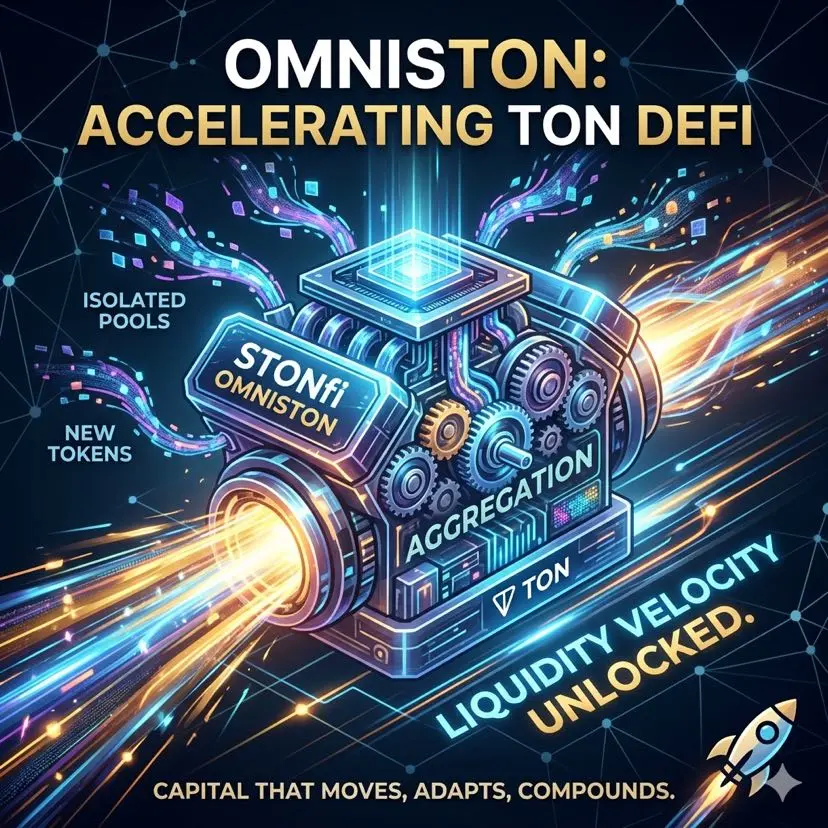
Every blockchain lives or dies by one thing: Liquidity Velocity, how fast capital moves, adapts, and compounds.
On TON, that engine is STONfi’s Omniston.
Most ecosystems suffer from a hidden problem: fragmented liquidity. Capital gets stuck in low-volume pools, trades become inefficient, and new projects struggle to gain traction. That friction kills growth.
Omniston flips that completely.
Instead of isolated pools competing for liquidity, it acts as a unified aggregation layer, routing every trade through the most efficient path available. The result is simple but powerful:
no trapped capital
TON2,1%
DEFI1,87%
post-image
  • Reward
  • Comment
  • Repost
  • Share
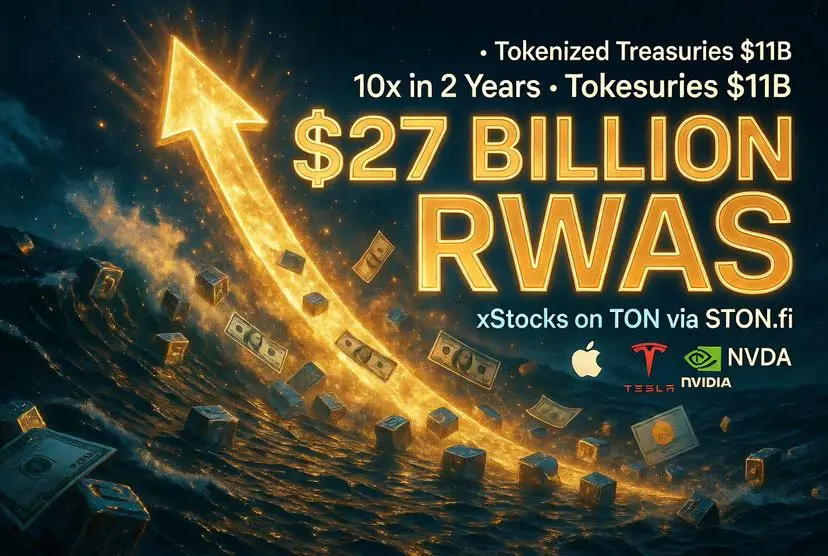
Real-World Assets (RWAs) on public blockchains have exploded to ~$21B with over 620K holders, a 10x increase in just two years.
Tokenized U.S. Treasuries alone account for $9B across 62 products.
The key insight? RWAs aren’t just experimental anymore, they’re a real, investable asset class. But growth isn’t only about issuing tokens; it’s about who can actually hold, trade, and access them.
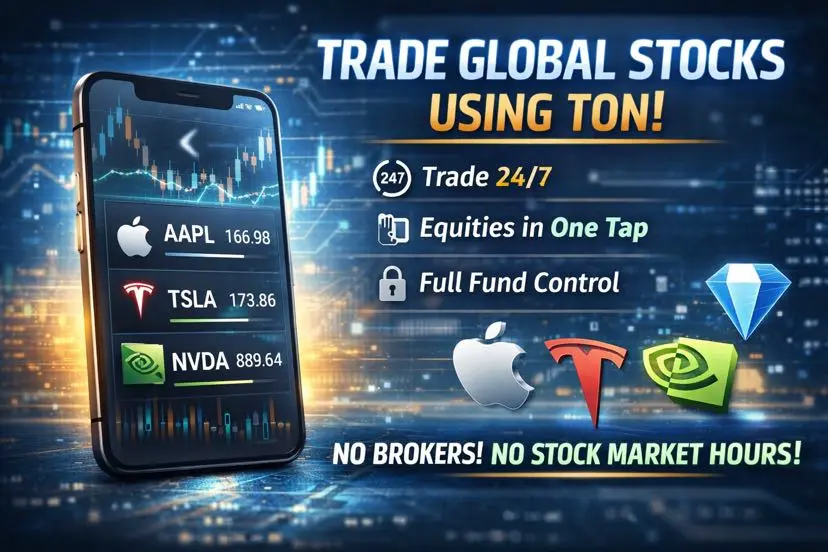
On $TON, STONfi makes this possible through xStocks, enabling seamless access to tokenized U.S. equities and other RWAs, no broker, no border, just on-chain ownership.
The RWA wave is here.
Are you riding
TON2,1%
post-image
  • Reward
  • Comment
  • Repost
  • Share
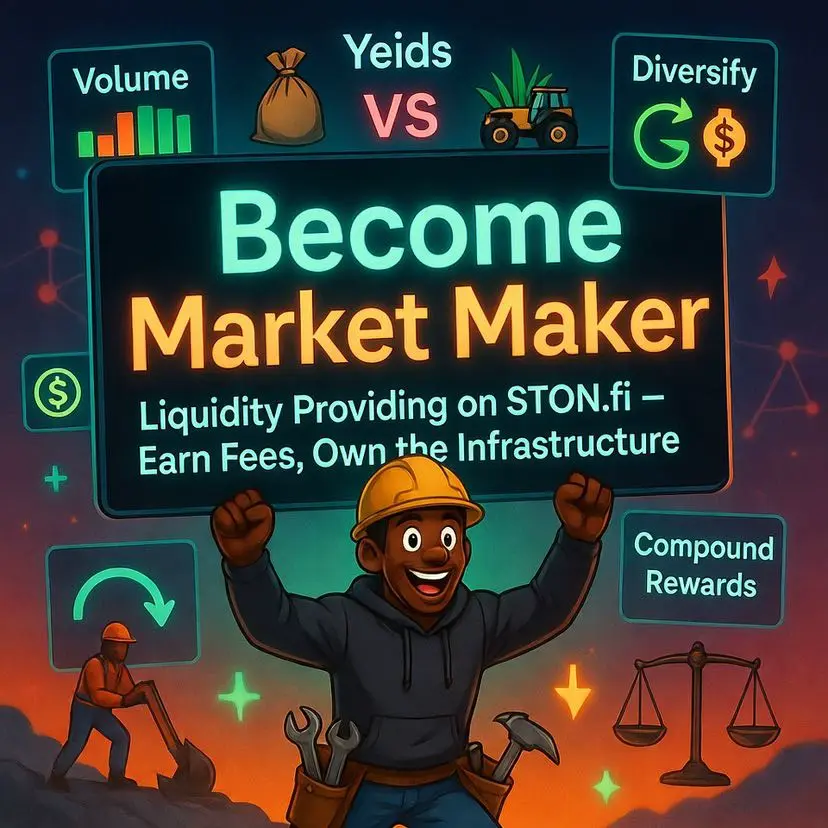
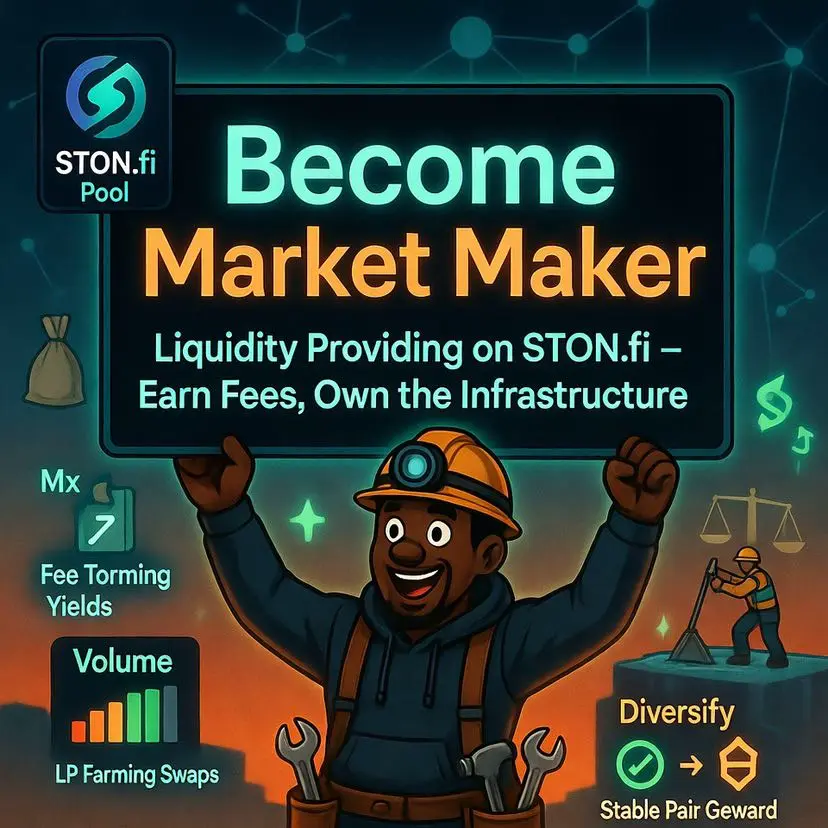
“Liquidity Provider” might be the most underrated job in DeFi.
In traditional finance, banks and market makers earn fees whenever people exchange currencies or assets. In decentralized finance, platforms like STONfi on The Open Network allow any user to play that role.
When you provide liquidity to a trading pool, you supply the tokens that make swaps possible. In return, you receive a share of the trading fees generated by that pool.
How to approach liquidity providing strategically
Focus on volume
Pools with higher trading activity generate more swap fees for liquidity providers.
Diversify l
TON2,1%
post-image
post-image
  • Reward
  • Comment
  • Repost
  • Share
The road to the future of DeFi is built on innovation. STONfi has grown from a new project into the largest DEX on The Open Network, with a mission to make finance open, efficient, and accessible to everyone.
As the ecosystem evolves, the focus remains on expanding key infrastructure that powers the $TON DeFi economy.
The STONfi focus going forward
Innovation
Continued development of tools like Omniston for better swap execution and the expansion of xStocks, bringing tokenized real world assets into DeFi.
Community governance
Strengthening the DAO so users and stakeholders can help shape prot
TON2,1%
post-image
post-image
  • Reward
  • 1
  • Repost
  • Share
ybaservip:
To The Moon 🌕
Why rely on “trust me” when you can rely on code-enforced transactions? In DeFi, the principle is simple: code is law.
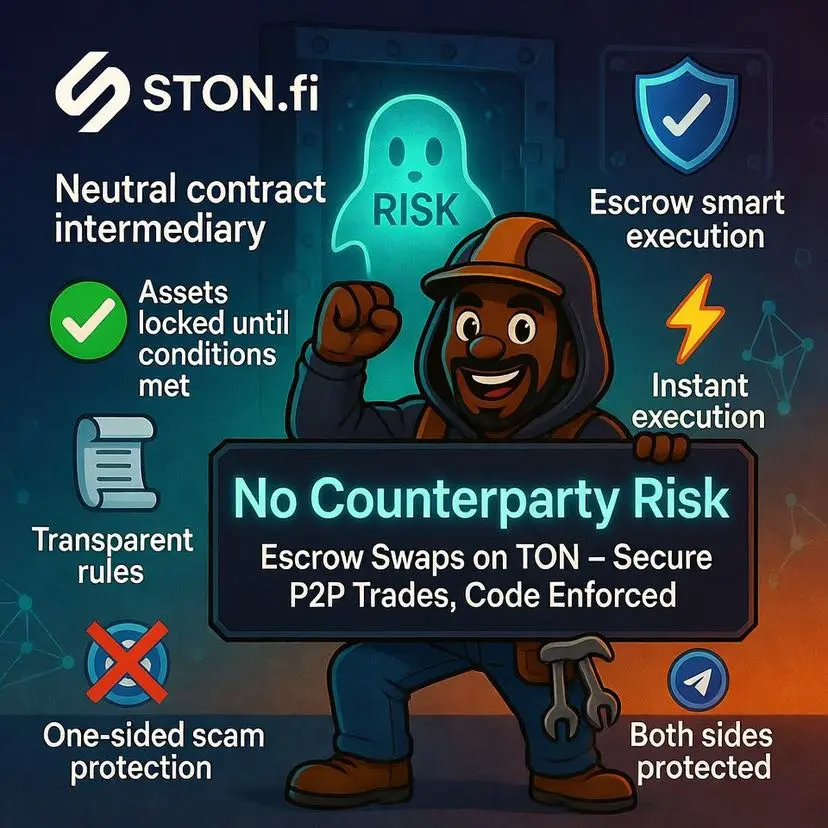
Peer-to-peer trading often carries counterparty risk. One side might send funds while the other fails to complete their part of the deal. On STONfi, this problem is addressed with Escrow Swaps, built on The Open Network.
Escrow Swaps use smart contracts to act as a neutral intermediary. Assets are locked in the contract and are only released when the predefined conditions of the trade are fulfilled.
Why escrow swaps matter
Reduced counterparty risk
The smart contract holds bo
TON2,1%
post-image
post-image
  • Reward
  • Comment
  • Repost
  • Share
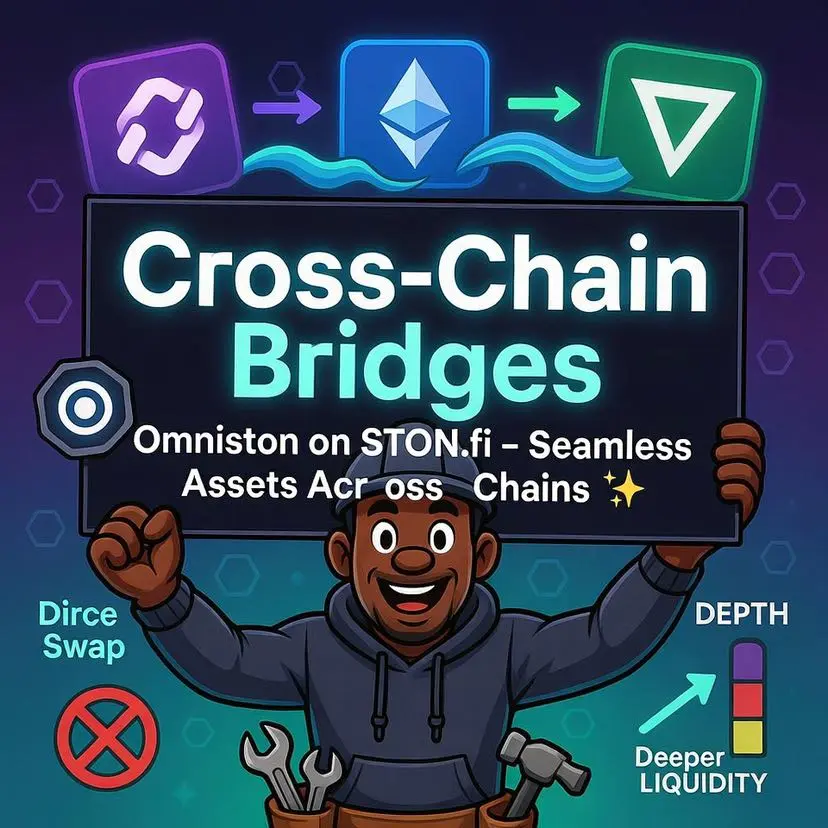
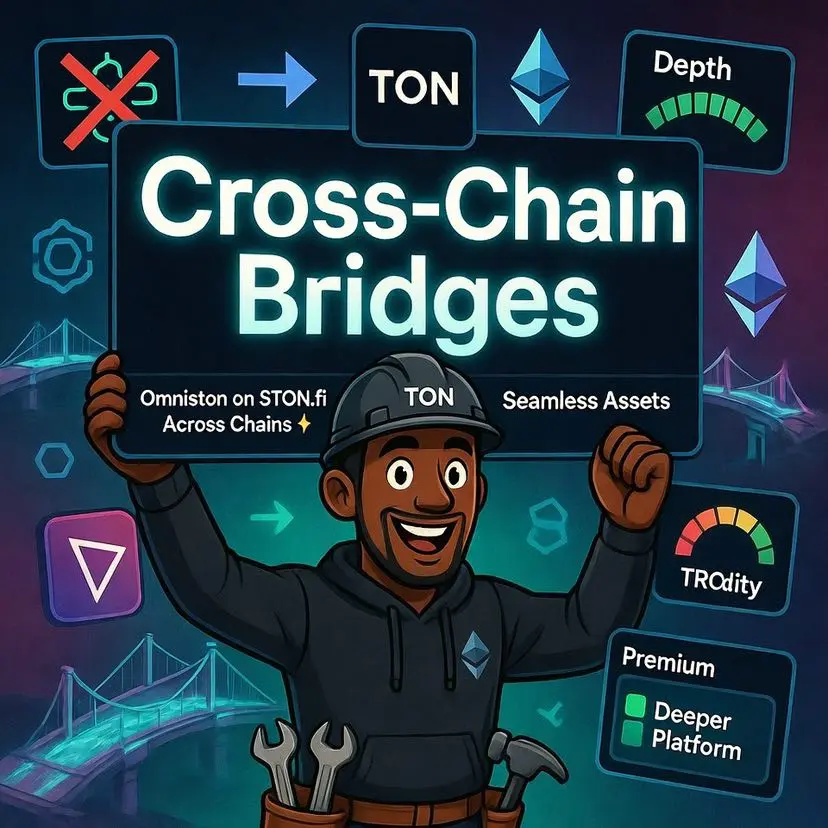
Cross-chain technology is becoming one of the biggest frontiers in crypto. The future likely won’t be dominated by a single blockchain, but by multiple networks connected through shared liquidity and infrastructure.
Platforms like STONfi are working toward that direction through tools such as Omniston, built on $TON.
The goal is to make it easier for users to interact with assets across different ecosystems such as $ETH and $TRON without relying on complicated bridges or centralized exchanges.
The cross-chain vision
Simpler asset movement
Users can potentially swap assets between different blo
TON2,1%
ETH0,27%
TRX1,15%
post-image
post-image
  • Reward
  • Comment
  • Repost
  • Share
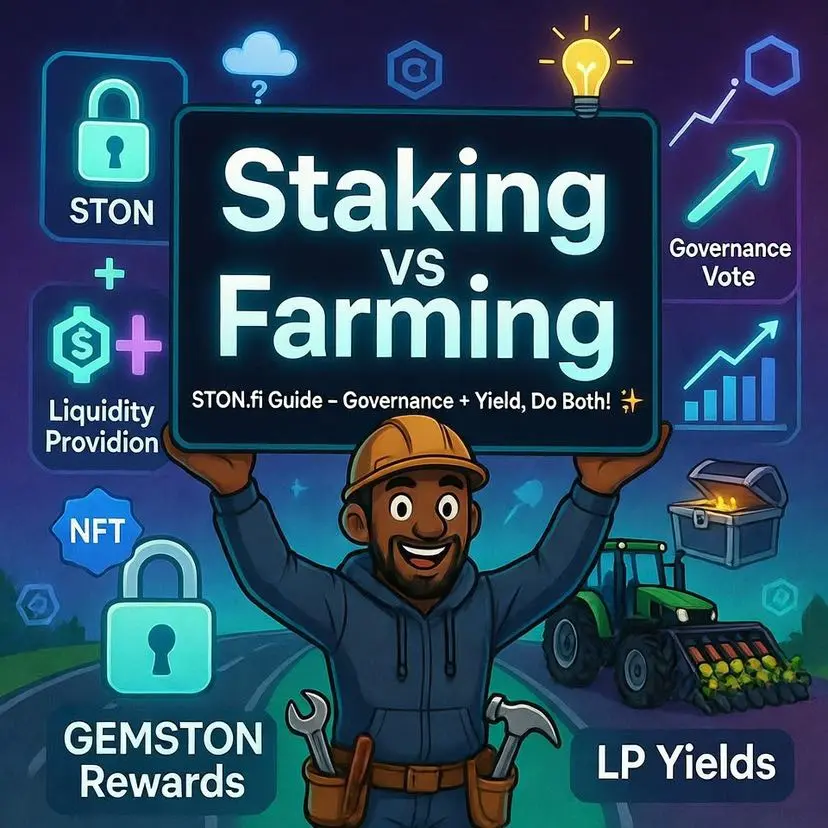
Staking or Farming? Knowing the difference can help you build a smarter DeFi yield strategy.
Many beginners use the terms interchangeably, but on STONfi they serve different roles within the ecosystem on The Open Network.
The key difference
Staking
When you stake STON, you lock your tokens to support the protocol. In return, you earn GEMSTON rewards and governance power, often represented through mechanisms like the Arkenston NFT.
This approach is typically used by long-term supporters who want influence in the DAO.
Farming
Yield farming involves providing liquidity to a trading pool (for exam
TON2,1%
post-image
post-image
  • Reward
  • Comment
  • Repost
  • Share
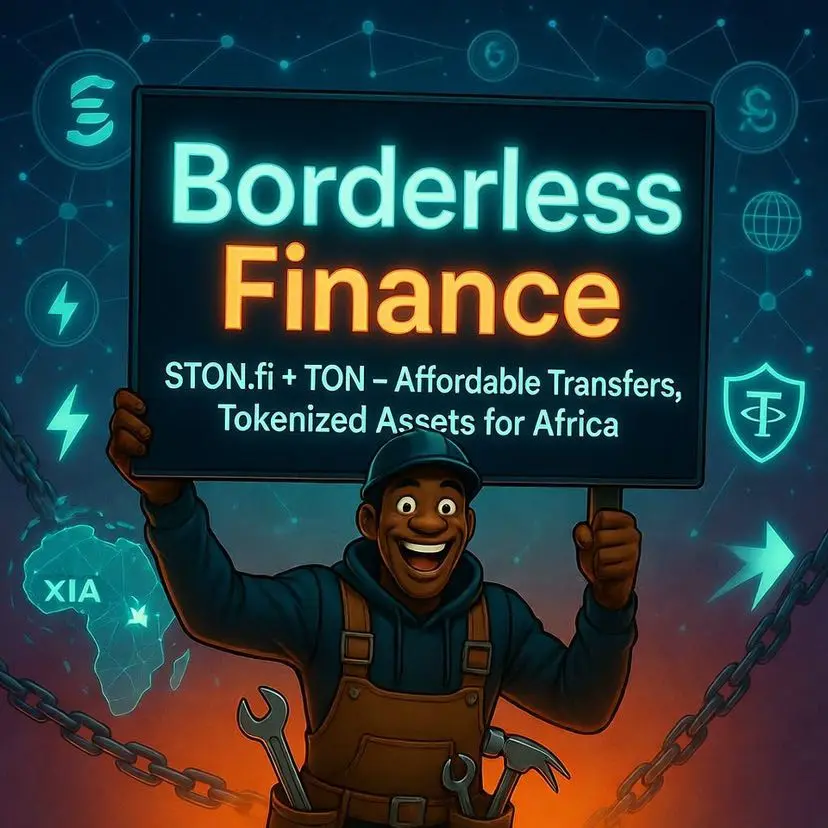
Traditional finance has left many people in emerging markets dealing with high fees, slow cross-border transfers, and limited access to global investments. Decentralized finance aims to offer an alternative. On The Open Network, platforms like STONfi are helping expand that access through mobile-friendly DeFi tools. 📱
Why platforms like STONfi matter for Africa
Lower transaction costs
On-chain transfers often cost a fraction of traditional remittance services such as Western Union, making cross-border payments more affordable.
Access to global assets
Tokenized assets such as xStocks can give
TON2,1%
post-image
post-image
  • Reward
  • Comment
  • Repost
  • Share
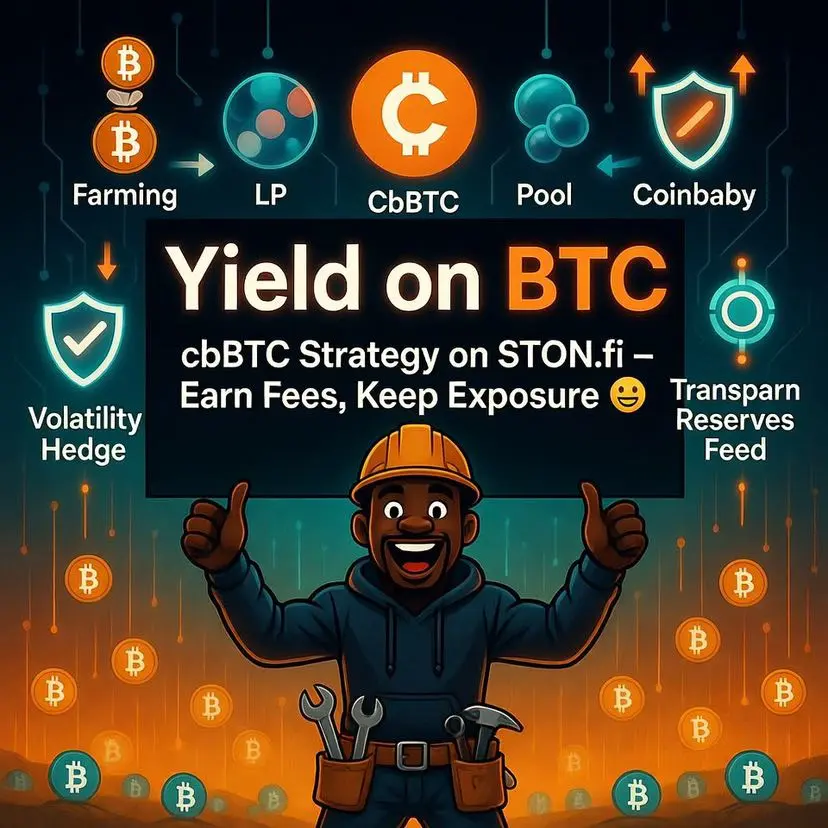
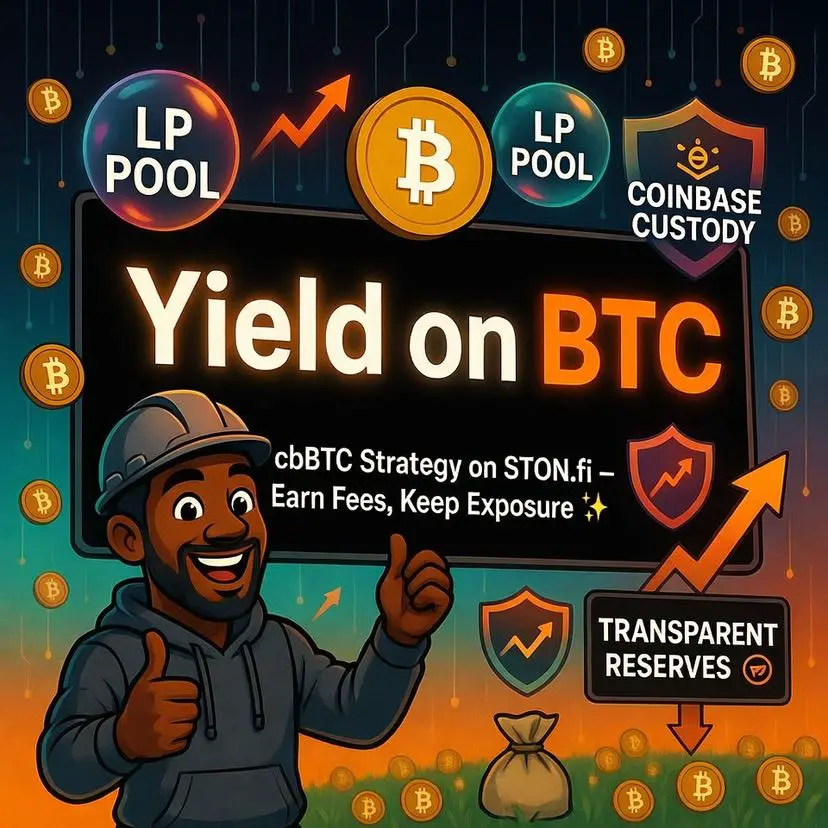
What is cbBTC and why are Bitcoin holders paying attention to it?
cbBTC is a tokenized version of Bitcoin issued by Coinbase. It represents 1:1 backed Bitcoin, allowing BTC to move and interact with DeFi ecosystems that native Bitcoin normally cannot access.
For years, Bitcoin has mostly functioned as a store of value. But tokenized versions like cbBTC allow that liquidity to participate in decentralized finance.
On The Open Network ecosystem, platforms such as STONfi allow users to utilize cbBTC in different ways.
Why cbBTC is gaining attention
DeFi liquidity
Users can provide cbBTC to liquid
BTC0,3%
TON2,1%
post-image
post-image
  • Reward
  • Comment
  • Repost
  • Share
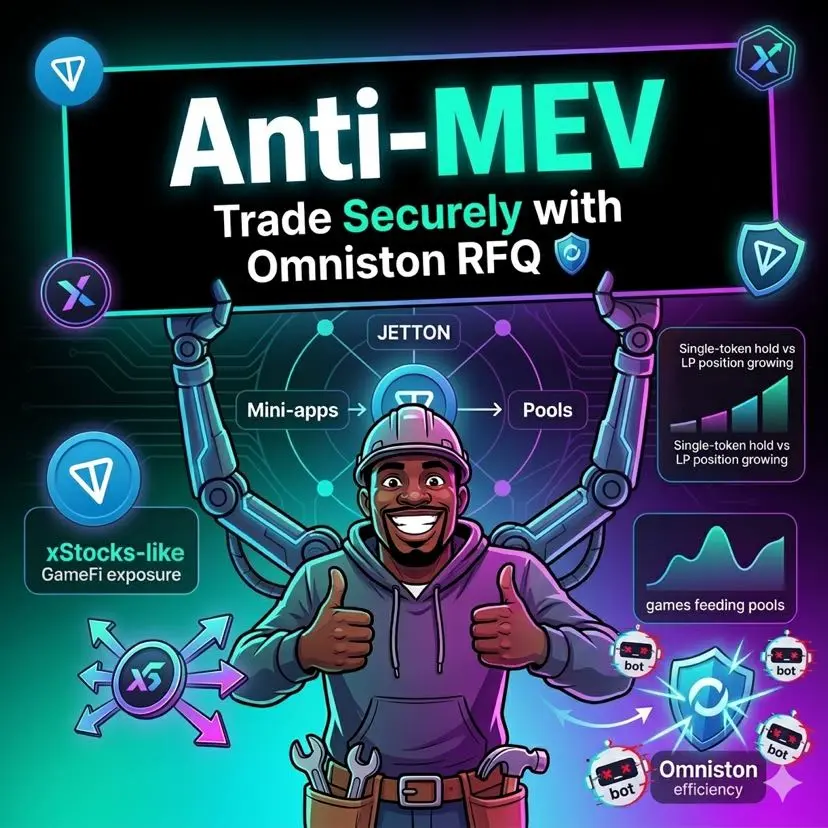
The MEV tax many traders experience is often avoidable. When trades are submitted on standard AMMs, bots can see them in the mempool and sometimes execute “sandwich attacks” that capture part of the trader’s margin.
On STONfi, the Omniston protocol addresses this with a Request for Quote (RFQ) execution model on The Open Network.
Instead of sending a trade directly into a public pool, the system first requests a private quote from liquidity providers (called resolvers). The trade is executed only after the quote is agreed upon, which reduces the opportunity for bots to interfere.
The anti-MEV
TON2,1%
post-image
  • Reward
  • Comment
  • Repost
  • Share
Is your portfolio truly diversified, or are you just all-in on one trend? Smart risk management is about building buckets, not making one big bet.
Many crypto portfolios move together. When one asset drops, most of them drop too. Platforms like STONfi on The Open Network make it possible to mix crypto exposure, DeFi yield, and tokenized real-world assets in one place.
A simple diversification model
1. The Foundation
Long-term assets like Toncoin and Bitcoin for core portfolio growth.
2. The Engine
Generate yield through liquidity farming and DeFi strategies on STONfi.
3. The Hedge
Add stabili
TON2,1%
BTC0,3%
DEFI1,87%
post-image
  • Reward
  • Comment
  • Repost
  • Share
Governance in DeFi should be more than just holding a token to vote. It should represent real commitment to the ecosystem.
On STONfi, governance goes beyond simple voting through a system built around GEMSTON rewards and the Arkenston NFT.
When users stake STON, they receive an Arkenston NFT, a non transferable (soulbound) NFT that represents their governance power and participation in the protocol on The Open Network.
How the governance model works:
Arkenston NFT
A soulbound NFT that proves your stake and participation in governance. Because it cannot be transferred, voting power stays tied
TON2,1%
post-image
  • Reward
  • Comment
  • Repost
  • Share
JETTON Liquidity on STONfi: A Smart GameFi Play on TON
Many people look at $JETTON and think it’s just another GameFi token. But liquidity providers see something deeper: exposure to a growing GameFi ecosystem on The Open Network.
JETTON powers a cross platform GameFi ecosystem across Telegram mini apps, web, and mobile. As activity grows, token swaps and in game transactions generate volume that flows through DeFi infrastructure like STONfi.
Providing liquidity in JETTON/USDT or JETTON/TON pools means you’re not just holding the token. You’re positioned at the center of the trading activity.
TON2,1%
post-image
  • Reward
  • Comment
  • Repost
  • Share
Is your portfolio truly diversified, or are you just all-in on one trend? Smart investing is about building balanced buckets, not placing one big bet.
Many crypto portfolios are highly correlated. When one asset drops, most of them drop together. Platforms like STONfi on The Open Network allow users to combine crypto assets, DeFi yield strategies, and tokenized real world assets in one ecosystem.
A simple framework many investors use is the Three Bucket Model:
1. Foundation (Long term assets)
Hold strong, widely adopted assets like Bitcoin and Toncoin for long term exposure.
2. Engine (Yield
BTC0,3%
TON2,1%
DEFI1,87%
post-image
  • Reward
  • Comment
  • Repost
  • Share
In a world full of glossy pitch decks, on-chain proof is what really matters. The rule in crypto is simple: trust, but verify.
After several failures in centralized finance, transparency has become essential. That is why STONfi integrates Proof of Reserve technology from Chainlink.
Proof of Reserve (PoR) allows users to verify on-chain that assets backing tokenized products, such as xStocks, actually exist in custody. Instead of relying on marketing claims, the verification happens directly through blockchain data.
Why this matters:
Transparent backing
Automated oracle feeds verify that the as
LINK0,36%
post-image
  • Reward
  • Comment
  • Repost
  • Share
The T+2 settlement cycle comes from the old paper-based financial system. Even today, when you sell a stock through a traditional broker, it can take two business days before the cash fully settles.
In a digital economy, that delay can slow down capital movement and limit trading flexibility.
On STONfi, tokenized assets like xStocks operate on The Open Network, where transactions settle as soon as the block is confirmed. That means trades can complete in seconds rather than days.
Why instant settlement matters:
No waiting period
Assets can move quickly between tokens such as NVIDIA Corporation
TON2,1%
post-image
  • Reward
  • Comment
  • Repost
  • Share
Slippage is an invisible cost many retail traders pay every day. When liquidity is fragmented across multiple pools, trades on a single AMM can suffer from price impact and MEV “sandwich” attacks. 📉🤖
In the The Open Network ecosystem, liquidity is growing but still spread across different sources. That’s where Omniston, developed by STONfi, comes in.
Omniston works as a Request-for-Quote (RFQ) engine that aggregates liquidity from 80+ potential paths. Instead of relying on a single automated market maker formula, it requests competitive quotes from multiple liquidity providers and routes you
TON2,1%
DEFI1,87%
post-image
  • Reward
  • Comment
  • Repost
  • Share
  • Pin