GateUser-61ae49a8

vip
Age 0 Yıl
Peak Tier 0
No content yet
+1
Successfully survived another year.
  • Reward
  • Comment
  • Repost
  • Share
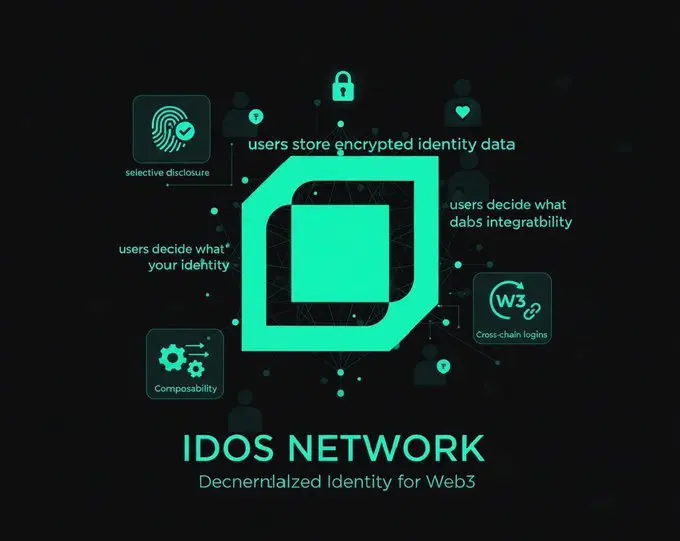
The more I dig into Web3, the more obvious it gets that identity being locked inside apps is a huge bottleneck. Every platform starts from scratch. New KYC, new forms, the same friction over and over. It slows everything down.
@idOS_network fixes that in a quiet but fundamental way. Identity becomes a reusable layer.
Apps only ask for what they actually need. Users stay in control. And trust doesn’t have to be rebuilt every single time. One verification can move with you across apps, chains, and protocols.
It’s not flashy, but it’s the kind of infrastructure Web3 actually needs. A shared ident
post-image
  • Reward
  • Comment
  • Repost
  • Share
gidos
idOS isn’t chasing attention.
@idOS_network is focused on a friction everyone feels but rarely talks about: having to start from zero every time you switch apps or chains.
New verification.
Wallet reconnects.
The same proofs again and again.
It’s not flashy, but that friction slows adoption more than bad UI ever will.
idOS takes a different path:
• Verify once
• Keep your data self-custodied
• Reuse access across apps without losing control
No theatrics. No hype cycles. Just fixing the base layer so everything built on top works better.
It might not trend loudly, but this is the kind of
post-image
  • Reward
  • Comment
  • Repost
  • Share
gidOS
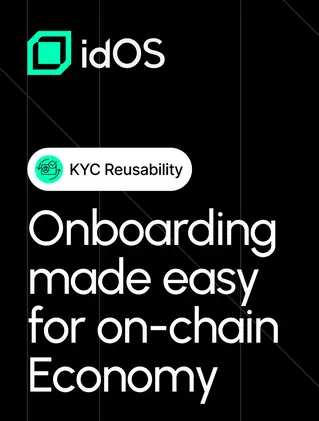
@idOS_network is tackling one of the biggest pain points in Web3: onboarding. Right now, users are stuck repeating the same KYC process over and over. Submit documents, wait for approval, then do it all again on the next app. It’s inefficient, frustrating, and one of the main reasons Web3 UX still feels broken.
Every app running its own KYC forces users to reupload sensitive documents, while control over that data slowly disappears. It’s a waste of time and a growing risk to both privacy and security.
idOS changes this completely. One verification. One identity. Credentials stay encrypte
DEFI1,54%
  • Reward
  • Comment
  • Repost
  • Share
As we know, @idOS_network Ω (Omega) is the final epoch on Wallchain before TGE.
At this point, idOS feels less like a tool and more like part of the environment I’m operating in.
Instead of constantly asking me to prove myself again and again, it carries trust forward wherever I go. Apps don’t have to slow things down, and I don’t have to second-guess what I’m sharing.
That kind of invisible reliability is hard to build. And that’s exactly why idOS keeps my we know, @idOS_network Ω (Omega) is the final epoch on Wallchain before TGE.
At this point, idOS feels less like a tool and more like par
post-image
  • Reward
  • Comment
  • Repost
  • Share
gIdOS fam
A lot of us are locked into @idOS_network, and the NotABank feature is how they’re tackling one of crypto’s biggest problems: onboarding with identity.
NotABank takes the identity layer and makes it real for everyday use. You can add funds with a card like Apple Pay or via bank transfer, and you can withdraw back to your bank without friction.
It feels like bringing real financial UX into crypto, without giving up custody or dealing with broken, confusing flows.
Reusable identity plus smooth stablecoin movement means easier access for real users and for apps building on top.
The futu
post-image
  • Reward
  • Comment
  • Repost
  • Share
Good Night guys
It's already 2/365 of 2026.
2025 was hard for me, full of ups and downs.
But I've learned a lot and I'm moving forward.
This year gonna be mine and I'm gonna make it definitely.
post-image
  • Reward
  • Comment
  • Repost
  • Share
1/365 is almost done.
Manifesting 6 figs this year.
Going all in on this app.
  • Reward
  • Comment
  • Repost
  • Share
The more I dig into Web3, the more obvious it gets that identity being locked inside apps is a huge bottleneck. Every platform starts from scratch. New KYC, new forms, the same friction over and over. It slows everything down.
@idOS_network fixes that in a quiet but fundamental way. Identity becomes a reusable layer.
Apps only ask for what they actually need. Users stay in control. And trust doesn’t have to be rebuilt every single time. One verification can move with you across apps, chains, and protocols.
It’s not flashy, but it’s the kind of infrastructure Web3 actually needs. A shared ident
post-image
  • Reward
  • Comment
  • Repost
  • Share
Sign or anything else?
Anyways, Happy new year.
post-image
  • Reward
  • Comment
  • Repost
  • Share
People don’t actually hate KYC.
They hate doing it five times with no idea where their data ends up.
What @idOS_network is doing feels way more practical. Your data stays encrypted, you choose who gets access, and you can pull that access back later.
idOS isn’t trying to reinvent identity.
It’s just making the boring parts less painful and a lot safer.
post-image
  • Reward
  • Comment
  • Repost
  • Share
The identity system in @idOS_network doesn’t make decisions by itself.
Applications clearly define what they need to verify, and the system simply enforces that request and returns the result.
Because of this, identity isn’t something interpreted or guessed. It becomes a precise, calculated outcome based on what was explicitly asked for.
post-image
  • Reward
  • Comment
  • Repost
  • Share
  • Pin

Trade Crypto Anywhere Anytime
qrCode
Scan to download Gate App
Community
  • 简体中文
  • English
  • Tiếng Việt
  • 繁體中文
  • Español
  • Русский
  • Français (Afrique)
  • Português (Portugal)
  • Bahasa Indonesia
  • 日本語
  • بالعربية
  • Українська
  • Português (Brasil)