# AaveLaunchesrsETHRecoveryPlan

1.02M
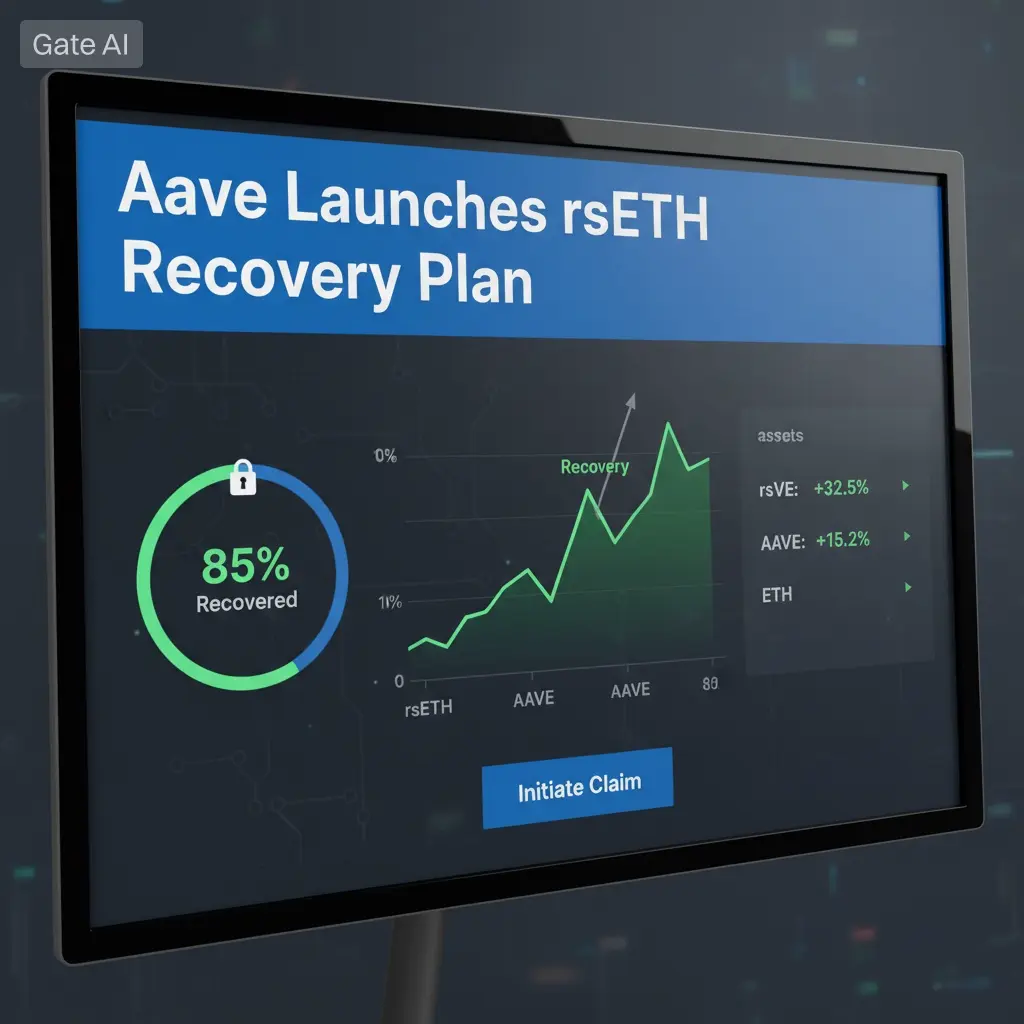
The largest coordinated recovery DeFi has seen since the Kelp rsETH bridge attack on April 18th has been completed. 116,500 counterfeit rsETH were minted, resulting in bad debts of between $123 and $230 million on Aave V3. Today, the situation has reversed.
What's the latest?
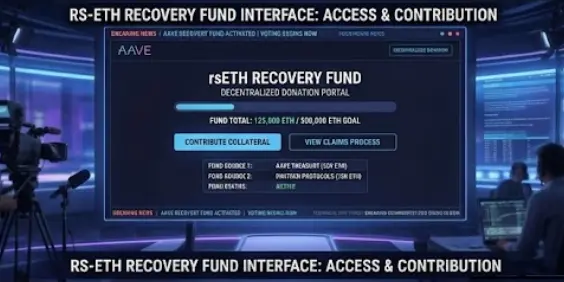
🔹Over 102,000 ETH has been deposited into DeFi United's treasury. This is over $237 million.
🔹Over 126,000 transactions have been made from more than 116,000 wallets. People have even sent donations of less than $1.
🔹Funding reached 86% when the $73.5 million ETH frozen in Arbitrum was included. With the release approv
AAVE-0,55%
ETH-3,05%
ARB-3,86%
post-image
User_any
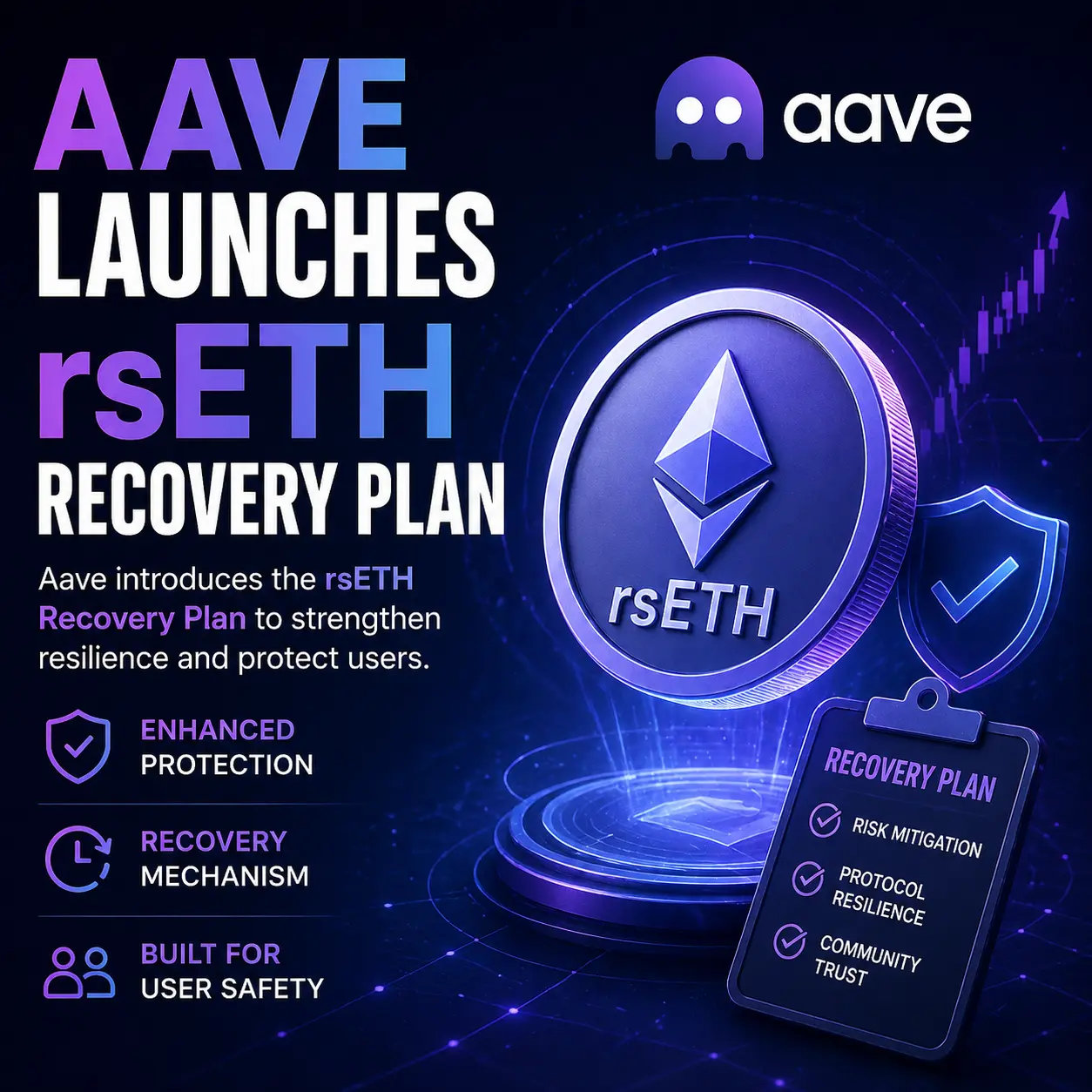
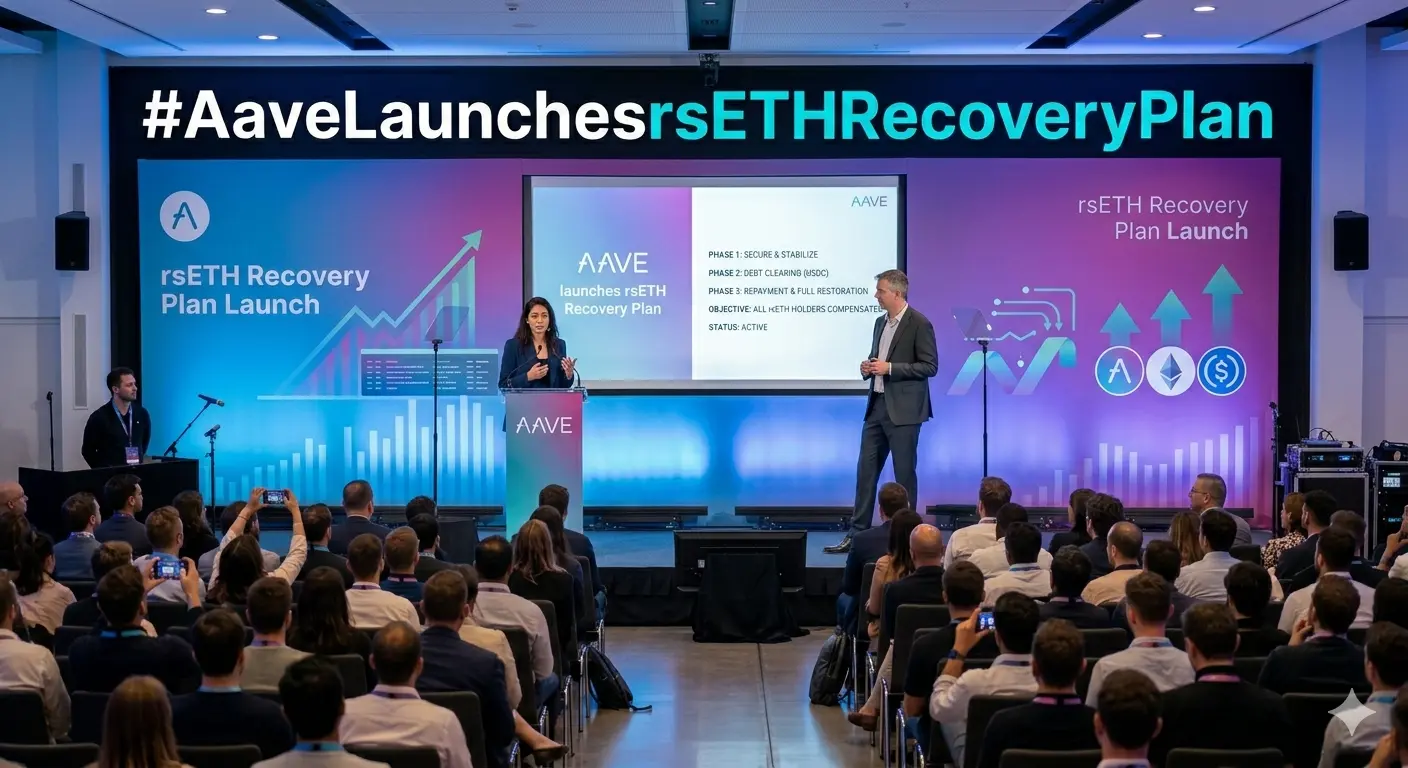
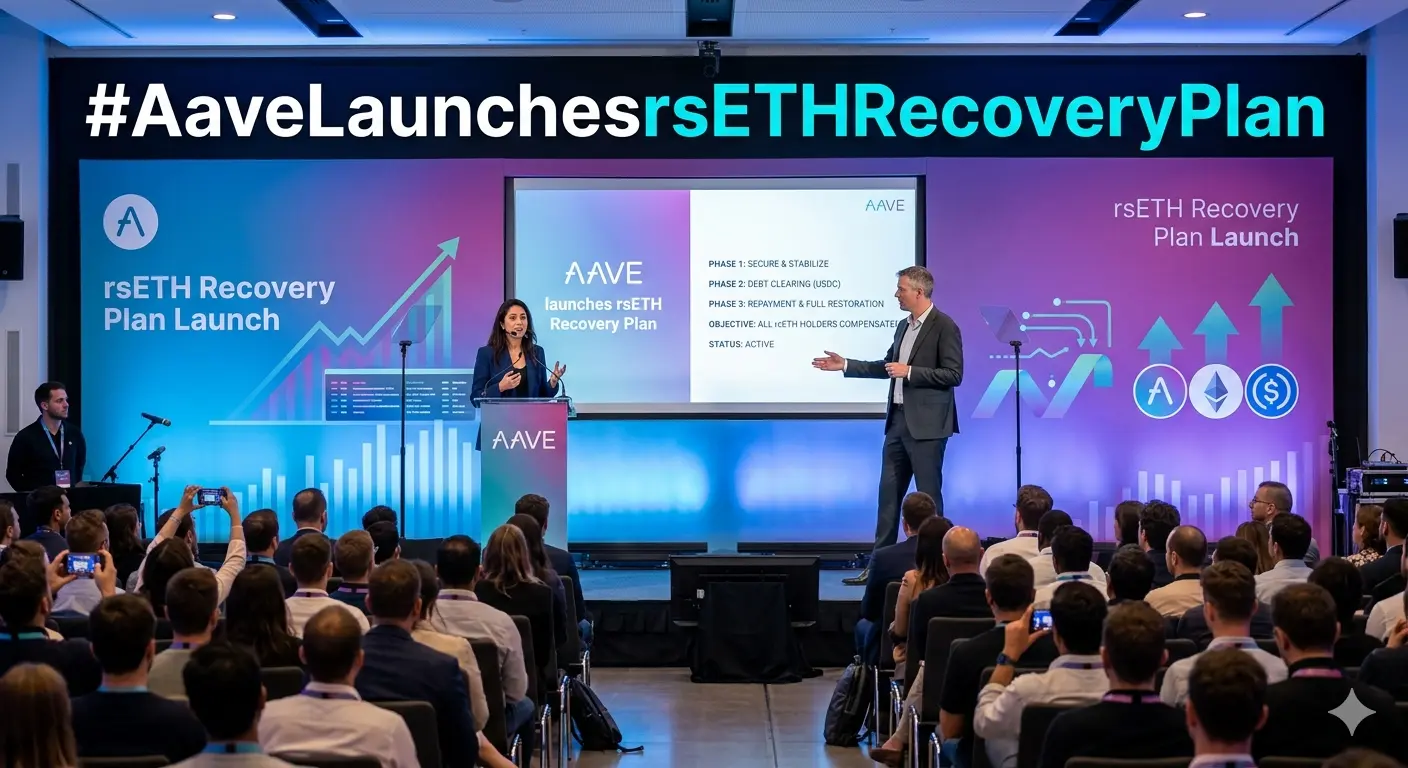
#AaveLaunchesrsETHRecoveryPlan Aave did something DeFi had never seen before on this scale: it risked its own treasury to fix someone else's bridge deficit.
On April 18th, an attacker exploited Kelp's LayerZero V2 bridge, generating 116,500 rsETH from thin air. This fake rsETH was transferred to Aave V3 as collateral in Ethereum, Arbitrum, and Base. The result: Aave's WETH markets accumulated between $123 million and $230 million in bad debt, and rsETH experienced a sharp decline in value.
Aave's response wasn't to pause and point fingers. It was to lead.
The plan, in numbers:
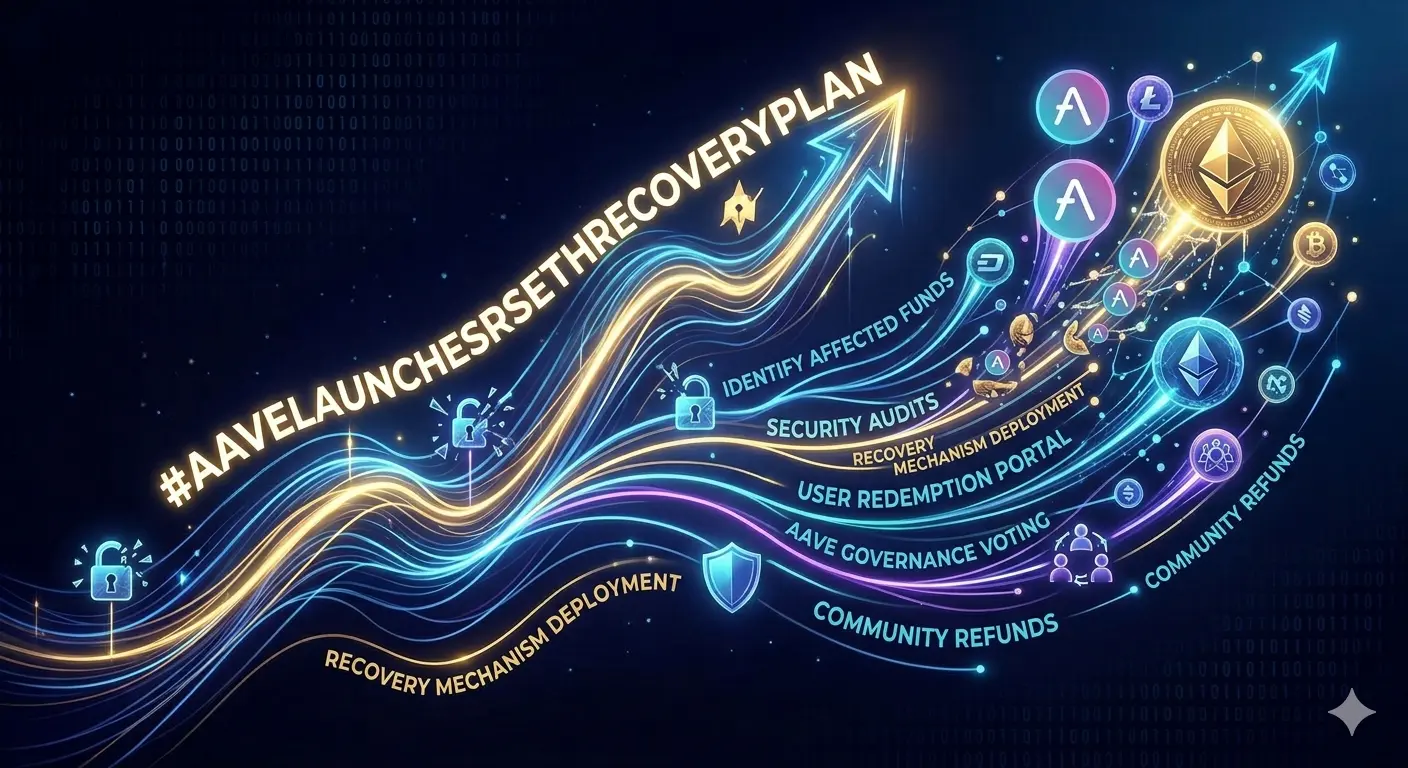
Aave DAO offered 25,000 ETH from its own treasury (approximately $58 million at current prices) to close the gap.
DeFi United, a coalition initiated by Aave, aims for a total of 100,000 ETH. Lido pledged 2,500 stETH, Mantle opened a 30,000 ETH loan facility, Frax, EtherFi, and others joined in.
Aave, Kelp, and LayerZero jointly applied to Arbitrum DAO to release 30,765 ETH ($71 million) frozen on the bridge. The funds will go to the 2-of-3 multi-signature, which is used solely to restore rsETH support.
Total deficit to be closed: approximately 75,081 ETH. With Aave's over 25,000 partners, they are currently about 80% funded.
Why this is important and why it caught my attention:
This is the first instance of a leading protocol voluntarily publicizing a cross-protocol loss. In 2022, everyone allowed the victims to accept it. In 2026, Aave says, "Our TVL is our reputation."
rsETH isn't a meme token. It's a fundamental LRT (Long-Term) token used as collateral by thousands. If it had failed, the contagion would have spread to EigenLayer, Pendle, and every restructuring vault. Aave stopped this domino effect.
They froze rsETH markets within hours, adjusted WETH rates, and contained the damage. There was no exploit in the Aave code – the bug was in Kelp's bridge – but Aave still stepped in.
My current strategy:
A treasury spending of 25,000 ETH seems large, but Aave DAO has over 300,000 ETH equivalent assets. This means allocating 8% of the treasury to protect 100% of the trust. This is a good capital allocation.
I'm watching the Arbitrum DAO vote on the 30,765 ETH release. If it passes, rsETH will be completely restructured. If it fails, expect short-term fluctuations.
I won't touch rsETH until multi-signature full support is confirmed. Recovery moves are for governance, not retail leverage.
#AaveLaunchesrsETHRecoveryPlan isn't about charity. It's about DeFi growth. In traditional finance, central banks support banks. In DeFi, the largest protocol ecosystem supported it.
These kinds of signals make me increase my exposure rather than decrease it.
Do you see this as Aave weakening its treasury or strengthening its stronghold?
🔹 Personal analysis only. Not financial advice. Manage your own risk.
repost-content-media
  • Reward
  • 4
  • Repost
  • Share
MrFlower_XingChen:
To The Moon 🌕
View More
#AaveLaunchesrsETHRecoveryPlan
🚨 DeFi’s Defining Stress Test of 2026 — A Crisis That Rewrote the Rules, Not the Future
April 18, 2026 wasn’t just another date on the crypto calendar. It was the kind of day that forces an entire industry to look in the mirror. What unfolded around rsETH wasn’t a routine exploit or a short-lived panic it was a full-scale stress test of decentralized finance itself. The kind of moment where systems either crack… or prove why they exist in the first place.
And surprisingly or maybe not, if you’ve been paying attention DeFi didn’t collapse. It adapted in real
post-image
  • Reward
  • Comment
  • Repost
  • Share
#AaveLaunchesrsETHRecoveryPlan
In the rapidly evolving landscape of decentralized finance, moments of disruption often become defining tests of resilience, credibility, and long-term vision. The announcement that Aave has launched a structured recovery plan for rsETH is one such moment—an inflection point where risk management, governance, and market confidence intersect. This is not just a technical response to a protocol-level challenge; it is a strategic demonstration of how mature DeFi ecosystems respond under pressure.
At its core, the situation surrounding rsETH is a reflection of the
post-image
  • Reward
  • 12
  • Repost
  • Share
SoominStar:
1000x VIbes 🤑
View More
#AaveLaunchesrsETHRecoveryPlan Aave Launches rsETH Recovery Plan: $25M Treasury Contribution Proposed
Introduction
In the wake of one of the most severe bad debt crises in decentralized finance (DeFi), Aave, the world’s largest lending protocol, has formally launched a comprehensive recovery plan. The proposal comes after a major exploit on Kelp DAO’s rsETH bridge on April 18, 2026, which led to approximately $6.6 billion in outflows and a severe liquidity crunch across several platforms, including Aave.
What Happened?
The attacker exploited a vulnerability in Kelp DAO’s cross-chain bridge, al
AAVE-0,55%
ETH-3,05%
post-image
  • Reward
  • 3
  • Repost
  • Share
MrFlower_XingChen:
To The Moon 🌕
View More
#AaveLaunchesrsETHRecoveryPlan
Aave has officially moved to stabilize the rsETH ecosystem after the recent exploit shock by launching a coordinated recovery plan and dedicated fund.
🚨 What Happened
The issue began after the April 18 rsETH / KelpDAO bridge exploit, which created a major collateral shortfall across DeFi lending markets and put pressure on Aave pools.
To respond, Aave and ecosystem partners launched “DeFi United”, a recovery initiative focused on restoring 100% asset backing for rsETH.
💰 Recovery Fund Highlights
• Aave DAO proposal: 25,000 ETH contribution
• Mantle credit line
AAVE-0,55%
ETH-3,05%
MNT-3,33%
ENA-3,67%
post-image
post-image
post-image
  • Reward
  • 3
  • Repost
  • Share
MrFlower_XingChen:
To The Moon 🌕
View More
#AaveLaunchesrsETHRecoveryPlan
Aave Launches rsETH Recovery Plan as DeFi Risk Containment Becomes Priority
The decentralized finance sector is now actively responding to the aftermath of recent liquidity stress events, as Aave introduces a structured recovery approach linked to the rsETH exposure issue.
The recovery plan is designed to address bad debt and stabilize protocol health after the turbulence caused by the Kelp-related exploit that impacted broader DeFi liquidity conditions. While the immediate crisis phase has passed, the focus is now shifting toward restoring balance sheets and re
AAVE-0,55%
post-image
  • Reward
  • 3
  • Repost
  • Share
discovery:
Happy birthday ❤️❤️🥰
View More
#AaveLaunchesrsETHRecoveryPlan
DEFI'S BIGGEST CRISIS OF 2026 AND THE INDUSTRY-WIDE RESCUE THAT FOLLOWED
THE HACK THAT SHOOK THE FOUNDATION OF DEFI
April 18, 2026 will be remembered as one of the darkest days in the history of decentralized finance. An attacker exploited Kelp DAO's LayerZero-powered bridge to drain 116,500 rsETH — about 292 million dollars and roughly 18 percent of the token's circulating supply — triggering an emergency pause of core contracts. Because the bridge held reserves backing rsETH on more than 20 networks, the loss raised immediate doubts about the backing of rsETH
AAVE-0,55%
ETH-3,05%
ZRO-7,97%
MNT-3,33%
post-image
Falcon_Official
#加密市场行情震荡- DeFi United Coalition Rallies to Restore $292M KelpDAO Shortfall
Aave has spearheaded a massive recovery initiative dubbed "DeFi United" to address the $292 million rsETH shortfall created by the KelpDAO bridge exploit, bringing together major DeFi protocols in an unprecedented show of industry solidarity.
The Incident:
On April 18, 2026, Kelp DAO suffered a devastating $292 million bridge exploit that turned its widely-used rsETH (restaked ETH) token from a trusted collateral asset into a source of systemic protocol risk. The attack, attributed to North Korean hacking group TraderTraitor, targeted Kelp's cross-chain bridge infrastructure.
Attack Details:
- Total stolen: $292 million in cryptocurrency
- Additional blocked attack: 40,000 rsETH (-$95 million)
- Method: Exploitation of 1-of-1 verifier configuration
- Primary target: Cross-chain bridge validation process
The DeFi United Recovery Plan:
Rather than allowing the exploit to cascade through DeFi ecosystems, Aave launched "DeFi United" - a coordinated recovery effort involving major industry players committed to restoring rsETH backing and preventing systemic contagion.
Key Participants:
- Aave: Leading the recovery initiative
- Lido: Major liquid staking provider
- EtherFi: Restaking protocol
- Ethena: Synthetic dollar protocol
- Other major DeFi protocols: Contributing to relief fund
Aave's Commitment:
Aave founder and CEO Stani Kulechov has made a personal commitment of 5,000 ETH to the relief fund, demonstrating leadership accountability. The Aave DAO is also considering a substantial 25,000 ETH treasury contribution to help restore Kelp DAO's rsETH backing.
Immediate Protocol Response:
Following the exploit, Aave took decisive action to contain risk:
April 18, 2026:
- Froze rsETH markets across all instances
- Prevented new borrows against rsETH collateral
- Activated emergency protocols
April 19, 2026:
- Froze WETH markets on several instances
- Adjusted interest rates on non-Core markets
- Implemented WETH interest rate adjustments on Core markets
- Monitored fallout from rsETH incident
The Attacker's Aave Strategy:
In a surprising twist, rather than immediately dumping the stolen rsETH, the attacker deposited nearly 90,000 rsETH into Aave as collateral across Ethereum and Arbitrum networks. This allowed them to borrow approximately $190 million in ETH and other assets, creating complex liquidation scenarios.
Recovery Scenarios:
Aave governance has outlined multiple approaches to address the bad debt:
Scenario 1: Uniform Socialization of Losses
- Losses distributed across all WETH markets
- Ethereum Core WETH included in slash
- Broad-based impact but systemic stability maintained
Scenario 2: Losses Isolated to L2 rsETH
- Impact contained to Layer 2 markets
- Ethereum Core markets protected
- Concentrated losses for L2 participants

Technical Implementation:
Aave has reached agreement with KelpDAO and LayerZero on technical steps required for implementing the recovery plan. The collaboration focuses on:
- Bridge security improvements
- Verification mechanism upgrades
- Multi-DVN (Decentralized Verifier Network) configuration
- Enhanced monitoring systems
The Structural Problem:
The Kelp DAO exploit highlights a critical vulnerability in DeFi infrastructure: cross-chain bridges remain a single point of failure despite being marketed as decentralized infrastructure. Kelp's reliance on a '1-of-1 verifier configuration' allowed attackers to poison the verification process.
LayerZero's Position:
LayerZero, the underlying messaging protocol, noted that it had previously recommended Kelp DAO migrate from its single-DVN configuration. The company emphasized that "no single DVN should represent a unilateral point of trust or failure."
Kelp DAO's Response:
Kelp DAO has pointed to LayerZero's documentation, noting that the single-DVN setup was the configuration officially recommended. The protocol paused relevant contracts and blacklisted the attackers' wallet, successfully blocking a second attack attempt.
North Korean Connection:
The exploit has been attributed to North Korea's TraderTraitor hacking group, part of the regime's ongoing crypto theft operations. North Korean hackers stole over $2 billion in crypto in 2025 alone, with total stolen crypto since 2017 estimated at around $6 billion.
Industry Implications:
For DeFi Security:
- Cross-chain bridges require enhanced security models
- Multi-signature verification becomes essential
- Real-time monitoring systems needed
- Insurance mechanisms for bridge risks
For Protocol Governance:
- Emergency response procedures
- Treasury allocation for recovery
- Multi-protocol coordination
- Risk assessment frameworks
For Users:
- Diversification of collateral assets
- Understanding bridge risks
- Monitoring protocol health
- Insurance product utilization
Market Impact:
The AAVE token has become a sentiment indicator for the recovery effort's success. While price action alone cannot explain the full scale of risk, market reaction reflects confidence in the DeFi United initiative.
Accounting and Regulatory Questions:
The exploit raises complex questions about:
- DAO control and consolidation
- Revenue recognition for protocol fees
- Governance risk disclosures
- Insurance and recovery accounting
- Regulatory compliance for cross-chain assets
Lessons Learned:
Technical:
- Single points of failure must be eliminated
- Verification mechanisms need redundancy
- Real-time monitoring is essential
- Emergency pause functions save funds
Governance:
- Multi-protocol coordination is possible
- Industry solidarity matters in crises
- Treasury reserves provide stability
- Leadership commitment builds confidence
Risk Management:
- Bridge risks are systemic
- Collateral diversification is critical
- Insurance products need development
- User education is paramount
Looking Forward:
The DeFi United recovery plan represents a watershed moment for the industry. If successful, it will demonstrate that DeFi can self-organize to address systemic threats without centralized intervention.
The recovery effort is ongoing, with Aave and partners working "nonstop" according to Stani Kulechov. The outcome will likely influence DeFi architecture, governance models, and risk management practices for years to come.
Key Metrics to Watch:
- rsETH peg restoration
- Bad debt resolution progress
- AAVE token performance
- Cross-chain bridge upgrades
- Insurance product development
The KelpDAO exploit and subsequent recovery effort may ultimately strengthen DeFi by exposing vulnerabilities and demonstrating the industry's capacity for collective action in crisis.
#AaveLaunchesrsETHRecoveryPlan
repost-content-media
  • Reward
  • 5
  • Repost
  • Share
discovery:
To The Moon 🌕
View More
#AaveLaunchesrsETHRecoveryPlan Aave #AaveLaunchesrsETHRecoveryPlan Launches rsETH Recovery Plan: A Comprehensive Step to Mitigate Risks and Restore Market Confidence
#AaveLaunchesrsETHRecoveryPlan
In a decisive move to address the recent challenges surrounding the rsETH token, Aave, the leading decentralized lending protocol, has officially unveiled a structured recovery plan. The plan aims to protect user funds, stabilize the protocol’s risk parameters, and restore trust among liquidity providers and borrowers following a critical price feed anomaly that affected the rsETH market on Aave V3.
AAVE-0,55%
ETH-3,05%
LINK-2,58%
USDC0,03%
  • Reward
  • Comment
  • Repost
  • Share
#AaveLaunchesrsETHRecoveryPlan
The recent developments around rsETH have once again highlighted how quickly liquidity risks and structural weaknesses can surface within the decentralized finance ecosystem. In response, Aave’s recovery plan is being closely watched as a critical test of both protocol resilience and community coordination.
At its core, the issue revolves around the imbalance between rsETH’s market price and its underlying value, triggered by liquidity fragmentation and shifting market sentiment. When confidence weakens in a derivative asset, even
AAVE-0,55%
post-image
post-image
  • Reward
  • 3
  • Repost
  • Share
discovery:
To The Moon 🌕
View More
#AaveLaunchesrsETHRecoveryPlan
Aave Moves to Contain rsETH Fallout with New Recovery Framework
The DeFi ecosystem is shifting from crisis management to structured recovery as Aave rolls out a targeted plan to handle losses tied to rsETH exposure.
This initiative aims to clear bad debt and reinforce protocol stability following the liquidity disruption triggered by the Kelp exploit, which sent ripples through multiple DeFi platforms. With the worst of the volatility behind us, attention is now on repairing protocol balance sheets and restoring market trust.
In decentralized systems, these reco
AAVE-0,55%
post-image
post-image
  • Reward
  • 3
  • Repost
  • Share
MrFlower_XingChen:
To The Moon 🌕
View More
Load More