












#OilPricesSurge
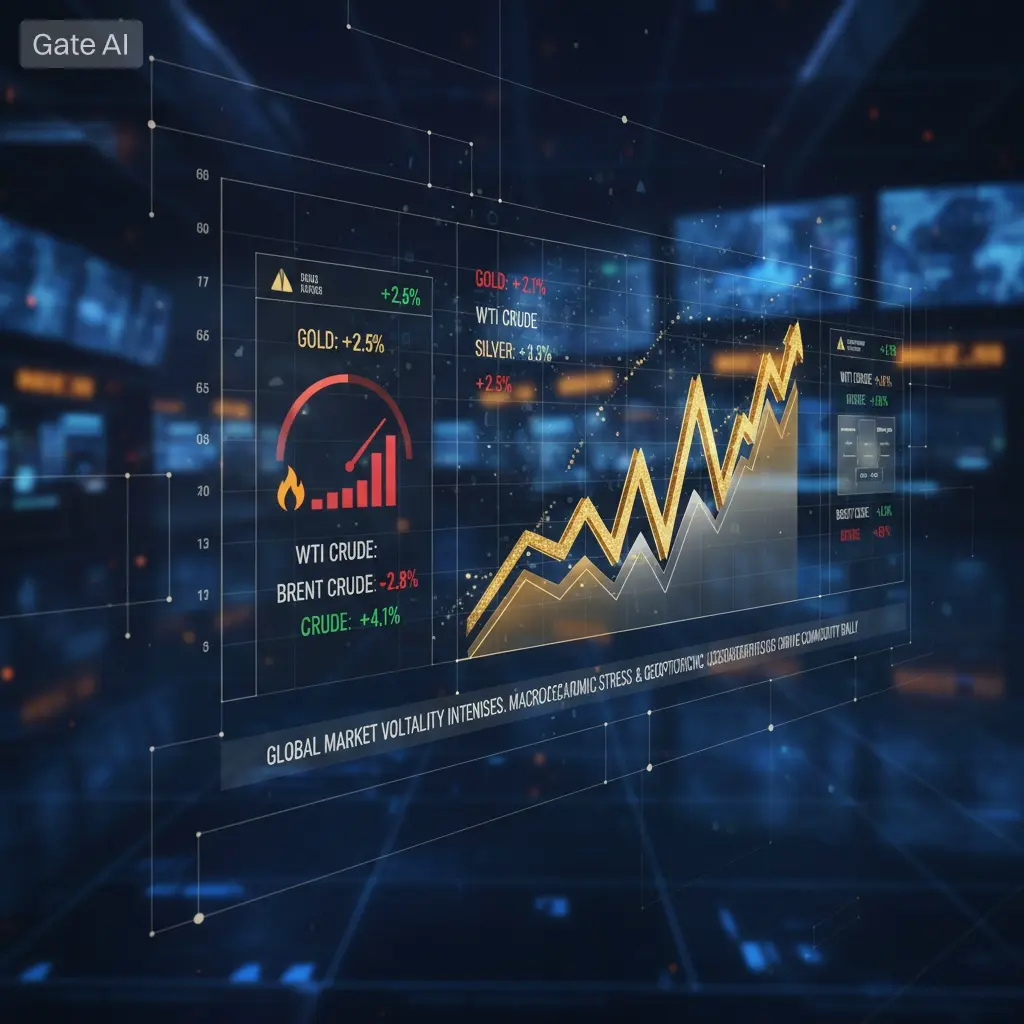
Global markets are experiencing heightened volatility as precious metals and oil prices surge simultaneously, reflecting broader macroeconomic stress and geopolitical uncertainties. Gold and silver, traditionally safe-haven assets, have seen renewed demand as investors seek to hedge against inflation and currency fluctuations. Meanwhile, crude oil prices have reacted sharply to supply concerns, geopolitical tensions, and ongoing energy market dynamics, putting pressure on both commodity-linked equities and broader market sentiment.
The surge in metals and oil demonstrates a classic capital rotation pattern. When traditional risk assets face uncertainty, liquidity flows toward tangible assets that maintain intrinsic value. Traders and institutional investors are increasingly viewing gold, silver, and energy commodities not just as hedges, but as strategic components in a diversified portfolio. This behavior is evident in both spot markets and derivative activity, where positions are being rebuilt to capture upside potential while managing downside risk.
Interestingly, this rally also impacts crypto markets indirectly. Bitcoin and other digital assets often respond to macro stress and safe-haven demand in unique ways. While some traders see crypto as a high-risk alternative, surging commodity prices can reinforce the narrative of Bitcoin as a “digital gold,” attracting strategic accumulation from investors seeking protection against inflation and market instability. On-chain metrics and wallet accumulation data suggest that while retail may panic during such surges, longer-term holders are increasingly positioning themselves for the next macro cycle.
Oil’s volatility amplifies the economic narrative. Rising energy prices can trigger inflation expectations, influence central bank policy outlooks, and create ripple effects across equities and fixed-income markets. This interplay reinforces the importance of monitoring correlations between commodity markets and other asset classes. For investors and traders, understanding these relationships is crucial for timing entries, managing leverage, and optimizing portfolio exposure in a high-volatility environment.
Historically, periods of simultaneous metals and oil strength have preceded broader market shifts. Consolidation phases after sharp surges often lay the groundwork for the next investment cycle, offering strategic opportunities for those who act with discipline and insight. Patience, risk management, and macro-awareness remain the keys to navigating such turbulent periods successfully.
#PreciousMetalsAndOilPricesSurge is not just a headline it’s a real-time lesson in global liquidity, risk sentiment, and strategic capital allocation. Traders who can analyze structure, accumulation, and cross-market correlations are far more likely to benefit from this environment than those who react emotionally to volatility. As precious metals and oil continue to surge, the next few weeks could define positioning for both traditional and digital asset markets.
Global markets are experiencing heightened volatility as precious metals and oil prices surge simultaneously, reflecting broader macroeconomic stress and geopolitical uncertainties. Gold and silver, traditionally safe-haven assets, have seen renewed demand as investors seek to hedge against inflation and currency fluctuations. Meanwhile, crude oil prices have reacted sharply to supply concerns, geopolitical tensions, and ongoing energy market dynamics, putting pressure on both commodity-linked equities and broader market sentiment.
The surge in metals and oil demonstrates a classic capital rotation pattern. When traditional risk assets face uncertainty, liquidity flows toward tangible assets that maintain intrinsic value. Traders and institutional investors are increasingly viewing gold, silver, and energy commodities not just as hedges, but as strategic components in a diversified portfolio. This behavior is evident in both spot markets and derivative activity, where positions are being rebuilt to capture upside potential while managing downside risk.
Interestingly, this rally also impacts crypto markets indirectly. Bitcoin and other digital assets often respond to macro stress and safe-haven demand in unique ways. While some traders see crypto as a high-risk alternative, surging commodity prices can reinforce the narrative of Bitcoin as a “digital gold,” attracting strategic accumulation from investors seeking protection against inflation and market instability. On-chain metrics and wallet accumulation data suggest that while retail may panic during such surges, longer-term holders are increasingly positioning themselves for the next macro cycle.
Oil’s volatility amplifies the economic narrative. Rising energy prices can trigger inflation expectations, influence central bank policy outlooks, and create ripple effects across equities and fixed-income markets. This interplay reinforces the importance of monitoring correlations between commodity markets and other asset classes. For investors and traders, understanding these relationships is crucial for timing entries, managing leverage, and optimizing portfolio exposure in a high-volatility environment.
Historically, periods of simultaneous metals and oil strength have preceded broader market shifts. Consolidation phases after sharp surges often lay the groundwork for the next investment cycle, offering strategic opportunities for those who act with discipline and insight. Patience, risk management, and macro-awareness remain the keys to navigating such turbulent periods successfully.
#PreciousMetalsAndOilPricesSurge is not just a headline it’s a real-time lesson in global liquidity, risk sentiment, and strategic capital allocation. Traders who can analyze structure, accumulation, and cross-market correlations are far more likely to benefit from this environment than those who react emotionally to volatility. As precious metals and oil continue to surge, the next few weeks could define positioning for both traditional and digital asset markets.