


Futures
Access hundreds of perpetual contracts
TradFi
Gold
One platform for global traditional assets
Options
Hot
Trade European-style vanilla options
Unified Account
Maximize your capital efficiency
Demo Trading
Introduction to Futures Trading
Learn the basics of futures trading
Futures Events
Join events to earn rewards
Demo Trading
Use virtual funds to practice risk-free trading
Launch
CandyDrop
Collect candies to earn airdrops
Launchpool
Quick staking, earn potential new tokens
HODLer Airdrop
Hold GT and get massive airdrops for free
Launchpad
Be early to the next big token project
Alpha Points
Trade on-chain assets and earn airdrops
Futures Points
Earn futures points and claim airdrop rewards


More





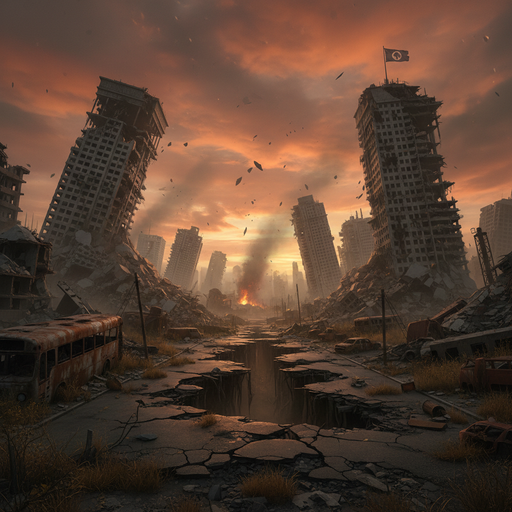
#USIranWarMayEscalateToGroundWar The escalating tensions between the United States and Iran have once again captured global attention, with fears growing that the ongoing conflict could potentially escalate into a full-scale ground war. The recent series of attacks and counterattacks in the Middle East has created a volatile environment where diplomacy seems increasingly fragile. Analysts and geopolitical experts are closely monitoring the situation, warning that any miscalculation could lead to serious consequences, not only for the region but for the global community.
The origins of the current tensions can be traced back to years of political, economic, and military disagreements. The U.S. has maintained a strong presence in the Middle East, citing security concerns and the need to counter Iran’s influence in the region. Meanwhile, Iran has consistently opposed foreign intervention in its affairs and has used proxy groups across neighboring countries to assert its strategic objectives. Recent escalations, including targeted strikes on key military assets and heightened rhetoric from both sides, have significantly increased the risk of direct confrontation.
Experts warn that a ground war would carry severe humanitarian and economic repercussions. A conflict of this scale could lead to massive casualties, displacement of civilians, and destruction of critical infrastructure. Additionally, global oil markets could be severely impacted, causing fluctuations in energy prices and creating economic uncertainty worldwide. Countries dependent on Middle Eastern oil exports could face supply shortages, leading to inflationary pressures and strained international relations.
Diplomatic efforts remain crucial to preventing further escalation. International organizations, regional powers, and global leaders are calling for dialogue and de-escalation. The United Nations and various diplomatic channels are urging both sides to avoid actions that could trigger wider conflict. Negotiations aimed at easing sanctions, establishing ceasefires, or mediating peace agreements are seen as potential avenues to reduce tensions. However, the complexity of the geopolitical landscape, combined with deep-seated mistrust, makes immediate resolution challenging.
Public sentiment in both nations also plays a significant role in shaping the course of the conflict. Citizens affected by economic sanctions, security threats, and political instability are expressing concern, pushing governments to act cautiously. The media coverage of the conflict has amplified public awareness, creating pressure on policymakers to seek solutions that prevent large-scale war. Meanwhile, analysts emphasize that miscommunication or accidental incidents could rapidly spiral into an unintended confrontation.
In conclusion, while the situation between the United States and Iran remains highly tense, there is still an opportunity for diplomacy to prevail. Global stakeholders, regional allies, and international organizations are actively monitoring the developments to prevent a catastrophic ground war. The world watches closely, hoping for restraint, dialogue, and strategic patience to avoid a conflict that could reshape the geopolitical order of the Middle East and affect millions of lives worldwide. The next few weeks will be critical in determining whether tensions de-escalate or whether the region enters a new, dangerous phase of confrontation.