


Futures
Access hundreds of perpetual contracts
TradFi
Gold
One platform for global traditional assets
Options
Hot
Trade European-style vanilla options
Unified Account
Maximize your capital efficiency
Demo Trading
Introduction to Futures Trading
Learn the basics of futures trading
Futures Events
Join events to earn rewards
Demo Trading
Use virtual funds to practice risk-free trading
Launch
CandyDrop
Collect candies to earn airdrops
Launchpool
Quick staking, earn potential new tokens
HODLer Airdrop
Hold GT and get massive airdrops for free
Launchpad
Be early to the next big token project
Alpha Points
Trade on-chain assets and earn airdrops
Futures Points
Earn futures points and claim airdrop rewards


More


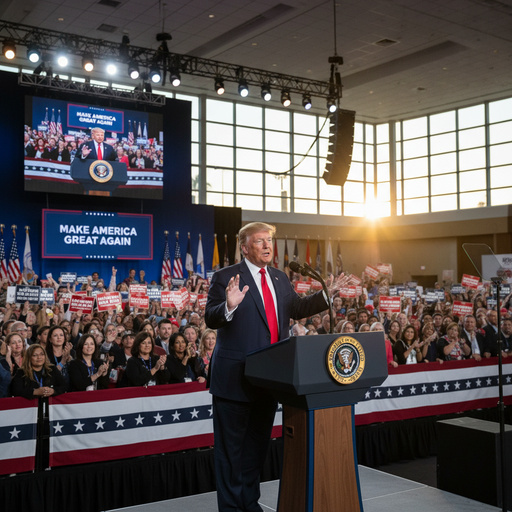


#TrumpExtendsStrikeDelay10Days The latest development surrounding the extension of a potential military strike timeline by 10 days has injected a new layer of complexity into already fragile global markets. This decision is not merely a pause it is a strategic delay that shifts the entire risk landscape. Markets do not operate only on confirmed actions; they react even more intensely to uncertainty, and this extension amplifies that uncertainty. Instead of a clear resolution, participants are now navigating a prolonged window of anticipation, where every headline, diplomatic signal, or unexpected escalation can rapidly alter sentiment.
From a geopolitical standpoint, a delay of this nature often reflects ongoing negotiations behind the scenes. It suggests that while the possibility of escalation remains real, there is still room for diplomatic maneuvering. However, this middle ground neither conflict nor resolution creates a highly unstable environment. Investors, institutions, and traders are left interpreting signals that may or may not translate into action. In such conditions, the market does not wait for clarity; it begins pricing in multiple scenarios simultaneously. This leads to increased volatility, as capital flows shift rapidly between risk assets and safe havens.
Financial markets are particularly sensitive to such developments because they thrive on predictability. When timelines for potential conflict are extended, it prolongs uncertainty rather than resolving it. This means that instead of a sharp, one-time reaction, markets may experience sustained volatility over the extended period. Each passing day becomes a new data point, and sentiment can shift dramatically based on even minor updates. This creates a reactive environment where positioning must remain flexible, as the narrative itself is constantly evolving.
The energy sector is one of the first to respond to geopolitical tensions, and this situation is no exception. Oil prices tend to rise when there is a perceived threat to supply routes or production stability. A delay in military action does not eliminate that threat it extends it. As a result, energy markets often remain elevated, pricing in the risk premium associated with potential disruption. This sustained elevation in oil prices can have a cascading effect on the global economy, influencing inflation, transportation costs, and overall economic sentiment.
For inflation, the implications are significant. Higher energy prices feed directly into consumer costs, making it more difficult for central banks to achieve price stability. If inflation remains elevated due to geopolitical factors, policymakers may be forced to maintain tighter monetary conditions for longer than anticipated. This creates additional pressure on risk assets, including equities and cryptocurrencies, as higher interest rates reduce liquidity and increase the cost of capital.
In the cryptocurrency market, the impact of such geopolitical developments is complex. Bitcoin, often described as a hybrid asset, reacts to both risk sentiment and macroeconomic conditions. During periods of heightened uncertainty, some investors view it as a hedge, while others treat it as a risk asset to be reduced. The result is often mixed behavior, with periods of volatility rather than clear directional trends. The extension of a strike delay reinforces this environment, where uncertainty dominates and conviction remains limited.
Market psychology plays a critical role during such phases. The absence of a definitive outcome creates a sense of tension, where participants are constantly reassessing their positions. Fear of escalation competes with hope for resolution, leading to fragmented sentiment. This fragmentation is reflected in price action, where markets may move sharply in both directions within short timeframes. Traders who rely on clear trends may find this environment challenging, as the lack of direction increases the likelihood of false signals.
Institutional behavior also adapts to such conditions. Large players often reduce exposure during periods of uncertainty, opting to preserve capital until clarity emerges. This can lead to lower liquidity in certain markets, amplifying price movements when activity does occur. At the same time, institutions may increase allocations to traditionally safer assets, such as government bonds or commodities, further influencing cross-asset correlations.
Another important aspect of this delay is its impact on global sentiment beyond financial markets. Businesses, policymakers, and consumers all respond to geopolitical risk in different ways. Investment decisions may be postponed, supply chains may be adjusted, and consumer confidence may weaken. These broader economic effects can, in turn, feed back into financial markets, creating a cycle where uncertainty in one area reinforces instability in another.
From a strategic perspective, this environment demands a high level of adaptability. Fixed assumptions can quickly become outdated as new information emerges. Instead, a scenario-based approach becomes more effective, where multiple potential outcomes are considered, and positioning is adjusted accordingly. Risk management becomes the central focus, as the potential for sudden market movements increases. Preserving capital and maintaining flexibility often outweigh the pursuit of aggressive gains during such periods.
Timing also becomes a critical factor. The 10-day extension creates a defined window where volatility is likely to remain elevated. However, the exact moment of resolution whether through escalation or diplomacy remains unpredictable. This means that markets may continue to oscillate within a range, punctuated by sharp reactions to news. Traders and investors must be prepared for both outcomes, rather than committing fully to a single narrative.
In terms of positioning, diversification becomes increasingly important. Exposure across different asset classes can help mitigate risk, as not all assets respond to geopolitical developments in the same way. For example, while equities and cryptocurrencies may face pressure during heightened uncertainty, commodities like oil or gold may benefit. Understanding these relationships allows for more balanced and resilient strategies.
Ultimately, the extension of the strike delay is not just a political decision it is a market-moving event that reshapes expectations, sentiment, and positioning across the global financial landscape. It transforms a potential moment of resolution into an extended period of anticipation, where uncertainty becomes the dominant force.
In conclusion, Trump Extends Strike Delay by 10 Days represents a critical phase where markets are caught between possibility and outcome. It is a period defined not by action, but by expectation a space where every signal matters and every reaction is amplified. Navigating this environment requires discipline, awareness, and the ability to adapt quickly to changing conditions. Because in markets driven by uncertainty, the greatest advantage lies not in predicting the future, but in preparing for multiple possibilities and responding with clarity when direction finally emerges.