

Trade
Basic
Futures
Futures
Hundreds of contracts settled in USDT or BTC
TradFi
Gold
Trade global traditional assets with USDT in one place
Options
Hot
Trade European-style vanilla options
Unified Account
Maximize your capital efficiency
Demo Trading
Futures Kickoff
Get prepared for your futures trading
Futures Events
Participate in events to win generous rewards
Demo Trading
Use virtual funds to experience risk-free trading
Earn
Launch
CandyDrop
Collect candies to earn airdrops
Launchpool
Quick staking, earn potential new tokens
HODLer Airdrop
Hold GT and get massive airdrops for free
Launchpad
Be early to the next big token project
Alpha Points
Trade on-chain assets and enjoy airdrop rewards!
Futures Points
Earn futures points and claim airdrop rewards
Investment
Simple Earn
Earn interests with idle tokens
Auto-Invest
Auto-invest on a regular basis
Dual Investment
Buy low and sell high to take profits from price fluctuations
Soft Staking
Earn rewards with flexible staking
Crypto Loan
0 Fees
Pledge one crypto to borrow another
Lending Center
One-stop lending hub
VIP Wealth Hub
Customized wealth management empowers your assets growth
Private Wealth Management
Customized asset management to grow your digital assets
Quant Fund
Top asset management team helps you profit without hassle
Staking
Stake cryptos to earn in PoS products
Smart Leverage
New
No forced liquidation before maturity, worry-free leveraged gains
GUSD Minting
Use USDT/USDC to mint GUSD for treasury-level yields

More


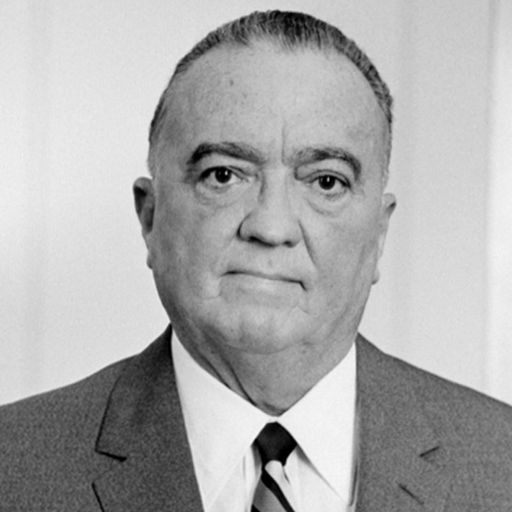



The Essential Trading Quotes Every Trader Needs to Build Discipline, Psychology, and Wealth
Trading isn’t just about charts and numbers—it’s about understanding the psychology that drives market decisions and your own success as a trader. This collection of trading quotes from legendary investors and market professionals reveals the wisdom behind every successful trade. Whether you’re learning risk management, building trading discipline, or mastering emotional control, these powerful insights from trading pioneers will transform how you approach the financial markets.
Building Your Foundation: Investment Wisdom from Market Masters
The world’s most successful investor, Warren Buffett, has spent decades teaching traders and investors the fundamental principles of wealth building. His insights form the bedrock of modern trading strategy.
“Successful investing takes time, discipline and patience,” Buffett reminds us that no strategy works overnight. Market success isn’t about quick wins—it’s about consistent application of proven principles over months and years.
Another cornerstone principle: “Invest in yourself as much as you can; you are your own biggest asset by far.” Your trading education, market knowledge, and decision-making abilities cannot be taxed or seized. This represents the most valuable investment you’ll ever make.
The contrarian mindset separates amateurs from professionals: “I’ll tell you how to become rich: close all doors, beware when others are greedy and be greedy when others are afraid.” This captures the essence of successful market timing—buying when prices fall and everyone panics, selling when euphoria grips the market. “When it’s raining gold, reach for a bucket, not a thimble” emphasizes taking full advantage of rare opportunities when risk-reward conditions align perfectly.
Quality over timing matters more than most traders realize: “It’s much better to buy a wonderful company at a fair price than a suitable company at a wonderful price.” The stocks you own matter less than the price you pay for them. Finally, “Wide diversification is only required when investors do not understand what they are doing.”—concentrate your efforts where you have genuine conviction.
Mastering the Mental Game: Trading Psychology Quotes from Market Legends
Your psychological state determines 80% of your trading results. The traders who fail typically understand markets but surrender to emotions.
Jim Cramer’s blunt assessment cuts through false hope: “Hope is a bogus emotion that only costs you money.” Many traders accumulate worthless assets expecting miracles, but probability and fundamentals matter far more than wishful thinking.
When losses strike, knowing when to retreat becomes critical: “You need to know very well when to move away, or give up the loss, and not allow the anxiety to trick you into trying again,” Buffett explains. Losses create desperation; desperation creates poor decisions. The market rewards patience: “The market is a device for transferring money from the impatient to the patient.” Rushed trades destroy accounts while disciplined waiting builds them.
Doug Gregory offers a simple rule: “Trade What’s Happening… Not What You Think Is Gonna Happen.” Your opinions about the future matter far less than recognizing what price action reveals right now.
Jesse Livermore identified the core personality requirement: “The game of speculation is the most uniformly fascinating game in the world. But it is not a game for the stupid, the mentally lazy, the person of inferior emotional balance, or the get-rich-quick adventurer. They will die poor.” Successful traders maintain emotional equilibrium regardless of market conditions.
When market conditions turn against you, survival becomes the priority: “When I get hurt in the market, I get the hell out. It doesn’t matter at all where the market is trading. I just get out, because I believe that once you’re hurt in the market, your decisions are going to be far less objective.” Continued losses cloud judgment. Mark Douglas adds, “When you genuinely accept the risks, you will be at peace with any outcome.”
Tom Basso synthesizes everything: “I think investment psychology is by far the more important element, followed by risk control, with the least important consideration being the question of where you buy and sell.” Trading systems matter, but psychology and risk management matter exponentially more.
System Design Philosophy: What Elite Traders Know About Strategy
Successful trading systems balance simplicity with sophistication. Peter Lynch observed, “All the math you need in the stock market you get in the fourth grade”—complex formulas often underperform basic common sense.
Victor Sperandeo identified the critical success factor: “The key to trading success is emotional discipline. If intelligence were the key, there would be a lot more people making money trading… I know this will sound like a cliche, but the single most important reason that people lose money in the financial markets is that they don’t cut their losses short.” Three words define trading mastery: “The elements of good trading are (1) cutting losses, (2) cutting losses, and (3) cutting losses. If you can follow these three rules, you may have a chance.”
Adaptation separates survivors from failures. Thomas Busby reflects, “I have been trading for decades and I am still standing. I have seen a lot of traders come and go. They have a system or a program that works in some specific environments and fails in others. In contrast, my strategy is dynamic and ever-evolving. I constantly learn and change.”
Jaymin Shah emphasizes flexible positioning: “You never know what kind of setup market will present to you, your objective should be to find an opportunity where risk-reward ratio is best.” Trade the market you’re given, not the market you expected. John Paulson’s decades of success rest on this principle: “Many investors make the mistake of buying high and selling low while the exact opposite is the right strategy to outperform over the long term.”
Market Reality: Trading Quotes That Reveal How Markets Actually Work
Buffett’s foundational insight returns: “We simply attempt to be fearful when others are greedy and to be greedy only when others are fearful.” This describes market cycles and the emotional traps that ensnare most participants.
Jeff Cooper warns against emotional attachment: “Never confuse your position with your best interest. Many traders take a position in a stock and form an emotional attachment to it. They’ll start losing money, and instead of stopping themselves out, they’ll find brand new reasons to stay in. When in doubt, get out!”
Brett Steenbarger identifies a fundamental problem: “The core problem, however, is the need to fit markets into a style of trading rather than finding ways to trade that fit with market behavior.” Markets behave according to their own patterns; traders must adapt to reality rather than force predetermined approaches.
Arthur Zeikel reveals how markets lead: “Stock price movements actually begin to reflect new developments before it is generally recognized that they have taken place.” Price action anticipates news. Philip Fisher adds crucial context: “The only true test of whether a stock is ‘cheap’ or ‘high’ is not its current price in relation to some former price, no matter how accustomed we may have become to that former price, but whether the company’s fundamentals are significantly more or less favorable than the current financial-community appraisal of that stock.”
The ultimate market truth: “In trading, everything works sometimes and nothing works always.” Adapt constantly or fail.
Risk Management: The Foundation of Long-Term Wealth
Professional traders think differently about money than amateurs. Jack Schwager explains: “Amateurs think about how much money they can make. Professionals think about how much money they could lose.” This mental shift transforms everything about trading behavior.
Finding optimal risk-reward opportunities matters more than trading frequently: “You never know what kind of setup market will present to you, your objective should be to find an opportunity where risk-reward ratio is best.” The best opportunities emerge when downside risk remains minimal relative to potential gains.
Buffett emphasizes continuous learning: “Investing in yourself is the best thing you can do, and as a part of investing in yourself; you should learn more about money management.” Minimizing risks defines professional investing; high risks typically indicate lack of understanding.
Paul Tudor Jones demonstrates mathematical advantage: “5/1 risk/reward ratio allows you to have a hit rate of 20%. I can actually be a complete imbecile. I can be wrong 80% of the time and still not lose.” Proper sizing and risk management can overcome accuracy problems.
Buffett’s stark warning: “Don’t test the depth of the river with both your feet while taking the risk.” Never risk your entire capital on a single trade. John Maynard Keynes adds, “The market can stay irrational longer than you can stay solvent.” Benjamin Graham concluded, “Letting losses run is the most serious mistake made by most investors.” Stop losses aren’t optional—they’re mandatory.
Discipline and Patience: The Hidden Advantages of Doing Nothing
Trading activity feels productive but often destroys wealth. Jesse Livermore observed, “The desire for constant action irrespective of underlying conditions is responsible for many losses in Wall Street.” Overtrading ranks among the most costly mistakes.
Bill Lipschutz found a simple solution: “If most traders would learn to sit on their hands 50 percent of the time, they would make a lot more money.” Inactivity often beats excessive trading. Ed Seykota warns, “If you can’t take a small loss, sooner or later you will take the mother of all losses.” Early discipline prevents catastrophic outcomes.
Kurt Capra offers a framework for improvement: “If you want real insights that can make you more money, look at the scars running up and down your account statements. Stop doing what’s harming you, and your results will get better. It’s a mathematical certainty!” Your trading history contains your best education if you analyze it honestly.
Yvan Byeajee reframes success: “The question should not be how much I will profit on this trade! The true question is; will I be fine if I don’t profit from this trade.” Trading decisions should account for failure scenarios. Joe Ritchie reveals, “Successful traders tend to be instinctive rather than overly analytical,” suggesting that pattern recognition developed through experience often surpasses mathematical analysis.
Jim Rogers describes the ultimate approach: “I just wait until there is money lying in the corner, and all I have to do is go over there and pick it up. I do nothing in the meantime.” Patience compounds returns far more than activity.
The Lighter Side: Humorous Trading Quotes With Serious Lessons
Buffett’s famous market observation provides humor with insight: “It’s only when the tide goes out that you learn who has been swimming naked.” Market downturns expose unprepared traders immediately.
The StockCats Twitter account captures market personality: “The trend is your friend – until it stabs you in the back with a chopstick” and “Rising tide lifts all boats over the wall of worry and exposes bears swimming naked.” Market reversals happen suddenly and painfully.
John Templeton’s market cycle observation proves remarkably prescient: “Bull markets are born on pessimism, grow on skepticism, mature on optimism and die of euphoria.” Every boom contains the seeds of its own collapse.
William Feather’s observation remains eternally true: “One of the funny things about the stock market is that every time one person buys, another sells, and both think they are astute.” Confidence in trading often exceeds justification.
Ed Seykota’s survival observation: “There are old traders and there are bold traders, but there are very few old, bold traders.” Aggression without discipline creates short careers. Bernard Baruch summarized market purpose succinctly: “The main purpose of stock market is to make fools of as many men as possible.”
Gary Biefeldt applies poker logic: “Investing is like poker. You should only play the good hands, and drop out of the poor hands, forfeiting the ante.” Selectivity beats participation. Donald Trump reminds, “Sometimes your best investments are the ones you don’t make.” Jesse Lauriston Livermore concluded with “There is time to go long, time to go short and time to go fishing”—knowing when to take a break separates professionals from amateurs.
Applying Trading Quotes to Your Market Success
These trading quotes from market masters span decades of accumulated wisdom. None promise instant riches, but each contains patterns that separate successful market participants from perpetual losers. The common threads running through all this wisdom involve controlling emotions, managing risks ruthlessly, maintaining discipline during uncertainty, and accepting that the most profitable trades often involve inaction rather than action.
Your journey in trading requires balancing these seemingly contradictory truths: patience with opportunity recognition, humility with conviction, aggression with risk consciousness. The trading quotes that resonate most deeply with you will likely address your personal weaknesses—the psychological blind spots that cost you money most consistently.
Study these insights from trading and investment pioneers. Reference them when emotions run high. Apply their principles when market conditions test your discipline. The traders who internalize this wisdom consistently outperform those who trade by impulse alone.