

Trade
Basic
Futures
Futures
Hundreds of contracts settled in USDT or BTC
TradFi
Gold
Trade global traditional assets with USDT in one place
Options
Hot
Trade European-style vanilla options
Unified Account
Maximize your capital efficiency
Demo Trading
Futures Kickoff
Get prepared for your futures trading
Futures Events
Participate in events to win generous rewards
Demo Trading
Use virtual funds to experience risk-free trading
Earn
Launch
CandyDrop
Collect candies to earn airdrops
Launchpool
Quick staking, earn potential new tokens
HODLer Airdrop
Hold GT and get massive airdrops for free
Launchpad
Be early to the next big token project
Alpha Points
Trade on-chain assets and enjoy airdrop rewards!
Futures Points
Earn futures points and claim airdrop rewards
Investment
Simple Earn
Earn interests with idle tokens
Auto-Invest
Auto-invest on a regular basis
Dual Investment
Buy low and sell high to take profits from price fluctuations
Soft Staking
Earn rewards with flexible staking
Crypto Loan
0 Fees
Pledge one crypto to borrow another
Lending Center
One-stop lending hub
VIP Wealth Hub
Customized wealth management empowers your assets growth
Private Wealth Management
Customized asset management to grow your digital assets
Quant Fund
Top asset management team helps you profit without hassle
Staking
Stake cryptos to earn in PoS products
Smart Leverage
New
No forced liquidation before maturity, worry-free leveraged gains
GUSD Minting
Use USDT/USDC to mint GUSD for treasury-level yields

More


Trending Topics
View More20.92K Popularity
8.76K Popularity
3.6K Popularity
35.9K Popularity
247.39K Popularity




Pin
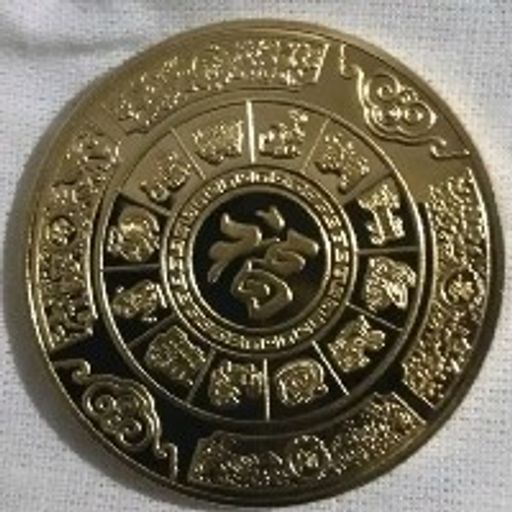
China Quietly Accumulates Gold – A Strategic Move to Challenge the US Dollar's Dominance?
For nearly a century, the US dollar has dominated the global financial system. From transactions involving millions of barrels of oil to millions of tons of wheat, the greenback has almost always played a central role in international payments. After World War II, the Bretton Woods system of 1944 officially pegged currencies to the USD, with the dollar convertible directly into gold at a rate of $35 per ounce. At that time, holding USD was almost equivalent to holding gold.
Although the gold standard collapsed in 1971 when U.S. President Richard Nixon ended the dollar’s convertibility into gold, the dollar maintained its dominance due to the size of the U.S. economy and its geopolitical strength. However, that order may be gradually changing.
The International Ambition of the Renminbi
Since the 2000s, China has pursued a long-term strategy to elevate the Chinese yuan (RMB), also known as renminbi, to become an important international currency, even a global reserve currency.
In a recent speech published in Qiushi magazine, President Xi Jinping emphasized that China needs to build “a strong currency, widely used in international trade and foreign exchange markets, and with a status as a global reserve currency.”
Some analysts believe that if the RMB can replace the USD around 2050, it would be the biggest shift in financial power since World War II.
But how can China achieve this?
The Mystery of China’s Gold Reserves
Many experts believe the key lies in gold.
By the end of 2025, Beijing announced official gold reserves of 2,306 tons, ranking sixth in the world behind the U.S. (8,133 tons), Germany, Italy, France, and Russia. However, many independent estimates suggest the actual figure could be double or even triple that amount.
Gold analyst Jan Nieuwenhuijs estimates China may hold around 5,411 tons of gold. Other forecasts, including from ANZ Bank, suggest about 5,500 tons. Financial writer Dominic Frisby even speculates total gold holdings could reach 7,000 tons, with earlier estimates as high as 16,000 tons before adjustments.
The Basis of These Estimates
China has been the world’s largest gold producer since 2007. Since 2013, the country has mined approximately 4,811 tons of gold. In 2024 alone, China produced 380 tons (accounting for 10% of global output).
China also imported about 1,225 tons of gold in 2024, mainly from Switzerland, Canada, and Australia.
On average, around 1,800 tons of gold have been withdrawn from the Shanghai Gold Exchange annually since 2015.
Assuming roughly 23% of the circulating gold is owned by the People’s Bank of China (PBoC), the actual reserves could far exceed the official figures.
Why Does China Keep Its Reserves Secret?
Experts say that prematurely revealing the true amount of gold could cause prices to spike, harming accumulation efforts. Additionally, early disclosure might trigger geopolitical tensions.
China’s “quiet buying” strategy aims to:
Avoid market panic like during the US bond sell-off.
Gradually reduce dependence on the USD.
Shift foreign exchange reserves (which are around $3.4 trillion by the end of 2025) into tangible assets with intrinsic value.
According to Jeff Currie of Carlyle, China’s gold purchases are part of a “de-dollarization” strategy.
The Gold-Backed Renminbi Scenario
One hypothesis is that China could announce enormous gold reserves at the right time and peg the RMB to gold at a fixed rate. This would give the Chinese currency “tangible collateral,” providing an advantage over the USD, which has not been linked to gold since 1971.
If China claims to hold gold reserves equal to or surpassing those of the U.S., confidence in the global monetary system could be seriously shaken.
However, creating a common BRICS currency backed by gold is considered unlikely in the short term due to differing interests among the more than 10 member countries. A unilateral move by China seems more feasible.
“Money Illusion” – Trust as the Foundation of Currency
Dominic Frisby emphasizes the concept of “money illusion” — the idea that money has value because people believe it does. Even without direct gold backing, we trust that there are assets behind the currency.
If China can demonstrate that the RMB is supported by a massive amount of gold, it could strengthen global confidence in the currency.
The Role of Gold and Bitcoin in the New Context
In an environment of rising global debt and escalating geopolitical tensions, many investors see gold and Bitcoin as safe havens against currency devaluation.
Gold continues to hit new highs.
Bitcoin, despite volatility, has increased over 16,500% since 2016.
Frisby argues that both gold and Bitcoin are “non-governmental money” — gold being naturally created, and Bitcoin generated through immense computational power.
Conclusion: A Quiet but Long-Term Shift
China’s secret accumulation of gold could be one of the biggest financial stories of the 21st century. Although there is no definitive proof of the actual scale, data on mining, imports, and gold transactions suggest Beijing is preparing for a less USD-dependent future.
Can the RMB replace the USD by 2050? That depends on:
China’s real economic strength
The degree of financial liberalization
International trust
And most importantly, the amount of gold they are truly holding.
One thing is certain: the global currency competition is entering a new phase — quiet, strategic, and long-term.