

Trade
Basic
Futures
Futures
Hundreds of contracts settled in USDT or BTC
TradFi
Gold
Trade global traditional assets with USDT in one place
Options
Hot
Trade European-style vanilla options
Unified Account
Maximize your capital efficiency
Demo Trading
Futures Kickoff
Get prepared for your futures trading
Futures Events
Participate in events to win generous rewards
Demo Trading
Use virtual funds to experience risk-free trading
Earn
Launch
CandyDrop
Collect candies to earn airdrops
Launchpool
Quick staking, earn potential new tokens
HODLer Airdrop
Hold GT and get massive airdrops for free
Launchpad
Be early to the next big token project
Alpha Points
Trade on-chain assets and enjoy airdrop rewards!
Futures Points
Earn futures points and claim airdrop rewards
Investment
Simple Earn
Earn interests with idle tokens
Auto-Invest
Auto-invest on a regular basis
Dual Investment
Buy low and sell high to take profits from price fluctuations
Soft Staking
Earn rewards with flexible staking
Crypto Loan
0 Fees
Pledge one crypto to borrow another
Lending Center
One-stop lending hub
VIP Wealth Hub
Customized wealth management empowers your assets growth
Private Wealth Management
Customized asset management to grow your digital assets
Quant Fund
Top asset management team helps you profit without hassle
Staking
Stake cryptos to earn in PoS products
Smart Leverage
New
No forced liquidation before maturity, worry-free leveraged gains
GUSD Minting
Use USDT/USDC to mint GUSD for treasury-level yields

More


Trending Topics
View More22.52K Popularity
9.8K Popularity
4.58K Popularity
36.36K Popularity
247.29K Popularity



Pin
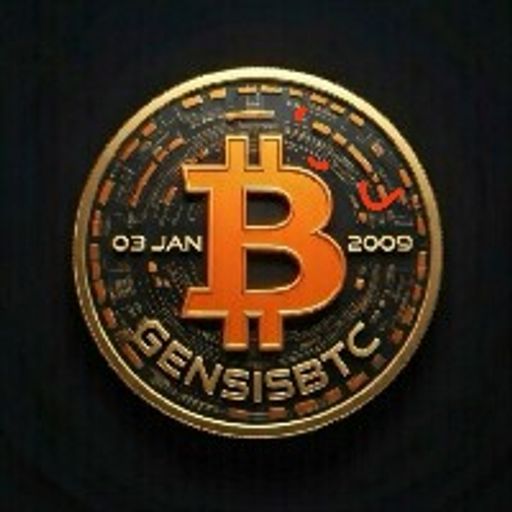
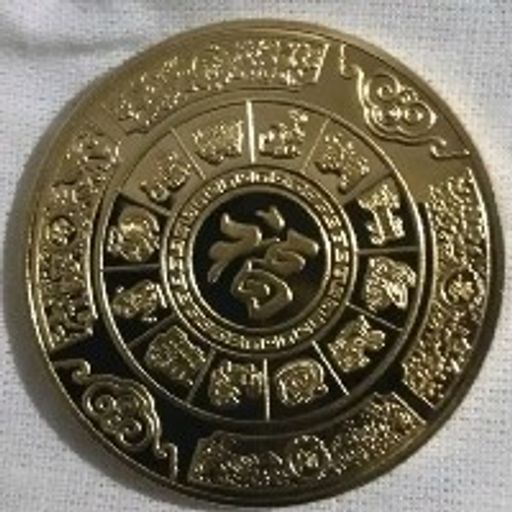
Satoshi is the digital treasure of Bitcoin: from units to rare collectible artifacts
When we talk about Bitcoin, we often mean whole coins, but the reality is much more interesting. Satoshis are the smallest unit of Bitcoin in circulation, and for a long time, they were nothing more than faceless elements of the system. However, with the introduction of the Ordinals protocol in 2023, these microscopic units gained new life, becoming collectible objects and digital artifacts with their own history and value.
The protocol, developed by Casey Rodarmor, allowed users to attach data directly to individual satoshis, transforming them from mere technical memory cells into objects that can be identified, tracked, and collected. This change opened up a whole new layer of interaction with the Bitcoin blockchain, where each satoshi can tell its own story.
Satoshis are the foundation of Bitcoin: what’s hidden in the smallest unit
Satoshis are not just a random name for a fraction of Bitcoin. They are the smallest divisible unit of the network, named after Bitcoin’s creator, Satoshi Nakamoto. One satoshi equals exactly one hundred millionth of a BTC (0.00000001 BTC).
Why does such a tiny amount make sense? Since the current price of Bitcoin is in the tens of thousands of dollars, handling whole coins for everyday transactions would be inconvenient. Satoshis serve the same function as kopecks for rubles or cents for dollars—they enable microtransactions, detailed pricing, and provide flexibility in Bitcoin’s economic model.
Beyond practical use, satoshis play a critical role in network security. Every transaction, even those involving tiny amounts, is recorded on the blockchain and validated, ensuring the integrity and transparency of the entire system. Thus, satoshis are not just a convenient unit of measurement but a fundamental component of Bitcoin’s architecture.
Rare satoshis: how Ordinals turned trivial units into valuable assets
Until January 2023, all satoshis were practically identical—they were just sequential units in the blockchain. The emergence of the Ordinals protocol changed this paradigm. Rodarmor developed a method whereby each satoshi receives a unique identifier based on its ordinal number in Bitcoin’s history.
This became possible thanks to updates like Taproot and SegWit, which allowed more efficient data recording and storage. Rare satoshis are digital artifacts that carry not only historical information about their creation but also user data—from artworks to text records and code.
The key difference: satoshis are now not just technical units but objects with unique characteristics that can be linked to significant events in Bitcoin’s history. For example, some rare satoshis are associated with halvings (events occurring every four years), while others relate to network difficulty adjustments (happening roughly every two weeks). This layered historical context creates collectible value.
Categories of rare satoshis: hierarchy of collectible assets
In the ecosystem created by Ordinals, a clear classification system for rarity has emerged. Understanding these categories helps collectors determine which assets have the greatest potential.
Common satoshis—these make up the vast majority of all satoshis on the Bitcoin network. They are located in the middle of blocks and have no special features. They are essentially “background noise” among digital assets.
Uncommon satoshis—the first satoshi of each new block. They occur more frequently than common satoshis but still have a specific position, making them more attractive to collectors than background assets.
Rare satoshis (in a narrow sense)—the first satoshi created after each network difficulty adjustment. These events happen every 2016 blocks (roughly every two weeks), making these assets significantly rarer.
Epic satoshis—the first satoshis that appear after Bitcoin halvings. Since halvings occur only every four years, these assets have considerable rarity and historical significance.
Legendary satoshis—extremely rare assets created under unique circumstances. For example, if a halving coincides with a difficulty adjustment, a satoshi with double historical significance is created.
Mythical satoshis—the only one of its kind: the very first satoshi created by Satoshi Nakamoto at the network’s launch. Its uniqueness is absolute.
Exotic categories include “black satoshis” (the last satoshi in a block that ends a certain period) and the famous “pizza satoshi” from the May 22, 2010 transaction, when Laszlo Hanyecz bought two pizzas for 10,000 BTC—one of the most iconic moments in Bitcoin history.
This classification turns simple transaction sending into a hunt for digital artifacts, where each rare satoshi found can have tangible value.
What affects the price of a rare satoshi: factors of collectible value
Not all rare satoshis are equally valuable. Their worth depends on multiple interacting factors.
Historical significance remains one of the main value markers. Satoshis associated with landmark moments in Bitcoin’s history—such as the first major transaction, the pizza purchase day, or key protocol upgrades—gain value due to their connection to the legend.
Position in the block also influences rarity. The first satoshi in a block appears less frequently than those in the middle. The first satoshi after a difficulty adjustment becomes more valuable due to the rarity of the event.
Ordinal inscriptions—content attached to a satoshi via the Ordinals protocol. Unique images, text, or code can significantly increase an asset’s value. Famous artworks or rare embedded codes attract collectors and can be worth much more.
Market demand and supply directly impact prices. Rare or high-value satoshis from limited categories can be more valuable when there is active community demand.
Milestones in Bitcoin’s technological development boost collectible value. Satoshis created during key upgrades (SegWit, Taproot, Schnorr Signatures) are considered historical evidence of technological evolution and attract collectors who value technical heritage.
Tools for determining rarity and verifying authenticity
To start collecting rare satoshis, you need tools for their identification and rarity assessment. Fortunately, the ecosystem offers several reliable solutions.
Ordscan—one of the main tools for analyzing rare satoshis. The platform provides detailed information about each satoshi: its ordinal number, attached data, block number, and history. Through Ordscan, you can view specific inscriptions or filter satoshis by desired rarity categories.
Blockchain explorers like Blockstream and BTC.com allow you to trace the historical path of a satoshi through various blocks and transactions. They provide context about the asset’s creation, helping assess its historical significance and verify authenticity.
NFT marketplaces on Bitcoin such as Gamma.io are becoming increasingly popular for trading rare satoshis. They offer data on market value, asset popularity, rarity analytics, and demand trends—everything needed for informed collecting.
Community forums and Discord channels play an invaluable role in exchanging information. Platforms like BitcoinTalk serve as gathering places for collectors, where discoveries, trends, and price benchmarks are discussed.
Social media and developer blogs (X, Medium) are another source of information. Influential figures in the Bitcoin NFT space regularly share discoveries and market insights, helping collectors stay updated on developments.
The future of rare satoshis: from theory to trading practice
The vision for the development of rare satoshis is expanding through innovative approaches to decentralized trading. Casey Rodarmor described the concept of so-called light pools—a new architecture for trading assets based on Bitcoin.
Unlike traditional decentralized exchanges (DEXs), which use automated market makers (AMMs) and require a large number of on-chain transactions, light pools operate on a network of nodes that efficiently relay trade information without excessive load.
This system leverages Bitcoin’s fundamental capabilities—UTXOs (unspent transaction outputs) and digital signatures—allowing for practical trading solutions that do not compromise the network’s decentralized nature. Light pools could become a fertile ground for developing the rare satoshi market, making it more accessible and efficient for collectors and investors.
Summary: satoshis are not just coins but digital monuments
Satoshis are the smallest unit of Bitcoin that has evolved from a purely technical component into a cultural and collectible object. Thanks to the Ordinals protocol and the community of enthusiasts, these microscopic units have gained new meaning.
Rare satoshis demonstrate how technology can redefine value and significance. From the mythical first satoshi of Satoshi Nakamoto to the famous pizza transaction satoshis—each rare asset carries a piece of Bitcoin’s history. As technology advances and the ecosystem grows, rare satoshis are likely to become an increasingly important part of digital collecting.
Current BTC price: $69,740 (as of February 10, 2026)