

Trade
Basic
Futures
Futures
Hundreds of contracts settled in USDT or BTC
TradFi
Gold
Trade global traditional assets with USDT in one place
Options
Hot
Trade European-style vanilla options
Unified Account
Maximize your capital efficiency
Demo Trading
Futures Kickoff
Get prepared for your futures trading
Futures Events
Participate in events to win generous rewards
Demo Trading
Use virtual funds to experience risk-free trading
Earn
Launch
CandyDrop
Collect candies to earn airdrops
Launchpool
Quick staking, earn potential new tokens
HODLer Airdrop
Hold GT and get massive airdrops for free
Launchpad
Be early to the next big token project
Alpha Points
Trade on-chain assets and enjoy airdrop rewards!
Futures Points
Earn futures points and claim airdrop rewards
Investment
Simple Earn
Earn interests with idle tokens
Auto-Invest
Auto-invest on a regular basis
Dual Investment
Buy low and sell high to take profits from price fluctuations
Soft Staking
Earn rewards with flexible staking
Crypto Loan
0 Fees
Pledge one crypto to borrow another
Lending Center
One-stop lending hub
VIP Wealth Hub
Customized wealth management empowers your assets growth
Private Wealth Management
Customized asset management to grow your digital assets
Quant Fund
Top asset management team helps you profit without hassle
Staking
Stake cryptos to earn in PoS products
Smart Leverage
New
No forced liquidation before maturity, worry-free leveraged gains
GUSD Minting
Use USDT/USDC to mint GUSD for treasury-level yields

More




The Race for China's Super Apps: Why Jack Ma's Alibaba Strategy Matters in the AI Era
The competition for dominance in China’s digital landscape is entering a new phase. Unlike the mobile internet era where dozens of megaplatforms thrived, the artificial intelligence era will consolidate power into just 3-4 Super Apps, each commanding over 500 million monthly active users. This shift represents perhaps the most critical business battleground of the next decade, with implications that far exceed the value created during mobile internet’s golden years. Jack Ma’s Alibaba stands at the center of this transformation, making strategic moves that reveal how experienced entrepreneurs approach technological revolutions.
The Transformation: Why AI Era Will Have Only 3-4 Super Apps
The difference between eras is starkly quantifiable. During mobile internet’s peak, China saw approximately 15 apps with over 100 million daily active users and roughly 10 platforms exceeding 500 million monthly active users. The AI era will be radically different. Technology fundamentals suggest that only 3-4 Super Apps will reach the 500 million monthly active user threshold, with each commanding significantly higher daily engagement—estimates suggest 500 million MAU will correspond to roughly 350 million daily active users.
This consolidation isn’t arbitrary. Super Apps in the AI age require excellence in large language models, increasingly approaching artificial general intelligence capabilities to maintain user stickiness. The barrier to entry has risen dramatically. Companies must possess: exceptional foundational model technology, integration across multiple service ecosystems, and sufficient capital reserves—estimates suggest at least $20 billion in available cash—to sustain multiyear investments before profitability emerges.
The value multiplier is extraordinary. These few surviving Super Apps will be worth many multiples more than the leading platforms of the mobile era, because they become the primary interface through which users interact with artificial intelligence technology itself.
ByteDance’s Unstoppable Momentum and Zhang Yiming’s Vision
Zhang Yiming’s ByteDance has emerged as the first-mover in executing this Super App strategy. The Doubao AI platform isn’t merely a chatbot—it represents an application of AI to every consumer touchpoint. ByteDance has announced intentions to expand Doubao’s presence into smartphones (through the Doubao Phone), electric vehicles, and robotics. Each represents not a separate business but integrated entry points through which Doubao’s AI influences user decisions and behavior.
This approach reveals why Super App leadership ultimately exceeds the value of leading in any single category like robotics. The Super App owns the gateway—the decision-making interface. When users face choices about which robot to purchase, the AI they consult daily holds enormous influence. This gateway control generates disproportionate commercial returns.
ByteDance’s progress has been remarkable even by recent standards. The company scored only 60 points on its 2023 large model strategy, but with leadership from Zhang Yiming and Zhu Wenjia, remedied this to reach 100 points within two months. By 2024, the AI strategy executed at 120 points. The trajectory continues ascending, with 2025 performance reaching 180 points—indicating acceleration rather than plateau.
Jack Ma’s Strategic Brilliance: How Alibaba Is Building Its Super App
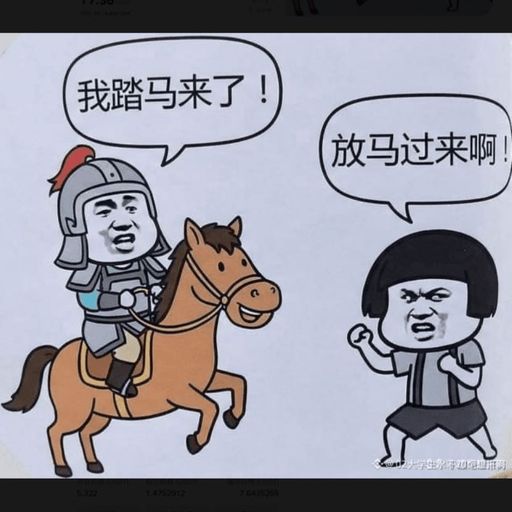
Among China’s senior entrepreneurs, few demonstrate the hunger and execution capability of Jack Ma in 2025. The Alibaba founder, now in his 60s, represents what Chinese philosophy describes as “an old steed in the stable, still aspiring to travel a thousand miles.” His strategic positioning for the Super App race deserves careful analysis.
Jack Ma holds Qwen—Alibaba’s foundational AI model—in one hand, the newly developed Afu platform in the other, and Alibaba Cloud infrastructure in the middle. This creates a remarkably cohesive architecture. Qwen differs from conventional chatbots; it’s designed as an action-oriented platform, not merely a question-answering interface.
The underlying differentiator is instant retail and hyperlocal commerce services. Alibaba’s acquisition of Haodf.com approximately eighteen months ago—priced at roughly 2 billion yuan—equipped Afu with medical services capabilities. At the acquisition time, both Baidu and Tencent held shareholder positions and possessed first rights of refusal. Jack Ma’s decision to acquire anyway demonstrated strategic conviction. Haodf.com, if valued today, commands an estimated worth exceeding 10 billion yuan.
Jack Ma’s intention appears clear: Qwen should surpass Doubao’s daily active user count by 2026. The instant retail and local services capabilities provide genuine differentiation from Tencent’s offerings and create genuine utility. This represents authentic competition, not merely technology duplication. Jack Ma attacks Meituan not just for market share but to delay Meituan’s own Super App ambitions, preventing them from launching a Qwen equivalent before Alibaba completed its ecosystem integration.
This strategy succeeded. Tencent benefited substantially from Alibaba’s news during this period. The synergies across Alibaba and Ant ecosystem components mean Qwen launched with instant access to payment infrastructure, commerce interfaces, and financial services—advantages that take competitors months or years to assemble.
The Five Challengers Fighting for Survival
Five other major technology companies possess sufficient scale and resources to potentially compete for Super App positions: Tencent, Meituan, Pinduoduo, JD.com, and Baidu. The economics are brutal. The first among Meituan or Pinduoduo to successfully launch an AI Native Super App would likely experience stock appreciation exceeding 20% from current valuations, according to market analysis.
Meituan’s exit from community group buying reflected more than loss mitigation—it represented strategic capital reallocation toward AI Native Super App development. Wang Xing, Meituan’s founder, demonstrated early recognition that AI technology creates far greater value than optimizing last-mile commerce or hyperlocal retail operations. Community group buying, by contrast, serves social stability purposes and should remain in the hands of small businesses and local entrepreneurs. This strategic clarity gave Meituan focus.
Pinduoduo faces a genuine dilemma. Like Meituan, it must simultaneously: invest in overseas expansion, develop competitive Super App capabilities, and maintain core business performance. Neither company can afford hesitation—both must launch comprehensive AI-native applications no later than Q1 2026 to maintain competitive viability.
Baidu, JD.com, and others possess resources but lack the ecosystem breadth necessary for Super App integration. The remaining platforms, including the prominent but still incomplete Xiaohongshu, face a particular vulnerability. As AI image generation and video synthesis advance, the functionality Xiaohongshu provides—practical tips and lifestyle guidance—will become increasingly available through AI platforms. Within 1-2 years, users may simply query an AI agent rather than browse Xiaohongshu’s interface. Xiaohongshu would then devolve into a pure social network with diminished search functionality.
Tencent’s Position: Can WeChat Defend Its Throne?
Tencent represents perhaps the most stable company in China’s technology sector. The company’s Mini Programs and Video Channels represent genuinely excellent product executions—textbook cases of platform design. WeChat will unquestionably maintain a position as an AI-native Super App.
Yet uncertainty clouds Tencent’s future dominance. Historical patterns suggest succession is possible. When Douyin emerged as a video platform, many questioned whether WeChat could maintain supremacy. Douyin succeeded not by replacing WeChat but by capturing attention time from it. Young users born after 1995 and 2000 exhibit measurable preference for Doubao’s personalization and responsiveness compared to conventional chatbot interfaces. If Doubao usage hours ever surpass WeChat—mirroring Douyin’s capture of video attention—the implications shift dramatically.
The damage Doubao could inflict on WeChat’s ecosystem would dwarf Douyin’s impact. Doubao reaches users at decision moments—when they query, research, or deliberate. WeChat’s communications network might retain users, but if Doubao becomes their primary interface for generating recommendations, preferences, and choices, WeChat’s downstream influence diminishes. The probability of this transition occurring “very soon,” within quarters rather than years, appears significant. Jack Ma and Zhang Yiming are actively racing to ensure they control this primary interface. Whoever succeeds will control China’s digital decision-making apparatus for the next decade.
Why Huawei Remains Outside the Battle
Huawei will almost certainly not enter the Super App competition, and were it to attempt entry, would likely fail regardless. The company’s genetic code emphasizes hardware excellence, chip design, and infrastructure rather than consumer behavior integration. Huawei’s optimal positioning mirrors the role it seeks to play: China’s equivalent to the combination of TSMC (in semiconductor manufacturing) and Nvidia (in AI capabilities) and Microsoft (in enterprise software infrastructure).
Within automotive manufacturing, Huawei’s strategy has proven enormously effective. The Huawei automobile alliance begun with partnerships with Seres, evolved through collaborations with Chery, and now extends to major manufacturers like BAIC and SAIC. The alliance will almost certainly encompass all major state-owned automakers eventually—Dongfeng, FAW, Chang’an, and GAC. Through Huawei Intelligent Manufacturing, the company has effectively assembled China’s largest automobile alliance without direct manufacturing liability.
This represents optimal positioning for the capabilities Huawei commands. Super App competition requires different strengths—consumer engagement, entertainment integration, and commerce orchestration—that diverge substantially from Huawei’s core competencies.
The Verdict: Why Jack Ma and Zhang Yiming Control the Decade
Zhang Yiming will almost certainly remain China’s wealthiest individual through this decade and likely into the next, assuming ByteDance successfully consolidates its Super App position. The financial velocity behind this logic is straightforward: control the interface, and commercial returns multiply accordingly.
Jack Ma’s position is nearly as formidable, though his competitive timeline is compressed. The strategic moves he’s made—acquiring Haodf.com, integrating Afu with instant retail capabilities, deploying Qwen as an action-oriented platform—indicate an entrepreneur still capable of extraordinary vision and execution. At his life stage, this itself merits respect. He isn’t executing a predetermined strategy; he’s actively learning, adapting, and competing at the highest level against younger rivals.
The Super App race will consume enormous capital and talent through 2026 and beyond. Only four platforms will likely reach the finish line. That finish line, however, leads to a landscape where the winners control the primary interface through which hundreds of millions of Chinese users generate decisions, preferences, and choices daily. In the artificial intelligence era, this interface controls everything. Jack Ma, Zhang Yiming, and the handful of leaders who comprehend this reality are orchestrating the competition that will define Chinese technology for the next twenty years.