

Trade
Basic
Futures
Futures
Hundreds of contracts settled in USDT or BTC
Options
HOT
Trade European-style vanilla options
Unified Account
Maximize your capital efficiency
Demo Trading
Futures Kickoff
Get prepared for your futures trading
Futures Events
Futures Mall
Participate in events to win generous rewards
Demo Trading
Use virtual funds to experience risk-free trading
Earn
Launch
CandyDrop
Collect candies to earn airdrops
Launchpool
Quick staking, earn potential new tokens
HODLer Airdrop
Hold GT and get massive airdrops for free
Launchpad
Be early to the next big token project
Alpha Points
NEW
Trade on-chain assets and enjoy airdrop rewards!
Futures Points
NEW
Earn futures points and claim airdrop rewards
Investment
Simple Earn
Earn interests with idle tokens
Auto-Invest
Auto-invest on a regular basis
Dual Investment
Buy low and sell high to take profits from price fluctuations
Soft Staking
Earn rewards with flexible staking
Crypto Loan
0 Fees
Pledge one crypto to borrow another
Lending Center
One-stop lending hub
VIP Wealth Hub
Customized wealth management empowers your assets growth
Private Wealth Management
Customized asset management to grow your digital assets
Quant Fund
Top asset management team helps you profit without hassle
Staking
Stake cryptos to earn in PoS products
Smart Leverage
NEW
No forced liquidation before maturity, worry-free leveraged gains
GUSD Minting
Use USDT/USDC to mint GUSD for treasury-level yields

More




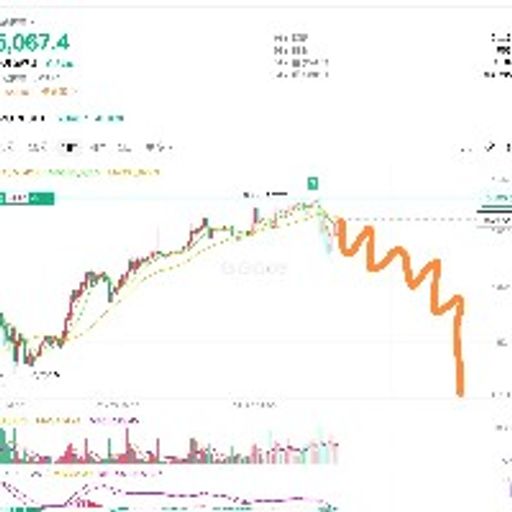


Bitcoin Price Prediction for 2026: Navigating Key Resistance and Support Levels
Bitcoin’s price action has become a fascinating study in market structure and technical resilience as we move through early 2026. At the time of writing, BTC is trading near $87,280, slightly below last week’s intraday high of $88.86K yet maintaining firm footing above the $86K floor. The cryptocurrency’s market capitalization stands at approximately $1.744 trillion with roughly 20 million BTC in circulation. As traders and analysts evaluate bitcoin price prediction models for the remainder of 2026, several critical factors—from options market dynamics to macroeconomic pressures—are shaping near-term and longer-term trajectories.
The coming weeks will be decisive for bitcoin price momentum. With 24-hour trading volume at $1.31 billion and prices holding within a defined range, the market is setting up key scenarios that could determine whether BTC breaks decisively higher or faces renewed selling pressure. Understanding these dynamics is essential for anyone making bitcoin price predictions in the current environment.
Bitcoin Price at Critical Technical Crossroads: Support and Resistance Battlegrounds
The technical picture reveals a market in consolidation mode around the $87K–$90K zone. According to Bitcoin Magazine analysts, price action continues to defend key support levels within a broadening wedge pattern, suggesting that bearish momentum is gradually losing steam. This defensive posture is positive for bulls but requires confirmation through a decisive breakout.
The $84,000 level represents the most critical support for bitcoin price action. A breakdown below this zone would likely cascade toward $72,000–$68,000, potentially opening doors to even deeper losses. Conversely, on the upside, resistance clusters at $91,400 and more critically at $94,000 present formidable barriers to a sustained rally. A weekly close above $94,000 could unlock a path toward $101,000 and even $108,000, though heavy resistance is expected at each level.
For bitcoin price prediction purposes, the $84,000–$94,000 range has become the battle zone. Market participants are watching whether large institutions can build enough conviction to drive spot demand through the $94,000 resistance. Without such participation, any upside moves risk fading during periods of thin liquidity.
Options Expiry Creates Volatility: How Funding Rates Shape Bitcoin Price Movements
Recent options activity has fundamentally altered market structure in ways that directly impact bitcoin price prediction models. A record options expiration last week triggered a sharp 50% decline in open interest, signaling that many traders exited positions ahead of the event. This withdrawal from the market underscores why bitcoin price struggled to maintain momentum above $90K despite optimistic technical setups.
The gamma dynamics have inverted significantly. Before the expiration, dealers were positioned long gamma to capture premium. Post-expiration, they flipped to short gamma to the upside—a critical shift that reshapes how the market should interpret bitcoin price swings going forward. With dealers now short gamma, rising prices force them to hedge by purchasing spot bitcoin or shorter-dated call options. This self-reinforcing dynamic can amplify rallies during conviction-driven buying but also accelerates selloffs when support breaks.
Funding rates offer another lens for bitcoin price prediction. Deribit’s perpetual funding rate climbed above 30% following the options expiry, up from near-zero levels just days earlier. Elevated funding rates signal crowded bullish positioning and increase the carrying cost for long trades—a headwind that can trigger liquidations if prices decline. The heavy BTC-2JAN26-94K call option activity during recent price spikes suggests that $94,000 remains the focal point for large traders, representing a flash point that could either accelerate a breakout or trigger profit-taking.
Macro Headwinds and Geopolitical Risks: The Bigger Picture for Bitcoin Price
Beyond the technical and derivatives landscape, macroeconomic factors are adding layers of complexity to bitcoin price prediction for 2026. Bitcoin’s recent pushes toward $90K coincided with rising oil prices stemming from renewed military tensions in Eastern Europe, which dampened hopes for near-term diplomatic resolutions. Higher energy costs ripple through global inflation expectations, creating uncertainty across risk assets.
The U.S. fiscal picture remains a longer-term tailwind for bitcoin price appreciation. National debt has surged to approximately $37.65 trillion, reinforcing the narrative that bitcoin serves as insurance against currency debasement and fiscal imbalances. However, this structural bullish argument doesn’t guarantee near-term price stability—market dislocations and geopolitical shocks can easily derail predictions based on fundamental thesis alone.
During holiday trading periods and early January, bitcoin price volatility often increases due to reduced institutional participation. Current market conditions reflect this pattern, with sharp reversals common as thin liquidity amplifies small order imbalances. The price swung between $86K and $90K over the holiday season, exemplifying how constrained volume can create false signals.
2026 Bitcoin Price Outlook: Will $94K Break Lead to New Highs?
For bitcoin price prediction throughout 2026, the immediate focus centers on whether sustained spot demand can push BTC through the $94,000 barrier. QCP Capital emphasized that without real volume participation from institutional buyers, any upside moves risk fading quickly. This caveat is crucial: technical formations mean little without the buying interest to sustain them.
A sustained break above $94,000 would be a bullish milestone, potentially igniting gamma-driven buying that extends rallies toward $101,000–$108,000. Conversely, a failure to hold above $91,400 after multiple attempts signals weakening conviction and raises the risk of a pullback toward $84,000 and below.
The most realistic bitcoin price prediction for early-to-mid 2026 acknowledges that current conditions are transitional. Holiday liquidity constraints are beginning to normalize, allowing market participants to reassess positions with clearer eyes. Large options expiries near $100,000 will likely serve as pressure points for price discovery. Bulls have shown resilience in defending the $84K zone, a positive sign, but they need concrete confirmation in the form of a sustained weekly close above $94K before claiming control. Until that occurs, bitcoin price remains vulnerable to sideways consolidation or downside tests, keeping traders and investors humble about their 2026 predictions.