

Trade
Basic
Futures
Futures
Hundreds of contracts settled in USDT or BTC
Options
HOT
Trade European-style vanilla options
Unified Account
Maximize your capital efficiency
Demo Trading
Futures Kickoff
Get prepared for your futures trading
Futures Events
Participate in events to win generous rewards
Demo Trading
Use virtual funds to experience risk-free trading
Earn
Launch
CandyDrop
Collect candies to earn airdrops
Launchpool
Quick staking, earn potential new tokens
HODLer Airdrop
Hold GT and get massive airdrops for free
Launchpad
Be early to the next big token project
Alpha Points
NEW
Trade on-chain assets and enjoy airdrop rewards!
Futures Points
NEW
Earn futures points and claim airdrop rewards
Investment
Simple Earn
Earn interests with idle tokens
Auto-Invest
Auto-invest on a regular basis
Dual Investment
Buy low and sell high to take profits from price fluctuations
Soft Staking
Earn rewards with flexible staking
Crypto Loan
0 Fees
Pledge one crypto to borrow another
Lending Center
One-stop lending hub
VIP Wealth Hub
Customized wealth management empowers your assets growth
Private Wealth Management
Customized asset management to grow your digital assets
Quant Fund
Top asset management team helps you profit without hassle
Staking
Stake cryptos to earn in PoS products
Smart Leverage
NEW
No forced liquidation before maturity, worry-free leveraged gains
GUSD Minting
Use USDT/USDC to mint GUSD for treasury-level yields

More




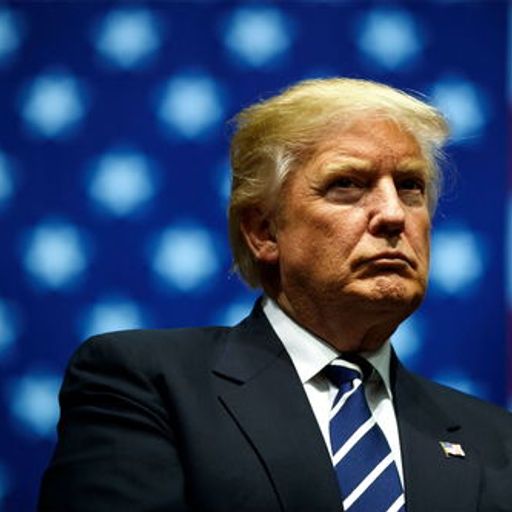


The Senate Office is awaiting a legislative compromise, while the cryptocurrency industry is pushing for a market transparency law.
Global competition forces the United States to accelerate digital asset regulation. While European MiCA frameworks are already in place and Asian financial centers such as Hong Kong and Singapore attract liquidity, American lawmakers and key industry players — including Ripple and Coinbase — are mobilizing around the Digital Asset Market Clarity Act (H.R. 3633), known as the Clarity Act of 2025.
Federal Market Framework as the Missing Regulatory Layer
The previous GENIUS Act established basic rules for payment stablecoins, but the domestic cryptocurrency ecosystem remains decentralized across state licenses and enforcement guidelines through top-down actions. The Clarity Act aims to build comprehensive market frameworks for secondary trading, asset classification, and intermediary registration. Without clear federal standards, companies invest resources in lobbying rather than innovation — resulting in a loss of competitiveness compared to jurisdictions with ambiguous but increasingly business-friendly approaches.
Reece Merrick from Ripple directly described this challenge: “The United States still lacks a comprehensive regulatory structure for the broad cryptocurrency ecosystem, which hampers the growth of companies based in America." Ripple, holding a banking license and developing ambitious plans related to access to the Federal Reserve for its stablecoin RLUSD, specifically requires this type of federal environment. The recent acquisition of broker-dealer Hidden Road — a platform settling $3 trillion annually — signals a strategic move toward controlling processes that require collateral segregation and auditable operational controls.
Deep Partisan Divides Block the Voting Schedule
The outline of major political conflicts emerged in bipartisan discussions on January 6. Republicans are pushing to move the Senate Banking Committee vote to January 15 to establish frameworks before the legislative window narrows within the year. However, according to Galaxy Research analyses, the gap between Republican calls for speed and a series of new Democratic demands threatens the possibility of reaching an agreement.
The central friction point concerns decentralized finance (DeFi). Democrats have proposed bold oversight demands, including: mandatory “front-end sanctions compliance” for DeFi interfaces (which would require user verification before access), increased powers for the Department of the Treasury, and a new regulatory category for “non-decentralized DeFi” — a term that could potentially encompass most existing projects.
Additionally, Democrats propose drastic procedural changes. Instead of waiting for SEC actions, issuers would be forced to proactively register, declaring that they are not securities. A capital limit of $200 million for certain exemptions and expanded FTC authority for consumer protection complete the stricter conditions.
Battle for Stablecoin Profits: Bank Lobby vs. Innovation
The stablecoin issue has shifted from ideological debate to a conflict over revenue. American banks are strongly lobbying against allowing stablecoin issuers to pass on profits from reserves (such as short-term government bonds) to token holders. Banks argue this raises concerns about deposit outflows from the traditional system.
Faryar Shirzad from Coinbase responded with data: banks earn about $176 billion annually on $3 trillion in deposits at the Federal Reserve, plus $187 billion from card transaction fees — averaging $1,440 per household. “That’s over $360 billion annually from payments and deposits alone,” Shirzad noted, arguing that stablecoin rewards would introduce real competition. Recent research by Charles River Associates found no statistically significant link between USDC growth and local bank deposit changes.
Alexander Grieve from venture firm Paradigm highlighted the absurdity: the banking lobby presents stablecoins as a “disaster on a scale of extinction,” while in reality, stablecoins support credit creation, and the current status quo established by GENIUS will remain if banks block the new market structure.
Global Competition Accelerates Senate Debate
A key argument for passing the bill concerns the fiscal significance of stablecoins. Brookings Institution studies linked stablecoin growth to demand for short-term Treasury bonds, representing a new source of buyers for US debt outside the banking sector. Estimates suggest that a 1% increase in stablecoin demand could lower short-term bond yields by 1-2 basis points — making this market scale significant for the Department of the Treasury.
On the international stage, pressure is mounting. Europe has implemented MiCA frameworks with single market licenses, and ESMA publishes detailed implementation templates. Asia — Hong Kong, Singapore — is building specialized regulations to attract liquidity that America seeks to retain domestically.
Senator Cynthia Lummis, a strong supporter of the Clarity Act, pointed to this jurisdictional arbitrage as a reason for urgency: “For too long, unclear rules have pushed digital asset companies abroad. Our market frameworks are changing that, establishing clear jurisdiction and strong safeguards for American leadership.”
Where the Real Threat to the Deal Lies
The greatest risk remains not ideological differences but operational chaos. As Brian Armstrong from Coinbase noted: “The bill will open the cryptocurrency market with clear rules, protecting customers and freeing creators.” However, the path to this victory requires resolving contradictions between legislative temperament and the technical complexity of regulation — where unclear positions from one side can completely block compromise from the other.
The stakes are high: without federal clarification, American crypto companies will continue to lose global competition, the traditional banking system will lose an alternative diversification, and US Treasury securities may be supplemented by offshore products instead of flowing into domestic capital markets.