

Trade
Basic
Futures
Futures
Hundreds of contracts settled in USDT or BTC
Options
HOT
Trade European-style vanilla options
Unified Account
Maximize your capital efficiency
Demo Trading
Futures Kickoff
Get prepared for your futures trading
Futures Events
Participate in events to win generous rewards
Demo Trading
Use virtual funds to experience risk-free trading
Earn
Launch
CandyDrop
Collect candies to earn airdrops
Launchpool
Quick staking, earn potential new tokens
HODLer Airdrop
Hold GT and get massive airdrops for free
Launchpad
Be early to the next big token project
Alpha Points
NEW
Trade on-chain assets and enjoy airdrop rewards!
Futures Points
NEW
Earn futures points and claim airdrop rewards
Investment
Simple Earn
Earn interests with idle tokens
Auto-Invest
Auto-invest on a regular basis
Dual Investment
Buy low and sell high to take profits from price fluctuations
Soft Staking
Earn rewards with flexible staking
Crypto Loan
0 Fees
Pledge one crypto to borrow another
Lending Center
One-stop lending hub
VIP Wealth Hub
Customized wealth management empowers your assets growth
Private Wealth Management
Customized asset management to grow your digital assets
Quant Fund
Top asset management team helps you profit without hassle
Staking
Stake cryptos to earn in PoS products
Smart Leverage
NEW
No forced liquidation before maturity, worry-free leveraged gains
GUSD Minting
Use USDT/USDC to mint GUSD for treasury-level yields

More


Trending Topics
View More24.64K Popularity
335.08K Popularity
45.68K Popularity
7.96K Popularity
6.53K Popularity




Pin
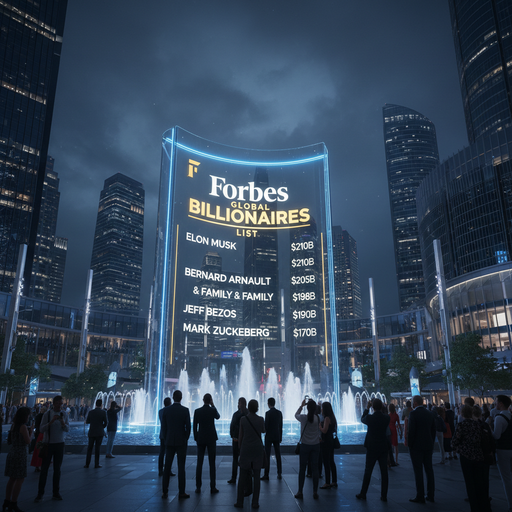
The Wealth Paradox: How Elon Musk Earns More Than You Make in a Lifetime—Every Single Second
There’s a peculiar fascination people have with extreme wealth. Not the typical millionaire next door, but the kind of affluence that exists in a completely different dimension. Elon Musk represents this apex—someone whose financial reality operates on a scale so distant from ordinary income that people find themselves asking an almost surreal question: how much does Elon Musk earn per second?
Not hourly. Not daily. Per second. In the time it takes to snap your fingers, this entrepreneur has accumulated wealth equivalent to annual salaries in developed nations. This phenomenon isn’t just a curiosity—it’s a window into how capital accumulation functions in the modern economy.
The Numbers That Defy Comprehension
Let’s establish the baseline: Elon Musk earns between $6,900 and $13,000 per second as of 2025, though this figure fluctuates based on market conditions and his company valuations.
To contextualize: during the time you read this paragraph, Musk has generated income that exceeds monthly housing costs in major metropolitan areas like London or Manhattan. This isn’t theoretical wealth—these are realized or unrealized gains that translate into actual purchasing power.
Breaking Down the Mathematics
Here’s how the calculation works. Assuming a daily wealth increase of $600 million (realistic during high-volatility trading weeks):
During Tesla’s peak valuations, this figure has climbed past $13,000 per second. To illustrate the absurdity: Musk’s two-second earnings exceed what many individuals accumulate across an entire year of full-time employment.
Why This Isn’t a Salary
This is the crucial distinction most people miss. Elon Musk doesn’t earn a traditional paycheck. He famously rejected a CEO salary from Tesla and compensates himself through a different mechanism entirely.
His income generation stems from equity ownership and asset appreciation. When Tesla stock performs well, SpaceX secures contracts, or xAI gains valuation traction, his net worth expands automatically—regardless of his active involvement in that particular moment. He could be sleeping and wake to find himself hundreds of millions wealthier.
This decoupling from labor hours is fundamental to understanding modern wealth accumulation at the billionaire tier. Traditional workers exchange time for compensation. Musk’s wealth compounds through ownership structures where value creation becomes passive income.
The Entrepreneurial Foundation: How the Fortune Was Built
This astronomical earning rate didn’t materialize overnight. It’s the cumulative result of decades of high-risk ventures:
Zip2 (1999): His initial entrepreneurial venture, sold for $307 million—establishing proof of concept.
X.com and PayPal: Co-founding X.com, which evolved into PayPal, was subsequently acquired by eBay for $1.5 billion. This success provided the capital foundation for subsequent investments.
Tesla: While not the original founder, Musk joined early and orchestrated its transformation into the world’s most valuable automaker. This investment proved exponentially rewarding.
SpaceX (2002): Founded with ambitions of Mars colonization, now valued at over $100 billion. This venture represents a bet on space commercialization.
Secondary Portfolio: Neuralink (neural technology), The Boring Company (tunneling infrastructure), xAI (artificial intelligence), Starlink (satellite internet)—each representing calculated bets on emerging sectors.
The strategy was deliberately reinvestment-heavy. Rather than extracting profits after PayPal’s sale, Musk redirected capital into capital-intensive, high-risk industries: aerospace and automotive. This compounding effect—where profits became down payments on larger ventures—accelerated wealth multiplication.
The Mechanism of Passive Accumulation
The distinction between how Musk generates income versus how salaried professionals earn highlights a structural reality of 21st-century capitalism:
Traditional earning model: Eight hours of labor = salary receipt. Income directly correlates with time invested.
Wealth accumulation model: Ownership stakes appreciate independent of active participation. Asset value increases through market dynamics, company performance, and sector tailwinds.
Musk exemplifies this second model. His net worth—currently approximately $220 billion—grows through stock valuations and company equity appreciation rather than monthly deposits. A volatile trading day can shift his wealth position by billions, yet his direct labor contribution remains constant.
This mechanism explains why discussing “how much Elon Musk earns per second” requires distinguishing between hypothetical paper wealth fluctuations and actual realized income. Market corrections can reverse these gains as dramatically as boom cycles create them.
Wealth Deployment: Consumption Versus Investment
Conventional billionaire stereotypes suggest penthouse living and extravagant consumption. Musk largely defies this archetype.
He reportedly resides in a modest prefab residence near SpaceX facilities and has divested most real estate holdings. Claims of minimal lifestyle expenditures—no yacht ownership, limited party attendance—suggest deliberate frugality at the personal consumption level.
Instead, accumulated wealth feeds back into his enterprise ecosystem: funding Mars colonization infrastructure, developing AI competitors, constructing underground transportation networks. Wealth functions as operational fuel rather than luxury consumption mechanism.
The irony is evident: despite earning thousands of dollars per second, personal expenditures remain modest compared to portfolio reinvestment rates.
The Philanthropy Question
When someone’s income reaches these levels, inquiries about charitable contribution naturally emerge. The reality proves complex.
Musk has publicly committed to substantial philanthropic pledges, including signing the Giving Pledge—a commitment by ultra-wealthy individuals to distribute the majority of their fortunes during lifetime or posthumously.
However, critics highlight a discrepancy: with $220 billion in net worth and earning $6,900 per second, even substantial donations appear proportionally minimal. If his earning rate is $217 billion annually (calculated from per-second figures), charitable contributions represent a small percentage relative to total accumulation.
Musk’s counterargument centers on alternative philanthropy: electric vehicle adoption (environmental impact), SpaceX development (multi-planetary survival), renewable energy investment (climate change mitigation), AI safety research. These represent contribution mechanisms beyond direct monetary donations—technological solutions substituting for traditional charitable grants.
This perspective presents a philosophical question: does technological innovation addressing systemic challenges constitute philanthropy equivalent to or exceeding direct financial contributions?
The Inequality Lens
The capacity to earn $6,900 per second—or in annual terms, approximately $217 billion—crystallizes growing wealth concentration debates.
The gap between ultra-high net worth individuals and median earners has expanded dramatically. Someone accumulating this much wealth in a single second reminds us that traditional economics education doesn’t adequately explain modern wealth dynamics.
Perspectives on this diverge sharply. Proponents view Musk as a visionary channeling capital toward technological advancement and civilizational challenges. Critics identify him as emblematic of systemic inequality where asset appreciation wealth vastly outpaces labor-based income.
Both perspectives contain validity. Someone earning one second’s income equivalent to a typical month’s wages reflects capitalism’s structural dynamics—where capital ownership generates returns exceeding labor compensation by exponential factors.
Conclusion: Understanding Extreme Wealth in Modern Capitalism
To directly answer the question: Elon Musk earns between $6,900 and $13,000 per second, fluctuating with market conditions and company performance. This isn’t salary income—it’s wealth appreciation through equity ownership.
His fortune wasn’t randomly granted but constructed through calculated risk-taking across capital-intensive industries, decades of reinvestment, and timing aligned with technological adoption curves. Tesla’s electric vehicle dominance, SpaceX’s space commercialization, and AI sector positioning represent bets that compounded exponentially.
Whether you find this fascinating, troubling, or simply incomprehensible, it represents a quantifiable reality of contemporary wealth concentration. It reveals how modern capitalism differs fundamentally from traditional labor economics—where ownership-based income generation operates at scales disconnected from hourly wage frameworks.
The question of whether anyone should accumulate this much wealth remains philosophically open. The fact that it’s possible—and occurring—isn’t debatable. Musk sits at wealth’s apex, and his per-second earnings represent a quantified measure of that position.