

Trade
Basic
Futures
Futures
Hundreds of contracts settled in USDT or BTC
Options
HOT
Trade European-style vanilla options
Unified Account
Maximize your capital efficiency
Demo Trading
Futures Kickoff
Get prepared for your futures trading
Futures Events
Participate in events to win generous rewards
Demo Trading
Use virtual funds to experience risk-free trading
Earn
Launch
CandyDrop
Collect candies to earn airdrops
Launchpool
Quick staking, earn potential new tokens
HODLer Airdrop
Hold GT and get massive airdrops for free
Launchpad
Be early to the next big token project
Alpha Points
NEW
Trade on-chain assets and enjoy airdrop rewards!
Futures Points
NEW
Earn futures points and claim airdrop rewards
Investment
Simple Earn
Earn interests with idle tokens
Auto-Invest
Auto-invest on a regular basis
Dual Investment
Buy low and sell high to take profits from price fluctuations
Soft Staking
Earn rewards with flexible staking
Crypto Loan
0 Fees
Pledge one crypto to borrow another
Lending Center
One-stop lending hub
VIP Wealth Hub
Customized wealth management empowers your assets growth
Private Wealth Management
Customized asset management to grow your digital assets
Quant Fund
Top asset management team helps you profit without hassle
Staking
Stake cryptos to earn in PoS products
Smart Leverage
NEW
No forced liquidation before maturity, worry-free leveraged gains
GUSD Minting
Use USDT/USDC to mint GUSD for treasury-level yields

More


Trending Topics
View More1.01K Popularity
30.75K Popularity
9.88K Popularity
99 Popularity
83 Popularity




Pin
RSI Indicator in Cryptocurrency Trading: A Comprehensive Strategy Guide
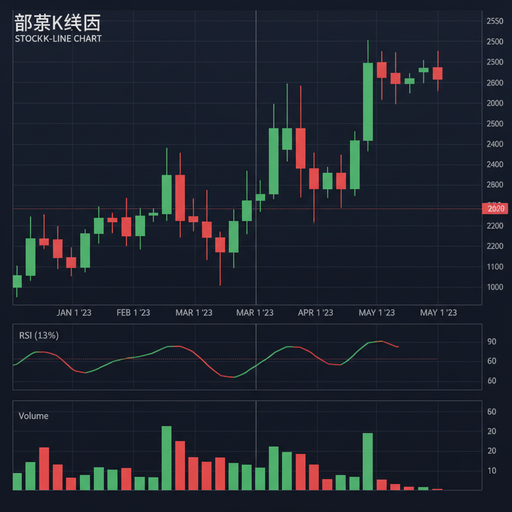
The Relative Strength Index stands as one of the most valuable momentum oscillators available to crypto traders today. This technical indicator has earned its reputation for measuring the velocity of price movements and identifying whether an asset has reached overbought or oversold conditions. Professional traders frequently incorporate RSI into their crypto trading toolkit, and beginners often start their technical analysis journey with this particular indicator.
Understanding the Fundamentals of RSI
Technical analysis forms the backbone of cryptocurrency price prediction. Market movements across crypto assets are influenced by patterns and trends that can be systematically analyzed. The Relative Strength Index, developed by J. Welles Wilder in 1978, belongs to the momentum oscillator category and operates on a scale from 0 to 100.
The indicator evaluates price changes over a default 14-period timeframe, though this can be customized for different time intervals—whether minutes, hours, days, or weeks. The beauty of RSI lies in its universal availability; virtually every trading platform and cryptocurrency exchange provides automated RSI calculation, requiring traders only to interpret the results.
The Mathematics Behind RSI
Understanding the calculation formula provides insight into how this indicator functions:
RSI = 100 – [100 / (1 + RS)]
Where RS = Average Gain / Average Loss
This formula considers the sum of gains and losses across your selected timeframe. The 14-period setting is standard across most platforms, meaning a daily chart analyzes the previous 14 days of data, while a weekly chart examines 14 weeks. Traders can adjust these parameters based on their specific strategy requirements.
Interpreting RSI Signals Effectively
The indicator generates clear directional signals through its positioning on the 0-100 scale:
Oversold Territory (Below 30): When RSI drops below the 30 threshold, it indicates the asset is experiencing a pullback and may be positioned for a potential upside reversal.
Overbought Territory (Above 70): Conversely, RSI readings above 70 suggest buying pressure has intensified, creating conditions where a price correction or bearish reversal becomes probable.
However, traders must recognize that RSI can generate false signals. The most successful approach combines RSI analysis with multiple additional indicators rather than relying on a single technical tool.
Advanced Application: Divergence and Convergence Analysis
Two powerful RSI applications help traders anticipate trend reversals:
Convergence occurs when both price and RSI move in the same direction—for example, when an asset reaches a higher high while RSI simultaneously confirms with a higher high. This alignment suggests continued momentum strength.
Divergence presents the opposite scenario. When price reaches a higher high but RSI reaches a lower high, this misalignment signals weakening momentum. This divergence typically appears near trend conclusions, offering early warning signals for potential reversals. A Bitcoin chart often demonstrates this principle clearly when price advances while RSI strength diminishes.
Practical Crypto Trading Applications
Several approaches maximize RSI effectiveness in cryptocurrency markets:
Timeframe Hierarchy: Remember that higher timeframes generate stronger signals. A 4-hour chart produces more reliable RSI signals than a 15-minute chart. Traders should verify signals across multiple timeframes before committing capital.
Adjusted Thresholds for Confirmation: Rather than strictly adhering to the 70/30 levels, experienced traders sometimes use 80/20 thresholds to filter out weaker signals and increase reliability. This adjustment lengthens price lines, resulting in fewer but more dependable trading opportunities.
Multi-Indicator Confirmation: The most effective crypto trading strategy employs RSI alongside other momentum indicators like Stochastics or MACD (Moving Average Convergence Divergence), combined with trend analysis. When multiple indicators align directionally, trade probability improves significantly.
Divergence-Based Entry Signals: Identifying bullish divergence (where RSI strength increases while prices decline) or bearish divergence (where RSI weakens while prices rise) provides precise entry and exit opportunities. These patterns emerge most reliably at trend exhaustion points.
Why RSI Remains Popular Among Traders
The Relative Strength Index has maintained its prominence in both day trading and swing trading environments due to its simplicity, reliability, and universal platform availability. It effectively communicates market conditions without requiring complex calculations.
Yet traders should exercise caution—RSI should never serve as the sole basis for trading decisions. The strongest results emerge when treating it as one component within a comprehensive technical analysis framework. By combining RSI insights with trend lines, moving averages, and other confirmatory indicators, crypto traders significantly reduce losing trades while increasing profitable execution rates.
The key to mastery lies not in perfecting a single indicator, but in developing the discipline to wait for convergent signals across multiple technical tools before executing cryptocurrency trades.