

Trade
Basic
Futures
Futures
Hundreds of contracts settled in USDT or BTC
Options
HOT
Trade European-style vanilla options
Unified Account
Maximize your capital efficiency
Demo Trading
Futures Kickoff
Get prepared for your futures trading
Futures Events
Participate in events to win generous rewards
Demo Trading
Use virtual funds to experience risk-free trading
Earn
Launch
CandyDrop
Collect candies to earn airdrops
Launchpool
Quick staking, earn potential new tokens
HODLer Airdrop
Hold GT and get massive airdrops for free
Launchpad
Be early to the next big token project
Alpha Points
NEW
Trade on-chain assets and enjoy airdrop rewards!
Futures Points
NEW
Earn futures points and claim airdrop rewards
Investment
Simple Earn
Earn interests with idle tokens
Auto-Invest
Auto-invest on a regular basis
Dual Investment
Buy low and sell high to take profits from price fluctuations
Soft Staking
Earn rewards with flexible staking
Crypto Loan
0 Fees
Pledge one crypto to borrow another
Lending Center
One-stop lending hub
VIP Wealth Hub
Customized wealth management empowers your assets growth
Private Wealth Management
Customized asset management to grow your digital assets
Quant Fund
Top asset management team helps you profit without hassle
Staking
Stake cryptos to earn in PoS products
Smart Leverage
NEW
No forced liquidation before maturity, worry-free leveraged gains
GUSD Minting
Use USDT/USDC to mint GUSD for treasury-level yields

More
Promotions
Activity Center
Join activities and win big cash prizes and exclusive merch
Referral
20 USDT
Earn 40% commission or up to 500 USDT rewards
Announcements
Announcements of new listings, activities, upgrades, etc
Gate Blog
Crypto industry articles
VIP Services
Huge fee discounts
Proof of Reserves
Gate promises 100% proof of reserves



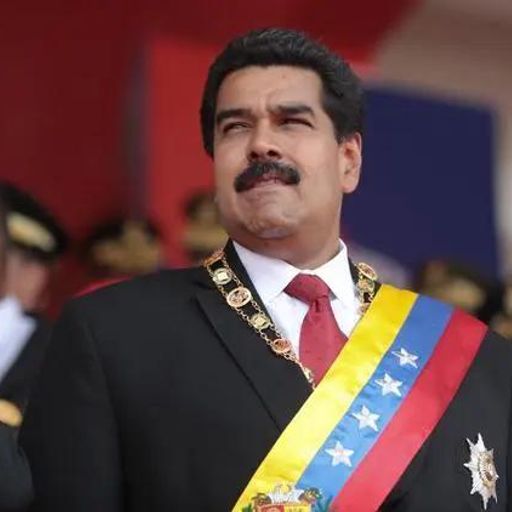


Looking back five years after the Luna incident: The final chapter of an algorithmic stablecoin experiment
1. From Prosperity to Decline: Do Investors Still Remember Luna After Five Years?
The crypto earthquake in May 2022 remains a painful memory for countless investors. Once hailed as a “miracle in the crypto world,” Luna’s market cap evaporated from $41 billion in just seven days to nearly zero. Over 200,000 investors lost their entire capital, and the entire crypto ecosystem suffered heavy damage.
The data at that time was shocking: Luna plummeted from a high of $119.5 to $0.00005, a decline of over 99.9%. Its associated stablecoin UST (once the third-largest stablecoin globally, with a market cap of $18 billion) also lost its peg, dropping from $1 to $0.006. The ripple effect affected the entire crypto market—Bitcoin fell below $27,000, Ethereum dropped below $1,800, and the total on-chain liquidation exceeded 107.3 billion RMB.
This crisis was likened by investment institutions to the “Lehman Brothers crisis in the crypto sector,” and its destructive power still warns new investors today.
2. Mechanism Traps: Why Algorithmic Stablecoins Are Destined to Fail
The root cause of the Luna incident was not a single black swan event but fundamental flaws in the system’s design.
The “Dual Dependency” Dilemma of UST and Luna
The Terra ecosystem used an algorithmic mechanism to bind Luna and UST: when demand for UST increased, the system destroyed Luna to generate UST; when UST needed to be sold off, the system issued more Luna to buy back UST. This closed loop seemed coherent but actually transferred all risks to Luna holders.
The critical turning point was on May 8, 2022—whales sold off $84 million worth of UST, causing UST to de-peg to $0.95, triggering panic withdrawals. To stabilize UST, the Terra Foundation had to use Bitcoin reserves to defend the peg, which further accelerated market confidence collapse. When UST was massively sold off, Luna was forced into infinite issuance, creating a vicious cycle—Luna’s price dropped further, requiring more Luna to be minted to maintain UST’s value.
The Unsustainable Model of Anchor Protocol
Another pillar of the Terra ecosystem was the Anchor lending protocol, which attracted deposits with an annual yield of 19.8%. This yield was already well above reasonable levels in the crypto space but attracted large amounts of capital driven by FOMO.
However, Anchor’s actual income (loan interest + staking rewards) was far below the interest paid to depositors, with daily losses exceeding $4 million. This meant that the protocol relied on continuous funding from the Terra Foundation to operate—classic “borrowing from Peter to pay Paul” mode.
A Perfect Storm of External and Internal Factors
The Luna incident occurred during the Fed’s aggressive rate hike cycle in 2022, with global liquidity tightening and high-risk assets being sold off. Coupled with a stock market crash, crypto market sentiment reached extreme panic levels. In this context, any trigger could ignite long-standing risks.
3. Responsibility and Escape: The Final Gambit of Do Kwon
Luna’s founder Do Kwon was once celebrated as a “Korean Elon Musk” innovator, but his past revealed warning signs—his previous project, Basic Cash, also went to zero.
During the collapse, Do Kwon attempted to save the situation by minting more Luna, which caused over 700 million Luna tokens to inflate to trillions, ultimately worthless. This was not a technical failure but an irreversible result of poor decision-making.
Subsequently, Do Kwon was internationally wanted for fraud, and Luna’s credibility was shattered. This history has become a textbook case of “founder’s credit bankruptcy equals project failure.”
4. Three Major Lessons Investors Should Learn
Stay Away from Uncollateralized Stablecoins
The UST collapse exposed the fatal flaw of algorithmic stablecoins—they lack real asset backing, and their risk entirely depends on market sentiment. In contrast, stablecoins like USDC and USDT, backed by real USD reserves, demonstrated resilience under similar market shocks. Future crypto markets should revert to collateralized stablecoin logic; the space for innovation in algorithmic stablecoins has been fundamentally limited.
Beware of High-Yield Traps
Annual yields exceeding 10% in crypto projects should raise suspicion. Anchor’s 19.8% yield is not a sign of market efficiency but an unsustainable promise. In traditional finance, long-term returns over 10% are considered “Warren Buffett level,” so how can crypto projects consistently offer such yields? The answer is: they can’t.
Market Sentiment vs. Rational Judgment
Before Luna’s collapse, social media was flooded with “long-term bullish” comments, and FOMO reached its peak. But 99% of zeroed tokens never recover. Investors should not abandon basic risk judgment just because of community hype.
5. The Bottom Line of Crypto Investment
The Luna incident happened over five years ago, but its lessons remain vital:
The fundamental flaw of algorithmic stablecoins is that their design essentially “prints money to dilute value.” This inherent defect cannot be fully eliminated through technological improvements. Regulatory tightening (such as the EU restricting stablecoin issuance) further confirms the cautious attitude toward such innovations.
When investing in crypto assets, prioritize: Does the project have a real economic model? Are the yield promises sustainable? Has the founder been tested by the market? These fundamentals are often hidden by FOMO but will surface in extreme market conditions.
Luna will not be the last failed experiment in algorithmic stablecoins, but it should serve as the cheapest textbook for investors.