

Trade
Basic
Futures
Futures
Hundreds of contracts settled in USDT or BTC
Options
HOT
Trade European-style vanilla options
Unified Account
Maximize your capital efficiency
Demo Trading
Futures Kickoff
Get prepared for your futures trading
Futures Events
Participate in events to win generous rewards
Demo Trading
Use virtual funds to experience risk-free trading
Earn
Launch
CandyDrop
Collect candies to earn airdrops
Launchpool
Quick staking, earn potential new tokens
HODLer Airdrop
Hold GT and get massive airdrops for free
Launchpad
Be early to the next big token project
Alpha Points
NEW
Trade on-chain assets and enjoy airdrop rewards!
Futures Points
NEW
Earn futures points and claim airdrop rewards
Investment
Simple Earn
Earn interests with idle tokens
Auto-Invest
Auto-invest on a regular basis
Dual Investment
Buy low and sell high to take profits from price fluctuations
Soft Staking
Earn rewards with flexible staking
Crypto Loan
0 Fees
Pledge one crypto to borrow another
Lending Center
One-stop lending hub
VIP Wealth Hub
Customized wealth management empowers your assets growth
Private Wealth Management
Customized asset management to grow your digital assets
Quant Fund
Top asset management team helps you profit without hassle
Staking
Stake cryptos to earn in PoS products
Smart Leverage
NEW
No forced liquidation before maturity, worry-free leveraged gains
GUSD Minting
Use USDT/USDC to mint GUSD for treasury-level yields

More
Promotions
Activity Center
Join activities and win big cash prizes and exclusive merch
Referral
20 USDT
Earn 40% commission or up to 500 USDT rewards
Announcements
Announcements of new listings, activities, upgrades, etc
Gate Blog
Crypto industry articles
VIP Services
Huge fee discounts
Proof of Reserves
Gate promises 100% proof of reserves




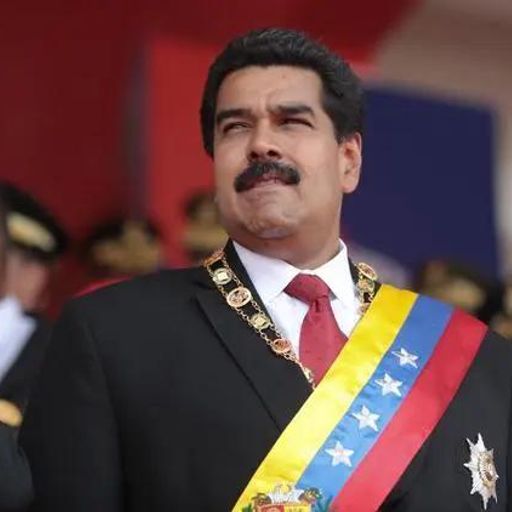

Will the dollar go down or up in 2025? Complete analysis of the USD/MXN pair
The behavior of the USD/MXN exchange rate in 2025 will depend on multiple economic, political, and monetary factors. To understand whether the dollar will decline or rise against the Mexican peso, it is essential to analyze both the macroeconomic situation and the technical indicators that drive the pair’s dynamics.
Current Outlook for USD/MXN: Volatility Status
The USD/MXN pair, representing the relationship between the US dollar and the Mexican peso, has experienced considerable volatility in recent months. It is currently trading near 19.94 pesos per dollar, after reaching lows in May 2024 of 16.31 and highs of 20.08. This dollar appreciation reflects the uncertainty affecting both US and Mexican markets.
The year-over-year variation of USD/MXN reaches +9.36%, showing that the dollar has strengthened significantly. The 52-week range (16.2559-20.1520) demonstrates the breadth of movements characterizing this pair. With a typical spread of 5 pips and 24-hour trading hours from Monday to Friday, it offers multiple opportunities for traders interested in maximizing currency movements.
Determining Factors for 2025: Will the Dollar Fall or Rise
Contrasting Economic Dynamics
Growth prospects diverge significantly between the two nations. Mexico faces a more moderate outlook, with the International Monetary Fund projecting GDP growth of 1.3% for 2025, while BBVA Research estimates 1.0%. This slowdown is due to weak domestic demand and lower formal employment growth.
In contrast, the United States presents more robust expectations. Vanguard anticipates a GDP growth of 2.1% in 2024, supported by solid consumption and a resilient labor market. This growth differential tends to strengthen the dollar against the peso, as investors seek refuge in more dynamic economies.
Monetary Policy: The Key Piece
The dollar’s behavior will largely depend on monetary policy decisions. Banxico began a cycle of interest rate cuts, reaching 10.50% in September 2024. Further cuts are expected throughout 2025, which typically weakens the peso by reducing the attractiveness of peso-denominated assets for foreign investors.
Meanwhile, the Federal Reserve has also started its rate reduction cycle, executing a 50 basis point cut in September 2024. Projections suggest more cuts in late 2024, bringing rates to a range of 4.25%-4.50%. Although this represents a reduction, dollar asset yields will remain globally competitive, maintaining the dollar’s relative strength.
Political Uncertainty and Elections
The US presidential elections in November 2024 introduce a crucial volatility factor. Donald Trump’s lead in polls has raised concerns in markets, especially due to his protectionist tariff proposals, including threats to impose 200% tariffs on imported vehicles from Mexico. This potential policy could significantly weaken the Mexican economy, depress the peso, and strengthen the dollar.
In Mexico, judicial reform promoted by President Claudia Sheinbaum has created institutional uncertainty, affecting perceptions of political stability. This reduces the attractiveness of Mexican assets for international investors.
Inflation and Expectations
Vanguard estimates that core inflation in Mexico will remain between 3.7% and 3.9% by the end of 2024, not reaching the central bank’s 3% target. Persistent inflation continues to weaken the peso, as it reduces the purchasing power of the Mexican currency and its appeal to investors.
Exchange Rate Forecasts for 2025
Projections from multiple specialized institutions regarding whether the dollar will decline or rise in 2025 show considerable variability:
These forecasts reflect the complexity of accurately predicting the pair’s behavior. Some analysts anticipate continued dollar appreciation (Longforecast and CoinCodex project significantly higher levels), while others suggest consolidation or correction (Gov Capital, Wallet Investor, and Tradersunion).
Technical Analysis: Signals on Future Movements
Bollinger Bands and Price Dynamics
Bollinger Bands, based on a 20-period moving average, indicate current moderate volatility. The price has recently touched the upper band, signaling bullish momentum. However, a retracement toward the moving average suggests a possible short-term consolidation phase. A sustained breakout above the upper band would support further dollar appreciation, while a move below the moving average would indicate a correction.
RSI Indicator: Neutral Position
The RSI (Relative Strength Index) stands at 53.42, reflecting a neutral market stance. This reading suggests the pair could move sideways in the short term without a clear trend. If RSI exceeds 70, overbought conditions would be indicated, potentially signaling a correction. A drop below 30 would indicate oversold conditions, possibly leading to bullish rebounds.
Relative Volatility Index (RVI)
The RVI, which measures trend momentum, is at 34.60, indicating a slight bearish bias. This suggests that short-term momentum is negative, reinforcing the possibility of a correction if the pair does not stay above key support levels.
Economic Impact of USD/MXN: Who Benefits and Who Loses
For Mexico
A rising dollar against the peso makes imports more expensive, generating inflationary pressures that affect consumers and companies with dollar-denominated debts. Simultaneously, Mexican export companies benefit from favorable exchange rates. However, the increased cost of imports generally dominates the negative impact on the overall economy.
For the United States
A strong dollar makes Mexican imports cheaper, benefiting sectors like automotive and easing internal inflation pressures. This benefits US consumers by lowering prices of imported goods.
Historical Context: Past Patterns
The USD/MXN relationship has historically shown recurrent volatility. The Mexican debt crisis of the 1980s caused significant devaluations. The North American Free Trade Agreement (NAFTA) in the 1990s stabilized the currency through increased foreign investment. The decline in oil prices in 2014-2015 and OPEC decisions in 2016-2018 had significant impacts due to Mexico’s dependence on oil exports.
The global financial crisis of 2008, US elections in 2016 and 2020, and the COVID-19 pandemic caused substantial fluctuations, demonstrating that macroeconomic and political events create major movements in the exchange rate.
Key Factors Continuing to Influence
Interest Rates
In the US, rate hikes by the Federal Reserve strengthen the dollar by attracting capital into US assets. In Mexico, rate increases by Banxico temporarily attract investors, strengthening the peso. Given the current trend of rate cuts in both jurisdictions, the rate differential favors the dollar.
Trade Balance
Mexican exports, mainly to the US, strengthen the peso when robust. Trade deficits or declining demand for Mexican goods weaken the currency. The US, as a global reserve currency issuer, is less affected by trade deficits.
Political and Institutional Stability
Political stability reinforces the dollar as a safe asset. Political instability in Mexico generates investor uncertainty, depressing the peso.
Oil and Commodity Prices
Mexico, as a major crude exporter, sees its currency pressured when oil prices fall. The US, as a net importer, experiences less direct pressure.
Investment Opportunities: How to Trade USD/MXN
Investment Modalities
Trading USD/MXN is mainly done through Forex platforms operating 24 hours from Monday to Friday. Investors can participate by buying and selling the pair directly in currency markets. Alternatively, specialized currency investment funds offer indirect exposure. Derivative instruments like futures and options also allow speculation on price movements.
Optimal Trading Times
Liquidity and volatility vary depending on the trading session. Higher activity coincides with Federal Reserve announcements, US economic reports, political events in both countries, and energy sector statements such as OPEC announcements. These events create opportunities for those seeking to capitalize on significant price movements.
Conclusion: Outlook for 2025
The USD/MXN outlook in 2025 is characterized by volatility driven by multiple pressures. Politically, US elections and Mexican institutional situations generate uncertainty. Economically, growth differentials favor the dollar, while monetary policy rate cuts exert mixed pressures.
Technical analysis suggests short-term consolidation, with upside potential if key resistances are broken. The question of whether the dollar will decline or rise in 2025 is answered by multiple scenarios, but the dominant trend points toward relative dollar strength, especially if uncertainties in Mexico persist.
For short-term investors, volatility offers significant opportunities. For long-term strategies, monitoring monetary policy developments in both jurisdictions, Mexican political dynamics, and oil price movements is crucial. A global uncertainty context could keep the dollar as the preferred safe-haven asset, supporting its strength against the Mexican peso.