
Futures
Access hundreds of perpetual contracts
TradFi
Gold
One platform for global traditional assets
Options
Hot
Trade European-style vanilla options
Unified Account
Maximize your capital efficiency
Demo Trading
Introduction to Futures Trading
Learn the basics of futures trading
Futures Events
Join events to earn rewards
Demo Trading
Use virtual funds to practice risk-free trading
Launch
CandyDrop
Collect candies to earn airdrops
Launchpool
Quick staking, earn potential new tokens
HODLer Airdrop
Hold GT and get massive airdrops for free
Launchpad
Be early to the next big token project
Alpha Points
Trade on-chain assets and earn airdrops
Futures Points
Earn futures points and claim airdrop rewards


More



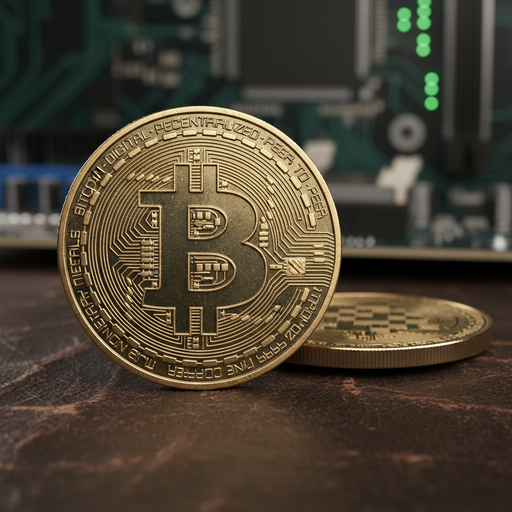


The incoming administration faces a significant economic challenge: managing the inflationary pressures accumulated under the previous regime. This shift in fiscal and monetary policy approach has profound implications for financial markets, including the crypto space.
Inflation dynamics directly influence how investors allocate capital across asset classes. When policy priorities shift toward controlling price pressures, we typically see changes in interest rate expectations, dollar strength, and real asset demand. These factors are fundamental to understanding Bitcoin's store-of-value narrative and altcoin valuations tied to macroeconomic cycles.
The debate over who bears responsibility for inflation levels matters less than understanding the policy trajectory ahead. Lower-inflation targeting combined with potential regulatory clarity could reshape investor risk appetite. Some market participants view this as a stabilizing force—potentially supporting institutional adoption of crypto assets. Others see it as creating headwinds if rate hikes accelerate faster than anticipated.
What's clear: economic policy recalibration always creates volatility in the short term but can establish clearer conditions for long-term market positioning. Whether this translates to bullish or bearish pressure on digital assets depends largely on execution and market expectations.
---
So basically, it's a gamble on policy implementation, otherwise it's all just empty talk.
---
Haha, we're back to discussing inflation responsibility. Interesting... but the main point is still how things will unfold next.
---
Once institutional investors come in, retail investors have to look at their faces. This thing is really annoying.
---
Short-term volatility and long-term gains, it's a common topic... the key is whether you can hold on.
---
If rate hikes really come, altcoins will explode. Are you mentally prepared for that?
---
BTC store-of-value narrative has been heard a thousand times, but if policies really shift, re-pricing is still necessary.
---
Regulatory transparency is the only savior, otherwise it's still a tangled mess.
Policy shifts are indeed positive for institutional entry, but the prerequisite is not to cause any trouble.
The key is still execution—talking without action is all nonsense.
Short-term chaos is certain, but maybe this wave is an opportunity to get on board?
The real question is whether tapering will happen faster than expected—that's the real killer move.
---
Changes in interest rate expectations can really directly impact our holdings. The only thing to fear is if they raise interest rates too much.
---
So, is this the bottom-fishing opportunity or should we wait and see... The volatility is just too high this time.
---
Can't even hold stablecoins anymore. Are institutions coming to scoop them up? It looks uncertain to me.
---
Policy swings are unpredictable; short-term chaos is real, but in the long run, it depends on who has stronger execution.
---
It sounds like a gamble on the government's competence. I usually don't place bets like that.
---
How long can the story of Bitcoin as a store of value last? It all depends on how inflation finally plays out.
---
Regulatory clarity, institutional adoption... I'm tired of hearing these phrases.
---
If rate hikes really accelerate quickly, wouldn't risk assets be finished?
---
Execution is everything. Anyone can make promises on paper.
Alright, when the rate cut expectations come, BTC gets excited; when the rate hike expectations come, it drops again. Honestly, it all depends on how they play it.
If regulatory clarity really happens, institutions will come in, but I don't believe it.
To clarify, lower inflation + clear regulation = a signal for institutional entry. This logic is sound.
Let's wait and see the interest rate policy; this is the core factor that determines whether BTC rises or falls. Everything else is just noise.