![]() Trusted Editorial content, reviewed by leading industry experts and seasoned editors. Ad Disclosure
Bitcoin supply structure is undergoing a notable transformation as the Network Distribution Factor (NDF) declines rapidly. While price action often dominates headlines, shifts in distribution metrics can reveal structural changes. A falling NDF suggests that the balance of BTC holdings across different wallet cohorts is evolving, and potentially signaling a redistribution of market participants.
Trusted Editorial content, reviewed by leading industry experts and seasoned editors. Ad Disclosure
Bitcoin supply structure is undergoing a notable transformation as the Network Distribution Factor (NDF) declines rapidly. While price action often dominates headlines, shifts in distribution metrics can reveal structural changes. A falling NDF suggests that the balance of BTC holdings across different wallet cohorts is evolving, and potentially signaling a redistribution of market participants.
What The Network Distribution Factor Actually Measures
An advanced on-chain data analytics firm, Alphractal, noted on X that the NDF of Bitcoin is declining sharply, and revealing an important structural shift in how the asset supply is distributed across the market. The NDF measures the proportion of the total BTC supply held by larger holders controlling at least 0.01% of the entire circulating supply.
Related Reading: Bitcoin Cycle Play: Analyst Maps Out When Accumulation Will Begin And It’s Below $40,000When the metric declines, it indicates that the BTC supply concentration among large holders is decreasing. In practical terms, this shift represents a reduced relative dominance of large holders over the total supply and broader redistribution of BTC among smaller participants and new market entrants.
A declining extreme concentration is often seen during early accumulation phases, and a natural redistribution process follows the periods of strong accumulation by large entities. Historically, extended declines in the NDF tend to occur during phases when the market is mature, and the asset becomes more widely distributed
![Bitcoin]() BTC market is undergoing a key shift | Source: Chart from Alphractal on XThis often occurs after major bull cycles, when large players accumulate supply and are gradually absorbed by the broader market. Rather than signaling weakness, this dynamic can strengthen BTC economic decentralization and reduce structural risk tied to excessive concentration.
BTC market is undergoing a key shift | Source: Chart from Alphractal on XThis often occurs after major bull cycles, when large players accumulate supply and are gradually absorbed by the broader market. Rather than signaling weakness, this dynamic can strengthen BTC economic decentralization and reduce structural risk tied to excessive concentration.
At the same time, it reflects a transition phase where supply is being redistributed globally, reinforcing BTC’s evolution from a relatively concentrated asset into a widely distributed global financial network. However, this does not signal structural weakness, but rather signals maturation and the expansion of BTC’s ownership base.
Why Bitcoin Represents A True Financial Revolution
The clearest reasons Bitcoin remains the most compelling asset of our generation are its ownership structure and fixed supply. According to Crypto Patel, roughly 63% of the total circulating supply is held by everyday individual participants, not Wall Street, not the government, or even the institutions.
Related Reading: Top Analyst Says ‘Paper Bitcoin’ Is Driving The Market, Not The 21 Million Supply CapAt the core of this thesis, there are only 21 million BTC in existence, and the number is fixed permanently; no central bank can inflate it, no politician can alter the code, and no corporation can dilute holders.
In a world characterized by aggressive money printing and currency debasement, BTC stands alone as mathematically enforced scarcity, and the majority of that asset belongs to ordinary individuals. Crypto Patel frames BTC’s decentralized ownership and fixed supply not just as a technology, but as a structural revolution.
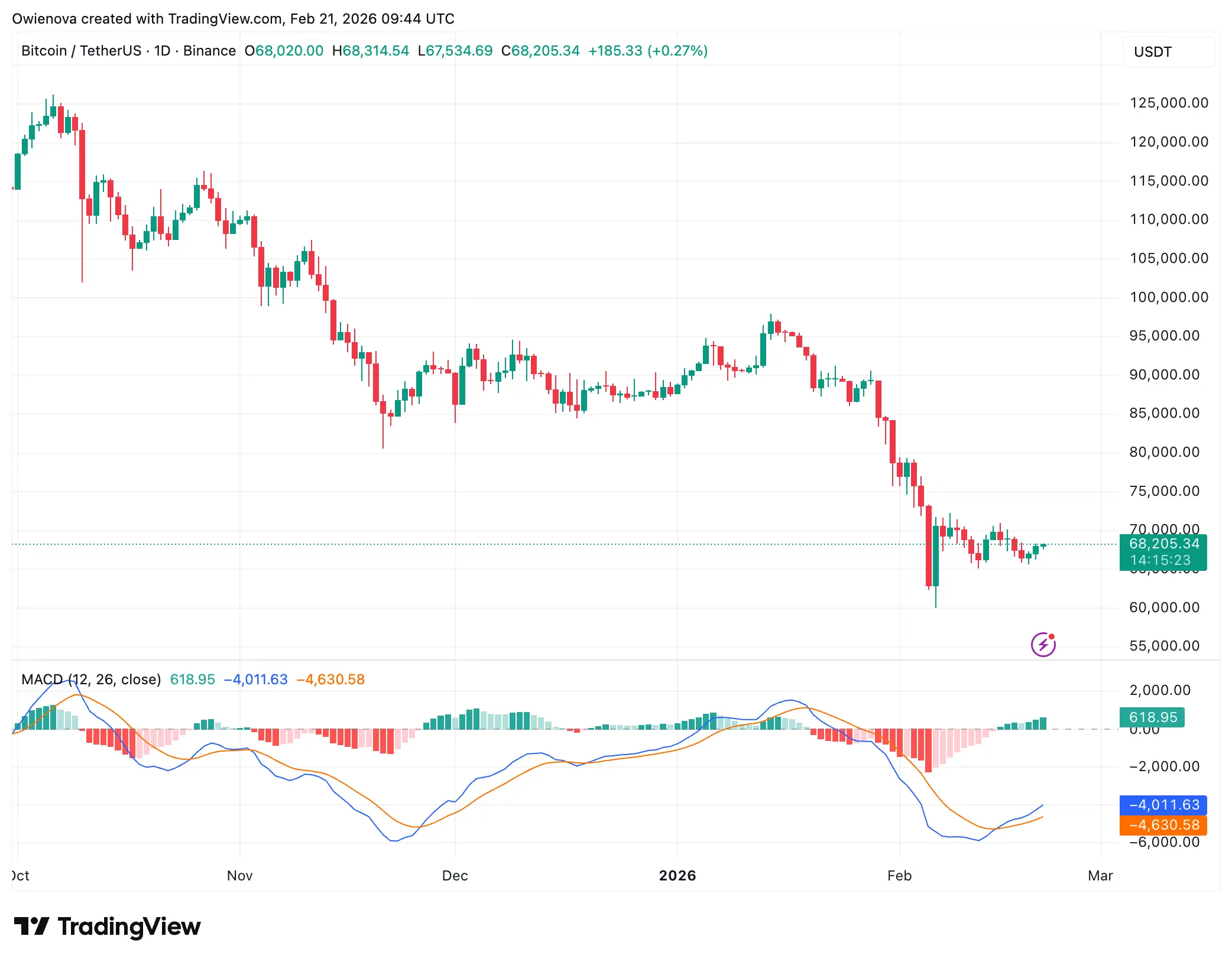 BTC trading at $68,205 on the 1D chart | Source: BTCUSDT on Tradingview.comFeatured image from Getty Images, chart from Tradingview.com
![]() Editorial Process for bitcoinist is centered on delivering thoroughly researched, accurate, and unbiased content. We uphold strict sourcing standards, and each page undergoes diligent review by our team of top technology experts and seasoned editors. This process ensures the integrity, relevance, and value of our content for our readers.
Editorial Process for bitcoinist is centered on delivering thoroughly researched, accurate, and unbiased content. We uphold strict sourcing standards, and each page undergoes diligent review by our team of top technology experts and seasoned editors. This process ensures the integrity, relevance, and value of our content for our readers.
Disclaimer: The information on this page may come from third parties and does not represent the views or opinions of Gate. The content displayed on this page is for reference only and does not constitute any financial, investment, or legal advice. Gate does not guarantee the accuracy or completeness of the information and shall not be liable for any losses arising from the use of this information. Virtual asset investments carry high risks and are subject to significant price volatility. You may lose all of your invested principal. Please fully understand the relevant risks and make prudent decisions based on your own financial situation and risk tolerance. For details, please refer to
Disclaimer.
Related Articles
Bitcoin Barely Avoids Equaling Worst Red Monthly Streak: What’s Next for April?
After another volatile month fueled by the war moves in the Middle East, bitcoin managed to scrape above the surface at the end and finished with a minor increase.
The focus has now turned to April and Q2, and _CryptoPotato_ turned to a leading expert about their take on the matter and what
CryptoPotato17m ago
F2Pool Co-Founder Says Thai Condo Bought for 2,900 BTC Was Sold for Just 7 Bitcoin
Wang Chun, co-founder of F2Pool, sold a condo in Thailand for 7 BTC, which he originally bought for 2,900 BTC in 2015. This transaction highlights Bitcoin's significant long-term opportunity cost, illustrating the risks early adopters faced when spending Bitcoin instead of holding it.
CryptoNewsFlash32m ago
Strategy preferred shares STRC raised funds yesterday that can be used to buy 2724 BTC
Gate News reports that, on April 1, according to monitoring by BitcoinTreasuries.NET, the preferred stock STRC issued by Strategy yesterday raised funds that can purchase 2,724 bitcoins.
GateNews46m ago
The Texas legislature will include prediction markets and cryptocurrency in its 2027 legislative priorities
Texas Senate vice governor Dan Patrick announced that the forecast market, cryptocurrency, and blockchain research will be priorities for the next legislative session, aiming to advance the Texas conservative agenda. Texas will evaluate cryptocurrency ATMs and strengthen coordination of federal regulatory efforts, while also focusing on the legal compliance of prediction markets. In addition, Patrick proposed studying the impact of artificial intelligence on the workforce. Texas markets and investors will closely watch the development of relevant policies.
GateNews46m ago


