StargazingWithAMirroredSphere

vip
Age 0.1 Year
Peak Tier 0
I like to think of the on-chain world as the universe: addresses are constellations, and capital flows are tides. Occasionally, I write long articles to explain things slowly and clearly.
Lately, the more I look at the blockchain, the more I feel that privacy is like fog—it can't disappear just by turning on an "anonymous mode." Addresses are like constellations; as the tides rise and fall, they always leave some traces: transaction paths, interaction habits, even the time periods you usually use. To put it simply, what ordinary users can expect is to "reduce the probability of being easily linked by a quick search," rather than complete invisibility.
The compliance line is also quite delicate: sometimes it's not what you did, but who you interacted with and who they interacted
View Original
  • Reward
  • Comment
  • Repost
  • Share
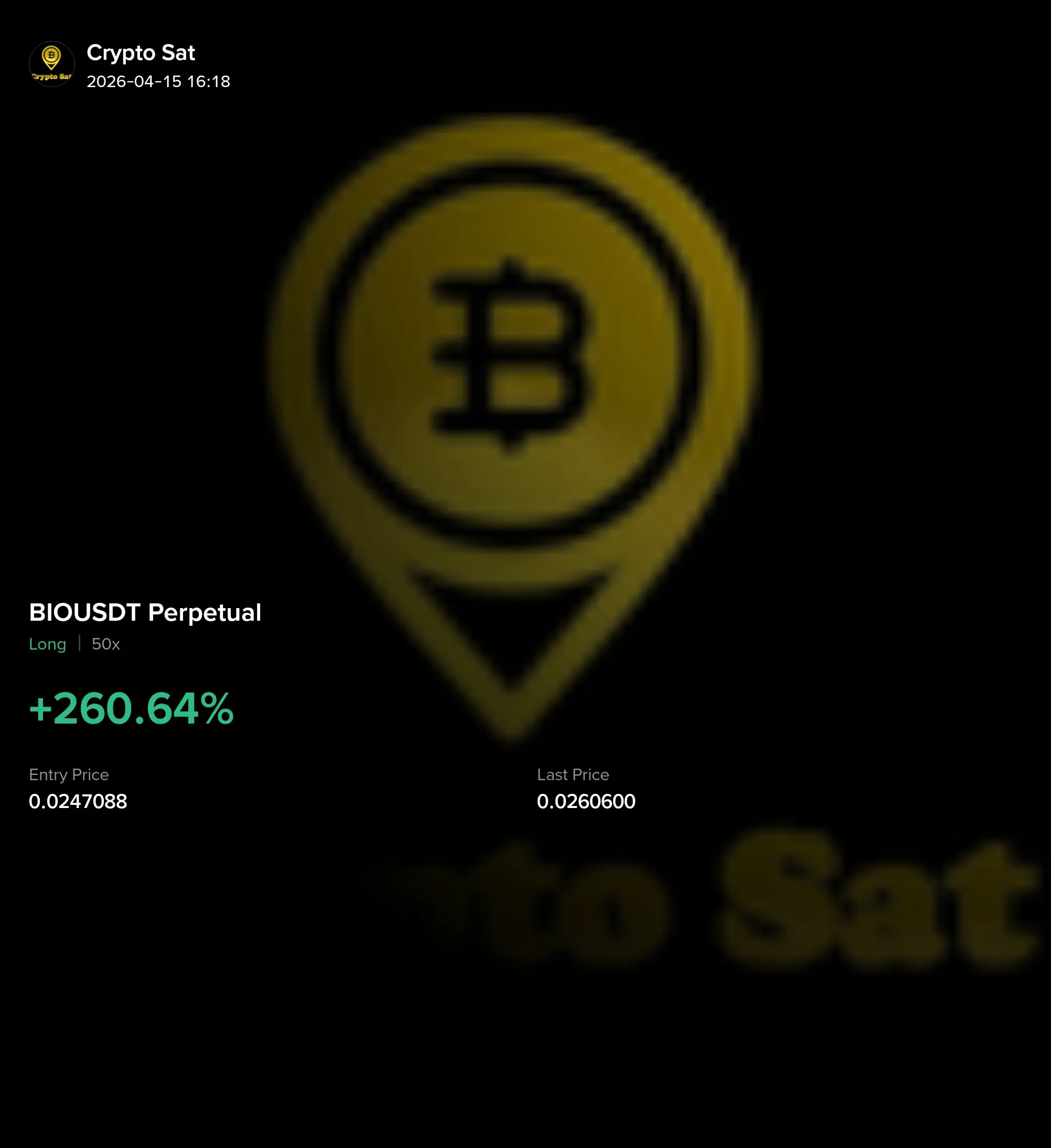
This move is very steady; let's see how it develops next.
View Original
CryptoSat
$BIO 2nd TARGET COMPLETED ✅
repost-content-media
  • Reward
  • Comment
  • Repost
  • Share
Every time it surges, it's treated as an escape route, and the price ceiling is thus welded shut by itself.
View Original
TheBuzzingBee
💥✨️💢 Bitcoin’s Biggest Problem Right Now Isn’t the Market, It’s Its Own Holders
As of mid April 2026, Bitcoin is facing a significant supply overhang that is stalling its upward momentum despite a recent rally above $76,000. While the price trajectory has been generally positive since the geopolitical tensions of the US Iran war, the market is currently struggling with intense selling pressure driven primarily by short term holders (STHs).
On-chain data reveals that the spike to $76,000 triggered a massive wave of profit-taking. Within a single 24-hour period around April 15, over 65,000 BTC were moved to exchanges, with 61,000 of those coins being sent in profit. This behavior indicates that short-term traders are viewing every price increase as an exit opportunity rather than a signal to hold. This "exit liquidity" mentality is creating a ceiling for the price, as evidenced by the immediate adjustment back down to the $74,600 range.
Key technical hurdles have been identified by analysts:
1. The Traders’ Realized Price ($76,800): This level represents the average cost basis for short-term traders and is acting as a stiff resistance zone.
2. The True Market Mean ($78,100): According to Glassnode, this is the critical threshold required for a sustained recovery. Reclaiming this level would signify that the market has successfully absorbed the current wave of distribution.
Further complicating the rally is the increase in large scale deposits. The average exchange deposit recently hit 2.25 BTC, the highest since 2024, driven by individual transfers exceeding 1,000 BTC.
Until institutional demand can outpace this consistent selling pressure from short term participants, Bitcoin’s path to new highs remains restricted by its own holders.
✅️ FOLLOW FOR MORE ✅️
$BTC $ETH $XRP
repost-content-media
  • Reward
  • Comment
  • Repost
  • Share
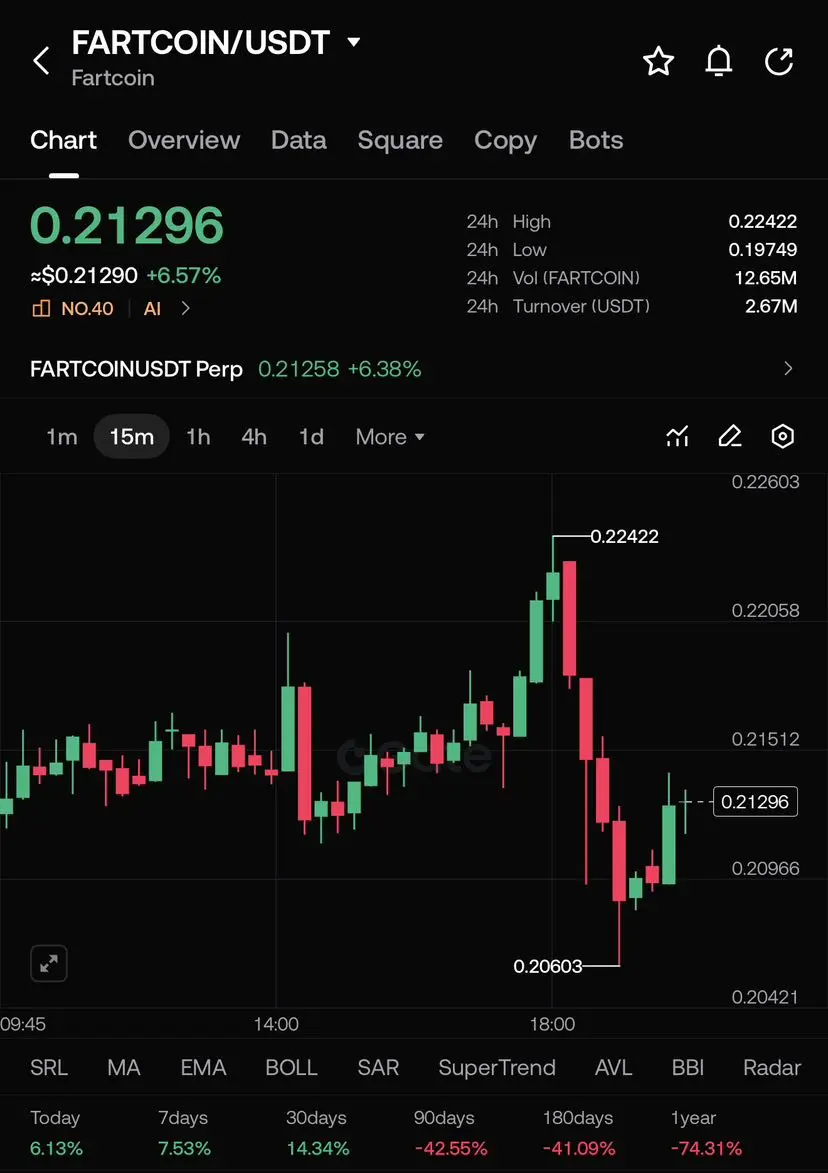
Liquidity above 0.224 was immediately drained, causing a rapid drop—classic trap to lure buyers and clear out the order book.
View Original
LedgerBull
$FARTCOIN showing rejection from local highs with momentum turning bearish.
Sellers stepping in as structure weakens on lower timeframes.
EP
0.213 - 0.218
TP
TP1 0.205
TP2 0.198
TP3 0.190
SL
0.225
Liquidity above 0.224 was tapped before a sharp sell-off, confirming rejection. Weak bounce and continued lower highs suggest downside continuation unless price reclaims the broken structure.
Let’s go $FARTCOIN ‌
repost-content-media
  • Reward
  • Comment
  • Repost
  • Share
Lately, when looking at options markets, I suddenly understand a bit more about who "time" is really eating. Buyers are like looking up at shooting stars—coming quickly and leaving just as fast. Before they get that one moment, only a slow evaporation of time value remains. Sellers are more like ticket collectors, picking up small change every day, but when a storm really hits, they have to tough it out. Recently, meme and celebrity shout-outs that shift attention in rounds really seem like someone intentionally turning on brighter shooting star lights, luring newcomers to chase the last strea
View Original
  • Reward
  • Comment
  • Repost
  • Share
Recently, people keep saying, “Since everything’s public on-chain, what are you afraid of?” But the starry sky you’re looking at might actually be delayed footage. If the nodes sync a bit slowly, if the RPC queue gets backed up, and if the indexing service hasn’t caught up, then the transfer in your wallet is like a star hidden behind clouds—others have already seen it, but you’re still left in the dark.
Later on, thinking about it, it’s pretty funny. I was there hitting refresh, convinced I was going crazy. And lately, everyone’s been complaining about validator income and that MEV ordering
View Original
  • Reward
  • Comment
  • Repost
  • Share
Macroeconomic instability + increasing on-chain narratives, during this period, either profit from volatility or be educated by volatility.
View Original
LedgerBull
📢 Gate Square Daily | Apr 14
Markets surge while geopolitical pressure tightens — volatility meets opportunity.
A US naval blockade on Iran is now in effect, with negotiations still stalled and no resolution in sight.
Crypto flips bullish. The market jumps 5.00% in 24 hours, with BTC rallying 4.51% and reclaiming strength above $74K.
Speculation heats up fast. On Polymarket, odds of “Genius FDV > $500M” spike to 42% — up a massive 34% in just one day.
Adoption expands globally. A Korean payment provider teams up with Ava Labs to build a new Avalanche-based Layer 1 network.
Institutions go all in. Strategy deploys $1B into BTC at an average of ~$71,902 — pushing total holdings to a staggering $57.83B.
Momentum is building. Capital is flowing. Stay ready.
repost-content-media
  • Reward
  • Comment
  • Repost
  • Share
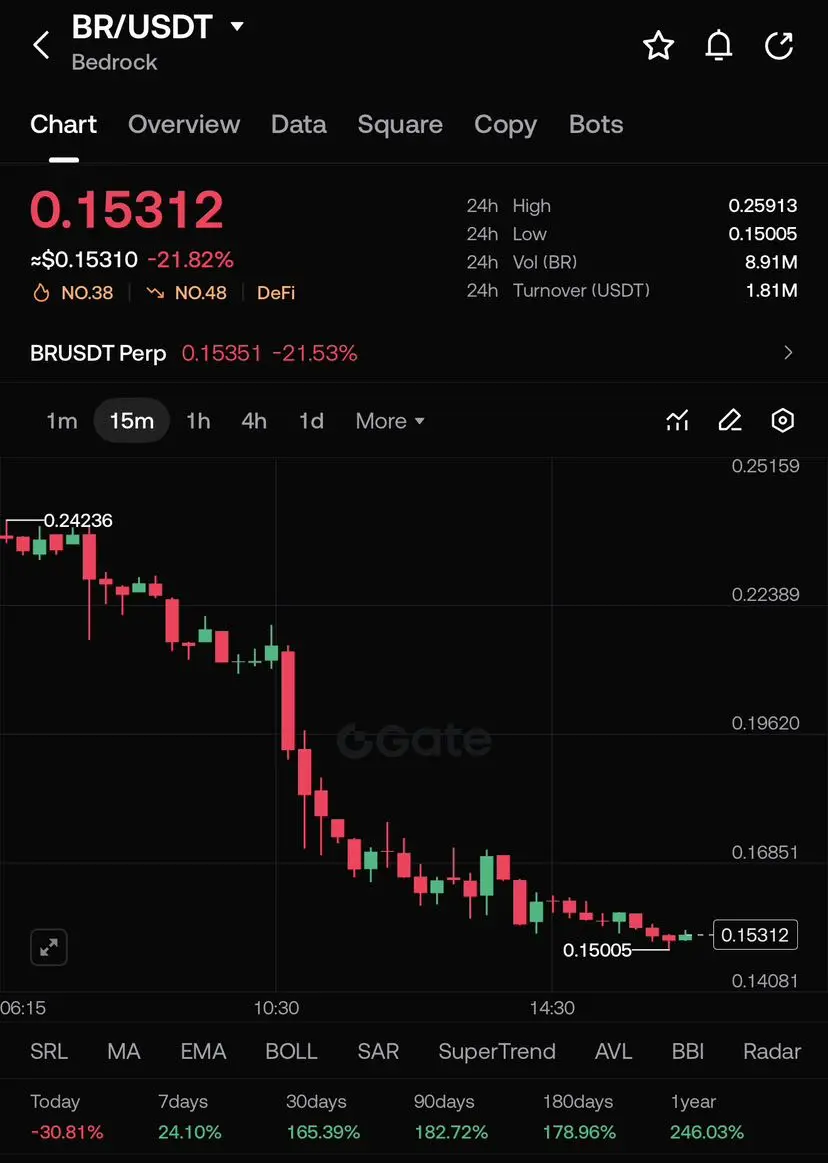
0.142 I think this TP2 is likely to be hit first, after all, the liquidity below has just been cleared in a round.
View Original
LedgerBull
$BR showing heavy downside pressure with continuation to the lows.
Structure remains bearish with sellers in full control.
EP
0.15400 - 0.15800
TP
TP1
0.14800
TP2
0.14200
TP3
0.13500
SL
0.16500
Strong selloff cleared liquidity across multiple levels and price is now compressing near lows. Any bounce into the entry zone looks like a weak reaction into supply, with structure favoring continuation as long as lower highs persist.
Let’s go $BR ‌
repost-content-media
  • Reward
  • Comment
  • Repost
  • Share
Recently, I've seen a bunch of people discuss data availability, ordering, finality—so many terms that it feels like the instrument panel of an observatory, dazzling and overwhelming... I'll focus on one main thread: whether you believe in "who records it first in the ledger" and "whether it can be altered after being recorded." Ordering is like queuing for tickets, finality is like stamping and taking effect; data availability is more straightforward—it's whether everyone can get their hands on the record of "what happened," otherwise you can't even do reconciliation.
These days, memes and
View Original
  • Reward
  • Comment
  • Repost
  • Share
These days, the funding rates have surged to quite extreme levels again, and the group is buzzing: is it about to reverse, or continue to squeeze the bubble? Honestly, every time I see this feeling of "the entire starry sky pulling in one direction," my first reaction isn't excitement, but a bit of wanting to pull my hands back first...
Of course, taking the opposite side of the trade is very tempting, like betting on the tide turning back, but before actually making a move, I ask myself: am I betting against the emotion, or can I really withstand the volatility? Many times I choose the latter
View Original
  • Reward
  • Comment
  • Repost
  • Share
Counterfeits are more dangerous. When liquidity tightens, high-beta assets fall faster than anyone else. Don't treat it as a substitute for BTC.
BTC2.79%
View Original
BraveBullsAreNotAfra
What is the true impact of the central bank selling U.S. Treasuries on the crypto market?
Let's start with the conclusion: the impact is real, but not direct—it propagates through the chain of "yield → liquidity → risk appetite" into the crypto market.
1. Transmission Path: How does the central bank's sale of U.S. Treasuries affect BTC?
First step: Treasuries are sold → yields rise. When the central bank reduces its holdings of Treasuries, bond prices fall, and yields go up correspondingly. The 10-year U.S. Treasury yield is the "anchor" for global risk pricing; when it rises, the relative attractiveness of all risk assets declines.
Second step: Higher yields → pressure on crypto assets. If yields stubbornly stay high (recent data shows the 10-year yield above 4%), the opportunity cost of holding "zero-yield" assets like BTC increases—your money in Treasuries earns a steady return, so why take risks on buying coins? This directly suppresses BTC valuation logic.
Third step: Dollar appreciation → further pressure on crypto. If, after selling bonds, some central banks switch to holding cash in dollars, it can temporarily boost the dollar index, and historically, a strong dollar often correlates negatively with crypto asset performance.
2. Recent real-world cases confirm this logic—In March 2026, after the Fed adopted a hawkish stance and hinted at slowing rate cuts, BTC dropped 5% in a single day, and the entire crypto market lost over $100 billion in market cap, with over $117 million BTC being sold from OG addresses in one day.
In late March 2026, the 10-year Treasury yield approached a high of 4.5% for the year, and Bitcoin simultaneously fell below $68,000. The movement of these data points was almost synchronized.
3. However, an important counter-narrative deserves attention: not all central bank bond sales are bearish for crypto.
Recent data shows that emerging markets like China and India have indeed been reducing their U.S. debt holdings (China has reduced about $71.5 billion in the past two years), but at the same time: private buyers have stepped in to buy, and foreign holdings have actually increased from $8.77 trillion to $9.25 trillion; gold demand hit record highs, interpreted as "de-dollarization and diversified allocation"; some analyses suggest that this macro anxiety (fiscal risks, geopolitical tensions, expectations of a weaker dollar) could be long-term bullish for BTC’s "hard asset" narrative—since some are starting to see BTC as a tool to hedge against sovereign currency risks.
But it’s important to emphasize: this narrative is currently more "emotional resonance" than quantifiable capital inflow, and empirical data backing it is not yet solid.
4. Key variable: How to interpret rising yields?
There’s a subtlety here—how the market perceives rising yields determines BTC’s direction:
- If rising yields are seen as inflation expectations heating up (real yields low), it’s bullish for BTC, strengthening its inflation hedge narrative.
- If yields are driven by liquidity tightening (real yields high), it’s bearish, as the cost of holding zero-yield assets increases.
Currently, the environment leans more toward the latter, so short-term bond sell-offs pushing yields higher generally create a bearish macro backdrop for crypto.
5. Bottom-line short-term judgment:
If large-scale bond sales push U.S. Treasury yields higher and strengthen the dollar, the crypto market is likely to face short-term pressure, with BTC and high-beta altcoins falling more than gold.
In the medium to long term: if this bond sell-off is interpreted as a signal of "de-dollarization + fiscal unsustainability," it could actually reinforce BTC’s scarcity narrative and attract some long-term capital.
Variable monitoring: Keep an eye on the 10-year real yield (TIPS) and the dollar index DXY, as they are the most direct leading indicators.
Markets are not monolithic; how macro signals are interpreted often matters more than the signals themselves.
This is also what makes the crypto market the most challenging and interesting.
  • Reward
  • Comment
  • Repost
  • Share
  • Pin