
Futures
Access hundreds of perpetual contracts
TradFi
Gold
One platform for global traditional assets
Options
Hot
Trade European-style vanilla options
Unified Account
Maximize your capital efficiency
Demo Trading
Introduction to Futures Trading
Learn the basics of futures trading
Futures Events
Join events to earn rewards
Demo Trading
Use virtual funds to practice risk-free trading
Launch
CandyDrop
Collect candies to earn airdrops
Launchpool
Quick staking, earn potential new tokens
HODLer Airdrop
Hold GT and get massive airdrops for free
Launchpad
Be early to the next big token project
Alpha Points
Trade on-chain assets and earn airdrops
Futures Points
Earn futures points and claim airdrop rewards


More





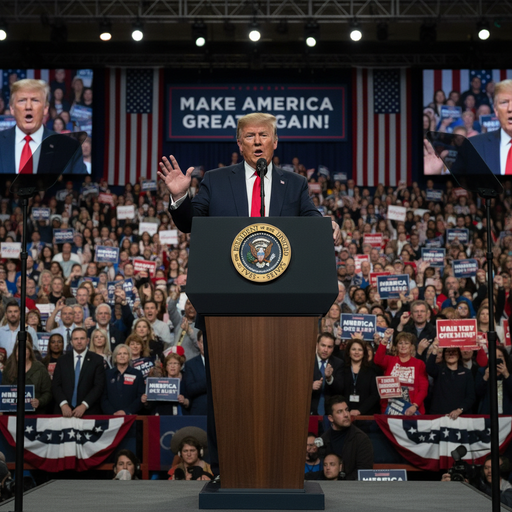
Details of the US-Iran ceasefire agreement revealed: Iran abandons nuclear ambitions in exchange for sanctions relief and asset thawing
Ask AI · Why is Iran refusing to use reopening the Strait as a bargaining chip for a ceasefire?
Both sides are under maximum pressure—one side from the U.S. and Iran, the other refuses to give in. As a major ceasefire-proposal framework containing “nuclear rollback in exchange for sanctions relief” comes to light, nerves across global markets are once again tightly on edge.
According to a Reuters report, the United States and Iran have now received a plan framework aimed at ending hostilities. Just a day earlier, U.S. President Trump had threatened that if Iran refused to reach an agreement, it would make Iran experience “hell on earth.” However, Iran has made it clear that as part of a temporary ceasefire agreement, it would never reopen the Strait of Hormuz.
The peace plan includes a “two-step” strategy: first implement an immediate ceasefire, then finalize a comprehensive agreement. A source familiar with the proposal said on Monday that Pakistan Army Chief of Staff Asim Munir has held “all-night talks” with U.S. Vice President Vance, envoy Witcoff, and Iran’s Foreign Minister Araghzi.
According to people familiar with the matter, the final U.S.-Iran ceasefire proposal would include that Iran gives up nuclear weapons in exchange for sanctions relief and the unfreezing of frozen assets. A plan to end the Middle East hostilities must be agreed upon by Monday. If agreement is reached, the plan will lead to an immediate ceasefire, the reopening of the Strait of Hormuz, and a final agreement within 15 to 20 days.
An Iranian senior official told Reuters on Monday that they have received the latest ceasefire proposal submitted by the mediator, Pakistan, and are currently reviewing its contents. The official insisted that Iran would not use the reopening of the strait as a bargaining chip for a temporary ceasefire, and added that it would not accept any imposed ultimatum while carefully reviewing the proposal. Iran believes the United States is not yet ready to bring about a permanent ceasefire.
Axios first reported on Sunday that, according to sources in the U.S., Israel, and the Middle East, the U.S., Iran, and regional mediators are in intensive discussions regarding a potential 45-day ceasefire agreement. This is also part of a larger two-stage agreement, which could ultimately bring an end to the war permanently.
In a profanity-laden post published on the Truth Social platform on Sunday, Trump issued a tough warning: if Iran fails to reach an agreement by Tuesday and reopen the strait, he will carry out further attacks against Iran’s energy and transportation infrastructure.
On Monday, reports once again surfaced from multiple parts of the Middle East about a new round of airstrikes. Since the U.S. and Israel began their relentless bombardment of Iran, the war has already lasted more than five weeks. It has not only taken the lives of thousands, but also dealt a major blow to the global economy by driving up international oil prices.
In retaliation for these attacks, Iran launched a swift response: it imposed a substantive blockade of the Strait of Hormuz—an important shipping route that is responsible for roughly one-fifth of the world’s oil and gas supply—while directing its fire at Israel, U.S. military bases, and energy infrastructure around the Persian Gulf.