
Futures
Access hundreds of perpetual contracts
TradFi
Gold
One platform for global traditional assets
Options
Hot
Trade European-style vanilla options
Unified Account
Maximize your capital efficiency
Demo Trading
Introduction to Futures Trading
Learn the basics of futures trading
Futures Events
Join events to earn rewards
Demo Trading
Use virtual funds to practice risk-free trading
Launch
CandyDrop
Collect candies to earn airdrops
Launchpool
Quick staking, earn potential new tokens
HODLer Airdrop
Hold GT and get massive airdrops for free
Launchpad
Be early to the next big token project
Alpha Points
Trade on-chain assets and earn airdrops
Futures Points
Earn futures points and claim airdrop rewards


More





The Iran issue tears NATO apart: Under U.S. pressure, is Europe finally waking up?
A geopolitical chess match revolving around Iran is stirring unprecedented waves within NATO.
Since the United States and its allies teamed up to launch a military strike against Iran, this conflict—now lasting more than a month—has not only roiled the situation in the Middle East, but also acted like a scalpel, carving open NATO’s seemingly solid outer shell.
The core disagreement points to a sharp question: Should Europe provide the United States with facilities to enable its military action against Iran? There is no standard answer to this question, yet it is making the fault lines within NATO increasingly clear. European allies that once blindly followed the United States are quietly shifting their stance, and Britain’s nuanced approach has become a microcosm of this dispute.
As the United States’ closest ally in Europe, Britain’s position has long been seen as a “barometer” within NATO. But this time, it has chosen to issue “ambiguous statements” and act “with caution.” British Prime Minister Starmer has repeatedly emphasized publicly that the military action against Iran “is not our war,” and he has urged time and again to prioritize diplomatic channels to de-escalate the situation. This stands in sharp contrast to the U.S. demand to quickly rally allies and expand the scope of the war.
Behind this subtlety lie Britain’s two dilemmas. On the one hand, it is trying to maintain strategic alignment with the United States and continue playing the role of a “bridge” between the U.S. and Europe. On the other hand, differences within domestic politics, public opposition, and considerations of its own strategic interests prevent it from fully siding with the United States.
Polling shows that 59% of Britons oppose the U.S.-allied strike on Iran. The opposition parties have even mocked Starmer’s stance as a “180-degree turnaround”—after all, he previously refused a U.S. request to use British bases, yet now has authorized the U.S. military to use facilities such as the Akrotiri Air Force Base in Cyprus. It has thus become the first Western country to provide direct military support to the U.S. Trump previously asked Starmer to dispatch an aircraft carrier, but he was politely turned down on the grounds that it “needs to be discussed in a meeting.” This unsatisfactory exchange also exposed the rift between the U.K. and the U.S.
Britain’s wavering is just a snapshot of NATO’s broader divisions. In fact, all of Europe is telling the United States “no.” Spanish Prime Minister Sánchez directly labeled the war a “major mistake,” closed its own airspace and military bases, and refused to provide any assistance to U.S. actions. French President Macron has clearly stated that military action “lacks a legal basis” if it has not obtained a United Nations resolution and has not been discussed with allies; he even refused to allow U.S. fighter jets to transit its airspace to transport weapons—prompting Trump to publicly accuse France of “not helping at all” on social media. Italy, unable to withstand domestic public pressure, refused to allow U.S. planes to land at the military base on the island of Sicily. Germany has gone even further with blunt remarks, saying the conflict “has nothing to do with NATO” and requiring the U.S.-led alliance to clearly inform whether its military objectives have already been achieved. Poland also refused a U.S. request to deploy the “Patriot” missile air defense system to the Middle East, firmly asserting that “Poland’s security is an absolute priority.”
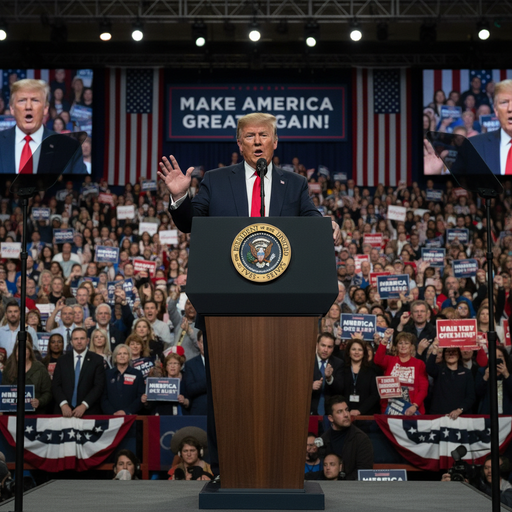
Europe’s collective resistance has made U.S. pressure look especially powerless. On one hand, the Trump administration frequently threatens to “consider withdrawing from NATO,” calling the 77-year-old military alliance nothing more than a “paper tiger.” On the other hand, it keeps urging allies to share responsibility for the war against Iran—so absurdly that it even suggests: countries that do not want to participate in the strike on Iran should either buy oil from the United States or go to the Strait of Hormuz themselves to抢 oil.
U.S. Secretary of State Rubio has gone even further, directly asking: “If we deploy so many U.S. troops and spend so much money, and then—when we need them—we’re not allowed to use even the bases, is that a good arrangement?”
The U.S.’s strong pressure has not made European allies compromise; instead, it has served as a “reverse catalyst”—prompting Britain and other European countries to reassess their own defense capabilities, the degree of their reliance on NATO, and their strategic positioning. For a long time, Europe has over-relied on the United States in the security domain, treating “security depends on the U.S.” as a guiding principle. Yet it has gradually turned into a “vassal” of the U.S.’s global strategy—repeatedly getting drawn into wars launched by the United States and paying heavy economic and political costs.
And this time, the Iran issue has become a turning point: the Strait of Hormuz has been blocked, roughly one-fifth of global oil and natural gas transport has been disrupted, Europe’s energy crisis has resurfaced, directly harming Europe’s core interests. It has also made Europe see a hard reality: the United States’ strategic priorities have never been Europe’s security and interests, but rather its own ambitions for hegemony.
With new clarity, Europe is accelerating its steps toward strategic autonomy. Recently, the European Union approved a 1.5 billion euro defense-industrial work plan, and set aside 115 million euros for an “Agile Plan,” aiming to raise Europe’s defense autonomy rate to 70% by 2030. Eleven European countries are jointly pushing forward the next-generation main battle tank program “Marlte,” trying to address the problem of equipment fragmentation. The EU is also stepping up the drafting of concrete implementation guidelines for Article 42.7 of the EU Treaty (the mutual assistance clause on collective defense), with plans for the first related joint exercises to build a contingency mechanism that can be activated immediately in a crisis. France has even begun construction of a new-generation nuclear-powered aircraft carrier, “Free France,” explicitly positioning it as a strategic tool for “breaking away from dependence on U.S. military power.”
Some say NATO’s fault lines have existed for a long time, and the Iran issue merely exposed them fully to daylight. Since 2003, when the United States invaded Iraq, Europe and the U.S. have never truly reconciled their differences. And now, those fault lines have been further compounded by the Trump administration’s tariff pressure on allies and its long-standing dissatisfaction with NATO defense spending burden-sharing—reaching a depth rarely seen in history.
The “Article Five” (collective defense clause) on which NATO relies for survival is facing unprecedented challenges. Former U.S. ambassador to NATO, Ivo Daalder, said bluntly that it is “hard to imagine that any European country still believes the U.S. would provide defense for it.” A senior European official speaking anonymously added that most Europeans no longer believe the clause has any real effect, and that the United States seems to have shifted from a “solution” to “a part of the world’s chaos.”
Of course, we also cannot ignore a reality: in the short term, NATO will not meaningfully disintegrate, and Europe-U.S. alliance relations will not completely break apart. After all, in areas such as security and the economy, the two sides still have many bindings. But it is undeniable that Europe’s strategic autonomy consciousness has awakened. It is no longer willing to blindly follow the United States, no longer willing to pay the price for the U.S.’s ambitions for hegemony—and is instead beginning to actively pursue its own strategic space.
The NATO divisions triggered by the Iran issue, at bottom, are a game over “hegemony versus autonomy.” The United States is trying to maintain its global hegemony by pressuring allies, while Europe, within this game, is gradually regaining its own strategic position and working to break free from dependence on the United States.
Looking ahead, as Europe accelerates strategic autonomy, NATO’s role will gradually hollow out, and the transatlantic security architecture may take on a “dual-track” structure: NATO will exist as a nominal collective defense framework, while the EU may develop into a “complementary” security actor that safeguards Europe’s own interests.
The U.S.’s heavy-handed pressure ultimately failed to secure allies’ blind compliance; instead, it awakened Europe’s clarity. This dispute will not only affect NATO’s future, but may also reshape the global geopolitical landscape—when Europe is no longer willing to serve as the United States’ “vassal,” the world may be entering a more diversified, more balanced new order.
Author’s note: Material sourced from official media / online news
海量资讯、精准解读,尽在新浪财经APP