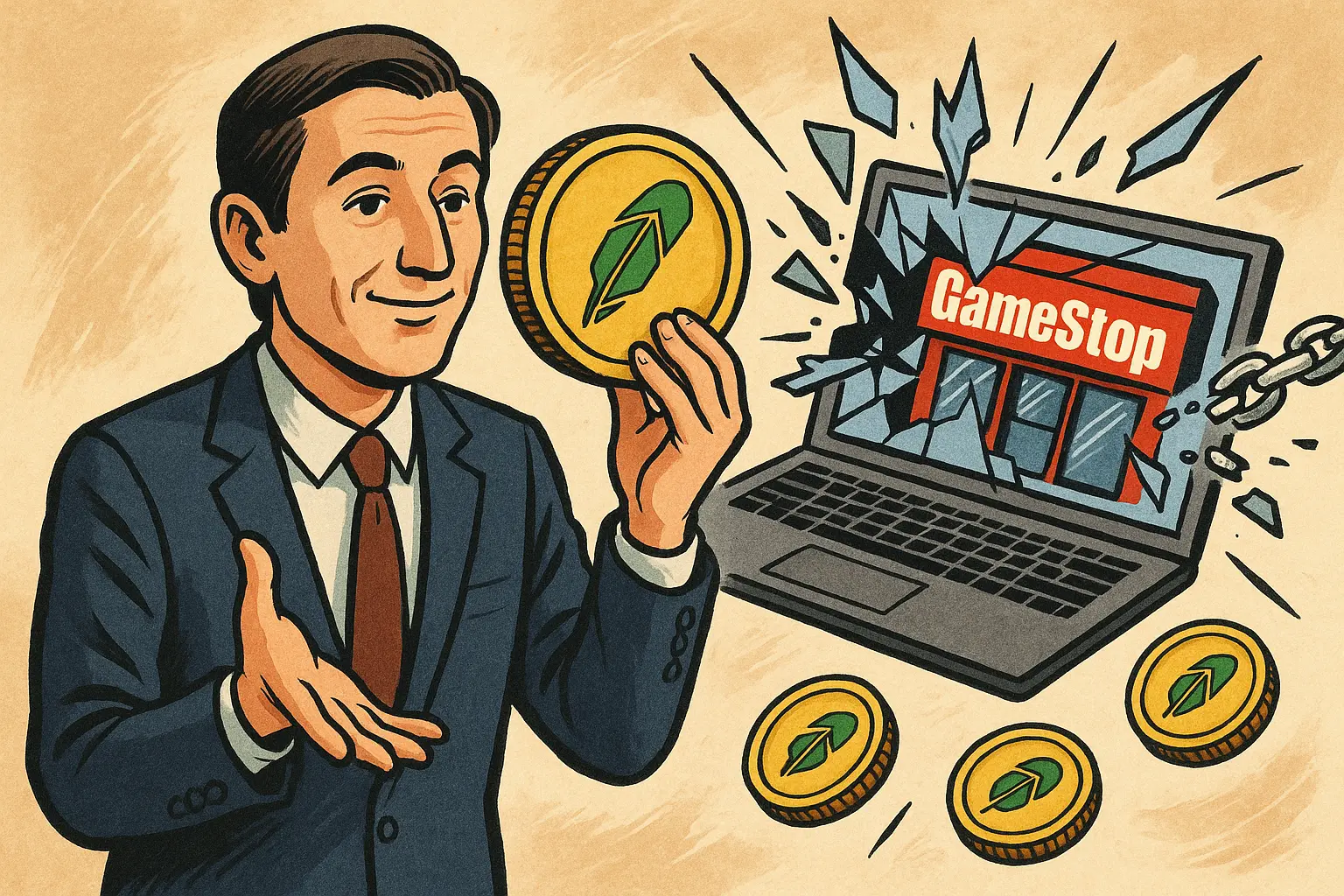
Robinhood CEO states that stock tokenization can prevent the GameStop freeze tragedy. At that time, T+2 settlement forced an emergency raise of 3 billion USD. Currently, T+1 “is still too long”; tokenization can enable real-time settlement to reduce risks. With SEC and CLARITY advancing, “America accepts the inevitable.”
Systemic Root Causes of the 2021 GameStop Freeze
Tenev posted on X forum on Wednesday that the 2021 GameStop trading freeze was “one of the strangest and most notable stock market failures in modern history,” caused by complex rules stemming from the two-day stock settlement period at the time. He added, “What happens when slow, outdated financial infrastructure combines with unprecedented trading volume and volatility in a few stocks? Massive deposit requirements, trading restrictions, and millions of dissatisfied customers.”
Looking back at the January 2021 GameStop incident, retail investors organized large-scale purchases of heavily shorted GameStop shares on Reddit, driving the stock price from $20 to $483. However, at the peak of the surge, Robinhood suddenly announced restrictions on buying “meme stocks” like GameStop, allowing only sales. This decision sparked a storm, with users accusing Robinhood of protecting Wall Street hedge fund interests at the expense of retail investors, and some Congress members called for investigations.
Tenev explained that a key reason Robinhood froze meme stock trading in 2021 was that it lacked sufficient cash to facilitate settlement, because rules required it to “put up large amounts of cash” to reduce the risk between stock trading and settlement over several days. The adopted T+2 settlement system meant that stocks bought on Monday wouldn’t transfer ownership and funds until Wednesday.
During this two-day “gap period,” clearinghouses (like DTCC) require brokers to post margin to prevent counterparty default risk. When GameStop’s stock price surged and trading volume skyrocketed, DTCC demanded Robinhood’s margin deposit jump from hundreds of thousands of dollars to 3 billion USD. Robinhood didn’t have that much cash and could only suspend buying to control risk exposure.
The company raised 3 billion USD within two days to replenish its capital reserves, but simultaneously, “retail investors wanting to buy GameStop stocks were naturally very angry.” This event not only severely damaged Robinhood’s brand (and some users still boycott the platform) but also exposed the fragility of the traditional securities settlement system. During extreme market volatility, the T+2 settlement system amplifies systemic risk, forcing brokers to choose between “freezing trading” and “bearing default risk.”
T+1 Still Too Slow: Tokenization Enables Second-Level Settlement
Tenev pointed out that since the GameStop incident, the settlement time for US stocks has been shortened to one day (T+1), a reform driven by regulators and industry efforts. However, he believes this “still takes too long,” because if a trade occurs on Friday, settlement could take three days, and four days if it’s a long weekend. Such delays seem especially absurd in today’s digital age.
“This is where stock tokenization comes in. By bringing shares on-chain in tokenized form, they can benefit from blockchain’s real-time settlement features,” Tenev explained. Blockchain settlement works by executing “Delivery versus Payment (DvP)” automatically via smart contracts when buyers and sellers trade on-chain, transferring stock ownership and funds simultaneously, completing the entire process within seconds and irreversibly.
Tenev states that using tokenization to eliminate settlement periods “greatly reduces systemic risk and eases pressure on clearinghouses and brokers.” In a tokenized model, there’s no need for a central clearinghouse like DTCC, because blockchain itself is an immutable record of settlement. This not only reduces systemic risk but also eliminates huge margin requirements—those very requirements that caused the 2021 trading freeze.
Four Major Advantages of Stock Tokenization Compared to Traditional Settlement
Real-time Settlement: From T+1 (24 hours) down to T+0 (seconds), eliminating settlement risk
No Margin Needed: Delivery occurs immediately, so clearinghouses do not require brokers to post large margins
24/7 Trading: Blockchain operates without market hours, allowing trading on weekends and holidays, improving market efficiency
Transparent and Auditable: All transactions and holdings are on-chain, accessible for regulators and investors in real-time
These advantages enable tokenized stocks to remain stable even during extreme market volatility. Even during wild surges like GameStop, brokers won’t be forced to freeze trading due to margin calls. Investors’ buying and selling freedom will be truly protected.
Daily Hundreds of Trading Halts: The Norm in Traditional Systems
Trading halts are common in traditional finance. Just on Wednesday, Nasdaq and NYSE suspended trading of over 100 stocks, mostly for five minutes, to curb market volatility. This “circuit breaker” mechanism helps prevent panic selling or irrational surges but also deprives investors of trading freedom.
When a stock moves more than a certain percentage (usually 10%) within five minutes, exchanges automatically trigger a halt to give the market “cooling-off” time. Theoretically, this protects investors, but in practice, it often backfires. During halts, investors holding the stock cannot stop-loss or take profits, only watch as prices fluctuate wildly. Worse, after trading resumes, volatility often intensifies as accumulated orders are released in a rush.
Stock tokenization can eliminate the need for such forced halts. Blockchain’s transparency allows regulators to monitor abnormal trading instantly without stopping the entire market. If manipulation is suspected, specific addresses can be investigated or frozen without affecting other traders. Additionally, tokenized stocks can incorporate smart contract “circuit breakers” that trigger automatically when price swings exceed thresholds—such as limiting trading frequency for individual addresses—rather than halting the entire market.
SEC and CLARITY Bill’s Regulatory Window
Tenev said now is the “timely opportunity” for regulatory clarity, as the SEC has begun experimenting with tokenized securities, and Congress is seeking to pass crypto regulations, including the CLARITY bill. He added, “By working with the SEC and pushing for clear guidelines through CLARITY, we can ensure that events like the 2021 trading restrictions never happen again.”
The policy shift during the Trump administration opened a window for stock tokenization. Former SEC Chair Gary Gensler was cautious or even hostile toward crypto, subjecting proposals involving tokenized securities to strict scrutiny. The new Chair, Paul Atkins, is openly supportive of crypto and has expressed willingness to explore tokenization’s potential to improve market efficiency. This regulatory shift allows platforms like Robinhood, Coinbase, NYSE to push forward with tokenization plans more boldly.
If the CLARITY bill passes, it will provide a clear legal framework for tokenized securities. The bill will clarify the boundaries of SEC and CFTC regulation, defining which tokenized assets are securities (SEC-regulated) and which are commodities (CFTC-regulated). Such clarity is essential for large institutions to adopt tokenized stocks at scale, as no major financial firm wants to operate in legal gray areas.
Many exchanges, including NYSE, are launching tokenized stock platforms. Tenev said these platforms could be necessary for achieving real-time settlement, which has long been difficult in traditional stock markets due to the need to manage a large number of legacy stakeholders. “As the advantages of this technology become more apparent, I believe America’s acceptance of it is inevitable.”


