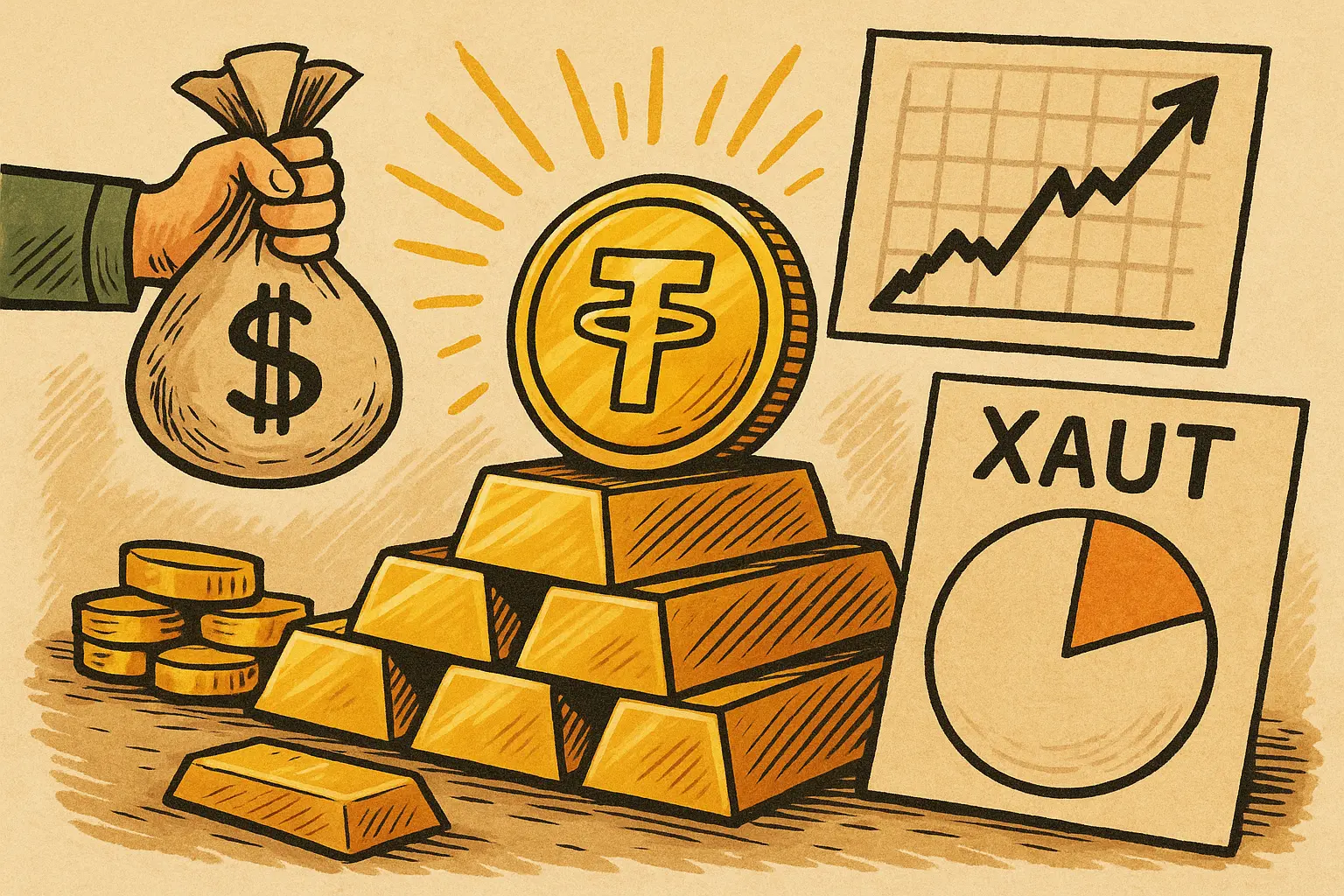
Gold prices broke through $5,100 to hit a new all-time high, driving the market capitalization of tokenized gold to $5.25 billion. XAUT’s market share dropped from 60% at the end of 2025 to 50%, with a market value of $2.6 billion. Tether holds 520,089 ounces of gold, increasing its holdings by over 27 tons in Q4, surpassing most central banks, but competitors like PAXG and KAU are emerging. Societe Generale forecasts gold prices will surge to $6,000 by the end of the year.
Gold Breaks $5100, Geopolitical Risks as Core Drivers
Gold prices surged past $5,100 per ounce on Monday US time, setting a new record. This rally mainly reflects a structural rise in global geopolitical risks—from sovereignty disputes in Greenland, political turmoil in Venezuela, to escalating military conflicts in the Middle East—intertwining multiple uncertainties and further reinforcing gold’s role as the ultimate safe-haven asset.
Societe Generale remains optimistic about gold’s outlook, predicting prices could reach $6,000 per ounce by year-end, emphasizing this may be a conservative estimate with further upside potential. Analysts point out that current gold price increases are not short-term speculative moves but are based on structural challenges facing the global monetary credit system. The persistent weakness of the US dollar index, record-high debt levels in major economies, and ongoing central bank gold purchases collectively underpin a long-term bullish gold market.
Morgan Stanley also agrees on the sustainability of this rally, setting a target of $5,700 per ounce. Their report highlights that gold has broken through several key technical resistance levels, including the $5,000 mark and the upper boundary of its long-term upward channel. Such technical breakthroughs often attract trend-following capital, pushing prices higher. Additionally, the correlation between gold and risk assets like Bitcoin is decreasing, indicating a market re-recognition of gold’s safe-haven properties.
Notably, this gold rally differs significantly from past cycles. Traditionally, gold prices rise alongside falling stock markets and a strengthening dollar, but while gold hits new highs, US equities remain volatile at high levels, and the dollar index continues to weaken. This atypical combination suggests a deep shift in investor confidence in fiat currency systems, with gold increasingly viewed not just as a short-term hedge but as a core component of long-term asset allocation.
Tokenized Gold Market Cap Soars to $5.25 Billion
As gold prices continue to hit new highs, the total market cap of tokenized gold (Tokenized Gold) also reaches new heights. According to The Block, the tokenized gold sector expanded rapidly in January, with a total market cap of approximately $5.25 billion, up over 15% from the end of last year. This growth far exceeds that of traditional gold ETFs, indicating blockchain technology is transforming how investors hold gold.
The core advantage of tokenized gold lies in combining gold’s safe-haven attributes with the convenience of cryptocurrencies. Investors can trade 24/7 without the high costs associated with traditional gold custody and transportation, and each token is backed 1:1 by physical gold, providing transparent auditability. This model particularly appeals to younger investors accustomed to digital assets but still valuing gold’s store of value.
Crossing the $5 billion market cap mark signifies tokenized gold’s transition from niche to mainstream. In comparison, the world’s largest gold ETF, SPDR Gold Shares (GLD), manages over $50 billion in assets, leaving ample room for growth in the tokenized gold market. If more institutional investors recognize and operate within regulatory frameworks, the market cap could surpass $10 billion in the coming years.
However, rapid growth also introduces new competitive dynamics. While the overall market expands, Tether’s issued XAUT’s market share has declined. This redistribution reflects investor demand for more diverse options beyond a single issuer.
XAUT Market Share Plummets from 60% to 50%
By the end of 2025, XAUT held a dominant 60% market share in tokenized gold issuance, maintaining its position as the market leader. However, from January 2026 onward, with rapid growth of competitors and overall market expansion, XAUT’s share has shrunk to just above 50%. Losing 10 percentage points within a month signals a warning for any market leader.
Currently, the total market cap of tokenized gold is about $5.25 billion, with XAUT’s market value around $2.6 billion. While absolute holdings continue to grow, the declining market share indicates XAUT faces unprecedented competitive pressure. The decrease in XAUT’s share reflects increasing demand for other gold tokens like PAXG and KAU.
Paxos’ PAXG is one of the main competitors. It is backed by LBMA-approved gold bars, provides monthly audits, and operates on the Ethereum network with strong DeFi ecosystem compatibility. Its redemption mechanism is more flexible, allowing users to redeem physical gold or cash, attracting some investors who previously held XAUT.
Another rising competitor is Kinesis’ KAU. Its unique feature is a reward mechanism where holders and traders earn income shares, attracting passive income-seeking investors. KAU also offers easy exchange between gold and silver, providing additional flexibility.
Market share erosion is not solely due to issues with XAUT but also reflects the market’s maturing phase. Early on, limited choices led investors to concentrate on a few products. As more high-quality competitors enter, investors diversify based on their needs. This healthy competition benefits the industry’s long-term development.
Tether Holds 520,000 Ounces of Gold, Rivaling Sovereign Nations
Despite the decline in market share, XAUT remains the market leader, with impressive reserve backing. Audits show that by the end of 2025, Tether held 520,089.35 ounces of LBMA-approved gold bars, supporting 520,089,300 XAUT tokens 1:1. Based on that gold, the total value was approximately $2.25 billion; at current prices of $5,100 per ounce, this gold’s value exceeds $2.65 billion.
In terms of circulation and reserves, over 409,200 XAUT tokens have been sold to market participants, with about 110,870 tokens available for sale. This layered management approach allows Tether to respond flexibly to market demand fluctuations while maintaining adequate reserves.
In Q4 2025, Tether increased its gold exposure by about 27 tons, surpassing most central banks’ gold purchases during the same period. For comparison, China’s PBOC added about 15 tons, and India’s central bank about 10 tons. A private enterprise’s gold acquisition exceeding that of sovereign central banks is extremely rare in gold market history.
Tether CEO Paolo Ardoino stated that through XAUT, the company’s operational scale now rivals that of sovereign gold holders, bringing real responsibility. Ardoino believes that amid waning confidence in the monetary system and stress tests on the current system by institutions and individuals, XAUT’s existence aims to eliminate asset value uncertainties.
This positioning indicates Tether is transforming XAUT into a systemically important financial infrastructure rather than just a speculative product. If realized, XAUT could become a key bridge connecting traditional finance and crypto finance. However, this also requires Tether to meet higher standards in transparency, regulation compliance, and risk management.
Tokenized Gold as a New Tool Against Macroeconomic Risks
As the US dollar weakens and geopolitical uncertainties persist, physically-backed digital precious metals tokens are increasingly becoming tools for investors to hedge against macroeconomic risks. Combining gold’s anti-inflation properties with blockchain’s technological advantages, tokenized gold offers a new asset allocation option.
For crypto investors, tokenized gold provides a way to reduce portfolio volatility while keeping assets on-chain. When high-volatility assets like Bitcoin face corrections, investors can quickly convert holdings into XAUT or PAXG without cumbersome fiat exchanges. This flexibility is especially valuable during market turbulence.
Traditional investors benefit from lower barriers to gold investment. Conventional gold investments often require high minimum purchases, but tokenized gold allows fractional investments, even less than one ounce. This divisibility enables more retail investors to participate in the gold market.
Looking ahead, the tokenized gold market may see further innovations—such as integrating gold tokens into DeFi protocols as collateral or developing yield-bearing products based on gold tokens. With regulatory frameworks gradually improving and market acceptance increasing, tokenized gold is poised to become one of the most important stable-value stores in digital assets.


