uPlexa (UPX) is a peer-to-peer electronic payment system focused on mining via Internet of Things (IoT) devices and privacy protection. Users can mine using smartphones, tablets, Raspberry Pi, smart TVs, or even smart refrigerators, earning UPX tokens by utilizing idle CPU resources on their devices. Core features include a decentralized VPN (PlexaNet) that’s faster than Tor, and the CryptoNote algorithm that ensures fully private transactions.
World’s First IoT Mining—31 Billion Devices Become Miners
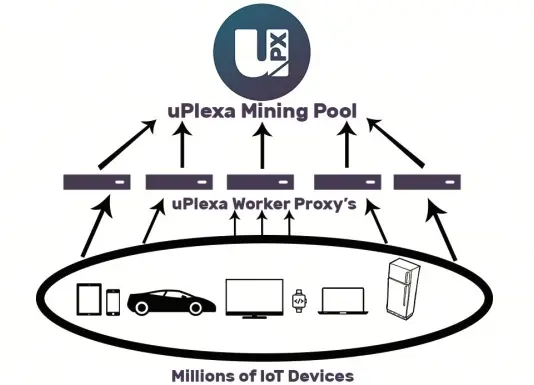
What is the most revolutionary innovation of uPlexa (UPX)? The answer is the world’s first viable IoT proof-of-work consensus. Users are privately converting all their unused resources into digital cash. Supported device types include desktops and laptops, smartphones and tablets, smart TVs, smart appliances (refrigerators, ovens, coffee machines, etc.), smart cars, Raspberry Pi, and servers.
The operation principle is extremely simple: a certain percentage of a device’s idle CPU resources is used for mining, and users can adjust this percentage themselves. The system sets an upper limit to prevent overuse of the device. The goal is to generate enough uPlexa to help pay for the device’s electricity or to exchange for free VPN services. The genius of this design is that it turns otherwise wasted computing resources into economic value while minimizing the impact on normal device usage.
Compared to traditional mining, uPlexa’s environmental advantages are highlighted. Bitcoin mining requires specialized ASIC miners, which consume huge amounts of electricity and generate a lot of heat. Ethereum GPU mining has a lower entry barrier but still needs specialized graphics cards and high, continuous power consumption. In contrast, uPlexa’s IoT mining uses electricity the device is already consuming, just redirecting idle CPU cycles to mining with extremely low marginal power costs.
uPlexa IoT Mining Core Features
ASIC-Resistant Design: The algorithm is optimized for low-power CPUs, giving no advantage to ASICs.
Controllable Resource Consumption: CPU usage can be limited to around 35%, so it does not affect normal use.
Web Mining Support: Mining can be done directly through a browser—no software download required.
Eco-Friendly and Energy Efficient: Resource consumption is lower than that of common apps like Facebook or Netflix.
In 2021, there were already 31 billion IoT devices worldwide, expected to reach 125 billion by 2030. Even if only 1% of these devices participate in uPlexa mining, that’s 310 million devices, creating the most decentralized miner network in history. This scale of decentralization makes a 51% attack nearly impossible, as an attacker would need to control hundreds of millions of personal devices scattered globally.
PlexaNet Decentralized VPN—Faster Than Tor
The second core answer to “What is uPlexa (UPX)?” is: the world’s first high-speed decentralized VPN system. PlexaNet is an onion routing protocol similar to Tor, but much faster. PlexaNet is powered by Utility Nodes, similar to masternodes, but with exit node functionality. To maintain high speeds, the network incentivizes Utility Node operators with a portion of the block rewards.
Tor’s biggest problem is its slow speed, since all nodes are run by volunteers with no economic incentive to ensure high-quality service. PlexaNet creates a “service quality = income” economic model by rewarding node operators with 20% of the block rewards. Nodes must have strong network connections and high bandwidth allocation; otherwise, the node will be deregistered. This quality control mechanism ensures PlexaNet is much faster than Tor.
dVPN is not just a more private VPN; it also offers hidden services like Tor, but at higher speeds. uPlexa’s idea is to offer it for free at first to help the service go viral. Once the network starts to grow and approaches congestion limits, a per-MB fee will be charged. This usage-based fee is automatically paid in UPX.
How PlexaNet’s pay-per-use mechanism works: users must lock a certain amount of UPX in their wallets for PlexaNet/dVPN. The network will automatically deduct the appropriate amount of UPX from these holdings during usage. No credit cards, no monthly or annual subscriptions. uPlexa aims to keep the average cost under $1 per month—nearly 15x cheaper than ExpressVPN and 5–10x cheaper than NordVPN.
What is uPlexa (UPX)’s technical implementation for privacy protection? The answer is the CryptoNote algorithm. Originally developed by Bytecoin and later improved and adopted by Monero, uPlexa now applies it to IoT scenarios. CryptoNote provides four layers of privacy protection:
Untraceable Payments: Using ring signature technology, each transaction’s signature is made from a group of public keys, so outside observers cannot determine the exact signer. It’s like a group signing at once—you know it’s someone in the group, but not who exactly.
Unlinkable Transactions: Each payment automatically creates multiple unique one-time keys. Even if your uPlexa address is public, all its transaction history and balance cannot be tracked. Every transaction uses a brand-new temporary address, making linking transactions impossible.
Double-Spending Prevention: By using a “key image” mechanism, each output can only be spent once. The system rejects duplicate key images to prevent the same funds from being spent multiple times.
Blockchain Analysis Resistance: Every payment address is a unique one-time key, and ring signatures introduce uncertainty, making it difficult to map transaction graphs. Even professional blockchain analytics companies cannot trace uPlexa’s fund flows.
This privacy protection is crucial in today’s era of surveillance capitalism. Why is privacy in payments needed? To prevent spyware from stealing private information, avoid data being sold for marketing, reduce ransomware and kidnapping risks, protect business vendor data, evade government oppression and service bans, and prevent hackers from tracking and account hijacking.
E-commerce Integration and 80/20 Hybrid Consensus Mechanism
uPlexa is ready to integrate with various business platforms, including Magento, Woocommerce/WordPress, Shopify, Prestashop, Opencart, Twitch, Facebook, and Instagram. NodeJS, PHP, and Python integration libraries are provided so merchants can easily accept UPX payments. The global e-commerce industry exceeds $2.3 trillion and is expected to reach $4.88 trillion in 2021, offering a huge potential use case for uPlexa.
The Steadfast Storm upgrade introduced an 80/20 PoW/PoS hybrid mechanism. 80% of block rewards go to PoW miners (IoT devices), and 20% to PoS Utility Nodes. Utility Nodes provide four main functions: near-instant transaction acceleration and 51% attack prevention, decentralized VPN for free and unlimited private network service, a mixnet for almost untraceable communications via multi-layer proxy chains, and UNApps that host private decentralized applications.
The staking requirement is 2 million UPX to become a Utility Node, but those with less can join node pools. This hybrid design is highly ingenious: IoT miners handle block production and basic network security, while Utility Nodes offer higher-level services like VPN and fast transactions. The division of labor and economic incentives are clearly aligned, creating a complementary ecosystem.
FAQ
What is uPlexa (UPX)?
uPlexa is a cryptocurrency focused on IoT device mining and privacy protection. Users can mine using any IoT device—smartphones, tablets, smart TVs, refrigerators, etc.—to earn UPX by utilizing idle CPU resources. Core features include a decentralized VPN (PlexaNet), a fully private payment system (CryptoNote algorithm), and e-commerce platform integration.
How do I mine uPlexa with my phone?
Download the official uPlexa wallet app (iOS/Android), create a wallet address, then start the mining function. CPU usage can be adjusted (recommended below 35% to avoid overheating), and mining runs in the background without affecting normal use. On average, a phone can mine several to dozens of UPX daily (depending on device performance and network difficulty).
How do I use PlexaNet VPN for free?
Lock a certain amount of UPX in your wallet (the exact amount dynamically adjusts based on network congestion). The system automatically deducts UPX according to your data usage. You can offset the cost by mining UPX, making it truly free to use. The average usage cost is designed to be under $1 per month (15x cheaper than ExpressVPN), and it’s fully anonymous with no credit card required.
What’s the difference between uPlexa and Monero?
Technical basis: Both are based on the CryptoNote algorithm for privacy protection. Mining: Monero targets GPU/CPU mining, while uPlexa is optimized for low-power IoT devices. Additional services: uPlexa offers PlexaNet VPN, which Monero does not. Eco-friendliness: uPlexa IoT mining consumes far less energy than Monero.
What are the requirements to mine uPlexa?
Almost any device with a CPU can mine. Minimum requirements: Android 5.0+ smartphones, iOS 12+ iPhones, any computer running Windows/Linux/macOS, or Raspberry Pi 3 and above. No graphics card or specialized miner needed—any regular phone can start mining.
This page may contain third-party content, which is provided for information purposes only (not representations/warranties) and should not be considered as an endorsement of its views by Gate, nor as financial or professional advice. See Disclaimer for details.
What is uPlexa (UPX)? A Complete Guide to Mobile Mining Privacy Coin and Free VPN
uPlexa (UPX) is a peer-to-peer electronic payment system focused on mining via Internet of Things (IoT) devices and privacy protection. Users can mine using smartphones, tablets, Raspberry Pi, smart TVs, or even smart refrigerators, earning UPX tokens by utilizing idle CPU resources on their devices. Core features include a decentralized VPN (PlexaNet) that’s faster than Tor, and the CryptoNote algorithm that ensures fully private transactions.
World’s First IoT Mining—31 Billion Devices Become Miners
What is the most revolutionary innovation of uPlexa (UPX)? The answer is the world’s first viable IoT proof-of-work consensus. Users are privately converting all their unused resources into digital cash. Supported device types include desktops and laptops, smartphones and tablets, smart TVs, smart appliances (refrigerators, ovens, coffee machines, etc.), smart cars, Raspberry Pi, and servers.
The operation principle is extremely simple: a certain percentage of a device’s idle CPU resources is used for mining, and users can adjust this percentage themselves. The system sets an upper limit to prevent overuse of the device. The goal is to generate enough uPlexa to help pay for the device’s electricity or to exchange for free VPN services. The genius of this design is that it turns otherwise wasted computing resources into economic value while minimizing the impact on normal device usage.
Compared to traditional mining, uPlexa’s environmental advantages are highlighted. Bitcoin mining requires specialized ASIC miners, which consume huge amounts of electricity and generate a lot of heat. Ethereum GPU mining has a lower entry barrier but still needs specialized graphics cards and high, continuous power consumption. In contrast, uPlexa’s IoT mining uses electricity the device is already consuming, just redirecting idle CPU cycles to mining with extremely low marginal power costs.
uPlexa IoT Mining Core Features
ASIC-Resistant Design: The algorithm is optimized for low-power CPUs, giving no advantage to ASICs.
Controllable Resource Consumption: CPU usage can be limited to around 35%, so it does not affect normal use.
Web Mining Support: Mining can be done directly through a browser—no software download required.
Eco-Friendly and Energy Efficient: Resource consumption is lower than that of common apps like Facebook or Netflix.
In 2021, there were already 31 billion IoT devices worldwide, expected to reach 125 billion by 2030. Even if only 1% of these devices participate in uPlexa mining, that’s 310 million devices, creating the most decentralized miner network in history. This scale of decentralization makes a 51% attack nearly impossible, as an attacker would need to control hundreds of millions of personal devices scattered globally.
PlexaNet Decentralized VPN—Faster Than Tor
The second core answer to “What is uPlexa (UPX)?” is: the world’s first high-speed decentralized VPN system. PlexaNet is an onion routing protocol similar to Tor, but much faster. PlexaNet is powered by Utility Nodes, similar to masternodes, but with exit node functionality. To maintain high speeds, the network incentivizes Utility Node operators with a portion of the block rewards.
Tor’s biggest problem is its slow speed, since all nodes are run by volunteers with no economic incentive to ensure high-quality service. PlexaNet creates a “service quality = income” economic model by rewarding node operators with 20% of the block rewards. Nodes must have strong network connections and high bandwidth allocation; otherwise, the node will be deregistered. This quality control mechanism ensures PlexaNet is much faster than Tor.
dVPN is not just a more private VPN; it also offers hidden services like Tor, but at higher speeds. uPlexa’s idea is to offer it for free at first to help the service go viral. Once the network starts to grow and approaches congestion limits, a per-MB fee will be charged. This usage-based fee is automatically paid in UPX.
How PlexaNet’s pay-per-use mechanism works: users must lock a certain amount of UPX in their wallets for PlexaNet/dVPN. The network will automatically deduct the appropriate amount of UPX from these holdings during usage. No credit cards, no monthly or annual subscriptions. uPlexa aims to keep the average cost under $1 per month—nearly 15x cheaper than ExpressVPN and 5–10x cheaper than NordVPN.
CryptoNote Algorithm Ensures Fully Private Transactions
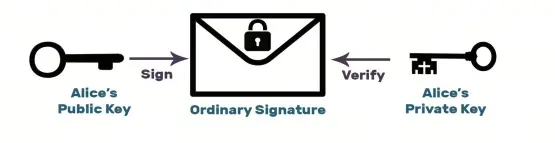
What is uPlexa (UPX)’s technical implementation for privacy protection? The answer is the CryptoNote algorithm. Originally developed by Bytecoin and later improved and adopted by Monero, uPlexa now applies it to IoT scenarios. CryptoNote provides four layers of privacy protection:
Untraceable Payments: Using ring signature technology, each transaction’s signature is made from a group of public keys, so outside observers cannot determine the exact signer. It’s like a group signing at once—you know it’s someone in the group, but not who exactly.
Unlinkable Transactions: Each payment automatically creates multiple unique one-time keys. Even if your uPlexa address is public, all its transaction history and balance cannot be tracked. Every transaction uses a brand-new temporary address, making linking transactions impossible.
Double-Spending Prevention: By using a “key image” mechanism, each output can only be spent once. The system rejects duplicate key images to prevent the same funds from being spent multiple times.
Blockchain Analysis Resistance: Every payment address is a unique one-time key, and ring signatures introduce uncertainty, making it difficult to map transaction graphs. Even professional blockchain analytics companies cannot trace uPlexa’s fund flows.
This privacy protection is crucial in today’s era of surveillance capitalism. Why is privacy in payments needed? To prevent spyware from stealing private information, avoid data being sold for marketing, reduce ransomware and kidnapping risks, protect business vendor data, evade government oppression and service bans, and prevent hackers from tracking and account hijacking.
E-commerce Integration and 80/20 Hybrid Consensus Mechanism

uPlexa is ready to integrate with various business platforms, including Magento, Woocommerce/WordPress, Shopify, Prestashop, Opencart, Twitch, Facebook, and Instagram. NodeJS, PHP, and Python integration libraries are provided so merchants can easily accept UPX payments. The global e-commerce industry exceeds $2.3 trillion and is expected to reach $4.88 trillion in 2021, offering a huge potential use case for uPlexa.
The Steadfast Storm upgrade introduced an 80/20 PoW/PoS hybrid mechanism. 80% of block rewards go to PoW miners (IoT devices), and 20% to PoS Utility Nodes. Utility Nodes provide four main functions: near-instant transaction acceleration and 51% attack prevention, decentralized VPN for free and unlimited private network service, a mixnet for almost untraceable communications via multi-layer proxy chains, and UNApps that host private decentralized applications.
The staking requirement is 2 million UPX to become a Utility Node, but those with less can join node pools. This hybrid design is highly ingenious: IoT miners handle block production and basic network security, while Utility Nodes offer higher-level services like VPN and fast transactions. The division of labor and economic incentives are clearly aligned, creating a complementary ecosystem.
FAQ
What is uPlexa (UPX)?
uPlexa is a cryptocurrency focused on IoT device mining and privacy protection. Users can mine using any IoT device—smartphones, tablets, smart TVs, refrigerators, etc.—to earn UPX by utilizing idle CPU resources. Core features include a decentralized VPN (PlexaNet), a fully private payment system (CryptoNote algorithm), and e-commerce platform integration.
How do I mine uPlexa with my phone?
Download the official uPlexa wallet app (iOS/Android), create a wallet address, then start the mining function. CPU usage can be adjusted (recommended below 35% to avoid overheating), and mining runs in the background without affecting normal use. On average, a phone can mine several to dozens of UPX daily (depending on device performance and network difficulty).
How do I use PlexaNet VPN for free?
Lock a certain amount of UPX in your wallet (the exact amount dynamically adjusts based on network congestion). The system automatically deducts UPX according to your data usage. You can offset the cost by mining UPX, making it truly free to use. The average usage cost is designed to be under $1 per month (15x cheaper than ExpressVPN), and it’s fully anonymous with no credit card required.
What’s the difference between uPlexa and Monero?
Technical basis: Both are based on the CryptoNote algorithm for privacy protection. Mining: Monero targets GPU/CPU mining, while uPlexa is optimized for low-power IoT devices. Additional services: uPlexa offers PlexaNet VPN, which Monero does not. Eco-friendliness: uPlexa IoT mining consumes far less energy than Monero.
What are the requirements to mine uPlexa?
Almost any device with a CPU can mine. Minimum requirements: Android 5.0+ smartphones, iOS 12+ iPhones, any computer running Windows/Linux/macOS, or Raspberry Pi 3 and above. No graphics card or specialized miner needed—any regular phone can start mining.