
Futures
Access hundreds of perpetual contracts
TradFi
Gold
One platform for global traditional assets
Options
Hot
Trade European-style vanilla options
Unified Account
Maximize your capital efficiency
Demo Trading
Introduction to Futures Trading
Learn the basics of futures trading
Futures Events
Join events to earn rewards
Demo Trading
Use virtual funds to practice risk-free trading
Launch
CandyDrop
Collect candies to earn airdrops
Launchpool
Quick staking, earn potential new tokens
HODLer Airdrop
Hold GT and get massive airdrops for free
Pre-IPOs
Unlock full access to global stock IPOs
Alpha Points
Trade on-chain assets and earn airdrops
Futures Points
Earn futures points and claim airdrop rewards


More

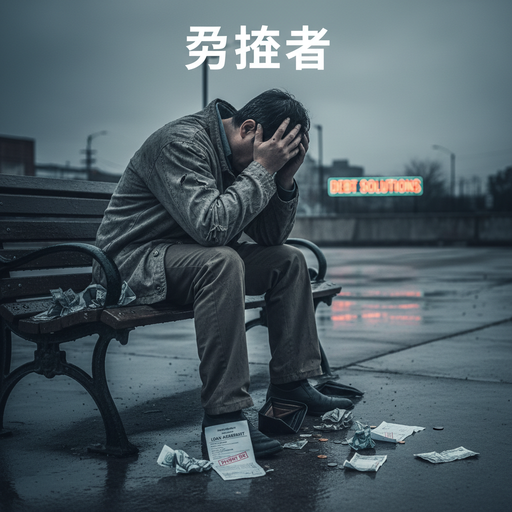




The main force behind market transactions remains the demand for self-occupancy and rigid needs.
This article is reprinted from: Liberation Daily
Shanghai’s second-hand housing market sellers reignite price increase expectations, industry reminds to trade rationally
Main market transactions still driven by urgent self-occupancy demand
Qi Yingpu
Staff Reporter Qi Yingpu
Xiaoyou, a programmer in Zhangjiang, has been watching a property in a community near Jinqiao for almost a year, with a total price of over 500k yuan. He planned to visit the property during the Qingming holiday, but when he opened the app, he saw a direct jump of 500k yuan. “How can we negotiate now?”
This is not an isolated case. After the “New Seven Policies” for Shanghai’s real estate market were introduced, second-hand home transactions in March hit a five-year high, with many buyers eager to try. During the Qingming holiday, with spring in full bloom, it was an ideal time to view properties. But some buyers found that the houses they liked either suddenly increased in price or negotiations fell through altogether.
Listing prices quietly rising
Ms. Xia saw a suburban old apartment of less than 100 square meters. The night before, she negotiated a price of 2 million yuan, but the next day, the seller raised the price to 2.05 million yuan. She was both amused and frustrated: “I thought that given the current market, most landlords would lower prices for sale. Now they’re raising prices—are they trying to ‘cover’ for neighbors to sell their properties?” Later, she changed her target and purchased an old house built in 1995, with a construction area of 93 square meters, for 1.9 million yuan.
Xiao Xu, a recent graduate who has been working in Shanghai for three years, saw a “bad old small apartment” in Putuo District before the Spring Festival. She wanted to negotiate during the holiday, but before she could speak, the seller raised the price by 150k yuan. She helplessly posted online for help: “There’s a 150k yuan gap between my expectations and the seller’s, any negotiation tips?”
Data also confirms a shift in seller mentality. In March, the average listing price of second-hand residential properties in Shanghai increased slightly by 0.08% month-on-month, ending a 33-month consecutive decline.
Many sellers are reigniting hopes of price increases. Some real estate agents report that since March, multiple areas in Shanghai have seen sellers raising prices out of reluctance to sell. Previously agreed prices are being suddenly reversed, with several popular neighborhoods directly increasing prices by 100k to 500k yuan, and some sellers pausing listings to observe the market.
While seller mentality can be understood, industry insiders generally believe that raising prices at this time may not be the best solution.
Accumulated urgent demand being released in concentrated waves
Lu Wenxi, an analyst at Zhongyuan Real Estate in Shanghai, pointed out that the current rebound in transaction volume is mainly due to the concentrated release of accumulated urgent demand under the new policies, rather than the start of a full-scale price increase cycle. Among the second-hand homes sold in March, over 70% had a total price below 3 million yuan. From the demand side, the main market remains self-occupiers with limited budgets and high sensitivity to prices.
From the supply side, the overall listing volume in Shanghai remains within a reasonable range, not a shortage of housing. “The current market is hot in transactions, not in prices. Prices have just stabilized after falling, and large price hikes could directly scare off first-time buyers, making properties less competitive,” Lu Wenxi said.
For example, in Pudong, a two-bedroom apartment was negotiated at 5.8 million yuan, but the seller temporarily increased the price by 80k yuan. The buyer gave up and bought a similar unit in the same neighborhood. The seller waited a month for the next buyer and finally sold for 5.72 million yuan, earning 80k yuan less than before but incurring an additional month of holding costs.
The reporter learned that a 94-square-meter property in the Huamu area of Pudong, with sincere seller intent, was adjusted three times over half a year, dropping from 7 million to 5.8 million yuan. During the Qingming holiday alone, it was viewed nine times. A 131-square-meter property in the Changzheng area of Putuo, with four price adjustments over half a year, dropped from 8.4 million to 7.68 million yuan, and was viewed 13 times during the holiday.
“Seize the window period and close the deal decisively,” Lu Wenxi advised. For sellers, the best strategy is to price according to recent transaction prices, avoid impulsive price hikes or last-minute reversals. When a sincere buyer appears, close the deal quickly and secure the profit. For those looking to upgrade, they should act fast—sell the old property and buy a new one during the active market phase to realize asset conversion, rather than waiting for prices to rise and missing the opportunity.
Whether prices go up or not, sellers decide; whether buyers buy or not, they vote with their feet. Those with genuine intent are speeding up transaction rhythms.