
Futures
Access hundreds of perpetual contracts
TradFi
Gold
One platform for global traditional assets
Options
Hot
Trade European-style vanilla options
Unified Account
Maximize your capital efficiency
Demo Trading
Introduction to Futures Trading
Learn the basics of futures trading
Futures Events
Join events to earn rewards
Demo Trading
Use virtual funds to practice risk-free trading
Launch
CandyDrop
Collect candies to earn airdrops
Launchpool
Quick staking, earn potential new tokens
HODLer Airdrop
Hold GT and get massive airdrops for free
Launchpad
Be early to the next big token project
Alpha Points
Trade on-chain assets and earn airdrops
Futures Points
Earn futures points and claim airdrop rewards


More





How fearful is the market of a recession? Oil prices surge, fueling safe-haven buying in U.S. Treasuries. Focus shifts to non-farm payrolls.
Hot Sections
Stocks to Watch
Data Center Market Watch Center Fund Flow Simulated Trading
Source: Caixin Global
As investors shift their focus to the risk that surging energy prices may drag down economic growth, U.S. Treasury yields again, unusually, rose on Thursday on the day oil prices jumped……
Market data show that Treasury yields across all maturities fell collectively overnight. The 2-year Treasury yield dropped 0.06 basis points to 3.796%, the 5-year Treasury yield fell 0.17 basis points to 3.946%, the 10-year Treasury yield declined 1.17 basis points to 4.305%, and the 30-year Treasury yield dropped 1.83 basis points to 4.880%.
The “V-shaped” intraday move in Treasury yields on Thursday left many traders sweating.
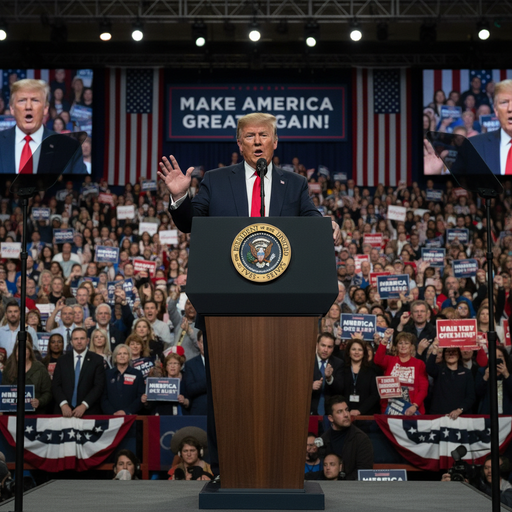
Earlier, during a speech by U.S. President Trump in the Asia session on Thursday, he made threatening remarks toward Iran. U.S. Treasury yields initially rose along with oil prices. However, the higher oil prices climbed, the more investors worried that this kind of shock could trigger an economic recession—hurting the stock market and pushing funds into the bond market. Ultimately, the 10-year Treasury yield fell by about 1 basis point into the close, even though it had risen by as much as 6 to 7 basis points at the peak earlier in the session.
Judging from the weekly trend, since the start of this week, the 10-year Treasury yield has fallen by roughly 13 basis points and is on track to record the biggest single-week decline since the week of February 9.
Gregory Faranello, U.S. rates strategist at Amerivet Securities, said that although inflation will rise first, the U.S. Treasury market has already priced in the reality that as time goes on, if energy prices keep climbing or stay at high levels, the economy will be hit.
In a speech Trump delivered in Washington on Wednesday evening local time, he all but shattered hopes in a rapid end to the Middle East conflict from the outside world. He said the U.S. plans to launch new attacks on Iran within the next two to three weeks, though he also reiterated that the war is “very close” to being completed.
The U.S. benchmark WTI crude oil futures settlement price on Thursday was $111 per barrel. Meanwhile, the U.S. daily average retail price of unleaded gasoline earlier this week already exceeded $4 per gallon; both marked the first time since 2022 that the prices reached the above levels.
“Markets previously seemed to be preparing for a ceasefire statement, but Trump’s remarks delivered the opposite message,” said Molly Brooks, rates strategist at TD Securities.
Focus shifts to nonfarm payrolls
Looking ahead, industry insiders noted that the near-term direction of U.S. Treasuries will depend largely on the U.S. March nonfarm employment report to be released on Friday. Economists surveyed by the media generally expect that March nonfarm payrolls will increase by 60k, versus the prior figure of a decrease of 92k.
Before the nonfarm employment data are released, Thursday’s initial jobless claims data showed that the U.S. labor market was temporarily relatively stable. Last week, initial jobless claims unexpectedly fell to 202k.
Of course, tonight’s nonfarm employment report will be somewhat special—the U.S. stock market will be closed for Good Friday. The diversified bond market typically closes for holidays as well, but when holidays coincide with the release date of employment reports, the more common practice is to shorten trading hours.
The Securities Industry and Financial Markets Association (SIFMA) currently recommends stopping dollar-denominated bond trading at 12:00 p.m. New York time on Friday (0:00 a.m. Beijing time on Saturday), one hour later than the end time for Chicago Mercantile Exchange interest rate futures trading.
Tom di Galoma, Managing Director at Mischler Financial Group, said, “This nonfarm data is very likely to be stronger than what the bond market expects. Ahead of the four-day Easter holiday in the UK and Europe, the entire week has been about risk avoidance and closing positions.”
In terms of interest-rate pricing, before the outbreak of the U.S.-Iran conflict on February 28, overnight indexed swaps (OIS) had priced in Fed rate cuts of more than twice this year (each time by 25 basis points). Then those expectations were wiped out due to worries about inflation, and traders began pricing in the possibility that the Fed’s next move would be rate hikes. But recently, the market has started pricing again that the Fed could be closer to cutting rates.
The Fed cut rates three times last year to address weakness in the labor market. They paused rate cuts in January, citing improvements in conditions in the employment sector. Since then, the U.S. Department of Labor’s January monthly nonfarm employment report came in stronger than expected, while February’s data showed signs of fatigue—falling into negative territory.
This week, Bank strategist has pushed their forecast for the Fed’s rate-cut window from June and July to September and October.
Huge amounts of information and precise interpretation—right on the Sina Finance APP
责任编辑:朱赫楠