


Futures
Access hundreds of perpetual contracts
TradFi
Gold
One platform for global traditional assets
Options
Hot
Trade European-style vanilla options
Unified Account
Maximize your capital efficiency
Demo Trading
Introduction to Futures Trading
Learn the basics of futures trading
Futures Events
Join events to earn rewards
Demo Trading
Use virtual funds to practice risk-free trading
Launch
CandyDrop
Collect candies to earn airdrops
Launchpool
Quick staking, earn potential new tokens
HODLer Airdrop
Hold GT and get massive airdrops for free
Launchpad
Be early to the next big token project
Alpha Points
Trade on-chain assets and earn airdrops
Futures Points
Earn futures points and claim airdrop rewards


More




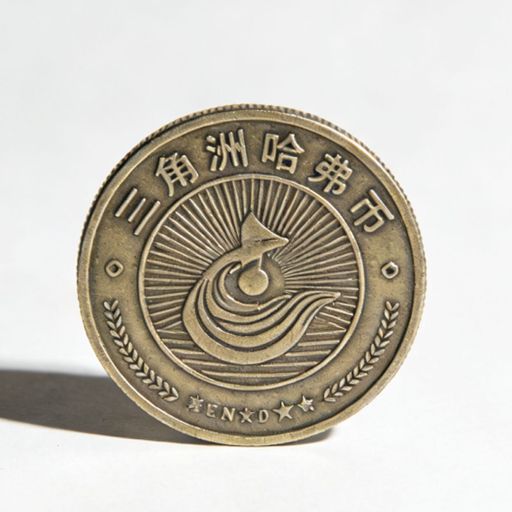

A 5-jiao coin quoted at 18,000 yuan—can you find the reason? It's just because of two extra "Chinese characters"
Currently, the five-cent coins in everyone’s hands mostly feature a bright gold lotus pattern, which is one of the so-called “New Three Flowers.” They are eye-catching in appearance, numerous in quantity, and the most common coins for daily change. However, many people don’t know that soon the country will issue a new version of the coin, meaning the current lotus five-cent coin will soon become a “previous generation” coin. So, how much is it really worth now? Is there any collectible value? Many friends have recently started to pay attention to this question.
In fact, the five-cent coin has gone through three generations. From the earliest wheat ear five-cent coin, to the middle plum blossom five-cent coin, and now the lotus five-cent coin, each has its own characteristics and “high-end collectors.” But nowadays, almost everyone sees only the lotus version, as the previous two have been phased out for many years.
The earliest wheat ear five-cent coin circulated from the 1950s to the 1980s and is most familiar to older generations. Why is it famous? The reason is simple—rare years are extremely expensive, to an absurd degree. For example, a good-condition wheat ear five-cent coin from 1986 can be quoted at over 30,000 yuan! This is already a ceiling level in the coin world.
The second generation is the plum blossom five-cent coin, part of the old “Three Flowers” series. Last year, the chrysanthemum one-jiao coin officially retired, which means the other two coins in the series, including the plum blossom five-cent coin, are not far from retirement. After retirement, they will become increasingly rare, but overall, the issuance volume of the plum blossom five-cent coin isn’t too small, so it has some collectible value, but its appreciation isn’t as exaggerated as the wheat ear five-cent coin.
The third generation is the current lotus five-cent coin, also known as the “New Three Flowers.” Because it is still widely circulated across the country, finding one in good condition isn’t difficult, so its short-term value remains relatively stable. Simply put: it’s too common, so it’s not very valuable.
However, being common doesn’t mean it has no value at all. In the coin collecting world, years with low mintage or fewer surviving specimens are always more sought after. For example, the two most “marketable” years for the lotus five-cent coin are recognized as 2003 and 2005. Their collectible prices are generally around 460–480 yuan per roll. A roll contains 50 coins, so roughly 9 yuan per coin, nearly 20 times the face value. It doesn’t seem particularly exaggerated, but for coins still in circulation, it’s a pretty good performance.
But you probably want to ask: what about the lotus five-cent coin mentioned in the article, valued at 18,000 yuan? Can ordinary lotus five-cent coins also reach that level?
The answer is: it’s definitely not an ordinary coin.
This coin, which can sell for 18,000 yuan, has a key feature—the words “Sample Coin” are printed on the face. As long as a coin bears the words “Sample Coin,” its price often doubles or more. The reason is simple: sample coins are not meant for the public; they are trial strikes used for approval, design verification, and process testing by higher authorities. The number of trial strikes is extremely limited, usually circulated only internally, and they are not officially issued or circulated in the market.
Because of this, most people will never see a real sample coin in their lifetime. Its rarity is much higher than that of popular years or special editions, so its price is naturally far beyond that of ordinary coins. For modern coins like the lotus five-cent coin, if a sample coin appears, it is an “unexpected event.” Once collectors discover it, its value can quickly rise to tens of thousands of yuan, which is not surprising.
In other words: ordinary lotus five-cent coins are not expensive, rare years have some premium, but coins marked with “Sample Coin” are the true kings of this series.