

Trade
Basic
Futures
Futures
Hundreds of contracts settled in USDT or BTC
TradFi
Gold
Trade global traditional assets with USDT in one place
Options
Hot
Trade European-style vanilla options
Unified Account
Maximize your capital efficiency
Demo Trading
Futures Kickoff
Get prepared for your futures trading
Futures Events
Participate in events to win generous rewards
Demo Trading
Use virtual funds to experience risk-free trading
Earn
Launch
CandyDrop
Collect candies to earn airdrops
Launchpool
Quick staking, earn potential new tokens
HODLer Airdrop
Hold GT and get massive airdrops for free
Launchpad
Be early to the next big token project
Alpha Points
Trade on-chain assets and enjoy airdrop rewards!
Futures Points
Earn futures points and claim airdrop rewards
Investment
Simple Earn
Earn interests with idle tokens
Auto-Invest
Auto-invest on a regular basis
Dual Investment
Buy low and sell high to take profits from price fluctuations
Soft Staking
Earn rewards with flexible staking
Crypto Loan
0 Fees
Pledge one crypto to borrow another
Lending Center
One-stop lending hub
VIP Wealth Hub
Customized wealth management empowers your assets growth
Private Wealth Management
Customized asset management to grow your digital assets
Quant Fund
Top asset management team helps you profit without hassle
Staking
Stake cryptos to earn in PoS products
Smart Leverage
New
No forced liquidation before maturity, worry-free leveraged gains
GUSD Minting
Use USDT/USDC to mint GUSD for treasury-level yields

More


Trending Topics
View More79.41K Popularity
6.27K Popularity
1.91K Popularity
2.89K Popularity
7.21K Popularity



Pin
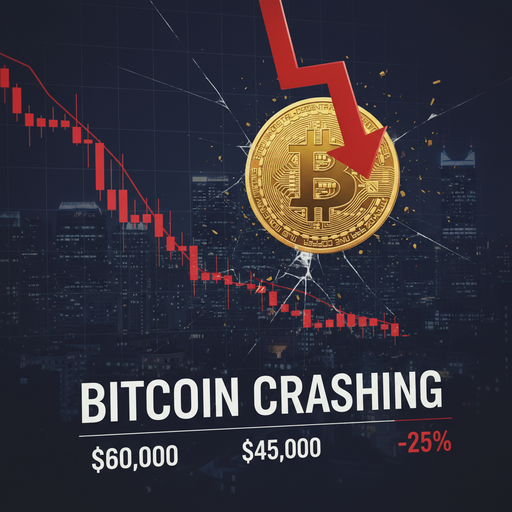
Gate Square | 2/5 Today's Hot Topic: #BuyTheDipOrWaitNow?
🎁 [Community Perk] Post with the topic or #BTC, 10 lucky users * $100 position Voucher.
Market volatility continues as BTC breaks below the $74,000 key support level, with altcoins pulling back in sync. Are you buying the dip in batches or waiting for a better entry point?
💬 Today’s Discussion:
1️⃣ Bottom Signals: Where do you see BTC’s bottom — $70,000 or lower?
2️⃣ Market Drivers: Which recent macroeconomic news or rumors are influencing the market?
3️⃣ Dark Horses: Are there any resilient or outperforming tokens worth watching?
ShTap to Trade in Gate Square, Win up to 50 GT & Merch!
Click the trading widget in Gate Square content, complete a transaction, and take home 50 GT, Position Experience Vouchers, or exclusive Spring Festival merchandise.
Click the registration link to join
https://www.gate.com/questionnaire/7401
Enter Gate Square daily and click any trading pair or trading card within the content to complete a transaction. The top 10 users by trading volume will win GT, Gate merchandise boxes, position experience vouchers, and more.
The top prize: 50 GT.
 shows a similar pattern. After a temporary divergence between inflation expectations and gold prices in 2022-2023, they are moving back into alignment. This synchronization is critical: if inflation remains steady or slightly increases as expected, it will underpin a moderate but consistent upward trend in gold until 2030.
The key insight: gold thrives in inflationary environments, not during recessions. The concern among many investors that economic problems will support gold is a misconception. It is rather inflation expectations that drive this market.
Leading indicators and market positions – Signals for the course until 2030
Besides technical analysis and macroeconomic fundamentals, there are two additional sources of signals: the foreign exchange and credit markets, as well as the futures market.
The EUR/USD shows a long-term constructive orientation, creating a gold-friendly environment. Since gold is inversely correlated with the US dollar, a stronger European currency tends to support gold purchases. Government bonds correlate positively with gold, and the outlook for subdued yields worldwide (due to interest rate cut expectations) is positive for gold investors.
In the COMEX futures market, extended net short positions by commercial market participants are observed. This is interpreted as a “stretch indicator”: when these positions are very high, upside potential is limited, but a gradual price increase is quite possible. The current positioning does not indicate explosive gains but a controlled, stable uptrend—consistent with our gold forecast 2030.
Institutional forecasts – A market consensus is emerging
A fascinating aspect of the current gold market analysis is the growing convergence between independent researchers and major financial institutions. In early 2024, Goldman Sachs forecasted an increase to $2,700 by 2025. Bloomberg worked with a range of $1,709 to $2,727. Other institutions like UBS, Bank of America, J.P. Morgan, and Citi Research mostly ranged between $2,700 and $2,800.
Our own forecast for 2025 (then around $3,100) proved to be ambitious but not unrealistic. The actual development until 2026 shows that the gold market tended to rise more steadily than many expected.
For 2030, these institutional analyses indirectly provide important insights. If the consensus for 2025 was around $2,700–$2,800 and gold has continued to rise since then, a projection up to 2030 with accelerated pace could well be in the range of $4,000–$5,000. A peak price of $5,000 by 2030 is thus not only theoretically plausible but also realistic within the context of institutional expectations.
Silver – The underestimated companion to the gold forecast 2030
While the gold forecast 2030 is in focus, silver deserves attention. The gold-to-silver ratio shows a classic cup-and-handle pattern over the 50-year timeframe. Silver tends to react explosively in later phases of a gold market. If gold doubles its price by 2030, silver could even rise disproportionately.
For a diversified precious metals portfolio, combining gold and silver makes sense: gold offers stability, silver offers growth potential.
Practical implications – What investors should take away from the gold forecast 2030
The gold forecast 2030 with target ranges between $4,000 and $5,000 should not prompt investors to make immediate massive purchases. Instead, it points to a structural, multi-year opportunity. The following insights are relevant:
First, timing is secondary. The long-term trend is clearly upward—short-term fluctuations are normal and present buying opportunities.
Second, regular savings in gold is a sensible strategy to benefit from this trend without market-timing risks.
Third, investors should monitor macroeconomic indicators—especially money supply development and inflation expectations. If the gold forecast becomes invalid (a very unlikely scenario), a stable resistance at around $1,770 would signal this.
Fourth, diversification is crucial. Gold should be part of a broader portfolio, not its sole focus.
The gold forecast 2030 is based on solid technical and fundamental analysis. It reflects a broad consensus that precious metals will appreciate in value in the coming years—a bull mood for the metal market until the end of this decade.