

Trade
Basic
Futures
Futures
Hundreds of contracts settled in USDT or BTC
Options
HOT
Trade European-style vanilla options
Unified Account
Maximize your capital efficiency
Demo Trading
Futures Kickoff
Get prepared for your futures trading
Futures Events
Participate in events to win generous rewards
Demo Trading
Use virtual funds to experience risk-free trading
Earn
Launch
CandyDrop
Collect candies to earn airdrops
Launchpool
Quick staking, earn potential new tokens
HODLer Airdrop
Hold GT and get massive airdrops for free
Launchpad
Be early to the next big token project
Alpha Points
NEW
Trade on-chain assets and enjoy airdrop rewards!
Futures Points
NEW
Earn futures points and claim airdrop rewards
Investment
Simple Earn
Earn interests with idle tokens
Auto-Invest
Auto-invest on a regular basis
Dual Investment
Buy low and sell high to take profits from price fluctuations
Soft Staking
Earn rewards with flexible staking
Crypto Loan
0 Fees
Pledge one crypto to borrow another
Lending Center
One-stop lending hub
VIP Wealth Hub
Customized wealth management empowers your assets growth
Private Wealth Management
Customized asset management to grow your digital assets
Quant Fund
Top asset management team helps you profit without hassle
Staking
Stake cryptos to earn in PoS products
Smart Leverage
NEW
No forced liquidation before maturity, worry-free leveraged gains
GUSD Minting
Use USDT/USDC to mint GUSD for treasury-level yields

More


Trending Topics
View More29.2K Popularity
10.58K Popularity
2.93K Popularity
51.69K Popularity
341.81K Popularity
Hot Gate Fun
View More- MC:$3.44KHolders:20.25%
- MC:$0.1Holders:10.00%
- MC:$3.38KHolders:10.00%
- MC:$3.45KHolders:20.29%
- MC:$3.42KHolders:20.00%




Pin
Strike Gold by Sharing Your TradFi Orders and Pictures!
Post on Gate Square and split $10,000 in rewards!
The TradFi Gold Lucky Bag is now live—1g of real gold every 10 minutes. Trade nonstop, win nonstop!
👉 https://www.gate.com/announcements/article/49357
🎁 50 lucky winners × $200 Position Vouchers ($10 × 20 leverage)
How to Join:
1️⃣ Post your order on Square with #GateTradFi1gGoldGiveaway, including:
A trade or draw screenshot
A brief experience sharing
2️⃣ Or create a related image (AI creation allowed) with a short promo line, such as:
Get gold on Gate App — 1g every 10 minutes!
⏰ Jan 2Gate Square New & Returning Creator Rewards are ongoing!
Your ideas may be more valuable than you think!
Make your first post or come back post to share a $20,000 monthly prize pool!
Post with #MyFirstPostOnSquare to receive a $50 Position Voucher each
Monthly Top Posters and Top Engagers will each earn an extra $50 reward
Your crypto insights could inspire many—start creating today!
👉 https://www.gate.com/postGate Square “Creator Certification Incentive Program” — Recruiting Outstanding Creators!
Join now, share quality content, and compete for over $10,000 in monthly rewards.
How to Apply:
1️⃣ Open the App → Tap [Square] at the bottom → Click your [avatar] in the top right.
2️⃣ Tap [Get Certified], submit your application, and wait for approval.
Apply Now: https://www.gate.com/questionnaire/7159
Token rewards, exclusive Gate merch, and traffic exposure await you!
Details: https://www.gate.com/announcements/article/47889
The global market remains cautious after the slowdown in American employment
Disappointing US Jobs Data Shift Geopolitical and Economic Balances
Last month brought significant surprises in American macroeconomic data, with the Department of Labor reporting only 50,000 new jobs added in December, below analysts’ expectations of 70,000 new positions. This performance also represents a decrease compared to the 56,000 jobs recorded in the previous month.
However, the most unexpected figure concerns the unemployment rate, which fell to 4.4% from previous 4.6%, suggesting a more resilient labor market than hiring numbers indicate. Economists remain divided in interpreting these conflicting signals.
Reactions of Global Stock Markets
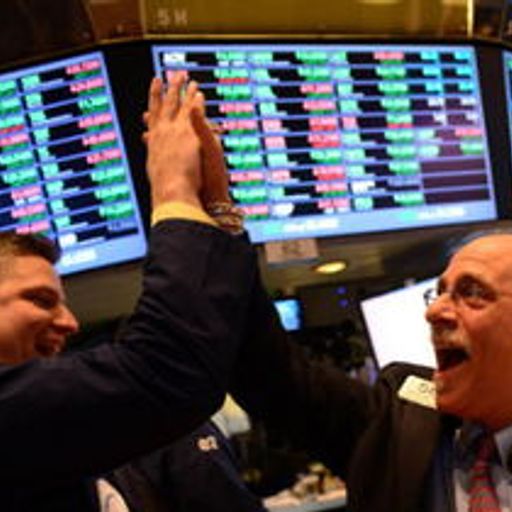
World stock markets responded with moderate optimism to this mix of weak employment growth data. The S&P 500 reached a new all-time high, rising about 0.7% to 6,967.73 points, while the Dow Jones Industrial Average advanced 0.5% to 49,441.30. The Nasdaq Composite gained 0.8%.
In the UK, the FTSE 100 ended the week at record levels, up 0.8% to 10,124.60 points, mainly supported by news of a possible mega-merger between Glencore and Rio Tinto. Glencore shares jumped 9%, while the FTSE 250 maintained its positive trend with a 0.3% increase.
In Europe, major indices followed the positive trend: the French CAC 40 rose 0.8%, and the German DAX gained 0.4%. In Asia, the Japanese Nikkei 225 increased by 1.6%, driven by the performance of Fast Retailing, parent company of Uniqlo.
The Healthcare Sector: Once Again the Employment Driver
US employment growth, despite being weakened by import tariffs and massive investments in artificial intelligence, received support from the healthcare sector. The sector generated 21,000 new jobs in December, of which 16,000 were in hospitals. Overall, the healthcare sector created an average of 34,000 positions per month in 2025, down from 56,000 in 2024.
Without this boost from the healthcare sector, the US private sector would have contracted since the tariffs were introduced in April. Conversely, retail trade experienced its worst month for hiring, losing 25,000 jobs.
Implications for Monetary Policy
Contradictory employment data have fueled debate about the Federal Reserve’s future actions. Many market participants, such as those represented by Goldman Sachs, believe that the larger-than-expected decline in unemployment suggests a stabilization of the labor market. Lindsay Rosner of Goldman Sachs noted that the improvement could indicate that recent increases in unemployment were due to temporary factors rather than structural weaknesses.
Consequently, financial markets have significantly reduced bets on rate cuts by the Federal Reserve. Currently, expectations see almost zero chance of a cut in January, and the prospects for two cuts during the year have halved, although a second cut remains expected by October. Stephen Brown of Capital Economics emphasized that, with robust GDP growth in the fourth quarter, the Fed should not rush to further lower rates.
The Rebound of Safe-Haven Assets
Labor data triggered strong movements in precious metals and energy markets. Gold rose 1.4% to $4,511 per troy ounce, up 4% for the week, while silver jumped 5% to $79.79 per ounce, gaining 9% over the weekly period.
In the energy sector, West Texas Intermediate (WTI) crude oil increased 2.8% to $59.36 per barrel, while Brent rose 2.4% to $63.46. These gains were partly fueled by geopolitical tensions in Iran, where Trump issued an ultimatum against potential damage to protesters.
Major oil companies benefited from these movements: Chevron rose 1.2%, ExxonMobil 0.5%, BP over 2%, and Shell about 3%.
International Currency Dynamics
The US dollar appreciated significantly in international exchange rates. The British pound fell 0.3% below $1.34, while the dollar reached a one-year high against the Japanese yen. Investors welcomed both the absence of a Supreme Court decision on tariffs and better-than-expected labor market data.
Geopolitical Uncertainty Around Presidential Tariffs
The Supreme Court did not issue the expected ruling on Trump’s “Liberation Day” tariffs, creating a suspension that characterized the entire trading day. Market forecasts suggest only a 25% chance that the court will confirm the president’s emergency tariff powers. However, analysts note that there are alternative legal avenues for applying tariffs, and sector-specific measures like those on steel and aluminum would not be affected by the ruling.
Kevin Hassett, Trump’s chief economic advisor and potential candidate to lead the Federal Reserve, downplayed concerns, stating that the US has alternative strategies if the court rules against the president’s tariffs. He emphasized that the economy is growing vigorously, with inflation under control despite recent slowing in hiring.
Expert Outlooks
Chris Zaccarelli, Chief Investment Officer of Northlight Asset Management, offered an interpretation of the employment picture reflecting the ambiguity of the moment: “Companies seem to be holding onto employees longer, avoiding rapid layoffs, but are not expanding the workforce quickly either. This report fuels concerns about a stagnant environment for hiring and layoffs.”
According to Berenberg, the US labor market avoided an “apocalyptic scenario” thanks to the larger-than-expected decline in unemployment. The Swiss bank now expects the Fed to cut rates only once this year. Atakan Bakiskan of Berenberg highlighted that the previous increase in unemployment was mainly concentrated among teenagers, an anomaly that distorted overall data.
Wealth manager Quilter Cheviot reiterated that the US labor market remains much weaker than in previous years, with hiring concentrated in specific sectors like healthcare and hospitality, while retail continues to suffer.
The European Macro Context
In the UK, yields on British government bonds are experiencing their largest weekly decline in nine months, as investors anticipate further rate cuts from the Bank of England. The 10-year gilt yield fell from 4.54% to 4.39%, while the 30-year yield declined from 5.28% to 5.12%.
Giles Gale of UBS expects further rate reductions and believes the UK could outperform its international competitors in the coming period.
US Consumer Sentiment
Despite evident concerns about the labor market, US consumer confidence has slightly improved. The University of Michigan’s Index of Consumer Sentiment rose 2.1% in January to 54, although it remains nearly 25% below last year’s level. The report highlighted improvements among low-income households, while sentiment among higher-income groups declined.
Outlook and Open Questions
The US economy is in a transitional phase characterized by mixed signals. While employment data reveal a slowdown in hiring, the decline in unemployment and strong GDP growth in the fourth quarter suggest greater resilience than market headlines might imply. Tariff policies, accelerated investments in artificial intelligence, and potential Supreme Court actions remain key variables that will continue to shape the economic trajectory in the coming months.