
Futures
Access hundreds of perpetual contracts
TradFi
Gold
One platform for global traditional assets
Options
Hot
Trade European-style vanilla options
Unified Account
Maximize your capital efficiency
Demo Trading
Introduction to Futures Trading
Learn the basics of futures trading
Futures Events
Join events to earn rewards
Demo Trading
Use virtual funds to practice risk-free trading
Launch
CandyDrop
Collect candies to earn airdrops
Launchpool
Quick staking, earn potential new tokens
HODLer Airdrop
Hold GT and get massive airdrops for free
Pre-IPOs
Unlock full access to global stock IPOs
Alpha Points
Trade on-chain assets and earn airdrops
Futures Points
Earn futures points and claim airdrop rewards


More



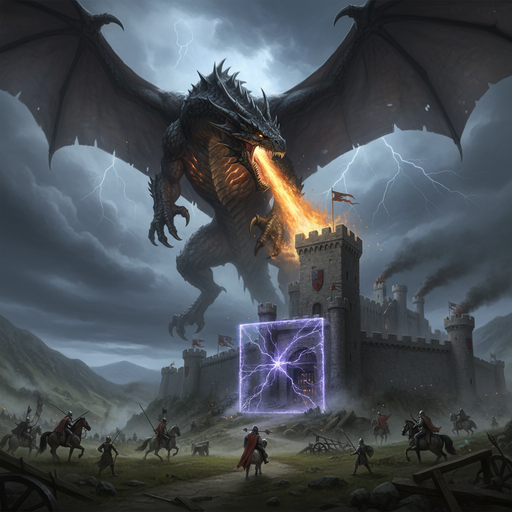


The "Lying Gate" of OpenAI: A Classic Example of Systemic Failure
Writing by: Web 4 Research Center
The biggest philosophical question is not “Can we trust someone,” but “How to design a system that makes trust unnecessary.” Otherwise, we are using 19th-century governance structures to face the most powerful game of authority in the 21st century.
01 A Investigative Report Shaking Silicon Valley
On April 6, 2026, The New Yorker published an in-depth investigative report completed over 18 months, revealing a past event within OpenAI that still leaves many insiders uneasy.
The core material of this report is a seventy-page internal memo compiled by former OpenAI Chief Scientist Ilya Sutskever in fall 2023, along with over two hundred pages of private notes kept by Anthropic co-founder Dario Amodei. After the report was published, all evidence pointed to the same conclusion: OpenAI’s leader, Sam Altman, exhibits a pattern of “habitual lying.”
This is not an ordinary tech gossip. It is a systemic questioning of whether the top management of one of the most powerful tech companies in human history is trustworthy.
02 This Is Not Just Altman’s Problem
If you only see this from that perspective, you miss the truly important question.
Mainstream media are asking: Is Altman trustworthy?
But the real question is: When a technology capable of transforming human civilization is entrusted to a system designed to rely on “self-awareness,” crises are not accidental but inevitable.
We have named this phenomenon: Structural failure of AI governance.
This is not just Altman’s problem. It is a common disease across the entire AI industry.
Trust is one of the most frequently used words in the AI field. Almost every AI company will tell you: Trust us, we prioritize safety, and our technology will benefit humanity. But The New Yorker’s investigation reveals a brutal fact: OpenAI has never established any institutional structure that makes trust unnecessary.
This organization’s core decisions are made by one person, or at most a few people. There are no external checks. No mandatory transparency mechanisms. Promises are tools, not constraints.
Camus wrote in “The Myth of Sisyphus”: “Judging whether life is worth living is equivalent to answering the fundamental philosophical question.” The same logic applies to AI: When technology is powerful enough to change civilization, and institutional constraints are so fragile, how do we build a system that does not rely on personal integrity?
03 A List of Betrayed Promises
The investigation by The New Yorker lists a complete “Betrayal of Promises” checklist.
The first item is the 2019 negotiations with Microsoft. At that time, OpenAI was transitioning from a non-profit to a “capped-profit” entity. During negotiations, Anthropic co-founder Dario Amodei proposed a core safety clause called “merger and assistance”—meaning if another company gets closer to AGI in safety, OpenAI must cease competition and merge with them. This was his bottom line in the negotiations. After signing the contract, Amodei discovered that Microsoft held veto power over the merger, rendering the clause meaningless. When he confronted Altman face-to-face, Altman initially denied the clause existed, until Amodei asked a colleague to verify on the spot, after which Altman admitted and claimed he “didn’t remember.” Amodei wrote in his private notes: “80% of the charter was betrayed.”
The second item is the 2023 compute power commitment. OpenAI publicly announced the formation of a “Super Alignment Team,” promising to allocate 20% of the company’s compute resources to it. But insiders revealed that the team actually received only 1% to 2% of the compute, using the oldest and worst chips. When the leader, Jan Leike, protested, the executives coldly replied: “This promise was never realistic.” Notice the selective memory here: promising 20%, actually giving 1-2%, then claiming “the promise was unrealistic.” This is not an execution deviation but systemic forgetfulness.
This is not a matter of integrity. It is an inevitable manifestation of systemic failure. When power is concentrated in one person, and that person instinctively weakens the binding force of commitments, promises will systematically be forgotten, redefined, and rationalized. This is not just Altman’s flaw; it is a common feature of any centralized power structure.
04 Why Whistleblowers Always Fail
Ilya Sutskever wrote in a memo to the board that: anyone committed to developing potentially civilization-changing technology will bear unprecedented responsibility, but ultimately, those in such positions are often interested in power.
There is a profound paradox: the people most in need of restraint are often those most eager for power. And current institutional designs are completely unprepared for this paradox.
When Ilya decided to issue a warning from within, he did not report to external regulators because AI industry has almost no external oversight; he also did not organize collective employee action because he is a scientist, not an activist. His only leverage was a document and the possible moral judgment within the board.
We all know the result: in November 2023, the board indeed dismissed Altman, but five days later, under pressure from capital, public opinion, and employee interests, the entire power structure collapsed, Altman returned victorious, and Ilya, who tried to whistleblow, was pushed out of the core power circle.
This is not just a story of “Altman being too powerful.” It is a story about institutional design: in a highly centralized organization, whistleblowing mechanisms are structurally ineffective, not accidental. The reason is simple—whistleblowers’ chips are their reputation and career prospects, which they conspire with their employer to protect. When the organization chooses denial, delay, and marginalization, individuals can hardly resist. The essence of centralized structures is to create a system where external voices are hard to enter and internal voices hard to amplify.
The same story happened to Dario Amodei. When he found he could not change OpenAI’s safety culture from within, he chose another path: leaving, founding Anthropic, and practicing his values through his own organization. It’s a noble retreat, but not a systemic victory—because it relies on the founder’s personal conviction rather than any institutional safeguard.
The core issue of AI governance is not “how to cultivate more conscientious AI leaders,” but “how to design a system that can operate normally even if leaders lack conscience.”
05 Blockchain Is Not a Panacea, But the Missing Piece
I propose a perhaps surprising judgment for outsiders: the core value of blockchain is not token issuance or Web3 speculation, but a paradigm innovation in governance technology—trust externalization.
What does trust externalization mean? Traditional systems rely on “trust in an institution or individual.” Blockchain’s approach is entirely different: shifting trust from people to rules and code. It does not depend on a trusted third party but on transparent rules and verifiable proofs.
The flaw in AI governance lies precisely in its complete lack of such externalized trust mechanisms. OpenAI’s promises are judged and executed by OpenAI itself. This is not regulation; it’s self-assessment. The outside world cannot independently verify whether they truly allocate 20% of compute to safety research or whether their model release process has been approved by a safety committee. Transparency is an option, not a structural requirement.
Blockchain offers a possible solution. Not that putting AI models on-chain can solve the problem—technology alone cannot fix institutional issues—but that transparent and verifiable record-keeping can make AI system behaviors more transparent and auditable. For example, a blockchain-based AI decision log could record every key model update and compute allocation decision on-chain, making it tamper-proof. This won’t make AI systems perfect, but it makes “systematic forgetting of commitments” more difficult.
Of course, this is just one direction, not a silver bullet. Technology alone cannot replace governance. But in an era where AI governance is almost entirely absent, any scheme that makes power more transparent and checks more structured deserves serious discussion.
06 A Deeper Question
The real lesson of the OpenAI crisis is not about what kind of person Altman is.
It is: when a technology that could determine the future of human civilization falls into a “self-awareness” institutional framework, the risk does not come from technological out-of-control but from systemic failure.
Throughout human history, every major technological revolution has been accompanied by an iteration of governance models. Nuclear energy led to the International Atomic Energy Agency and non-proliferation regimes. The internet brought data protection and cybersecurity laws. Every technology capable of changing power structures has forced humanity to establish new institutional frameworks to manage it.
AGI is the first technology that could change civilization before we have an effective governance framework for it. This framework must not rely on any founder’s personal virtue nor on any company’s self-commitment. It must be a systemic, checks-and-balances, non-reliant institutional system.
And we currently do not have it.
Regarding Ilya Sutskever’s seventy-page memo, The New Yorker’s investigation restored its core content: Ilya explicitly told the board that he believed Altman should not be the one holding the “AGI button.”
This document was the trigger for the shocking 2023 OpenAI “palace coup.” The board indeed dismissed Altman based on it. But in the following five days, the entire power structure of the industry made its choice.
This is not a story about good versus evil. It is a story about institutions. Under a good system, Altman’s certain behaviors would be restrained; under a failing system, even the most well-intentioned whistleblower can be turned against by power.
Humanity is entering an era where AGI could change civilization. Yet, the governance system we use is still stuck in the 19th century.
This is not anyone’s personal failure. It is a classic failure of institutional design.
And the real lesson is not “don’t trust Altman”—but “build a system where anyone can be questioned, checked, and cannot escape transparent constraints.”
Trust is necessary. But in the AI era, trust alone is not enough. What we need is a system that makes trust redundant.
(This article is compiled from The New Yorker’s April 6, 2026 investigation, official OpenAI statements, and publicly available data as of April 2026.)