Source: Jishi Communication
Abstract
The allocation of traditional research funding is often controlled by small, closed, centralized groups, which have certain limitations in terms of regulation and efficiency, further affecting the output efficiency and value potential of research results. To address these issues, a decentralized science movement, (DeSci), has recently emerged in the industry, aiming to construct a public infrastructure for fairly and equitably funding, creating, regulating, verifying, storing, and disseminating scientific knowledge using Web3.0 systems. In simple terms, DeSci provides solutions based on Web3.0 thinking for fundraising, regulation, auditing, research advancement, and timely decision-making in scientific research. Completely different from the operational model of traditional scientific research, users in the Web3.0 world become the drivers of scientific research, and the market becomes the core driving force. This represents a new opportunity in the industry. Of course, as a new phenomenon, the risks of DeSci are also evident, such as data falsification in the research process, platform security, and other external risks (such as external attacks), which can have immeasurable impacts on research quality and risk spillover.
Pumpscience promotes longevity research and represents the recent rise of the DeSci industry. Currently, Pumpscience enables anyone to conduct a longevity experimental study, providing an idea of an intervention (drug, or multiple drugs) to be tested, as well as token incentives based on the Solana platform. Drug developers can raise money for experiments, and others can bet on which intervention will extend the lifespan of the different model organisms being tested. To fund an experiment for a particular intervention, drug developers have launched a token that represents a portion of the rights to a mixture of drugs that can be sold to pay for the experiment. The rights to the interventions developed on the platform can be authorized, and these interventions can be sold by chemical suppliers as supplements or research chemicals. All projects on Pumpscience are decentralized from launch to implementation, and DeSci’s model is structured at all stages, and at each stage: funding preparation, decision-making, regulation, and market operations are driven by the role of the cryptocurrency market, and are carried out in a fully developed and decentralized manner.
The core of Pumpscience is the cryptocurrency market as the driving force, utilizing market power in terms of funding (and funding thresholds), creativity, regulation, and decision-making to fully explore the market value at every link and promote the rapid development of scientific research. For example, compounds can be formulated into final products at any stage of the research process (if relevant companies are willing). This is also very imaginative, and we can open our minds to think: in the research experiments of life sciences and even other fields, some intermediate data and products may also have a certain application market. For instance, although they are not the final ideal target chemicals, they may be compounds required by other manufacturers (catalysts or other intermediate products needed for production). Relevant companies can purchase tokens in the token market, raising prices as an intervention method, providing a milestone basis for potentially effective products in the next stage. At the same time, they can buy out the production/sales authorization of related products. Although this is not the ultimate goal of the experiment, the market value of the intermediate processes has also been well released.
It can be said that DeSci decentralizes the structure of every step from the creativity/leadership of scientific research, the advancement process (as well as decision-making at various stages), to the supervision of industrial transformation. This flywheel model will undoubtedly fully unleash the efficiency and energy of Web 3.0.
Risk warning: The development of blockchain technology is not meeting expectations; uncertainty of regulatory policies; the implementation of Web 3.0 business models is not meeting expectations.
1**. Core Perspective**
The allocation of traditional research funding is often controlled by small, closed, centralized groups, which have certain limitations in terms of regulation and efficiency, thereby further affecting the output efficiency of research results and the potential for value discovery. Of course, these groups have a significant influence during the transfer of related property rights and the productization process, which can sometimes also suppress the efficiency of research output. To address these issues, the industry has recently seen the emergence of the decentralized science (DeSci) movement, aimed at building public infrastructure using Web3.0 systems for the fair and equal funding, creation, regulation, confirmation, storage, and dissemination of scientific knowledge. Unlike the decentralized crowdfunding of a few years ago, DeSci is characterized by considerable openness in terms of funding, creativity, research ideas, and even market support, embodying a more Web3.0 mindset, fully tapping into the efficiency and output of research, while sharing the rights with decentralized Web3.0 ecosystem users.
Of course, as a new phenomenon, the risks of DeSci are also evident, such as issues like data falsification in the research process, platform security, and other external risks (such as external attacks), which can have immeasurable impacts on research quality and risk spillover.
This article introduces the operating model of typical representative projects in DeSci and analyzes their development potential.
2. DeSci: Empowering Scientific Research with Web3.0
Decentralized Science ( DeSci ) is a movement aimed at building public infrastructure for the fair and equal funding, creation, regulation, confirmation, storage, and dissemination of scientific knowledge using Web 3.0. In simple terms, DeSci provides a Web 3.0-based solution for funding scientific research (as well as regulation, auditing, and various supportive aspects), meaning that Web 3.0 becomes a new accelerator for scientific research. Completely different from the traditional operating model of scientific research, users in the Web 3.0 world become the driving force behind scientific research and do so in a decentralized manner.
2.1 Progress of DeSci Compared to GitCoin: Fully Decentralized Structure Project Process
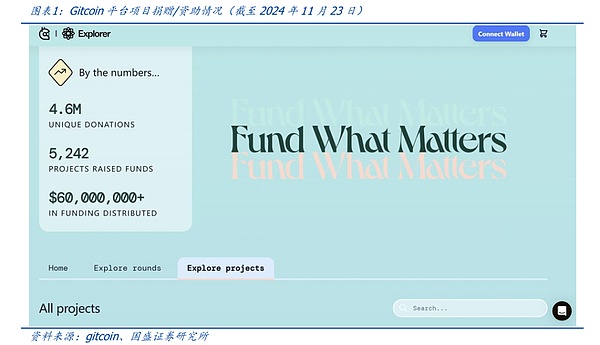
Gticoin is a decentralized collaboration platform built on Ethereum, providing developers with a collaborative development platform while offering investors a donation platform (cryptocurrency donations). It can be simply understood as a crowdfunding and sharing platform for project codes and funds. Project token airdrops are provided to funders as a reward, and this financing method is highly characteristic of Web 3.0, representing an early decentralized financing and incubation model.
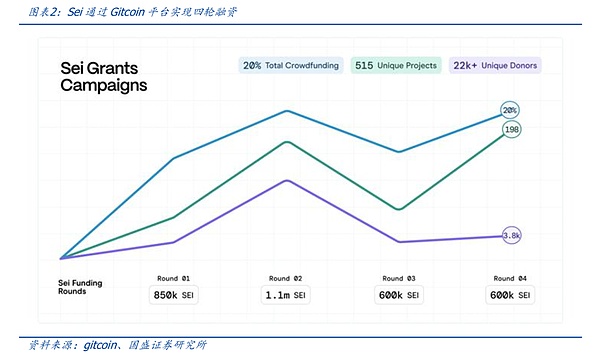
In the implementation of the funding program, projects require not only one-time funding but also different rounds of financing arranged according to different stages of project development. A single round of financing can stimulate the interest of funders, but a coordinated multi-round financing strategy is essential for establishing sustained engagement and attracting long-term builders. By prioritizing financing rounds based on established goals (milestone achievements), projects can attract a continuous stream of funders and co-builders while continuously adapting to changing needs.
Taking the project Sei as an example, Sei’s goal is to combine the development standards of the Ethereum Virtual Machine (EVM) with the performance of Solana, enabling ecosystem applications to flexibly scale between the two public chains. Depending on the different stages of development, Sei’s financing is planned in four rounds, raising a total of 1.3 million USD allocated to various projects within the Sei ecosystem. The TVL (Total Value Locked) of the Sei ecosystem saw significant growth between July and October, more than doubling to over 200 million USD. During this period, the number of active users surged, peaking at around 65,000 per day.
Obviously, GitCoin is an earlier Web3.0 decentralized crowdfunding platform, which mainly solves the personalized financing needs of different stages of the project, and provides a more decentralized and market-oriented way to integrate financing demand and capital supply in a decentralized way. In addition to providing early support for scientific research (projects) in terms of funding, DeSci is also more decentralized in all aspects of project (research) content, creativity and decision-making, rather than just crowdfunding funds. This is a more Web3.0 thinking innovation. At the same time, in terms of openness of development potential, the scientific research supported by DeSci has more potential and wider commercialization potential, and innovation in this area is also a prominent feature.
In the following analysis, we will see that DeSci essentially decentralizes the structure of research project processes.
2.2 DeSci: A Comprehensive Deconstruction of the Research Process
DeSci aims to create an ecosystem that incentivizes scientists to openly share their research and, in turn, receive recognition and rewards, while allowing anyone to easily understand and contribute to the research. This is significantly different from traditional scientific research: the allocation of traditional research funding is often controlled by small, closed centralized groups, which have certain limitations in regulation and efficiency, further impacting the efficiency of research output and the potential for value discovery. Of course, these groups have a high level of influence in processes including the transfer of relevant intellectual property and commercialization, and this influence can sometimes suppress the efficiency of research output. To address these issues, DeSci is attempting to create a more decentralized and transparent scientific research model, obtaining funding, scientific tools, and channels for communication in a decentralized manner, creating an environment where new and non-traditional ideas can thrive. Clearly, under the DeSci model, Web 3.0 users will deconstruct the traditional powers of research funding bodies, regulatory bodies, and even experimental operators, making the entire process from the initiation of scientific experiments to product realization more developmental and possessing different potentials.
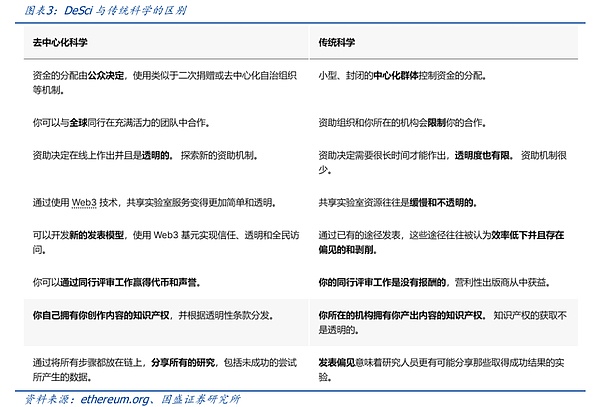
DeSci has become a recent trend, and its representative is the Pumpscience platform. Currently, Pumpscience enables anyone to conduct a longevity experimental study, providing an idea of an intervention (drug, or multiple drugs) to be tested, as well as token incentives based on the Solana platform. Drug developers can raise money for experiments, and others can bet on which intervention will extend the lifespan of the different model organisms being tested. To fund an experiment for a particular intervention, drug developers have launched a token that represents a portion of the rights to a mixture of drugs that can be sold to pay for the experiment. The rights to the interventions developed on the platform can be authorized, and these interventions can be sold by chemical suppliers as supplements or research chemicals. All experimental tests on Pumpscience are (for now) aimed at longevity. The whole process of the project from launch to implementation is decentralized, and the DeSci model is structured at various stages, and at each stage: funding preparation, decision-making, regulation, and market operation are driven by the role of the cryptocurrency market, and it is carried out in a fully developed and decentralized manner.
The specific workflow of Pumpscience includes:
-
The drug developer submits intervention measures for testing and pays X dollars in SOL to cover the experimental costs;
-
Issue tokens on pump.fun and use the raised funds to purchase the first batch of tokens:
-
If the token market value reaches a certain threshold, the token will be automatically sold to fund the new phase of development for the experiment;
-
These interventions were tested on the nematode ( C elegans ) on Ora Biomedical’s Wormbot, and on flies using Tracked Biotechnologies’ FlyBox, with more experiments to be conducted in the future;
-
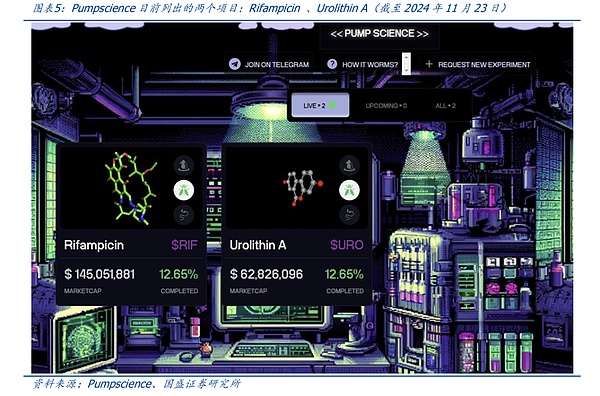
Data is transmitted to users at fixed time intervals, allowing users to assess the effectiveness and value of intervention measures.
-
Chemical suppliers can purchase the rights to intervene from token holders.
At the operational level, Pumpscience’s existing research projects have designed DeSci as a “game” to identify chemicals that prolong human life in the most time-saving and cost-effective way. To generate meaningful, high-quality data quickly and cost-effectively, Pumpscience first tests on shorter-lived and less expensive model organisms, building evidence in simpler organisms before moving on to more complex and cost-effective organisms. Consists of three levels:
-
Worms: First, starting with worms, this is a small nematode about the size of an eyelash. The lifespan of worms in the laboratory is only 20-30 days, so the effects of potential lifespan-extending chemicals can be quickly observed using worms. High-quality drug screening on worms costs approximately $300-500.
-
Fruit Flies: Next, tests will be conducted on fruit flies, which can survive for about 3 months in the laboratory. The cost of cultivating fruit flies is relatively low (around 2-3 thousand dollars per experiment) and they provide more complex biological insights compared to nematodes. Although they do not have a spinal cord, their low cost and rapid life cycle make them an ideal experimental subject.
-
Mice: Promising chemical drugs will subsequently enter the mouse testing phase. The lifespan of mice is about 2-3 years, and the experimental cost ranges from $30,000 to $60,000, depending on the environmental setup. Due to the longer lifespan and higher costs, only the most promising candidate drugs can enter this phase, where more expensive, time-consuming, but more human-relevant data can be collected.
To fund the game, Pumpscience proposed a fundraising protocol based on a cryptocurrency platform. This protocol will allow funds to be raised and allocated for each intervention, ensuring that only the most promising interventions can progress. Through transparent, decentralized funding, donors can directly support the development of chemicals that may extend human life in the future.
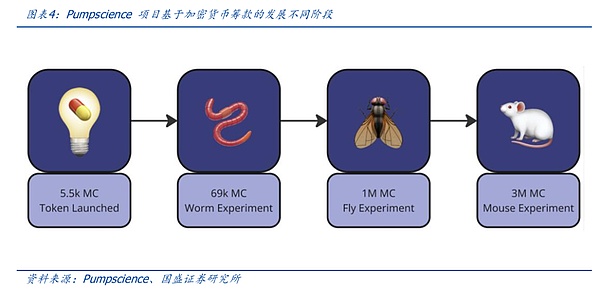
When researchers (developers) submit new interventions, participants purchase tokens linked to their interventions on the platform. This funding at different stages is based on cryptocurrency market capitalization milestones: as the token’s market value grows, tokens will be sold at key milestones to pay for increasingly advanced testing fees:
-
Worm: Sold $500 worth of tokens when the token market value was $70,000;
-
Fly: Sell $2,500 worth of tokens when the token market cap reaches $1,000,000;
-
Mouse: Sell $20,000 worth of tokens when the token reaches a market value of $3 million.
Anyone can submit tests for the corresponding compounds at a price of less than $100 without needing permission. Keeping costs low and removing barriers to entry for potentially valuable products to enter the market will further increase the number of submitted ideas. The more ideas submitted, the more likely those ideas will lead to valuable products that extend healthy lifespans.
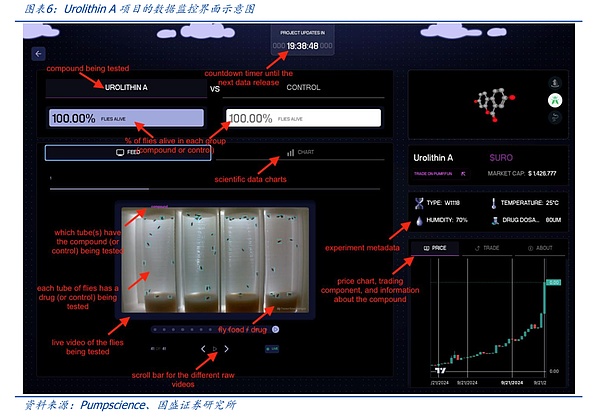
The longevity experiment with flies involves feeding a compound or placebo control to a tube of flies (about 15 flies per tube). The flies that consume the compound are placed in one tube, while those that consume the placebo are placed in another tube. Your goal is to predict whether the compound will allow the flies to live longer than those consuming the control. To make this prediction, you need to monitor the flies, which will be uploaded to Pumpscience as they are recorded. You can view the flies in the test tubes. The flies in each test tube either receive the compound or the control, the latter of which is labeled at the top of the tube.
At the end of the experiment, there will be a final score: Percentage Life Extension (PLE). This indicates how much longer the lifespan of the animals taking the drug is compared to the control group. The goal of the game is to find more compounds that can increase the PLE of all test organisms. Once the experiment is completed, if the market value of the compound tokens reaches the next milestone threshold, then the next experiment will be funded and executed.
Pumpscience’s future development plan is to launch more research testing content, business plans, and even the introduction of AI agents. Currently, there has not been any substantial progress in this area, but the deconstructive force and innovation brought by Web 3.0 are expected to yield more interesting results.
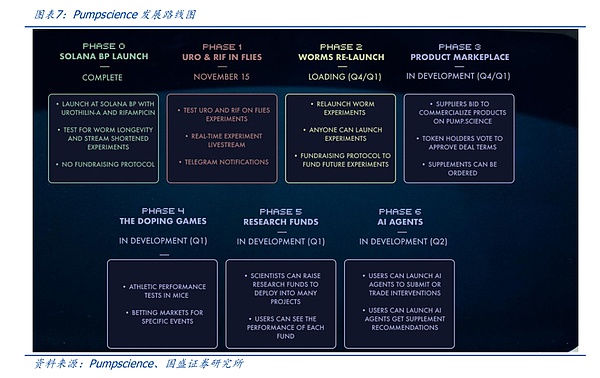
The game above seems to be quite complex and interesting, but the core is the cryptocurrency market as the driving force, utilizing market power in terms of funding (and funding thresholds), creativity, regulation, and decision-making to fully explore the market value of every link and promote rapid development in scientific research. For example, compounds can be formulated into final products at any stage of the research process (if the relevant companies are willing). This is also very imaginative, and we can think openly: in the research experiments of life sciences and even other fields, some intermediate data and products may have certain application markets. For instance, although not the final ideal target chemicals, they may be compounds (catalysts or other intermediate products needed for production) required by other manufacturers. Relevant companies can purchase tokens in the token market, driving up prices as an intervention method, providing a milestone foundation for the potentially effective products in the next phase. They can also buy out the production/sales authorization of relevant products. Although this is not the ultimate goal of the experiment, the market value of the intermediate processes has also been well realized.
It can be said that DeSci has decentralized the structure of the creative/leading, promotion process (as well as decision-making at each stage), and regulation at every step of the industrial transformation. This flywheel model will undoubtedly fully unleash the efficiency and energy of Web 3.0.
!
Risk Warning
Blockchain technology research and development is less than expected: Bitcoin’s underlying blockchain-related technologies and projects are in the early stage of development, and there is a risk that the technology research and development is less than expected.
Uncertainty of regulatory policies: The actual operation of blockchain and Web3.0 projects involves a number of financial, network and other regulatory policies, and the regulatory policies of various countries are still in the research and exploration stage, and there is no mature regulatory model, so the industry is facing the risk of regulatory policy uncertainty.
The implementation of Web3.0 business models is below expectations: The relevant infrastructure and projects related to Web3.0 are in the early stages of development, posing a risk of the business models not being realized as anticipated.
This article is excerpted from the report “DeSci: The New Opportunity for Scientific Research Empowered by Web 3.0,” which was published on November 28, 2024. For more details, please refer to the relevant report.


