Author: W3C DAO
According to Cointelegraph, BlackRock CEO Larry Fink stated that the price of Bitcoin is expected to rise to between $500,000 and $700,000.
“If you are afraid or worried about currency devaluation, then you can view Bitcoin as a huge potential long-term store of value. It’s like digital gold.”
He also stated, “Bitcoin is a ledger, but it is an international ledger that crosses borders. It is more powerful than any country. The emergence of Bitcoin ETFs is an example of us legitimizing this asset class.”
In addition to BlackRock’s head of digital assets, Robert Mitchnick, emphasizing in an interview with CNBC Squawk Box that Bitcoin is not a high-risk asset, but rather a “global, scarce, non-sovereign, decentralized” token.
Mitchnick pointed out that some research and commentary within the industry portrays Bitcoin as a risk asset, leading to self-fulfilling volatility in the market. He believes that the impact of a potential U.S. recession on Bitcoin is exaggerated and could even act as a catalyst for it. Furthermore, he stated that despite macroeconomic uncertainties, Bitcoin has still risen about 15% since last November, and he called 2024 a “historic year,” asserting that Bitcoin’s long-term trend makes it “digital gold.”
BTC loyal fans
Larry Fink, the CEO of BlackRock, the world’s largest asset management company, is a staunch supporter of Bitcoin (BTC).
Although he turned to Bitcoin (BTC) relatively late, he has now become one of the most influential advocates for Bitcoin.

For many years, the U.S. Securities and Exchange Commission has been hesitant to approve a spot Bitcoin ETF, partly due to concerns about market maturity and manipulation issues. (The U.S. has Bitcoin futures ETFs, but a spot ETF would allow investors more direct access to Bitcoin.)
One of Wall Street’s leading financial institutions, BlackRock, has expressed efforts to legalize it and indicated that there may be demand for such products in the market. Subsequently, several other traditional financial institutions, including Fidelity, Franklin Templeton, and VanEck, as well as many cryptocurrency newcomers like Bitwise and Hashdex, have followed suit and started applying to list their own Bitcoin ETFs.

Bitcoin ETFs are important because they allow more institutions to gain exposure to Bitcoin by holding stocks like BlackRock’s iShares or WisdomTree’s BTCW, rather than holding Bitcoin directly. This means that retail and institutional investors can invest in Bitcoin through index funds.
Fink’s perspective
Fink told Fox Business that BlackRock’s clients are showing strong interest in cryptocurrencies, and that BlackRock’s products in this asset class are becoming more “democratized.”
Fink also stated that Bitcoin, as an open, verifiable, and stateless currency, may become an increasingly important financial tool.
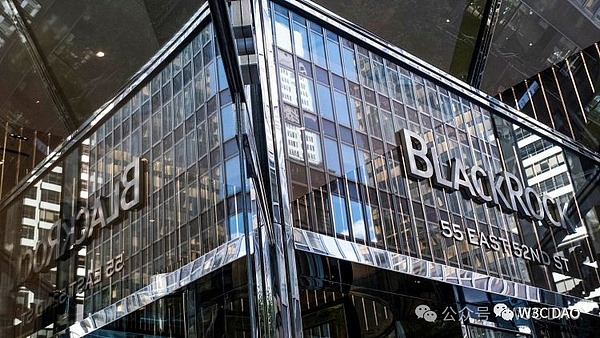
Fink’s transformation is noteworthy, as many in the traditional finance sector are re-evaluating blockchain, particularly the “tokenization” of real-world assets such as stocks and bonds.
Written at the end
The future is digital, and the combination of traditional finance and blockchain is opening a new chapter. Bitcoin is gradually being viewed as a global value storage method and a powerful financial tool. With the gradual legalization of Bitcoin ETFs, a large number of institutional and individual investors will be able to participate in the cryptocurrency market more easily, which not only marks the maturity of Bitcoin but also promotes the popularization of the entire crypto ecosystem.
Larry Fink, the CEO of BlackRock,’s transformation fully illustrates that traditional financial giants are re-evaluating the potential of cryptocurrencies. This shift from concern to support reflects not only market demand but also underscores the undeniable importance of cryptocurrencies in the future financial system.
As the application of blockchain technology continues to expand, the tokenization of real-world assets such as stocks and bonds is becoming possible. Looking ahead, we may see a more open, transparent, and borderless financial world, from which both individuals and institutions can benefit. This is not only a technological innovation but also a deep integration of traditional and modern finance. Let us look forward to this transformation, which will bring broader possibilities to the human economic system.
Disclaimer: The information on this page may come from third parties and does not represent the views or opinions of Gate. The content displayed on this page is for reference only and does not constitute any financial, investment, or legal advice. Gate does not guarantee the accuracy or completeness of the information and shall not be liable for any losses arising from the use of this information. Virtual asset investments carry high risks and are subject to significant price volatility. You may lose all of your invested principal. Please fully understand the relevant risks and make prudent decisions based on your own financial situation and risk tolerance. For details, please refer to
Disclaimer.


