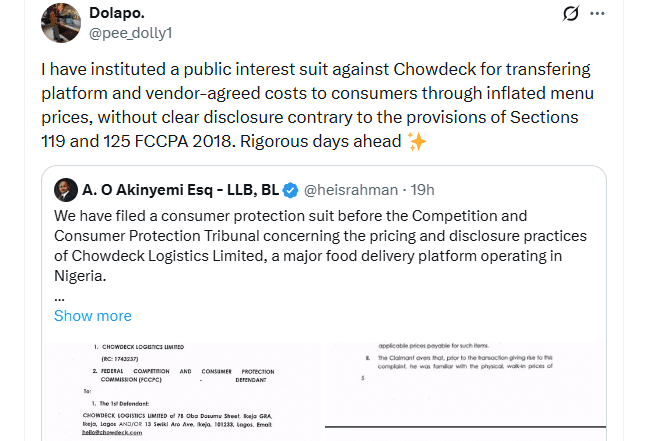
Dolapo Adedeji filed a complaint with Nigeria’s Competition and Consumer Protection Tribunal alleging that food delivery platform Chowdeck embeds platform commission fees into menu prices without disclosing the hidden markups to customers. Adedeji discovered that orders placed through Chowdeck cost 20% to 50% more than purchasing the same items directly from restaurants, despite receiving identical food, portions, and packaging. The lawsuit claims Chowdeck’s pricing practices violate Nigeria’s Federal Competition and Consumer Protection Act by misleading consumers about the true cost of their purchases.
Pricing Discrepancy and Discovery
When Adedeji compared his Chowdeck orders with in-store prices, he found a significant gap between what he paid through the app and what customers pay at restaurant locations. The food quality and portion sizes were identical, yet the app-based transactions cost substantially more. According to Adedeji’s public statement on social media, this discovery prompted him to investigate the platform’s pricing structure and file a formal complaint.
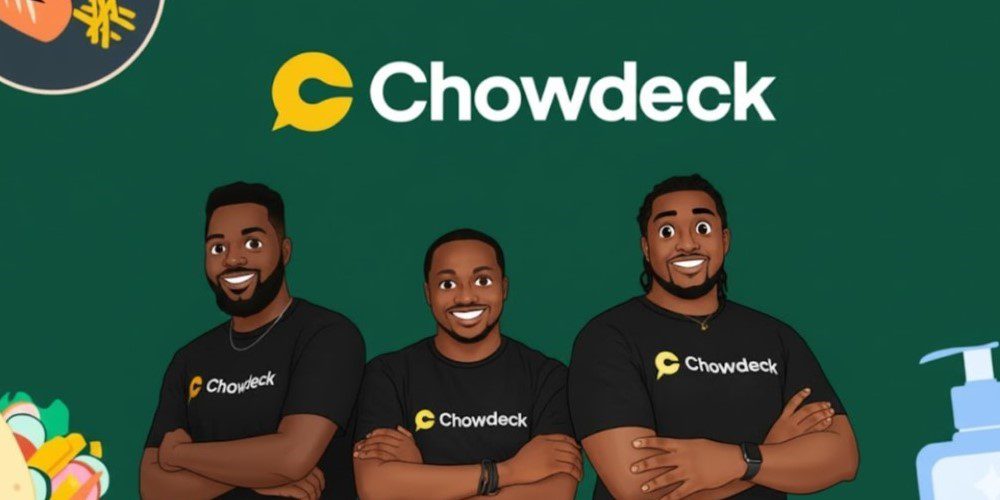
The lawsuit highlights how food delivery apps operate as intermediaries between customers and restaurants, often with pricing structures that are not transparent to end users.
Platform Commission Structure and Hidden Charges
According to Adedeji’s investigation, Chowdeck charges restaurants a commission ranging from 20% to 30%, depending on the vendor’s subscription tier and access to promotional features such as improved search result placement. Rather than absorbing these business costs or disclosing them transparently to customers, Chowdeck allegedly incorporates the commission into the menu prices displayed on the app. The platform then presents delivery fees and service charges as the primary additional costs at checkout, obscuring the fact that menu prices already include embedded platform charges.
This pricing approach creates a misleading impression of the true cost structure, according to the lawsuit.
Legal Allegations and Consumer Protection Violations
Adedeji’s legal team argues that Chowdeck’s pricing model violates the Federal Competition and Consumer Protection Act by failing to disclose the full cost breakdown before customers complete their purchases. The lawsuit raises a fundamental question: should consumers bear the cost of platform-vendor commission agreements without their knowledge or consent? Adedeji’s lawyers contend that the practice of embedding commission charges into menu prices while presenting delivery and service fees as the only additional costs constitutes consumer deception.
The complaint also challenges Chowdeck’s policy of labeling delivery and service fees as “non-refundable,” even when orders are cancelled or fail to arrive. The lawsuit argues this practice violates consumer protection rules designed to prevent unfair contract terms, as customers are charged fees for services they did not receive.
Potential Remedies and Lawsuit Demands
If the tribunal rules in favor of Adedeji, Chowdeck will be required to restructure its pricing display and transparency practices. The lawsuit requests that the platform clearly indicate when menu prices on the app differ from in-store rates and display any additional markups before customers select items for purchase. It also calls for Chowdeck to cease presenting delivery fees as the primary additional cost when menu prices already incorporate hidden platform charges.
The complaint seeks to establish that pricing transparency is a consumer right, not a discretionary business practice. Adedeji’s legal team framed the case as a public interest matter, stating that consumer rights become enforceable only when individuals actively assert them.
Industry-Wide Implications and Precedent
Beyond Chowdeck, this lawsuit could establish a precedent affecting the entire Nigerian food delivery sector. Competing platforms such as Jumia Food and Glovo operate under similar commission-based business models, and a tribunal ruling in Adedeji’s favor could compel the industry to reconsider pricing transparency standards.

A ruling that requires platforms to disclose embedded markups could reshape how food delivery apps structure their pricing and communicate costs to customers across Nigeria.
Chowdeck has not yet responded to the allegations. The matter is now before the Competition and Consumer Protection Tribunal, which will determine whether the platform’s pricing practices comply with consumer protection law.
Frequently Asked Questions
Q: What specific pricing practice is Chowdeck accused of in this lawsuit?
Chowdeck is accused of embedding its platform commission (20–30% of order value) into restaurant menu prices without disclosing this markup to customers, then presenting delivery and service fees as the only additional charges. This allegedly makes the true cost of orders unclear to consumers.
Q: What could happen if the tribunal rules in favor of Adedeji?
If Adedeji wins, Chowdeck would be required to clearly display that menu prices differ from in-store rates, show any platform markups before checkout, and stop presenting delivery fees as the primary additional cost. This ruling could also set a precedent for the entire Nigerian food delivery industry, including competitors like Jumia Food and Glovo.
Q: Is this lawsuit unique to Chowdeck, or could it affect other food delivery platforms?
While this case specifically targets Chowdeck, the lawsuit’s outcome could establish legal precedent for the entire sector, as other major food delivery platforms in Nigeria operate under similar commission-based business models.
Disclaimer: The information on this page may come from third parties and does not represent the views or opinions of Gate. The content displayed on this page is for reference only and does not constitute any financial, investment, or legal advice. Gate does not guarantee the accuracy or completeness of the information and shall not be liable for any losses arising from the use of this information. Virtual asset investments carry high risks and are subject to significant price volatility. You may lose all of your invested principal. Please fully understand the relevant risks and make prudent decisions based on your own financial situation and risk tolerance. For details, please refer to
Disclaimer.


