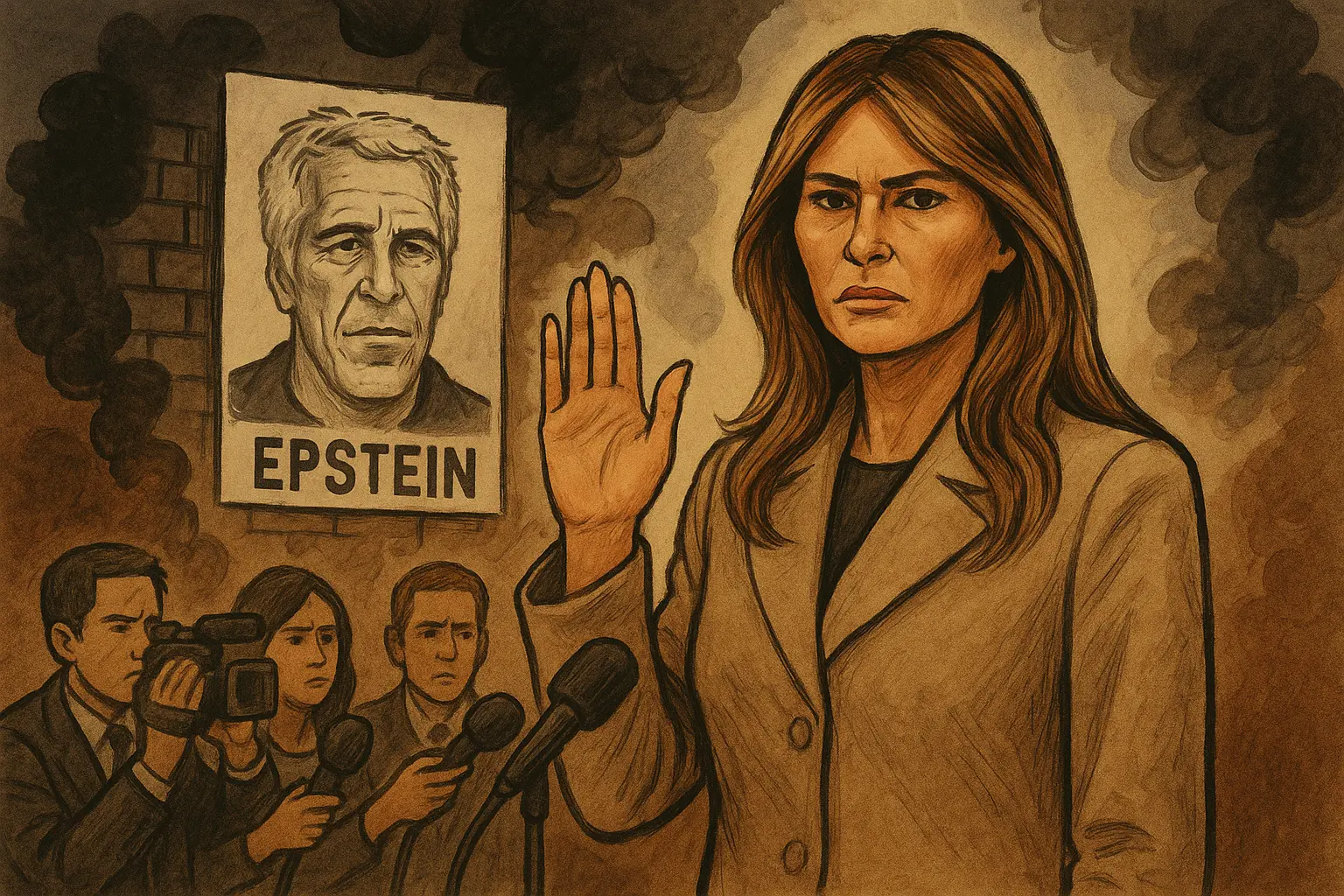
U.S. First Lady Melania Trump (Melania Trump) made a rare public statement on April 9 at the White House regarding Jeffrey Epstein, denying any private connection with Epstein or Ghislaine Maxwell. However, shortly after Melania’s statement was issued, Trump told reporters that he “knew nothing” about his wife’s statement.
Melania’s Statement: Three Clear Denials
Melania’s public remarks at the White House directly addressed multiple allegations about her relationship with Epstein.
She clearly said, “I have never had any relationship with Jeffrey Epstein. He did not introduce me to my husband.” She also denied an alleged email sent to Maxwell in 2002, calling it “ordinary correspondence,” and described the related allegations still circulating as “false and highly damaging.”
Melania also urged Congress to focus on the victims in the Epstein case, saying, “Innocent people should not be harmed by lies.” This was one of the rare occasions in her public career when she proactively stepped into a political controversy, and the timing of the statement therefore sparked widespread political interpretations.
Pressure Over Epstein Documents: Why Now in Particular?
Melania’s decision to speak up at this time cannot be analyzed in isolation from the following recent developments:
Attorney General Bondy Fired: A few days before Trump’s statement this week, Bondy was removed from his position as attorney general over criticism of how he handled Epstein-related documents.
U.S. Department of Justice Refuses Congressional Subpoenas: Earlier this week, the Justice Department confirmed that Bondy would not comply with congressional subpoenas related to the leaking of Epstein documents.
Congress Keeps Pressing: Lawmakers continued to question whether key information was being withheld, and allegations tied to previously undisclosed Federal Bureau of Investigation (FBI) interview records further intensified the pressure.
Doubts Remain About the Authenticity of the Documents: U.S. officials warned that some claims in the related documents had not yet been formally verified, but this warning did not fully quell public doubts about information transparency.
Against the backdrop of these pressures occurring in parallel, Melania’s White House statement was interpreted by multiple analysts as an active response to escalating political risks, rather than a routine denial.
Trump “Unaware”: A Response That Raises Even More Questions
The biggest controversy sparked by Melania’s statement was not the content of the statement itself, but Trump’s subsequent reaction. Shortly after Melania publicly denied the allegations, Trump, when answering reporters’ questions, said that he was “unaware of” the statement his wife had made.
This response has prompted widespread discussion in political analysis circles: if the first lady issued a statement in the White House on a highly sensitive political issue, while the president himself claimed to be unaware, both possibilities are equally thought-provoking—either a breakdown in internal White House communication, or a consciously managed strategy of maintaining distance. As of the time of publication, the White House has not provided further explanation for this contradiction.
Frequently Asked Questions
Why did Melania choose to issue a statement about the Epstein matter at this time?
The timing of the statement closely coincided with a simultaneous surge in multiple political pressures: Congressional review of Epstein-related documents, Bondy being removed as the former attorney general, and the Justice Department’s refusal to honor congressional subpoenas—all occurring in a concentrated period. As a result, the political heat surrounding the Epstein case rose noticeably in the days leading up to the statement’s issuance. Many observers believe this statement was the White House’s active response to external pressure.
What specific allegations did Melania deny in her statement?
In her statement, Melania denied three core claims: that she had a personal relationship with Epstein, that Epstein introduced her to meeting Trump, and any connection implied by an email allegedly sent to Maxwell in 2002. She characterized the related allegations as “false and highly damaging.”
What does Trump’s claim that he was “unaware” of Melania’s statement mean?
Trump’s remarks have led to multiple interpretations at the political level, including possible issues with communication and coordination within the White House, or a strategy of deliberately keeping distance from the first lady’s statement. At present, the White House has not provided an official explanation for the apparent disagreement between the two on this matter.
Disclaimer: The information on this page may come from third parties and does not represent the views or opinions of Gate. The content displayed on this page is for reference only and does not constitute any financial, investment, or legal advice. Gate does not guarantee the accuracy or completeness of the information and shall not be liable for any losses arising from the use of this information. Virtual asset investments carry high risks and are subject to significant price volatility. You may lose all of your invested principal. Please fully understand the relevant risks and make prudent decisions based on your own financial situation and risk tolerance. For details, please refer to
Disclaimer.


