
Meta is doubling down on AI, and Zuckerberg is personally using Claude Code to write programs. To hit KPIs, an internal token consumption frenzy has emerged that wastes resources. Learning the lesson from the Metaverse’s $80 billion loss, Meta is actively acquiring startups, hoping to turn the technology into real value.
Meta is doubling down on AI: Zuckerberg is using Claude Code to write code
Meta, the tech giant that owns social media platforms like Facebook, Instagram, and Threads, has recently been putting the company’s resources fully into the generative AI space.
Meta CEO Mark Zuckerberg has begun using AI coding tools—Claude Code—to write code himself, breaking a record of years in which he did not participate in direct development.
Foreign media also reported that Meta’s internal team has recently sparked a token-consuming competition, where many engineers burn through large amounts of tokens to boost their personal performance metrics (KPIs).
AI coding is all the rage, as founders return to the front lines of development
In March 2026, Zuckerberg submitted three code diffs to Meta’s single repository—his first substantial code contribution in 20 years.
Zuckerberg uses Claude Code CLI, a terminal-based coding assistant developed by Anthropic. In one of his submissions, it received approvals from more than 200 engineers.
His actions reflect how AI coding tools are attracting business founders to re-enter systems development. Y Combinator CEO Garry Tan has also returned to code writing work after 15 years, and open-sourced a system that combines Claude Code.
According to leaked internal documents from Meta in March 2026, the company has set ambitious goals, planning that by the middle of 2026, 65% of engineers will use AI to write 75% or more of their code.
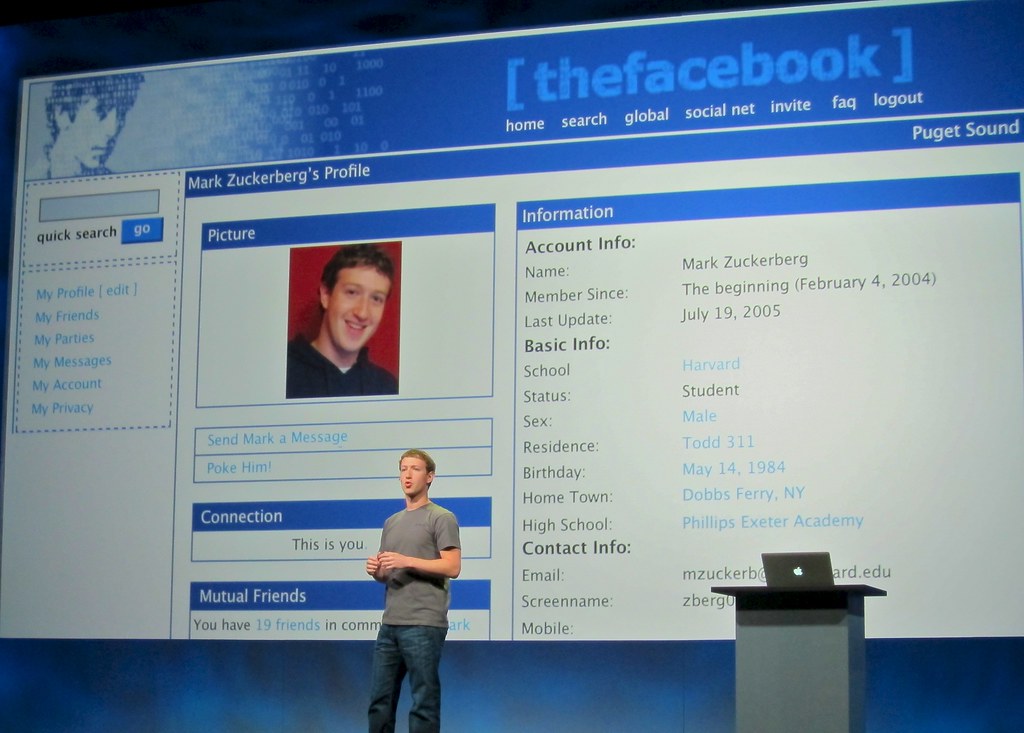
Image source: flickr, photo by Niall KennedyMeta founder Zuckerberg speaking at the Facebook F8 developer conference in September 2011
Meta’s internal token consumption contest turns KPIs into a performance
To drive the adoption of generative AI applications, Meta has spawned a phenomenon internally that links token usage to productivity. Tokens are the smallest units that large language models process text; in Chinese they are often called “character units” or “tokens.”
《The Information》 reports that Meta’s internal team has created a leaderboard called Claudeonomics, tracking the artificial intelligence token consumption of more than 85k employees. The data shows that employees consumed as many as 60 trillion tokens in just 30 days—topping the leaderboard. The average user at the top consumed 281 billion tokens.
The leaderboard sets up titles like Token Legend to encourage employees to integrate AI tools into their day-to-day work.
A report by Forbes says that Meta’s Chief Technology Officer Andrew Bosworth previously mentioned that a top engineer’s token consumption equals the amount of tokens worth his annual salary. NVIDIA CEO Jensen Huang has also said that if a $500k-a-year engineer cannot consume tokens valued at $250k, he would be concerned.
However, this KPI system that drives excessive token consumption also brings downsides. Some Meta employees, in order to boost performance figures, leave AI agent programs running idle for hours, causing a waste of compute resources.
In addition, treating employees’ token consumption directly as a productivity metric turns the consumption behavior into a performance, creating a challenge for performance reviews that lack support from tangible business outcomes.
Learning from the Metaverse failures, Meta’s next challenge in the AI race
Before making heavy investments in AI, Meta’s metaverse bet ended in failure. The company previously spent about $8 billion building the virtual world Horizon Worlds and VR/MR equipment, and even changed the company name to “Meta,” yet ultimately failed to reach the user scale the market expected.
Lily Liu, president of the Solana Foundation, also expressed a pessimistic view in the comments section on a social platform when discussing the development of blockchain games and the metaverse, criticizing virtual economy models that lacked substantive content support in the past.

Image source: Meta Meta metaverse platform Horizon Worlds—Zuckerberg’s virtual avatar shown in the initial version
Now that Meta is shifting its focus to AI, it is actively positioning itself in the market. In addition to launching its own large language model LLaMA, it is also gradually rolling out an AI model plan called “Avocado.”
A recent report by《Axios》also revealed that Meta has acquired Moltbook, a community agent dubbed the “AI version of Reddit.” Moltbook founders Matt Schlicht and Ben Parr will join Meta’s team.
- Related report:****“The lobster community was bought!”—Report: Meta acquires Moltbook; founders successfully transition from media to AI
The outside world is still watching to see whether Meta can avoid repeating the Metaverse’s mistakes of over-investing but lacking real applications, and whether it can turn the current internal token consumption frenzy and acquisition deals of startups like Moltbook into actual products with commercial value—so it can establish a foothold in the highly competitive generative AI market.
Disclaimer: The information on this page may come from third parties and does not represent the views or opinions of Gate. The content displayed on this page is for reference only and does not constitute any financial, investment, or legal advice. Gate does not guarantee the accuracy or completeness of the information and shall not be liable for any losses arising from the use of this information. Virtual asset investments carry high risks and are subject to significant price volatility. You may lose all of your invested principal. Please fully understand the relevant risks and make prudent decisions based on your own financial situation and risk tolerance. For details, please refer to
Disclaimer.


