
Pi Network recently launched a token distribution trial on the Pi Launchpad testnet, using a system architecture called “12 Grid” to complete full end-to-end token distribution verification with irrational test tokens (IRRA). More than 300k independent Pioneers participated in this test, with a total of 24 million Test-Pi tokens staked, conducting large-scale stress testing on new distribution infrastructure.
12 Grid System: Breakdown of the End-to-End Token Distribution Architecture
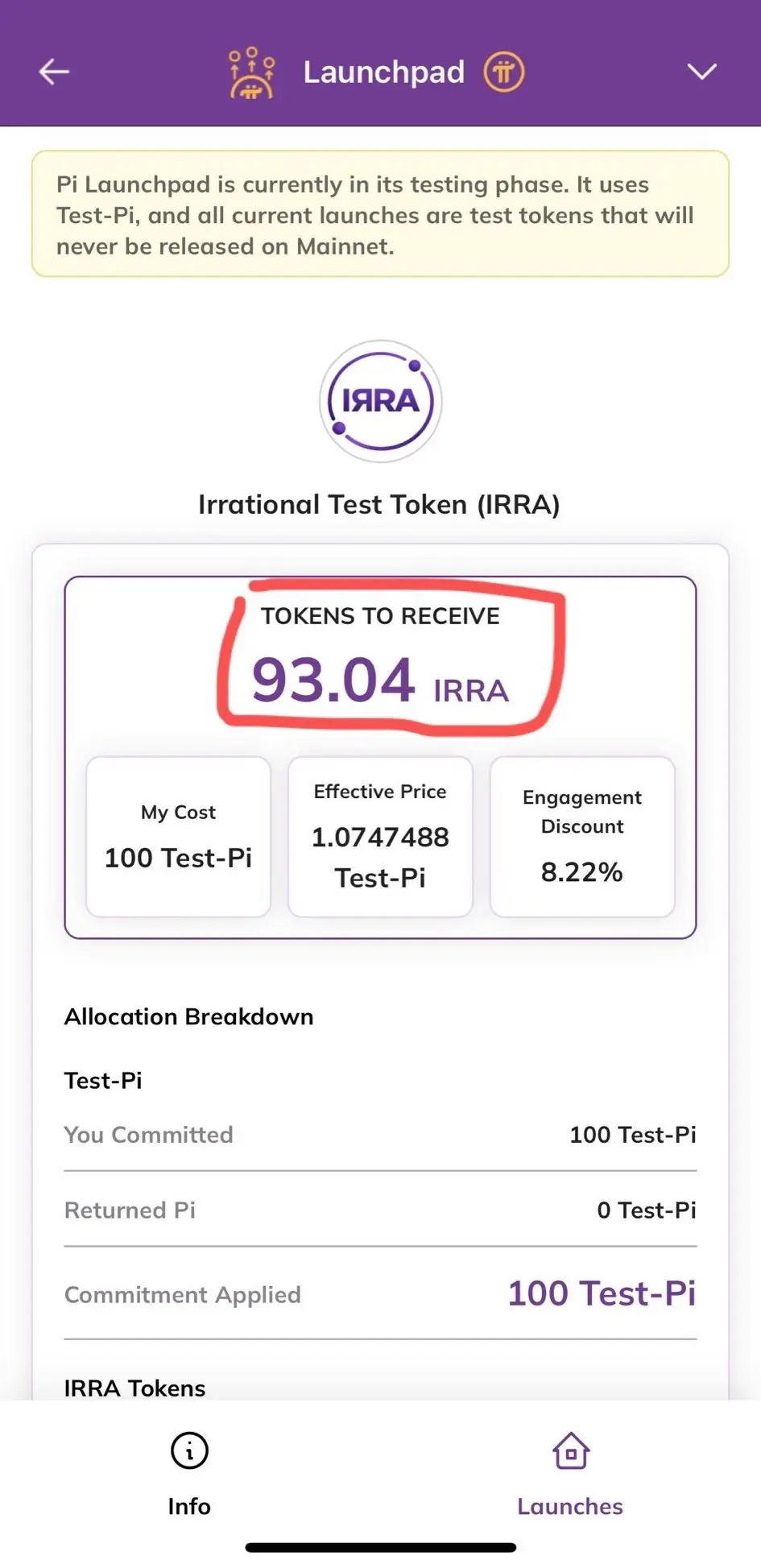 (Source: Pi Launchpad)
“12 Grid” is the core token distribution framework of Pi Launchpad, and its operating logic is relatively straightforward: users subscribe to projects using the test version of Pi tokens, the system calculates token allocation ratios based on the amount staked, and finally sends the tokens directly to the user’s wallet.
Test data shows that about 93 IRRA test tokens were successfully sent to a single wallet, and all transactions are visible on the blockchain and can be independently verified. This means Pi Launchpad has fully validated the entire process from subscription to token distribution to account credit, rather than stopping at the concept level. The system also includes a locking mechanism—users who stake Pi must wait about 30 days before redeeming, which matches the common lock-up arrangements in the issuance of crypto tokens.
Test Scale and Three Key Results
This stress test scale exceeds the typical level of most testnets, and three core indicators are worth paying attention to:
300k+ Independent Pioneers Participating: demonstrates a real user scale, not a simulated test by a single organization
24 million Test-Pi Tokens Staked: reflects the Pi community’s high level of interest in new features and willingness to participate
Full End-to-End Verification: subscription, distribution calculation, and wallet-to-account credit all operate as expected—completing full validation of the entire token distribution cycle
Pi Network states that the system is still running on the testnet and has not been deployed to the mainnet yet, but this test has validated the feasibility of the underlying logic—Pi Launchpad is an operable model, not a theoretical design.
Upcoming Upgrade Roadmap: PiRC1 and Protocol 23
The test launch of Pi Launchpad is part of Pi Network’s broader upgrade roadmap:
Protocol 21.2 (completed on April 6): enforces hard-fork node upgrades to improve network stability and prepare the way for decentralized exchange (DEX) infrastructure.
PiRC1 Framework (planned to go live on April 22): introduces token rules with practicality prioritized, establishing a standard framework for compliant token issuance within the ecosystem.
Protocol 23 (planned to go live on May 18): introduces full smart contract support, a key milestone as Pi Network shifts to supporting developers building real-world applications.
Community reactions remain polarized—some Pioneers have raised concerns about the KYC process and the timeline for mainnet migration, but most users believe this Pi Launchpad test provides tangible grounds for the project to keep moving forward.
Frequently Asked Questions
How does Pi Launchpad’s “12 Grid” token distribution system work?
After users subscribe to a project with Test-Pi, the system calculates token allocation based on the staked amount and sends tokens directly to the user’s wallet. The staking lock-up period is about 30 days, and all transactions can be publicly verified on-chain. About 93 IRRA test tokens have been successfully credited and validated in this test.
How large was the Pi Launchpad test?
More than 300k independent Pioneers participated, with a total of 24 million Test-Pi tokens staked, fully validating the end-to-end process across three stages: subscription, distribution calculation, and wallet-to-account credit.
When will Pi Launchpad transfer from the testnet to the mainnet?
A specific mainnet deployment timeline has not been announced yet. According to the official roadmap, the PiRC1 token framework is planned to launch on April 22, and Protocol 23 smart contract support is planned to be released on May 18. These two upgrades are important prerequisite conditions for Pi Launchpad’s official commercial use.
Disclaimer: The information on this page may come from third parties and does not represent the views or opinions of Gate. The content displayed on this page is for reference only and does not constitute any financial, investment, or legal advice. Gate does not guarantee the accuracy or completeness of the information and shall not be liable for any losses arising from the use of this information. Virtual asset investments carry high risks and are subject to significant price volatility. You may lose all of your invested principal. Please fully understand the relevant risks and make prudent decisions based on your own financial situation and risk tolerance. For details, please refer to
Disclaimer.


