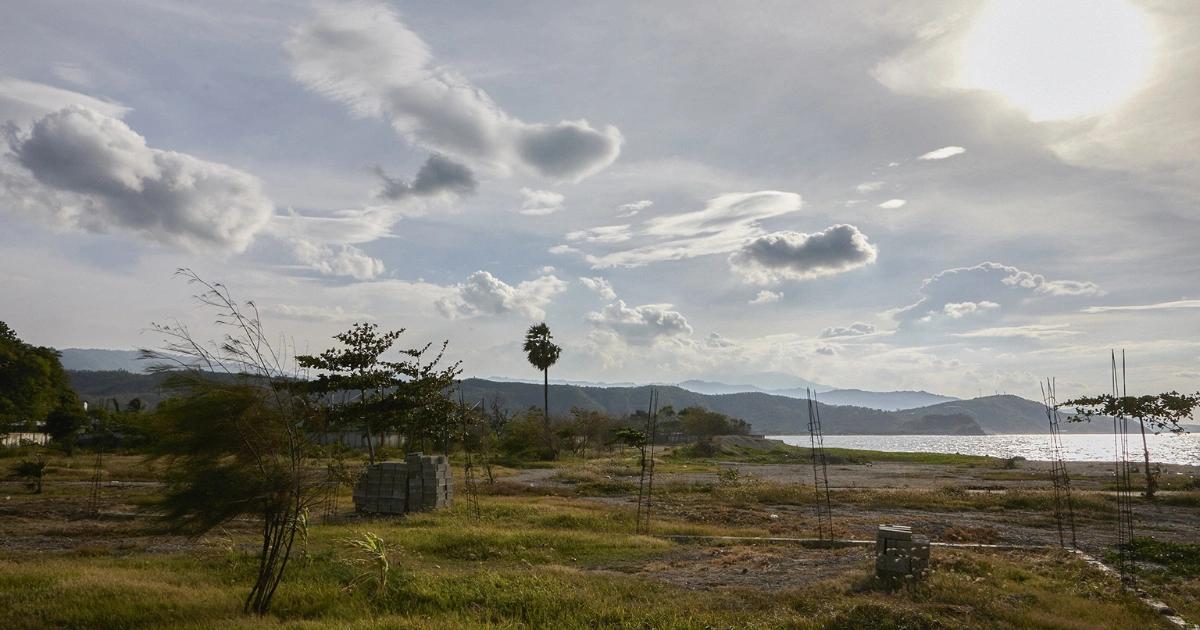
Timor-Leste crypto resort allegedly linked to a Cambodian Prince Group scam network; a stark contrast between lavish promotions and an empty plot on-site has raised concerns about transnational crime.
A joint investigation by The Guardian and the Organized Crime and Corruption Reporting Project (OCCRP), spanning four months, has revealed that in Timor-Leste, one of the world’s poorest countries, a development project branded as the “world’s first cryptocurrency resort” is suspected to be connected to a scam network run by the Cambodian Prince Group (Prince Group), which has been sanctioned by the United States. In February this year, investigative reporters went to visit the construction plot near Dili airport in person, only to find a vacant lot overgrown with weeds.
A gap between promotion and reality: the luxury crypto resort is left with an empty plot
AB Digital Technology Resort’s promotional materials tout luxury villas, a sea view, and a “global tech elite exchange venue,” and claim that part of the proceeds will be used for charity. However, when reporters went to the coastal plot shown in the promotional photos, they found that the fenced-off land contained nothing at all—only scattered shrubs.
This plan is at the heart of the investigation. Investigators found that three individuals involved in the resort project have alleged ties to the Prince Group (Prince Group), which is subject to U.S. sanctions; during the investigation, these three people have been removed from the project.
Prince Group: “pig-butchering” scams, human trafficking, and seized bitcoin
The Prince Group (Prince Group) is a multinational corporate conglomerate. It claims to operate in real estate and financial services, but last October the U.S. Department of the Treasury imposed sanctions on it, accusing it of running large-scale online fraud operations in Southeast Asia, relying on human trafficking and modern slavery to keep the operation running. Victims are found around the world. Founder Chen Zhi (Chen Zhi) was sued by the U.S. authorities for conspiracy to commit wire fraud and conspiracy to commit money laundering, and billions of dollars’ worth of bitcoin were seized.
Earlier this January, Chen Zhi was extradited from Cambodia to China, with widely circulated footage showing him stepping off the plane under escort by officers in black uniforms. China has not yet disclosed the specific charges against him.
The main scam methods alleged against the Prince Group (Prince Group) are “pig-butchering” scams (Cantonese also known as “killing pig rackets”): fraudsters establish relationships with victims using fake identities on social media or messaging apps—sometimes for months—before inducing them to put money into bogus cryptocurrency or investment platforms. After victims see the fabricated profit figures, they often continue to add investments until the funds are siphoned off and the scammers disappear.
Timor-Leste government: “the most dangerous crossroads”
The investigation also uncovered multiple troubling details: a foreigner involved in the resort project held a Timor-Leste diplomatic passport; some former heads of state who had originally supported the project denied—after being contacted—making the remarks quoted in the promotional materials, and even denied knowing about the project. After the investigation reporters contacted key figures, related content on AB’s official website was taken down one after another.
The United Nations issued warnings last year about the risks of scam networks infiltrating Timor-Leste. A Timor-Leste government official told The Guardian that this small country, only about 700 kilometers from Australia’s mainland, is facing the “most dangerous crossroads since independence,” with a risk of becoming a “playground for transnational criminal groups.” Timor-Leste’s president also told the media that whether this resort is “a real resort or just talk” remains a question.
The resort company’s shareholders said that the development plan will continue to move forward.
- This article is republished with authorization from: 《Chain News》
- Original title: 《Timor-Leste “crypto resort” project allegedly linked to the sanctioned scam group Prince Group; the on-site construction plot turns out to be empty》
- Original author: Elponcrab
Disclaimer: The information on this page may come from third parties and does not represent the views or opinions of Gate. The content displayed on this page is for reference only and does not constitute any financial, investment, or legal advice. Gate does not guarantee the accuracy or completeness of the information and shall not be liable for any losses arising from the use of this information. Virtual asset investments carry high risks and are subject to significant price volatility. You may lose all of your invested principal. Please fully understand the relevant risks and make prudent decisions based on your own financial situation and risk tolerance. For details, please refer to
Disclaimer.


