
On April 1, Bonk.fun, a Solana meme token launch platform, published an April Fools’ Day satirical post disguised as if it were an official, compliance-focused announcement. Using the name of a new system called the “Trench Guardian,” it shows a geographic-logging screenshot featuring the flag of Israel, implying that Israeli users would be banned from trading on the platform. This post touches on the core promise of the crypto industry’s “permissionless” principle.
The Design of the Prank: How a Fake Compliance Announcement Becomes Political Satire
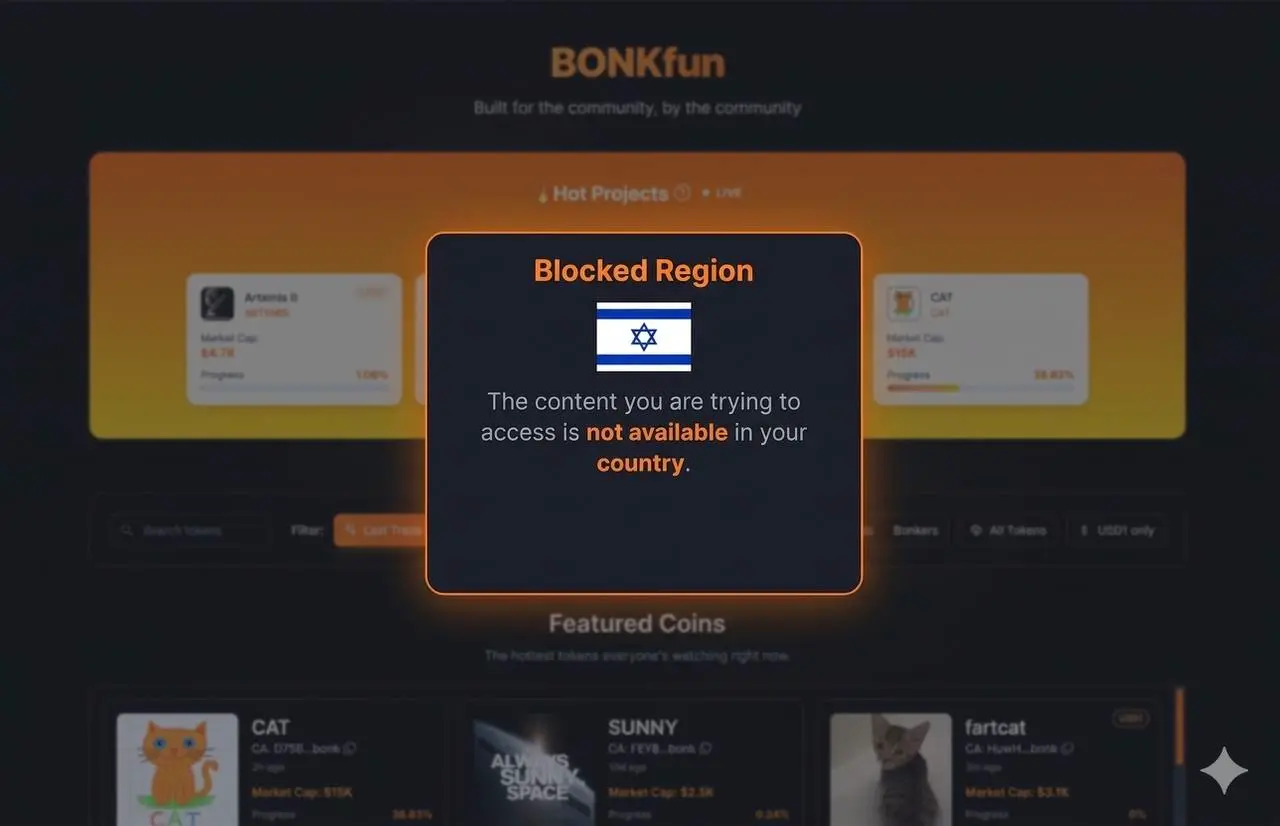
In form, this post precisely imitates the typical official feature update announcements commonly seen on crypto platforms. It uses standard feature-release wording and screenshot formatting, making it almost indistinguishable from real notifications about geographic restrictions. The satire’s key twist is choosing Israel—not the usual targets of sanctions (such as Iran, Russia, or North Korea).
The logic behind geographic restrictions on crypto platforms typically rests on two standards: legal compliance requirements (such as OFAC sanctions lists) and operational risk assessments, with clear legal grounding behind them. Bonk.fun’s prank introduces an unsettling hypothesis: if a platform’s definition of “bad actors” stops being based on regulations and instead is based on public opinion or geopolitical stances, where would this “compliance” logic end up?
At first, the crypto community generally believed it was just an April Fools’ joke, but the post’s ambiguity quickly evolved into a layered, controversial text.
Breaking Down the Satirical Logic: Why Israel Was Chosen as the Punch Line
In terms of selection, Bonk.fun expertly borrowed the network sentiment shaped by the current geopolitical situation. Israel is embroiled in multiple lines of conflict, and in a large volume of online discussions it plays a highly polarizing role. “Banning Israel,” in a satirical context, can generate immediate resonance. The satirical logic of this post can be broken down into the following layers:
Reversing the sanctions narrative: Sanctions are usually driven by processes led by democratic countries, placing Israel in the role of the party being blocked, overturning the customary geopolitical narrative pattern
Amplifying crypto contradictions: Using a highly controversial example, it exaggerates and presents the real state of crypto platforms’ “selective openness”
Triggering backlash on both sides: Community members who support Israel feel offended; crypto ideological purists become angry at the geographic-restriction logic itself
Ultimately, the post turns into a multi-meaning text. Readers from different backgrounds interpret sharply different political messages from it, which is also the fundamental reason the controversy spreads.
Deeper Criticism: The Structural Challenges of the Crypto “Permissionless” Promise
No matter how the political aspects are interpreted, the question raised by Bonk.fun’s post has real industry significance: the crypto industry has long touted “permissionless, borderless, open access” as core values, but in reality, nearly all major centralized exchanges and an increasing number of DeFi platforms have already implemented varying degrees of access restrictions for users based on geography or regulatory requirements.
Bonk.fun’s satire uses a politically charged extreme example to push this contradiction to the highest level of visibility: if blocking users based on sanctions regulations is acceptable today, then who defines the boundaries of geographic restrictions, and according to what standards—this question is increasingly becoming impossible to avoid during the crypto industry’s compliance process.
Frequently Asked Questions
Did Bonk.fun’s April Fools’ post really announce that it would block Israeli users?
No. This is an April Fools’ satire that imitates the format of an official compliance announcement. It uses the name of the new “Trench Guardian” system to display a geographic-restriction screenshot next to the flag of Israel, but it is not a real feature update. Bonk.fun’s purpose in publishing this post is political satire, not an actual announcement of any access restriction measures.
Why did this April Fools’ joke trigger such intense controversy?
The controversy stems from multiple angles. Some people believe that, amid ongoing political sensitivities surrounding conflicts involving Israel, Gaza, Lebanon, and Iran, using Israel as the punch line constitutes improper political manipulation. Others believe the post is satirizing the crypto industry’s “fake permissionless” approach, with Israel only serving as a tool to magnify the contradiction. The post’s multi-meaning nature allows readers with different stances to extract sharply different political messages from it, resulting in widespread controversy.
How are geographic restrictions on crypto platforms formed?
Geographic restrictions on mainstream crypto platforms are generally based on two grounds: first, legal compliance—following international regulatory frameworks such as the OFAC sanctions lists and recommendations from the Financial Action Task Force (FATF); second, a self-directed assessment of operational risk. The core issue Bonk.fun’s satire points to is this: when the space for “discretion” expands, geographic restrictions may evolve from tools of legal compliance into selective access controls with political leanings.
Disclaimer: The information on this page may come from third parties and does not represent the views or opinions of Gate. The content displayed on this page is for reference only and does not constitute any financial, investment, or legal advice. Gate does not guarantee the accuracy or completeness of the information and shall not be liable for any losses arising from the use of this information. Virtual asset investments carry high risks and are subject to significant price volatility. You may lose all of your invested principal. Please fully understand the relevant risks and make prudent decisions based on your own financial situation and risk tolerance. For details, please refer to
Disclaimer.


