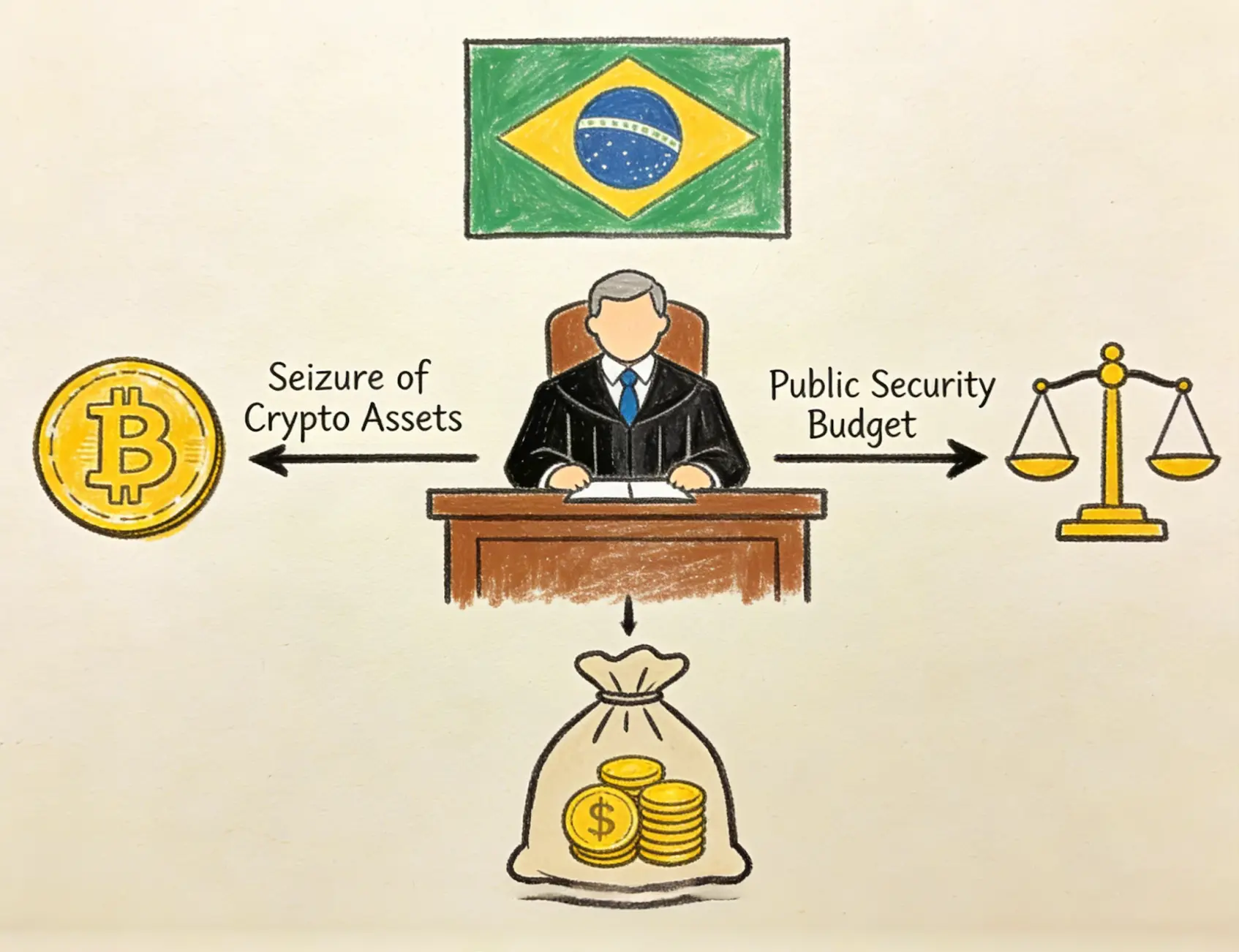
 Brazilian President Luiz Inácio Lula da Silva signed Law No. 15.358, known as the “Anti-Gang Law,” on March 24, 2026, authorizing authorities to seize, block, and freeze digital assets—including cryptocurrencies—as part of efforts to combat organized crime, with proceeds from liquidated assets directed to public security funds.
The law expands the state’s ability to reach the highest levels of criminal organizations by incorporating mechanisms for “financial, logistical, and material strangulation,” according to Justice Minister Wellington Lima. Judges may also authorize the early sale of seized assets, with funds flowing to public security initiatives, including police operations, intelligence work, and officer training.
The legislation was sent to Congress in November 2025, following a broader government crackdown on illegal Bitcoin mining operations and proposals to curb illicit stablecoin use.
Key Provisions of the Anti-Gang Law
Asset Seizure and Custody
The law allows judges to order precautionary measures including “seizure, attachment, blocking or freezing of movable and immovable property, rights and assets, including digital or virtual assets” when sufficient evidence of a serious crime exists. Custody of seized assets falls to public authorities, except where a judge determines that “the material impossibility or technical inadequacy of custody by the public authorities is demonstrated.” Proceeds from liquidated assets are directed to public security funds.
Enhanced Penalties and Tools
The law targets ultraviolent criminal organizations, paramilitary groups, and private militias, broadening the definition of crimes and significantly increasing penalties for acts such as controlling territories, obstructing police, or using encrypted messaging apps and privacy tools to conceal illicit activity. Authorities can suspend access to exchanges, digital wallets, and online platforms during investigations, with permanent restrictions applied upon conviction. The legislation also facilitates international cooperation for asset recovery and intelligence sharing, aiming to track and recover illicit proceeds across borders.
Civil Measures and Database
The law strengthens civil measures, allowing courts to seize property, block funds, and liquidate assets connected to criminal activity. It establishes a national criminal database that integrates the financial structures of known criminal groups, improving coordination between police, prosecutors, and the judiciary.
Background and Related Developments
Crackdown on Crypto Crime
The Anti-Gang Law follows a series of government actions against crypto-related crime. In September 2025, Brazilian authorities clamped down on an illegal Bitcoin mining operation. The law was sent to Congress in November 2025 as the government and central bank introduced proposals to crack down on organized crime and illegal use of Bitcoin and stablecoins.
Custody Challenges in Other Jurisdictions
The law’s custody provisions come amid documented difficulties in other jurisdictions. In South Korea, law enforcement lost access to $1.4 million in Bitcoin after failing to adhere to crypto custody guidelines. Later, representatives for the National Tax Service posted photos of seed phrases, allowing an unknown individual to grab $4.8 million in crypto tokens before ultimately returning them.
Bitcoin Reserve Proposal
RESBit Reintroduced
In February 2026, Brazilian lawmakers reintroduced a bill proposing the creation of a Strategic Sovereign Bitcoin Reserve (RESBit) to gradually acquire one million bitcoins over five years. The bill, presented by Federal Deputy Luiz Gastão, outlines a framework to integrate Bitcoin into the country’s financial strategy and diversify national reserves.
Key Provisions
The legislation would prohibit selling bitcoins seized by judicial authorities, allow federal taxes to be collected in Bitcoin, and encourage public companies to participate in Bitcoin mining and storage. RESBit would require public disclosure of holdings and use of cold wallets, multisignature wallets, and other recognized storage methods. If approved, Brazil would join a small group of countries holding national Bitcoin reserves, following examples such as El Salvador and proposals in the United States.
Frequently Asked Questions
What does Brazil’s Anti-Gang Law allow authorities to do with crypto assets?
The law authorizes judges to order seizure, blocking, or freezing of digital assets—including cryptocurrencies—during investigations of serious crimes. With judicial approval, authorities may also authorize the early sale of seized assets, with proceeds directed to public security funds for police operations, intelligence work, and officer training.
How does the law address custody of seized crypto?
Custody of seized assets falls to public authorities unless a judge determines that public custody is materially impossible or technically inadequate. The provision reflects lessons from other jurisdictions where law enforcement agencies have struggled to maintain proper custody of seized crypto assets.
What is the Strategic Sovereign Bitcoin Reserve (RESBit) proposal?
RESBit is a separate legislative proposal reintroduced in February 2026 that would create a national Bitcoin reserve, gradually acquiring one million bitcoins over five years. The bill would prohibit sale of seized bitcoins, allow federal taxes to be collected in Bitcoin, and encourage public companies to participate in mining and storage, using cold wallets and multisignature wallets for security.
Disclaimer: The information on this page may come from third parties and does not represent the views or opinions of Gate. The content displayed on this page is for reference only and does not constitute any financial, investment, or legal advice. Gate does not guarantee the accuracy or completeness of the information and shall not be liable for any losses arising from the use of this information. Virtual asset investments carry high risks and are subject to significant price volatility. You may lose all of your invested principal. Please fully understand the relevant risks and make prudent decisions based on your own financial situation and risk tolerance. For details, please refer to
Disclaimer.


