The race to make blockchains quantum-resistant is shaping into a test of governance, and decentralized networks may be at a disadvantage.
Quantum upgrades don’t stop at protocol-level changes. For major networks, they require wallet-level migration across millions of users, making coordination the bottleneck.
“The hard part is not changing the node itself, it’s having the wallets do the same,” said Yoon Auh, founder of BOLT Technologies, adding that each asset holder would need to migrate and do so in a coordinated way.
“If you go talk to Bitcoin or Ethereum, it’s a bit more perplexing because of the really decentralized and kind of ad hoc participation. It seems like whenever I hear about it, it’s more like herding cats.”
A sufficiently powerful quantum computer could theoretically break the public-key cryptography that underpins digital signatures and secure communications, threatening both blockchain wallets and core financial infrastructure.
Post-quantum cryptography (PQC) is the proposed countermeasure, and the transition is already underway. The National Institute of Standards and Technology (NIST) has urged organizations to begin preparing for “harvest now, decrypt later” threats, while US policy sets 2035 as the target for completing migration across federal systems.
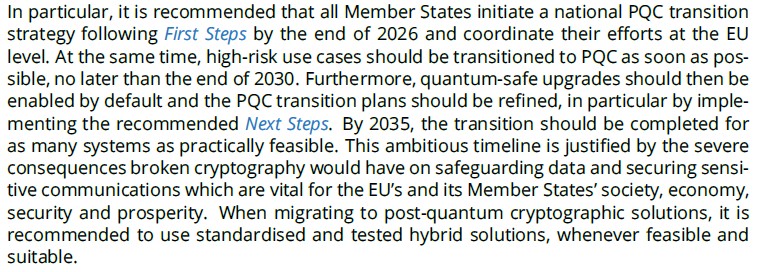
_The European Union is pushing high-risk systems to transition by 2030. Source: _European Commission
Institutional governance is accelerating quantum upgrades
One place coordination may be easier is in institutional blockchain networks, where governance is tighter and the chain of authority is clearer.
Auh’s BOLT Technologies is running a pilot with the Canton Network to test a system that allows institutions to use and switch between multiple cryptographic signature schemes. Canton describes itself as an open blockchain for regulated institutions, designed to let participants exchange data and value without giving up privacy or control.
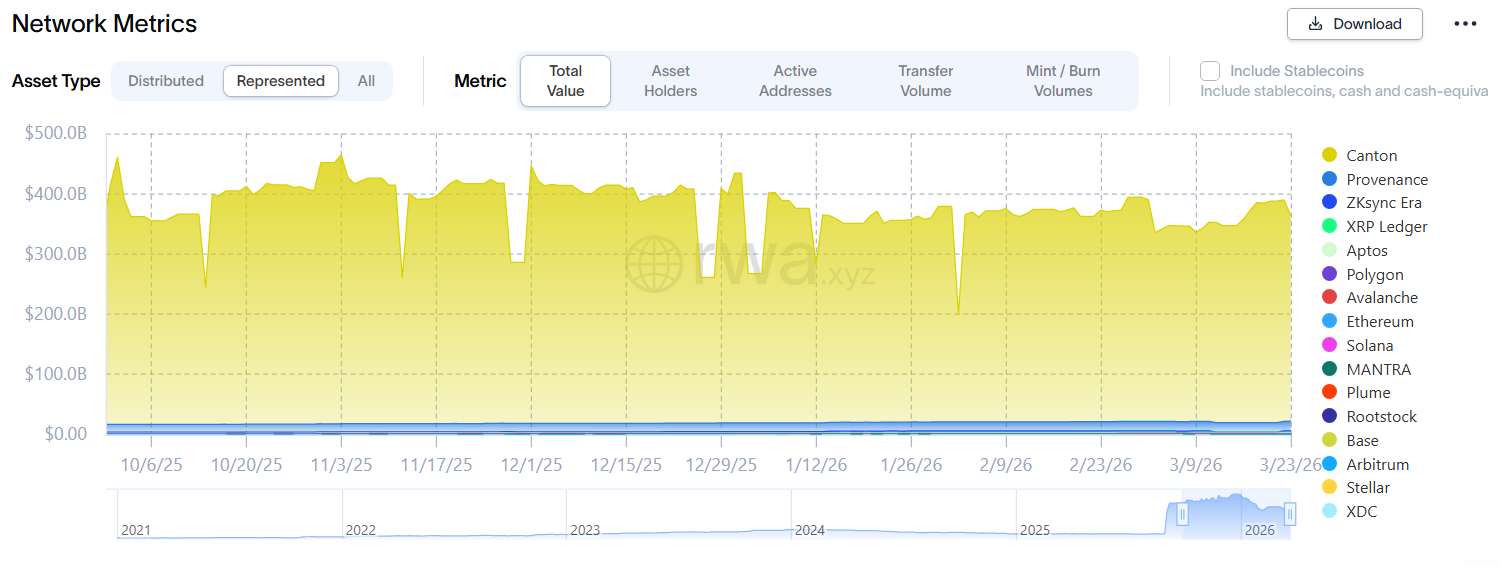
_Canton is the leading network for recordkeeping of RWA tokens. Source: _RWA.xyz
In regulated financial markets, infrastructure changes must meet internal controls, risk management standards, privacy requirements and interoperability demands across firms.
Canton is built around those constraints, positioning itself as infrastructure for regulated institutions and a way to connect siloed financial systems without sacrificing control.
In August 2024, NIST finalized its first set of post-quantum cryptography standards and explicitly urged system administrators to begin transitioning to them as soon as possible.
For regulated institutions, that kind of guidance makes delays harder to justify. Once migration becomes a recognized security and compliance issue, the networks most likely to move first are the ones that can turn technical advice into a managed operational process. Auh said that is one reason permissioned networks may be better positioned to move first.
“Because of their governance structure, you only need a few people there who are very knowledgeable to understand what’s going on,” he said. “And then because their governance is a lot quicker and a lot more organized, you can make those changes quicker.”
That does not mean permissioned networks have solved the post-quantum problem. It means they may be better equipped to test, approve and stage upgrades under real-world constraints.
**Related: **__Banks will run RWAs on two blockchain rails, says RedStone co-founder
Coordination slows quantum upgrades on public networks
Public blockchains face a different coordination problem because major protocol changes cannot be approved by a small governing group.
On Bitcoin, protocol changes are suggested through the Bitcoin Improvement Proposal (BIP) process, and the project’s own documentation says that “acceptance and adoption rests with the Bitcoin users.”
That makes a system-wide cryptographic migration harder to stage on public chains than on permissioned ones.
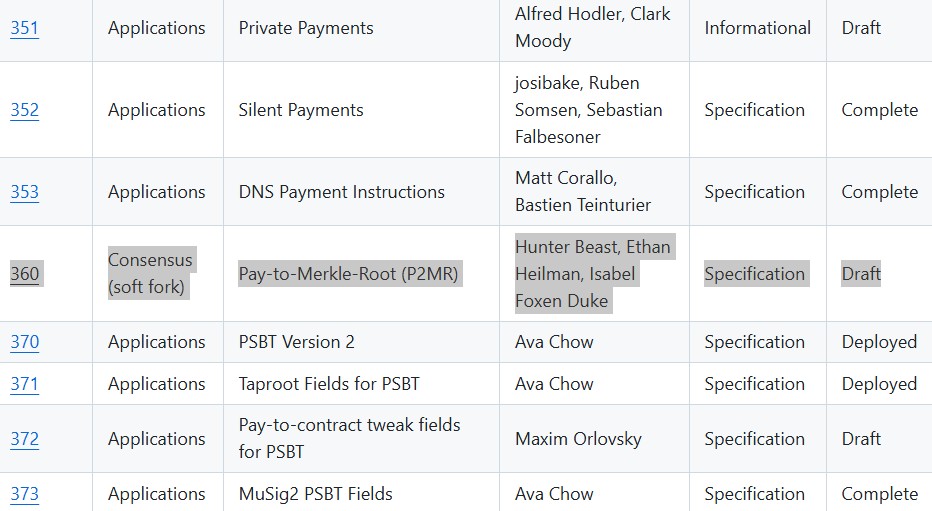
_BIP 360 proposes a new output type designed to move the network toward quantum-resistant transaction structures. Source: _Github
Given these coordination constraints, a post-quantum upgrade may require more disruptive upgrade paths, including a hard fork.
“I think it’s a very difficult thing to do with a soft fork,” he said. “They’re going to have to take the bitter medicine at some point and do a hard fork.
I know that it’s very traumatic for something like Bitcoin.”
On Ethereum, core changes move through the EIP process, where authors are expected to build consensus within the community and document dissenting opinions.
Ethereum’s governance documentation describes a process involving multiple stakeholder groups, including node operators, validators and EIP authors, while the AllCoreDevs process exists to coordinate technical work across contributors from different organizations.
**Related: **__Are quantum-proof Bitcoin wallets insurance or a fear tax?
The real challenge in quantum migration is coordination
The post-quantum transition is often framed as a technical race to find the right cryptography, but the harder question may be whether a network can carry out the migration at all.
Auh said the industry should spend less time trying to predict the exact arrival of a cryptographically relevant quantum computer — often called “Q-Day” — and more time thinking about whether blockchain networks are structurally capable of responding.
“The recognition of the risk should spur you into action,” he said, arguing that preparation matters more than timeline guessing.
For permissioned blockchains, that process can be channeled through tighter governance, formal approval paths and institutional pressure to act. For public chains, the same migration has to pass through a wider and slower process shaped by developers, client teams, wallet providers and users.
General investors are more likely to focus on post-quantum readiness for networks like Bitcoin and Ethereum, whose growth has tracked the broader industry, though views on the risk remain split. Jefferies strategist Christopher Wood removed Bitcoin from a model portfolio, citing quantum concerns, while Blockstream CEO Adam Back has said the threat may still be decades away.
**Magazine: **__Bitcoin may face hard fork over any attempt to freeze Satoshi’s coins
Cointelegraph Features publishes long-form journalism, analysis, and narrative reporting produced by Cointelegraph’s in-house editorial team with subject-matter expertise. All articles are edited and reviewed by Cointelegraph editors in line with our editorial standards. Research or perspective in this article does not reflect the views of Cointelegraph as a company unless explicitly stated. Content published in Features does not constitute financial, legal, or investment advice. Readers should conduct their own research and consult qualified professionals where appropriate. Cointelegraph maintains full editorial independence. The selection, commissioning, and publication of Features and Magazine content are not influenced by advertisers, partners, or commercial relationships. This content is produced in accordance with Cointelegraph’s Editorial Policy.
- #Bitcoin
- #Cryptography
- #Upgrade
- #Quantum Computing
- #Bitcoin Adoption
- #Features


