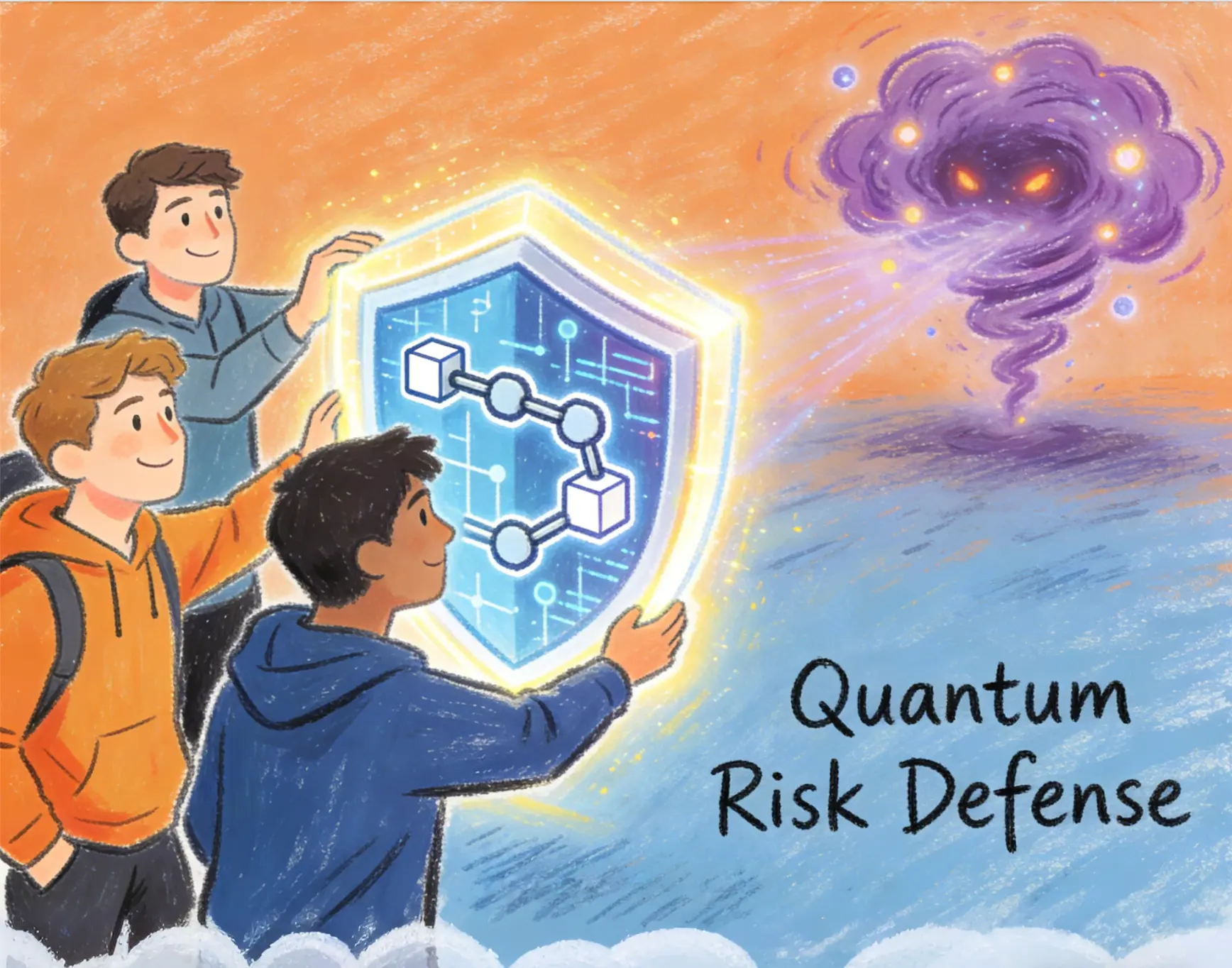
 The Ethereum Foundation has established a dedicated Post-Quantum team and launched a resource hub outlining a multi-year roadmap to transition the network to quantum-safe cryptography, with protocol-level solutions targeting implementation by 2029.
The initiative brings together more than eight years of research across cryptography, protocol architecture, and coordination efforts, shifting from isolated work to a structured, publicly accessible roadmap. While the team stated that no imminent quantum threat exists for cryptography-secured blockchains, they emphasized that “migrating a decentralized, global protocol takes years of coordination, engineering, and formal verification,” requiring early action.
The transition will affect Ethereum’s execution, consensus, and data layers, with researchers developing aggregation techniques including zero-knowledge proofs to maintain efficiency while upgrading security.
Quantum Threat Context and Industry Debate
Long-Term Risk Assessment
Quantum computing is widely expected to eventually break the public-key cryptography that underpins modern digital systems, including blockchain networks. While the Ethereum Foundation noted that a quantum computer relevant to cryptography is not imminent, the organization emphasized that preparing for such a threat requires years of planning and coordination.
Industry analysts have offered varying assessments of the threat:
-
Galaxy Digital analyst Will Owens has stated that only crypto wallets with exposed public keys are vulnerable to quantum attacks
-
Capriole Investments’ Charles Edwards has argued that all coins are at risk
Quantum-Safe Solutions
Many crypto developers are focused on implementing quantum-safe solutions into cryptographic signatures to defend against potential attacks. However, some solutions are computationally intensive and could impact blockchain performance by increasing bandwidth and storage requirements.
Post-Quantum Team and Technical Approach
Team Formation and Mandate
The Post-Quantum team, comprised of Ethereum Foundation members, plans to implement quantum solutions at the protocol level, with solutions targeting the execution layer to follow. The team is integrating SNARK (Zero-Knowledge Succinct Non-Interactive Argument of Knowledge) technology to prevent performance degradation associated with quantum-safe implementations.
Prioritization Strategy
The team stated it would prioritize protecting standard Ethereum wallets first, as this is where the largest pool of value resides, followed by high-value operational wallets tied to crypto exchanges, bridges, and custody solutions.
Multi-Layer Protocol Transition
Execution Layer
At the execution layer, the focus is on enabling users to adopt quantum-safe authentication through gradual, opt-in mechanisms that avoid disruptive changes to wallets and transactions.
Consensus Layer
Ethereum is exploring replacing its current validator signature system with post-quantum alternatives while maintaining performance and scalability.
Data Layer
The work extends to securing data availability and ensuring that core infrastructure remains resilient under new cryptographic standards.
Technical Challenges and Balancing Security with Scalability
Performance Considerations
Post-quantum cryptographic schemes tend to produce larger signatures and require more computational resources. To address this, Ethereum researchers are developing aggregation techniques, including the use of zero-knowledge proofs, to maintain efficiency while upgrading security.
Implementation Complexity
The team highlighted key challenges beyond algorithm selection:
-
Safely upgrading hundreds of millions of accounts
-
Preventing the migration from introducing new bugs
-
Avoiding new attack surfaces
-
Maintaining performance
-
Coordinating ecosystem-wide adoption
Cryptographic Agility
The effort is guided by the principle of “cryptographic agility,” allowing the protocol to upgrade its core primitives over time without destabilizing the network.
Frequently Asked Questions
When will Ethereum implement quantum-safe solutions?
The Post-Quantum team is planning to implement quantum solutions at the protocol level by 2029, with solutions targeting the execution layer to follow. The transition will be a multi-stage process rather than a single event.
How will quantum-safe solutions affect Ethereum performance?
Post-quantum cryptographic schemes typically produce larger signatures and require more computational resources. To address this, Ethereum researchers are developing aggregation techniques including zero-knowledge proofs to maintain efficiency while upgrading security.
Which Ethereum accounts will be protected first?
The Post-Quantum team stated it will prioritize protecting standard Ethereum wallets first, as this is where the largest pool of value resides, followed by high-value operational wallets tied to crypto exchanges, bridges, and custody solutions.
Disclaimer: The information on this page may come from third parties and does not represent the views or opinions of Gate. The content displayed on this page is for reference only and does not constitute any financial, investment, or legal advice. Gate does not guarantee the accuracy or completeness of the information and shall not be liable for any losses arising from the use of this information. Virtual asset investments carry high risks and are subject to significant price volatility. You may lose all of your invested principal. Please fully understand the relevant risks and make prudent decisions based on your own financial situation and risk tolerance. For details, please refer to
Disclaimer.


