When evaluating Sandbox, users frequently ask whether SAND is simply a payment token or if it plays a broader role in the virtual economy. This question is especially critical in contexts involving virtual land, NFT assets, and content creation, where the token’s allocation and circulation directly shape the ecosystem structure.
This discussion covers multiple dimensions—token utility, circulation mechanics, acquisition methods, and economic models—which together define SAND’s real value within Sandbox.
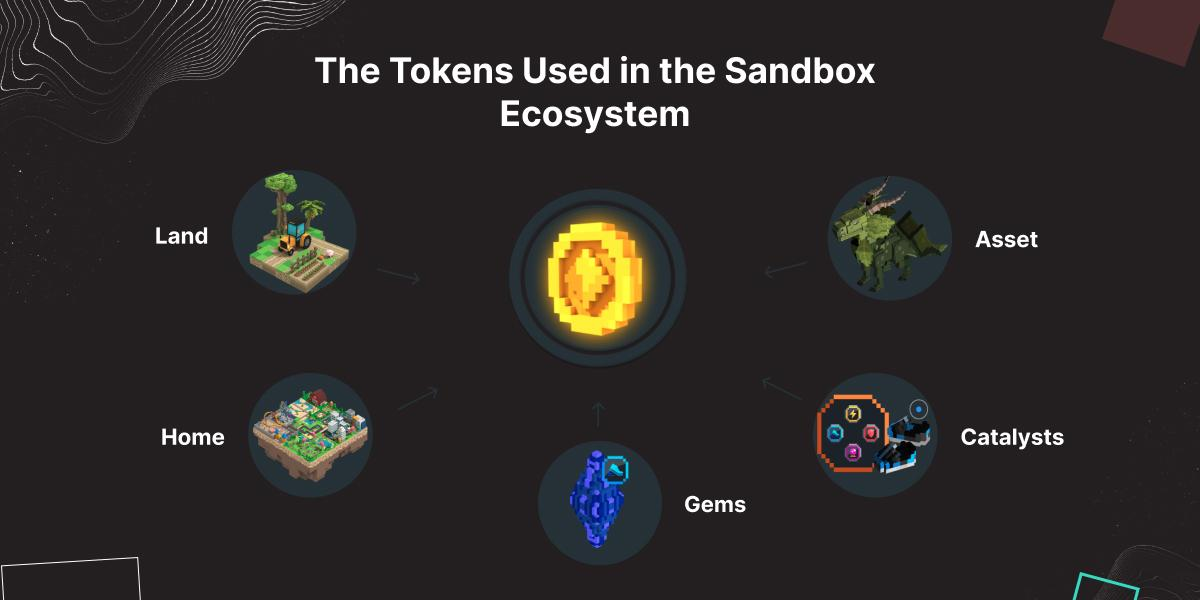
What Is the SAND Token
SAND is a utility token powering the Sandbox metaverse, serving as the central value medium for its virtual economic system.
SAND is issued on blockchain networks and features transferability, verifiability, and programmability. It’s not just used for settlement of transactions—it’s integrated into the platform’s incentive systems and governance structures.
Through smart contracts, SAND facilitates asset transactions and revenue sharing, enabling economic activity to be executed and recorded on-chain. This setup eliminates reliance on centralized systems and enforces automatic rule-based operations.
SAND’s importance lies in its dual role as a medium of exchange and as critical infrastructure linking user actions with ecosystem operations.
Core Functions of SAND Token
SAND’s functions fall into three main categories: payment, incentive, and governance.
For payments, SAND enables purchases of virtual land and NFT assets, serving as the main currency in the Sandbox marketplace. For incentives, the platform distributes SAND to reward content creators and active users, sustaining content supply. For governance, SAND holders can participate in platform decision-making.
These functions are interconnected. Users spend SAND to consume content, creators earn SAND as revenue, and the platform redistributes tokens through its incentive mechanism, fueling the ecosystem cycle.
This design makes SAND a versatile token, not merely a payment tool.

SAND Circulation Mechanism in the Sandbox Ecosystem
SAND’s circulation mechanism is structured around user activity and forms a continuous loop.
Typically, players spend SAND to buy NFTs or virtual land, transferring tokens to creators or asset holders. Creators then earn SAND, which they use to re-engage in the ecosystem.
The circulation structure can be summarized as follows:
| Stage |
Action |
SAND Flow |
| Asset Purchase |
Player buys LAND or NFT |
Player → Creator |
| Content Consumption |
Player experiences gameplay |
Player → Creator/Platform |
| Incentive Distribution |
Platform rewards users |
Platform → User |
| Re-engagement |
User spends or invests again |
User → Ecosystem |
The core of this model is the continuous flow of SAND among different participants, rather than being consumed by a single entity.
This circulation efficiency is a key driver of ecosystem activity and user engagement.
SAND Acquisition Methods and Usage Paths
Users can acquire SAND through exchange purchases or by earning rewards within the Sandbox ecosystem.
SAND can be bought directly on trading platforms or earned by participating in games, events, or content creation. Once acquired, SAND is used for asset purchases, immersive experiences, and governance participation.
Acquisition and usage form a closed loop: users obtain SAND, spend it in the ecosystem, and their consumption incentivizes further content creation, sustaining the cycle.
This model ensures SAND has real utility beyond simple trading.
SAND Incentive Mechanism Design
SAND’s incentive mechanism is built around content creation and user engagement, focusing on converting activity into measurable rewards.
The incentive system typically includes a reward pool, allocation rules, and behavior evaluation criteria. The platform distributes SAND to creators and active users based on their participation and contributions.
This creates a sustainable environment for content production. Creators earn SAND by providing assets or gameplay, and users receive rewards for active engagement, forming a positive feedback loop.
A well-designed incentive mechanism is vital; imbalance can result in declining content quality or reduced user activity.
Impact of SAND Economic Model on Ecosystem Growth
The SAND economic model consists of total supply, allocation structure, and circulation mechanics, directly affecting Sandbox’s stability and growth trajectory.
SAND’s maximum supply is 3 billion tokens, establishing scarcity. The allocation breakdown is:
| Allocation Category |
Percentage |
| Company Reserve |
25.82% |
| Team |
19.00% |
| Seed Round |
17.18% |
| Launchpad |
12.00% |
| Foundation |
12.00% |
| Advisors |
10.00% |
| Strategic Sale |
4.00% |
Company reserve and team allocations are substantial, setting early control distribution. The foundation supports ecosystem incentives, fostering content creation and user expansion.
With progressive token unlocks, SAND is now nearly fully circulating, stabilizing market supply and reducing the impact of large-scale unlocks.
Key economic model impacts include:
| Dimension |
Role |
Impact |
| Supply Cap |
Controls supply |
Drives scarcity |
| Allocation Structure |
Sets initial control |
Influences governance |
| Unlock Schedule |
Guides circulation |
Affects market stability |
| Incentive Mechanism |
Token distribution |
Drives ecosystem activity |
Overall, SAND’s economic model leverages supply control and incentive distribution to build a content-driven virtual economy, with stability reliant on supply-demand balance.
Summary
SAND plays multiple roles in the Sandbox ecosystem—payment, incentive, and governance—connecting creators, users, and the platform via its circulation mechanism. Its economic model, defined by total supply, allocation, and unlock schedule, directly influences ecosystem stability and growth. Sandbox’s token-driven cycle delivers a content-centric virtual economic system.
FAQ
What is SAND’s primary use?
SAND is used for virtual asset purchases, rewarding user participation, and supporting platform governance. It’s the essential token within Sandbox.
What is SAND’s total supply?
SAND’s maximum supply is 3 billion tokens, under a fixed supply mechanism.
What does SAND’s allocation structure mean?
The allocation structure defines initial control and ecosystem incentive methods, impacting governance and development.
Has SAND been fully unlocked?
SAND is now nearly fully circulating, with most tokens released to the market.
Why is the SAND economic model important?
The economic model sets token supply and distribution, directly impacting ecosystem activity and long-term stability.