When exploring the Ordinals ecosystem, users often compare ORDI to traditional tokens. However, since ORDI is not built on smart contracts, its issuance and circulation logic are fundamentally different.
This distinction generally involves three key aspects: issuance mechanism, supply structure, and market formation. These elements collectively define the economic model behind ORDI.
What Is ORDI? Core Role in the Ordinals Ecosystem
ORDI is an inscription token developed under the BRC-20 standard, designed to represent fungible assets on the Bitcoin network.
Unlike smart contract-controlled tokens, ORDI’s issuance and transfer rules are defined by inscription text. These rules are embedded in Bitcoin blocks and executed by compatible clients.
ORDI does not participate in network consensus or transaction fee payments. Its primary roles are asset representation and market trading.
This framework makes ORDI one of the most iconic tokens within the Ordinals ecosystem.
How Is ORDI’s Issuance and Distribution Structured?
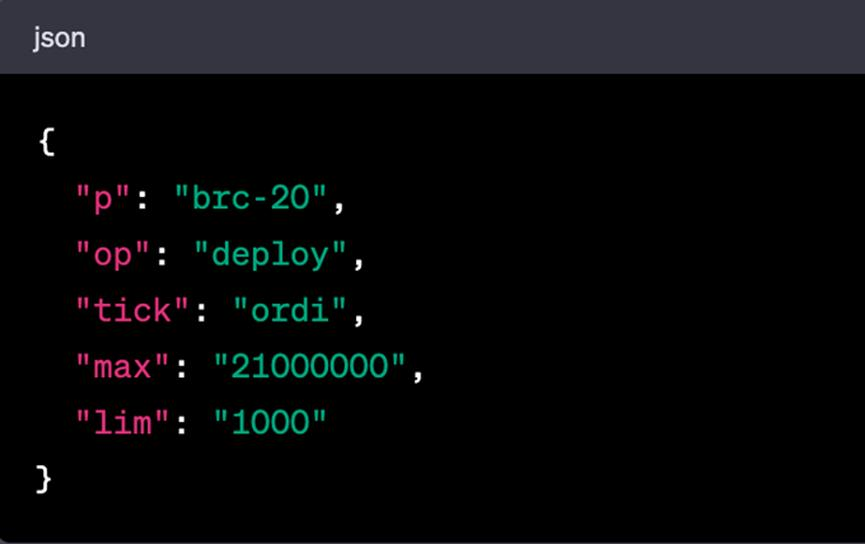
ORDI’s issuance is entirely governed by inscription protocol rules, with a fixed maximum supply and uniform minting method.
Key parameters for ORDI issuance:
| Parameter |
Value |
| Total Supply |
21,000,000 ORDI |
| Mint Amount per Transaction |
1,000 ORDI |
| Minting Method |
Fair Mint |
| Reserved Allocation |
None |
| Team Allocation |
None |
All ORDI tokens were minted directly by users—there was no pre-mining or private allocation—resulting in a highly decentralized distribution.
This approach ensures that ORDI’s initial allocation is driven by market demand, not by project teams.
How Are ORDI’s Supply Mechanism and Circulation Path Established?
ORDI’s supply model combines a fixed cap with gradual release.
The total supply is permanently capped; after all tokens are minted, supply growth stops and full circulation is achieved.
ORDI tokens circulate primarily through wallet transfers and trading markets, with liquidity entirely dependent on user trading activity.
This supply mechanism enforces clear scarcity, allowing price discovery to be determined purely by the market.
How Does the Inscription Token Mechanism Shape ORDI’s Value?
ORDI’s value is tightly linked to the inscription framework.
The BRC-20 standard defines token behavior via a simple text protocol, making ORDI reliant on on-chain data rather than contract execution.
While this design reduces technical complexity, it also limits extensibility—for example, there’s no automated logic or support for complex interactions.
As a result, ORDI functions as a “record-based asset,” with value primarily driven by scarcity and collective consensus.
How Is ORDI’s Price Determined in the Marketplace?
ORDI’s price is set by market trading activity.
Buyers and sellers match orders to set prices, while trading depth and liquidity directly influence price volatility.
ORDI is traded on markets that support inscription assets, providing both order matching and liquidity.
This market-driven approach means ORDI’s value is determined entirely by supply and demand, not by any protocol-level mechanism.
How Do Participants Shape ORDI’s Supply and Demand?
Multiple types of participants—holders, traders, and new entrants—collectively shape ORDI’s supply and demand dynamics.
Because supply is fixed, price becomes highly sensitive to demand shifts. The supply side is stable, while the demand side fluctuates, making ORDI a classic market-driven asset.
As a result, changes in ORDI’s value are driven primarily by market consensus and participation levels.
What Are the Boundaries and Limitations of ORDI’s Economic Model?
ORDI’s design brings certain limitations.
Without smart contract support, ORDI cannot support complex financial logic or feature expansion.
Its value relies on community consensus and ecosystem growth; if demand declines, there is no built-in support mechanism.
These limitations make ORDI best suited for simple asset representation, not as a platform for complex applications.
Summary
ORDI’s unique economic model—defined by a fixed supply, fair minting, and market-driven dynamics—derives its value structure from the interplay of supply, demand, and the inscription protocol.
FAQ
What is ORDI’s total supply?
21,000,000 tokens, identical to Bitcoin’s cap.
Was there any pre-mining or team allocation for ORDI?
No. All tokens were created through public minting.
Can ORDI be further issued?
No. The supply is permanently fixed.
What drives ORDI’s value?
Primarily market demand and ecosystem consensus.
Does ORDI support smart contracts?
No. It relies solely on the inscription protocol for its core functionality.