The Evolving Role of Stablecoins: From Value Preservation to Yield-Generating Assets
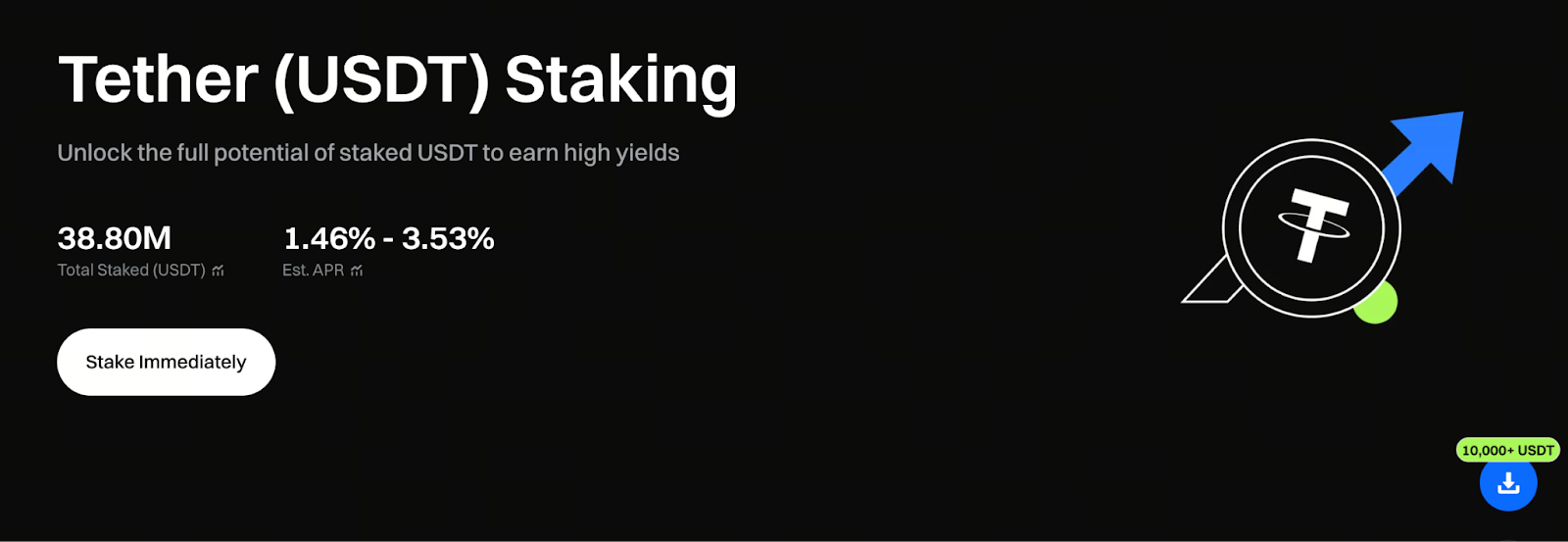
In the early stages of the crypto market, stablecoins mainly acted as a pause button—investors would convert funds to USDT to avoid risk during periods of extreme volatility. As on-chain finance has matured, stablecoins have transformed from passive assets into active capital, now integrated into yield-generating strategies and serving as units of capital that can generate ongoing returns.
Gate’s USDT Staking exemplifies this transformation, enabling USDT that would otherwise remain idle in accounts to participate in on-chain interest rate markets and deliver stable cash flow.
Ultra-Low Entry Barriers: Lowering the Cost of Earning Yields
Unlike most yield products, Gate USDT Staking is designed for accessibility, requiring only 1 USDT to get started. This allows both new users and those with smaller balances to experience on-chain yield models firsthand.
For this event, the platform is also offering additional annualized incentives, with a combined reference annualized yield of up to 50%. This enables users to test stablecoin yield mechanisms while taking on minimal risk.
Event Terms and Participation Restrictions
This USDT staking event is available for a limited period:
- January 30, 2026, 17:00 to February 14, 2026, 17:00 (UTC+8)
To participate, users must meet the following criteria:
- No on-chain earning product purchases in the past 30 days
- Account holdings do not exceed 1 USDT
Eligible users will see a dedicated entry point and reward prompt after logging in to the event page.
Event Details
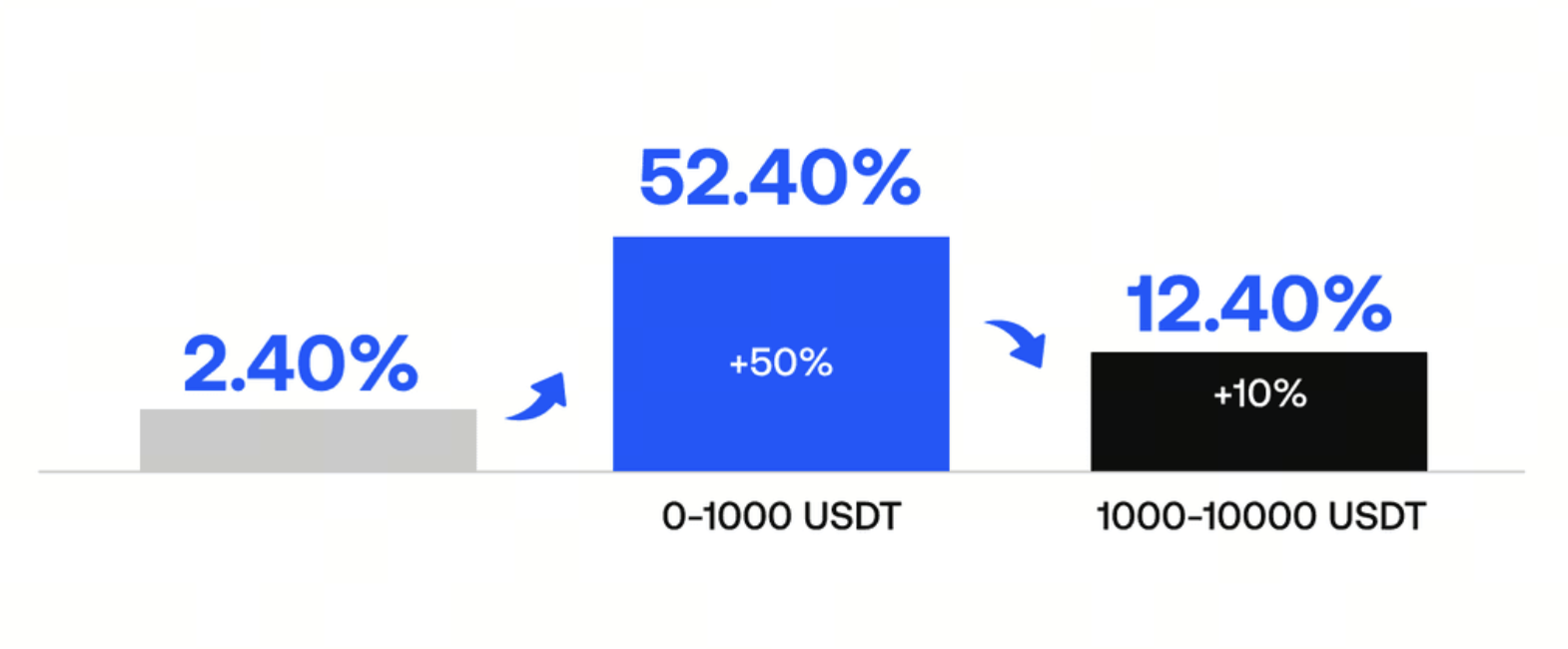
Start USDT Staking now and earn attractive returns: https://www.gate.com/staking/USDT
How Does the Staking Mechanism Work?
Gate USDT Staking is part of the on-chain earning suite. The platform aggregates user funds and allocates them to on-chain yield protocols, managing subsequent fund allocation and yield distribution on users’ behalf.
Compared to operating DeFi independently, users benefit from:
- No need to connect a wallet
- No need to sign smart contracts
- No need to understand protocol details
The entire process takes place within the Gate platform, offering a traditional wealth management experience while accessing DeFi returns.
Yield Source: Aave V3 Lending Market
Yields are generated from the decentralized lending protocol Aave V3. As one of the largest and most established lending markets in DeFi, Aave’s interest rates adjust in real time based on supply and demand. Gate packages this mechanism into a streamlined product, allowing users to participate in the lending rate market without direct on-chain operations.
Payout and Staking Rules
The basic parameters for USDT staking are as follows:
- Staking period: Daily 00:00 – 23:59 (UTC)
- Payout timing: Interest begins accruing on the same day staking is completed (D+0)
- Minimum subscription: 1 USDT
- Daily maximum staking limit: 200,000 USDT
- No overall staking cap
Users can flexibly adjust their allocation based on available funds, with high flexibility and minimal restrictions.
Redeem Anytime to Maintain Liquidity
Gate USDT Staking does not impose a fixed lock-up period. Users can submit redemption requests at any time, with funds returned to their account within one day at the latest.
Redemption rules:
- Minimum redemption: 1 USDT
- Daily maximum redemption limit: 200,000 USDT
This enables users to pursue returns while retaining full control over their capital.
How Is the Annualized Yield Composed?
The reference annualized yield displayed on the page consists of two parts:
- Market annualized yield: Based on Aave’s real-time lending rate
- Additional rewards: Subsidies provided by Gate in GT
The additional reward pool is limited. Once it is exhausted, only the market annualized yield remains. Actual rates are subject to the real-time figures shown on the event page.
On-Chain Earning Product Positioning
Gate’s on-chain earning products are not designed for extreme returns, but instead focus on low technical barriers and manageable risk. The platform assesses partner protocols for risk before making them available for subscription. USDT Staking is an entry-level product, designed to let users access on-chain interest rate markets in the simplest way possible.
How to Participate
- Web: Wealth Management → On-Chain Earning → USDT Staking
- App: Wealth Management → On-Chain Earning → USDT Staking
Risks and Important Considerations
This service may not be available in certain jurisdictions (including the UK and other restricted regions). For actual availability, please refer to the Gate User Agreement. This event does not constitute investment advice. The crypto market remains volatile, and users should independently assess their capital allocation and risk tolerance.
User Agreement: https://www.gate.com/legal/user-agreement
Summary
The core value of Gate USDT Staking lies not in high-risk investment, but in transforming stablecoins from idle holdings into productive capital. By integrating Aave V3’s lending framework, the platform allows users to participate in on-chain yield cycles without complex DeFi operations. For users seeking to generate cash flow from idle funds without technical barriers, this type of staking product provides a balanced, highly accessible, and transparently structured yield solution.







