Ethereum Staking Queue Hits Two-Year High: Is $ETH Still Worth Staking?

Last Updated 2026-03-29 06:19:44
Reading Time: 1m
The queue for Ethereum staking has surged to its highest level in over two years, with more than 860,000 ETH now pending activation. This article presents an in-depth analysis of the current staking landscape, projected wait times, and market implications. It also offers key recommendations for newcomers and a concise overview of staking opportunities.

What Is the Ethereum Staking Queue?

Following Ethereum’s upgrade to the Proof-of-Stake (PoS) protocol, users must stake at least 32 ETH to become validators. Since the network can only activate a limited number of validators at any given time, excess requests enter a “queue” and await activation. This mechanism helps ensure network stability and increases the scarcity of staking opportunities.

Why Has the Staking Queue Reached a Two-Year High?

Currently, over 860,000 ETH are queued for staking—a level not seen in nearly two years. The main reasons include:

  • Growing investor confidence in Ethereum’s long-term value, resulting in more ETH being locked up.
  • Rising market prices have made staking yields more attractive.
  • Institutional investors and large funds have continued to enter the staking market, further driving up the queue size.

This spike in the queue also reflects an accelerating trend in staking activity and sustained demand for validators.

Current Market Impact on $ETH
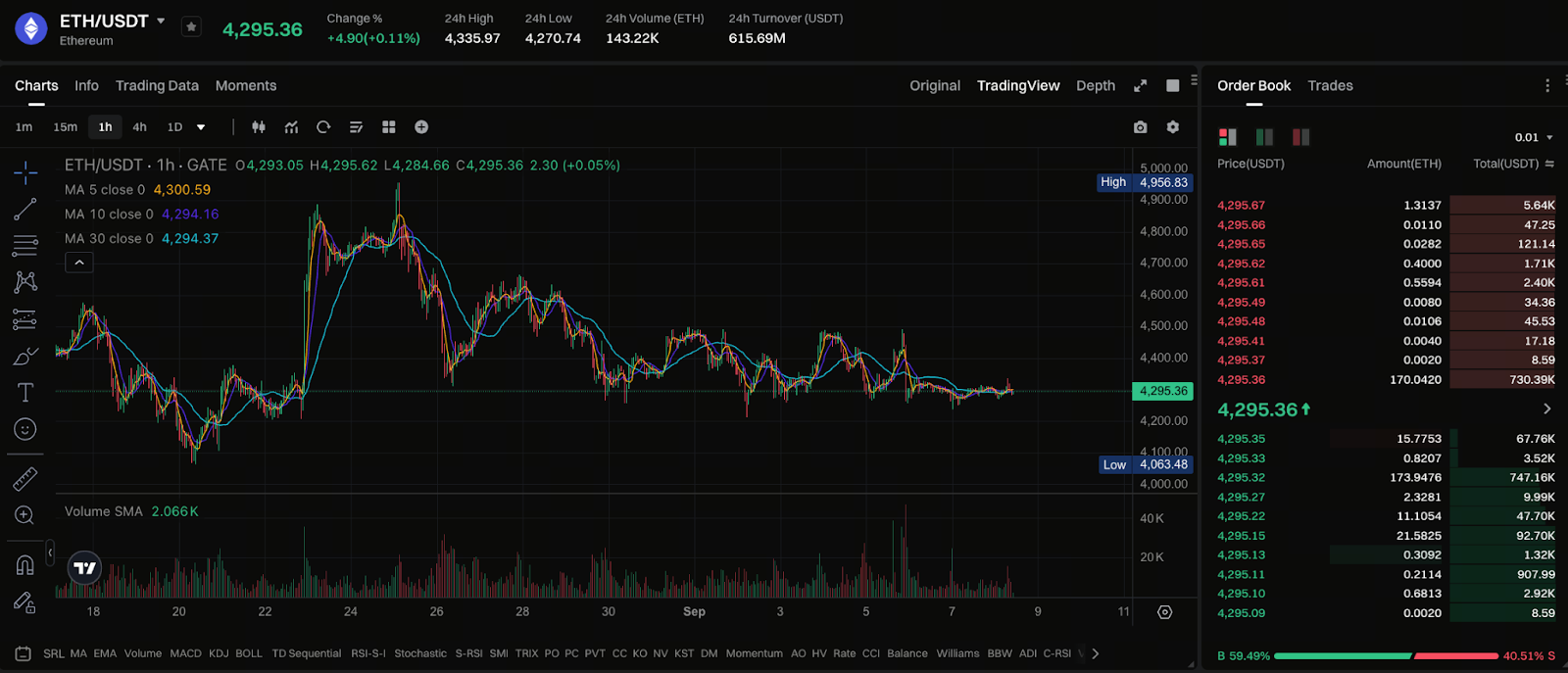

Chart: https://www.gate.com/trade/ETH_USDT

The swelling staking queue means more ETH is being locked, reducing circulating supply in the short term and providing support for the price. Meanwhile, the pressure to exit staking has eased, signaling that market anxiety is subsiding and investor confidence is strengthening. Overall, these supply and demand shifts could have a positive effect on ETH prices over the medium to long term.

How Long Is the Queue Wait Time?

At the current network activation rate, the queue wait time may be around 14 days. Users looking to start earning staking rewards immediately will need to be patient. Furthermore, once ETH is staked, it cannot be redeemed for a certain period, which limits liquidity.

Tips for New Stakers

  • Advantages: Stable yields (annual percentage rate typically ranges from 3–6%), enhanced network security, and long-term holding offers the potential for appreciation.
  • Disadvantages: Lengthy wait times, low liquidity, and a high minimum requirement for direct staking (32 ETH).
  • Recommendation: Newcomers can participate using liquid staking platforms like Lido and Coinbase, which convert staked ETH into tradable tokens for a balance of yield and liquidity.
  • Strategy: Consider staking as part of a long-term investment plan, gradually increasing your allocation according to market conditions and your risk tolerance.

Conclusion: Ethereum’s staking queue has hit a two-year high, reflecting increased market confidence. If you’re a beginner willing to hold ETH long term and wait patiently, staking could be a solid option. If you want flexibility and easier trading, liquid staking is likely the better choice.

Author: Max
Disclaimer
* The information is not intended to be and does not constitute financial advice or any other recommendation of any sort offered or endorsed by Gate.
* This article may not be reproduced, transmitted or copied without referencing Gate. Contravention is an infringement of Copyright Act and may be subject to legal action.

Related Articles

Gold Price Forecast for the Next Five Years: 2026–2030 Trend Outlook and Investment Implications, Could It Reach $6,000?
Beginner

Gold Price Forecast for the Next Five Years: 2026–2030 Trend Outlook and Investment Implications, Could It Reach $6,000?

Analyze current gold price trends alongside authoritative five-year forecasts, integrating an evaluation of market risks and opportunities. This gives investors insight into the potential trajectory of gold prices and the main drivers expected to shape the market over the next five years.
2026-03-25 18:13:30
AI-Native Settlement Layers: How United Stables Is Building the Next Financial Rail
Beginner

AI-Native Settlement Layers: How United Stables Is Building the Next Financial Rail

Stablecoins were originally designed as dollar substitutes within exchanges, primarily used for asset pricing and trade settlement. As on-chain financial ecosystems have matured, their role has expanded beyond simple payments to include collateral assets, cross-chain liquidity mediums, and unified settlement units. In particular, as AI systems and automated agents begin to participate directly in economic activity, demand has risen sharply for programmable value units capable of instant settlement. This shift is pushing stablecoins toward the role of foundational financial infrastructure.
2026-03-25 03:16:17
Aster vs Hyperliquid: Which Perp DEX Will Prevail?
Beginner

Aster vs Hyperliquid: Which Perp DEX Will Prevail?

Aster and Hyperliquid are the two representative protocols of the "purpose-built L1 path" within the current decentralized perpetual exchange (Perp DEX) sector. As a pioneer in the field, Hyperliquid has built a deep liquidity moat through its highly mature order book architecture and strong community consensus. Conversely, Aster, as a rising challenger, seeks to leapfrog the competition in high-performance trading through more aggressive multi-chain aggregation logic, private transaction modules, and an underlying execution environment optimized for 2026 market demands.
2026-03-24 11:58:33
DePIN Identity Network and Real World Applications: How Humanity Protocol Brings on-chain Identity Into the Physical World
Beginner

DePIN Identity Network and Real World Applications: How Humanity Protocol Brings on-chain Identity Into the Physical World

Most Web3 identity systems remain confined to on-chain environments and struggle to achieve meaningful adoption in real world settings. Through a DePIN architecture and physical verification hardware, Humanity Protocol aims to bring decentralized identity into access control systems, hospitality, public services, and offline events, allowing on-chain identity to function not just as a digital credential, but as foundational infrastructure for real world access.
2026-03-25 07:40:53
Aerodrome Tokenomics: How ve(3,3) Powers Base's Most Profitable DEX
Beginner

Aerodrome Tokenomics: How ve(3,3) Powers Base's Most Profitable DEX

AERO is the native token of Aerodrome Finance, a core decentralized exchange and liquidity protocol in the Base ecosystem. It is primarily used for liquidity incentives and ecosystem operations. veAERO is a governance NFT that users receive by locking AERO, representing both voting power and the right to share protocol revenue. Through a dual track structure of AERO as a utility token and veAERO as a governance credential, Aerodrome separates liquidity usage value from long term governance power, allowing participants to act as liquidity providers, governance decision makers, and revenue sharers within the same system.
2026-03-25 06:40:31
How Does Kite Work? An In-Depth Look at Kite's Identity and Programmable Permission Architecture
Beginner

How Does Kite Work? An In-Depth Look at Kite's Identity and Programmable Permission Architecture

Kite is an EVM compatible Layer 1 blockchain network that runs on proof of stake. It is designed to give AI agents verifiable identity, programmable permissions, and real time settlement in an on-chain execution environment. In Kite's design, AI is no longer only a tool that follows instructions. It becomes an economic participant with independent on-chain identity and direct control over assets. Within secure and auditable infrastructure, an AI agent can complete payments, call services, and coordinate tasks autonomously, making Kite a foundational layer for the emerging agent economy.
2026-03-25 06:02:34